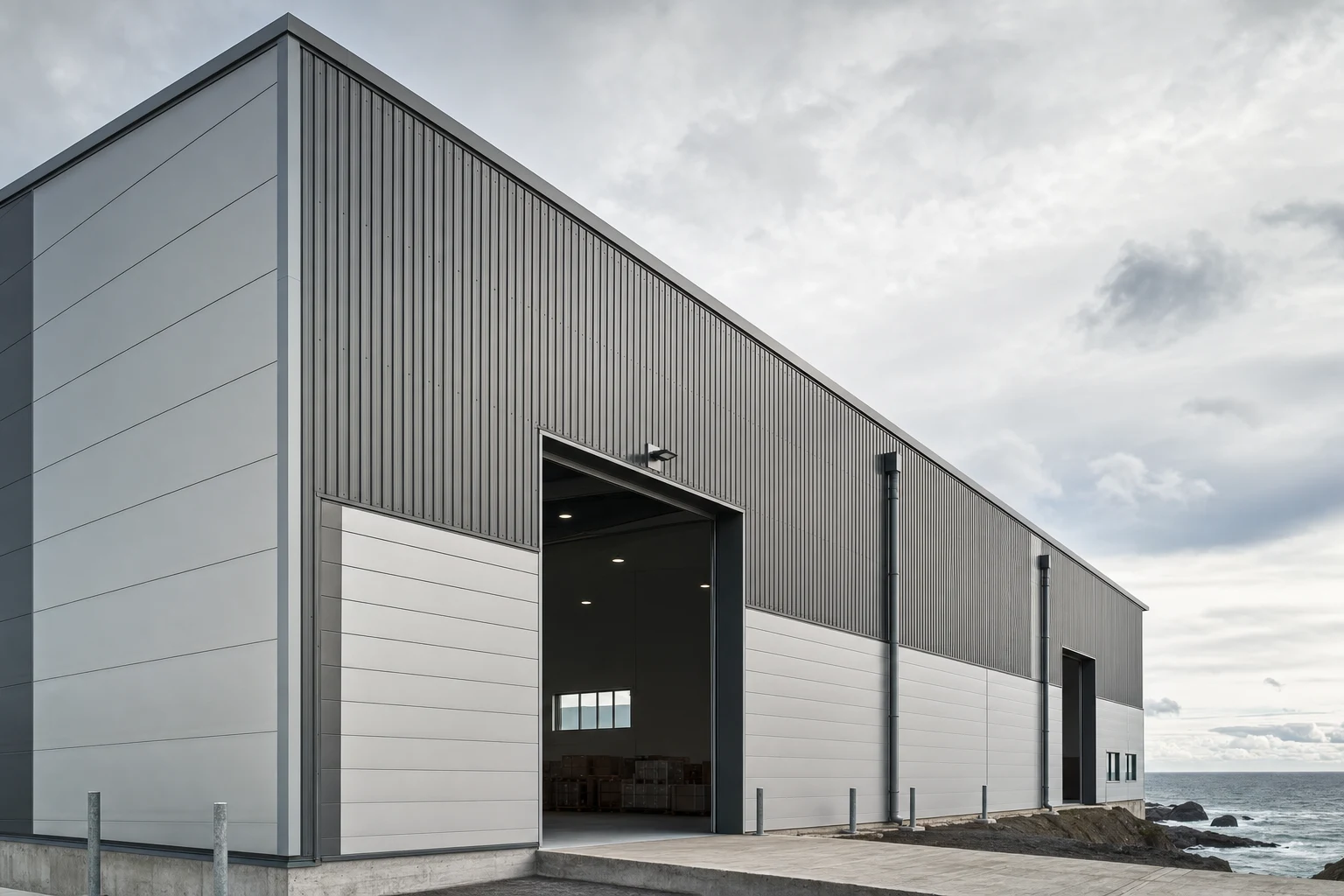
Sandwich panels second grade — what it exactly means and when it makes sense
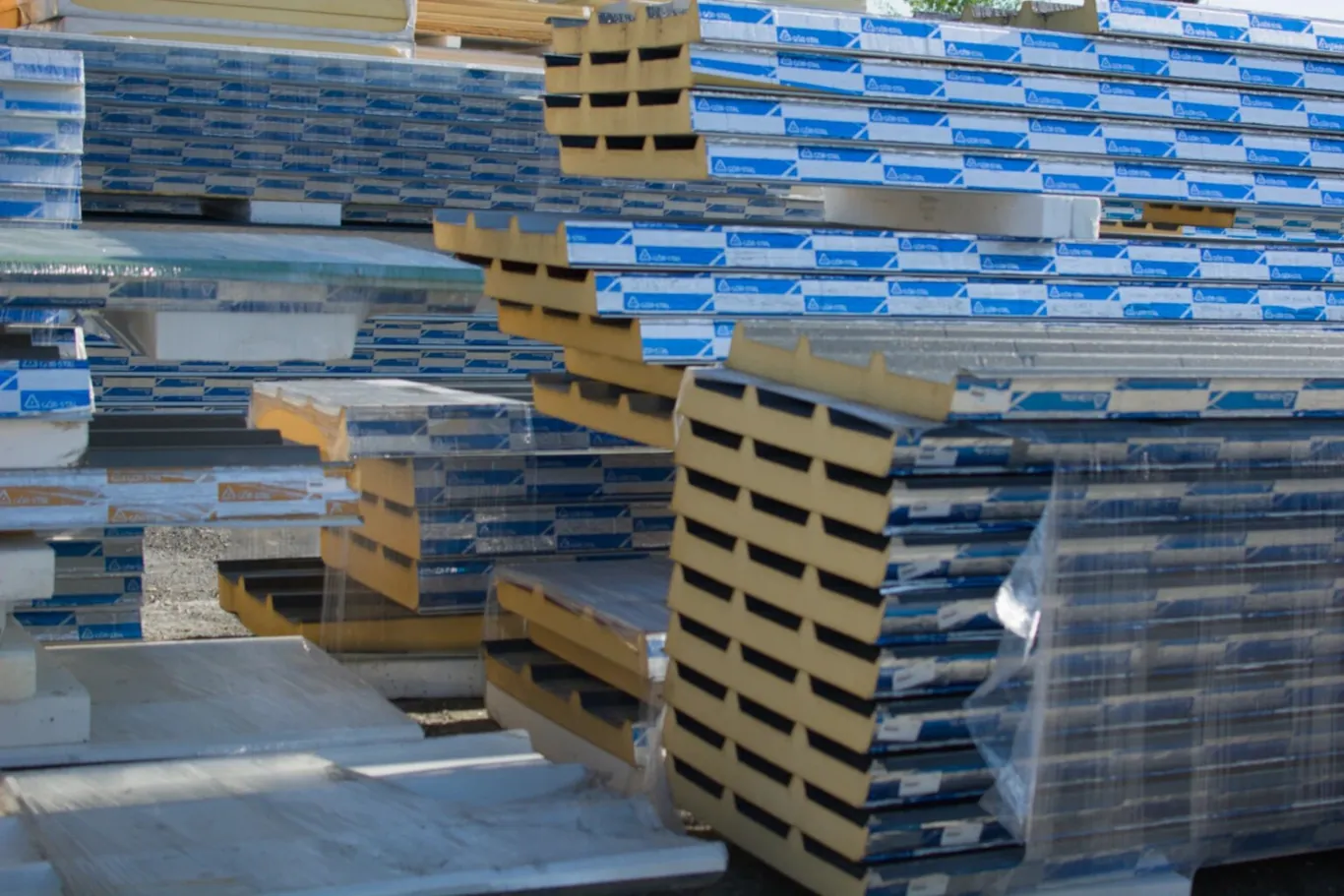
“Second grade”, “outlet”, “Obornicka panel”, “end-of-series” — all these terms describe the same market segment: sandwich panels sold roughly 30% cheaper than the first-grade catalog product, rejected from the main production stream for various reasons or unused in the original project. For an individual investor building a metal garage, a driveway canopy, a carport, or a cold room on a fruit farm, this is often the most economically sensible option — provided they understand well what they’re buying. Because second grade also comes with several important limitations that outlet sellers don’t always communicate willingly, and that can surprise you after delivery.
In this guide, we explain honestly: where defects in second grade come from, why the thermal parameter (lambda) remains preserved, why there is no DoP and no right to warranty claims, where you can use second-grade panels and where you absolutely should not install them. Material for BOKKA clients considering a purchase — before calling our advisor, it’s worth knowing what to ask about.
What second grade formally is (and what it isn’t)
The first misunderstanding worth clarifying: second grade is not a normative category. The Polish harmonized standard PN-EN 14509:2013-12 — which defines technical requirements for sandwich panels in Poland and the entire European Union — does not contain a division into grades. It defines dimensional tolerances, flatness, bending resistance, acoustic parameters, and the reaction-to-fire class. A panel either meets the standard or it doesn’t.
“First grade” and “second grade” are a commercial convention of the Polish market — the way a distributor classifies panels in its warehouse. The manufacturer (Gór-Stal, Kingspan, Balex, Pruszyński) usually doesn’t sell second grade through its own website. From time to time, a batch with deviations appears at the factory — and it is precisely such a batch, in bulk and at a large discount, that is bought by a distributor, who then sells it to the end customer under the name “second grade”.
This is important because it affects two key aspects:
- No Declaration of Performance (DoP). The manufacturer issues a DoP only for a product compliant with PN-EN 14509. A batch classified as second grade falls outside this regime — no DoP, no testing, no CE marking in full scope. This does not mean the product is bad — it means the manufacturer does not take formal responsibility for its parameters in the legal sense.
- No right to warranty claims. Second grade at BOKKA and at most other distributors in Poland is sold as “as is” — defects described before sale, the customer accepts the condition at purchase, it is not subject to claims. This is an industry standard and stems from the very nature of the product (every batch different, defects open).
Where defects come from — four typical sources in BOKKA’s warehouse
In our warehouse in Wola Batorska, we usually encounter four types of “defects” that qualify a panel as second grade:
1. Aesthetic production defects — minor scratches on the lacquer coating created on the production line, small dents in the facing (usually < 2–3 mm deep, not affecting the panel geometry), slight RAL color deviations from what was ordered (± a few percent). This is by far the most common type of defect — it has absolutely no effect on the panel’s functionality, only on the visual “newness” of the surface.
2. End-of-series and non-standard lengths — when the manufacturer finishes a large order and is left with, e.g., 200 m² of panels in lengths of 2–4 meters (instead of the standard 6–13 meters), they go to the distributor as “end-of-series”. The panel is technically fully functional, but its length limits its application to smaller buildings. It works great for a garage, carport, or utility storage.
3. Occasional local PIR core under-fills — it happens that in some places of the panel, the PIR foam did not fill the entire space evenly. We’re talking about really small areas (usually < 5% of the panel area). The nominal λD parameter remains unchanged — the same as for first grade of the same model — but in the specific spot of the under-fill, insulation may be locally slightly worse. In practice, for a garage or carport, this is absolutely negligible. For a project requiring a precise U-value of the entire envelope — it may matter, and there we don’t recommend second grade.
4. Facing sheet joints — sometimes a panel is produced with a joined facing (two pieces of sheet instead of one, joined at the factory), which is visually visible but does not affect tightness or strength.
What we never sell as second grade (we always reject for disposal): core delamination (foam detached from facing), edge cracks with exposed core, surface corrosion or sheet rust-through, dents deeper than 5 mm changing panel geometry, distorted geometry hindering installation.
Lambda preserved — what this specifically means
The most common question we hear: “Does second grade insulate worse than first grade?” The answer is precise: the nominal λD parameter is the same. An insPIRe® S panel from our second-grade warehouse has a declared λD = 0.022 W/(m·K) — identical to a new first-grade panel of the same model. The U-value of your wall or roof is calculated the same way.
This results from how second grade is created: the PIR core is the same raw material, in the same factory, on the same production line. The defect — if any — usually concerns the steel facing (scratch, RAL, dent) or geometry (end piece), not the insulating core itself.
The exception is the previously mentioned local foam under-fills — and here we need to be honest: in a specific spot of the panel where the foam did not fill evenly, insulation is locally minimally lower. Globally, for an entire 100 m² wall, the difference is negligible. But for a designer who has to document the wall’s U-value on the investor’s invoice — it’s a risk not worth taking. Hence our rule: at BOKKA, we recommend second grade for buildings where there is no strict requirement for a documented U-value.
Where second grade is allowed (BOKKA B2C use cases)
We say “YES” for buildings that:
- do not require a building permit (or only require notification),
- do not need to document the U-value with a document from the material manufacturer (DoP, ETA, technical data sheet),
- are auxiliary buildings of a farm or plot, not the main residential building.
Typical applications we handle regularly:
- Metal garage / freestanding garage — the most popular second-grade use case, the customer builds themselves or with a crew. The real savings vs first grade is often the entire frame or foundation.
- Carport / over a terrace — 40–60 mm canopy, short sections, color less important.
- Driveway canopy — analogously, short sections, the customer doesn’t see defects from above.
- Plot storage / woodshed / tool shed — functionality > aesthetics.
- Fruit farm cold room — popular among fruit producers who need a large area of low-temperature insulation (4–10°C, not -25°C). PIR foam retains insulation in the vegetable-fruit cold room range.
- Henhouse / barn / guardhouse — agricultural segment, customer buys on an agricultural company invoice, optimizes costs.
- Small temporary hall / workshop / production canopy — for temporary buildings, second grade is absolutely sufficient.
- Utility container — some customers build mobile containers from sandwich panels (on properties, on plots, as construction site facilities).
Where it is not allowed (red flags)
We say “NO” unequivocally for projects requiring full material documentation:
- Industrial hall with acceptance documentation — the designer, general contractor, insurer will not accept material without DoP/ETA.
- Public utility building (school, kindergarten, office, hospital) — full technical documentation of every material required, fire classification, acoustics.
- Commercial cold room with HACCP certificates — hygienic-sanitary requirements require full material documentation.
- Evacuation routes / fire separation zones — required fire class confirmed by a manufacturer’s document.
- Any project with commercial / investment acceptance — where the designer or investor requires DoP, ETA, certificate of conformity, acoustic or fire certificates.
For such projects, we recommend first grade with full documentation — contact Paweł Michalski, +48 787 025 027.
Important note: sandwich panel is not used to insulate single-family residential buildings using the ETICS method, nor is it subject to the PIT thermal modernization relief — this is a different product segment. For insulating a single-family house (ETICS, sloped roof, attic), we use PIR insulation boards (termPIR®) — this is a separate BOKKA offer with full technical documentation.
Price — how we quote at BOKKA and what to expect
The second-grade price is always individual and depends on:
- current warehouse availability (each batch has its own history),
- core type (PIR insPIRe® usually more expensive than mineral wool GS MW per m²),
- thickness (40 mm – cheapest, 100+ mm – higher threshold),
- panel length (end pieces <2 m are significantly cheaper than 6-meter sections),
- quantity ordered (greater volume = better net/m² rate).
The indicative discount on second grade is approx. 30% compared to catalog prices of first grade of the same model. End-of-series (shorter sections) can be even cheaper. We always quote the specific batch price individually after a conversation about the project — each batch has a different history, different availability, and different discount.
We always provide the price of a specific batch by phone or email, after a prior conversation about the project. Why? Because each batch in our warehouse has a different price and different availability — we want to propose a real product that you can collect next week, not a price list with an asterisk.
What the purchase at BOKKA looks like step by step
- Call or write to Roman Shvydenko (+48 721 543 398, rshvydenko@bokka.pl) — this is our advisor responsible for second grade, serving clients across all of Poland.
- Describe the project — what you’re building (garage, carport, storage), how many m² you need, what thickness, whether length matters (full ceiling or joints possible).
- You will receive photos of the specific batch — Roman sends photos of panels from the warehouse so you can see defects, color, lengths. You accept in writing or by email.
- Individual quote — net/m² price, transport cost, lead time (usually 3–7 working days).
- Order and prepayment — we issue a pro forma VAT invoice, after payment transport or personal pickup from the Wola Batorska warehouse.
- Domestic transport — sandwich panels are long elements (usually 2–13 m) that don’t fit on a pallet. We transport by delivery van (up to 6 m) or truck with semi-trailer (up to 13 m). Unloading at the construction site is on the customer’s side — for longer panels we recommend a HDS crane truck or forklift. Roman agrees the transport type after the quote is accepted.
Summary
Second-grade sandwich panels are a very sensible option for utility and commercial buildings — metal garage, carport, canopy, storage, farm cold room, container, small temporary hall. Savings of around approx. 30% compared to first grade while preserving the nominal thermal parameter λD. However, you need to understand the limitations: no DoP, no right to warranty claims, no application in projects with commercial acceptance requiring documentation.
At BOKKA we run this category consciously and transparently — each batch is photographed separately, the customer sees what they’re buying, accepts the condition at purchase, receives a VAT invoice. We serve all of Poland — transport by truck or delivery van (panels 2–13 m don’t fit on a pallet), or personal pickup from the warehouse in Wola Batorska near Kraków.
Do you have a specific project? Call Roman: +48 721 543 398 or write: rshvydenko@bokka.pl. He will advise on what we currently have in the warehouse and match it to your project.
Frequently asked questions
Can I see the panels before buying?
What is the warranty?
Does a panel with foam under-fill have worse insulation?
What does transport look like?
Is it suitable for residential building insulation (ETICS, house roof)?
What thicknesses do you have most often?
Are lengths standard?
Related products and systems
Products
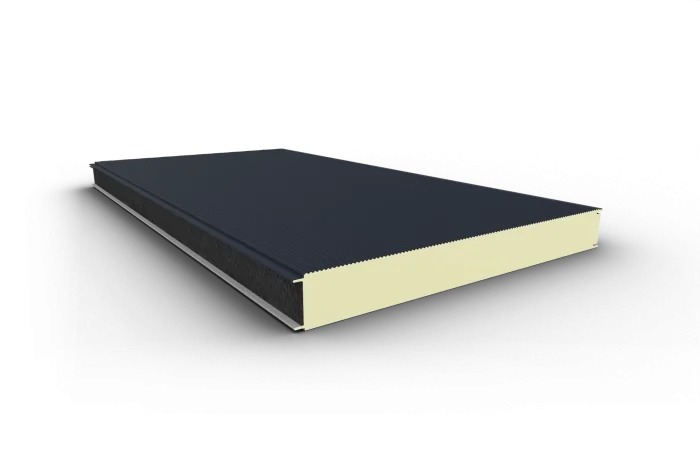
insPIRe® S
PIR wall sandwich panel with exposed fixing (standard lock)
insPIRe® S MAX
PIR wall panel with exposed fixing, MAX variant
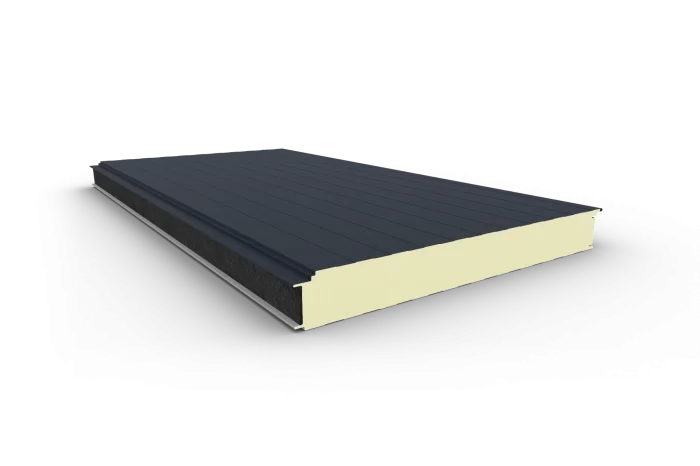
insPIRe® U
PIR wall panel with concealed fixing
insPIRe® U MAX
PIR wall panel with concealed fixing and modified core
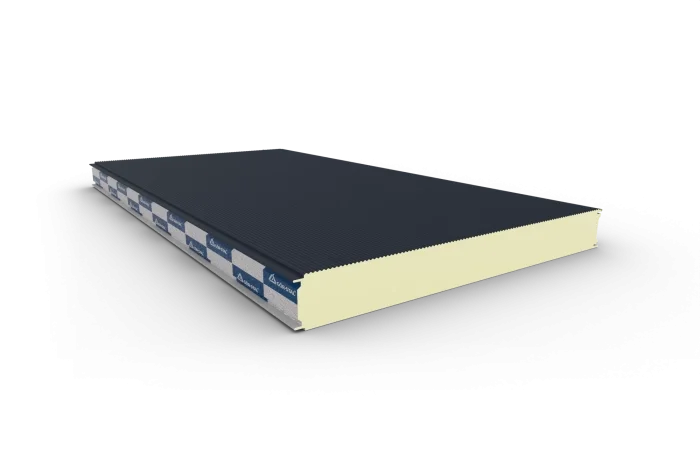
insPIRe® CH
Cold storage PIR sandwich panel
insPIRe® CH MAX
Cold storage PIR sandwich panel with modified core
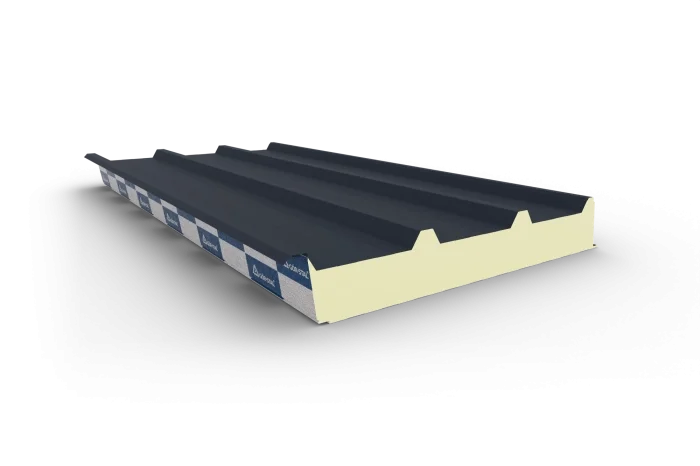
insPIRe® D
Roof PIR sandwich panel with deep external trapezoid
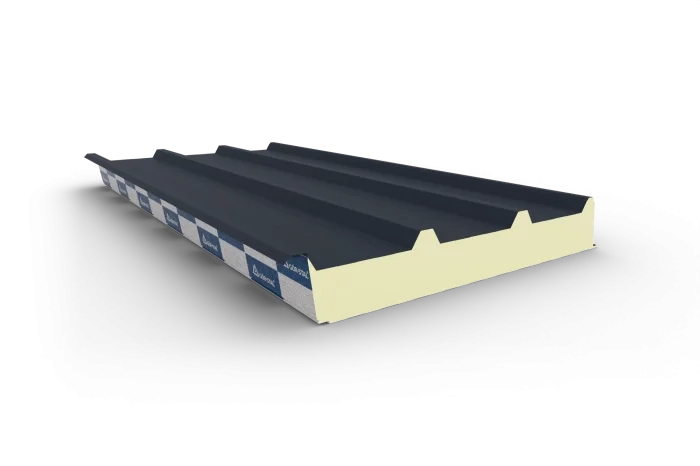
insPIRe® D MAX
Roof PIR sandwich panel with deep trapezoid and modified core
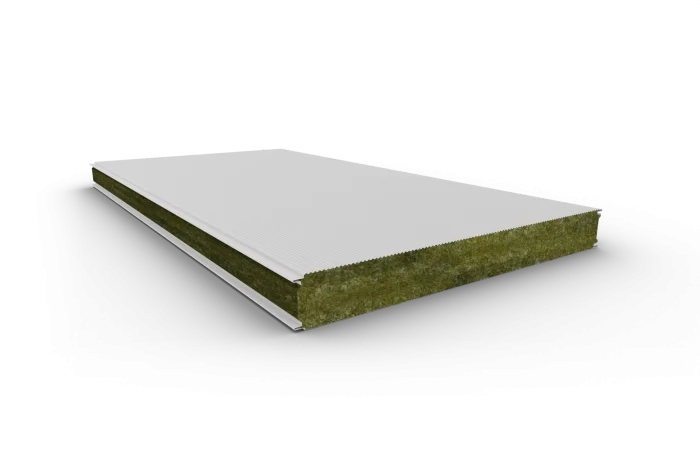
MW S
Mineral wool wall sandwich panel
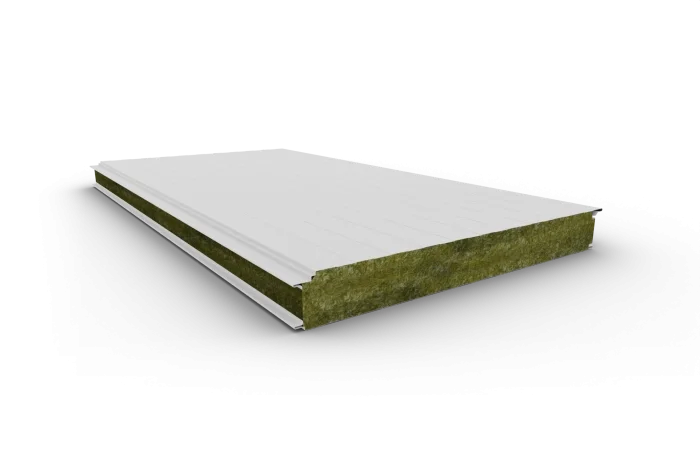
MW U
Mineral wool wall panel with concealed fixing
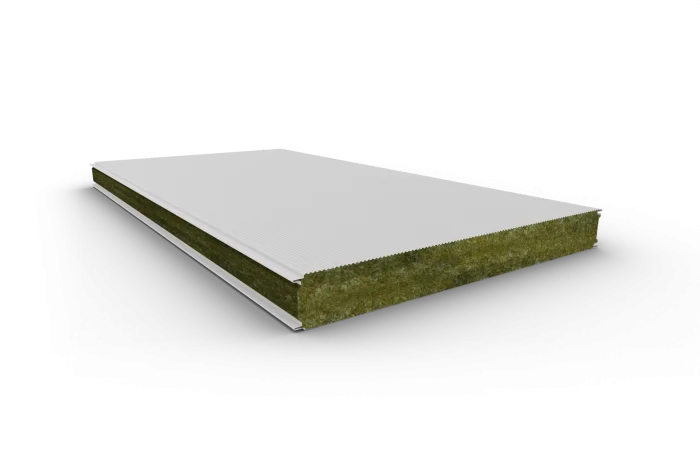
MW CH
Mineral wool cold storage sandwich panel
MW QA S
Mineral wool wall panel QA
MW QA U
Mineral wool wall panel QA with concealed fixing
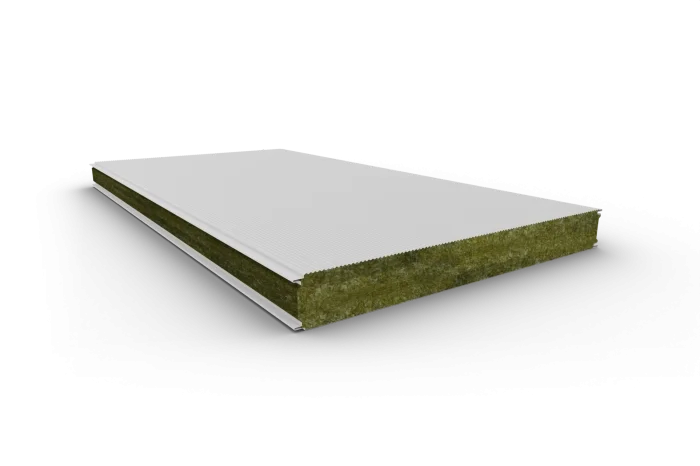
MW QA CH
Mineral wool cold storage panel QA
Read next
EI 120 for sandwich panels — under what conditions? 10 pitfalls of fire classification
insPIRe S, U, D and CH — which sandwich panel variant to choose
Mineral wool sandwich panels — when to choose them instead of a PIR core