izoGRASS® Tapered Wedges
Product description
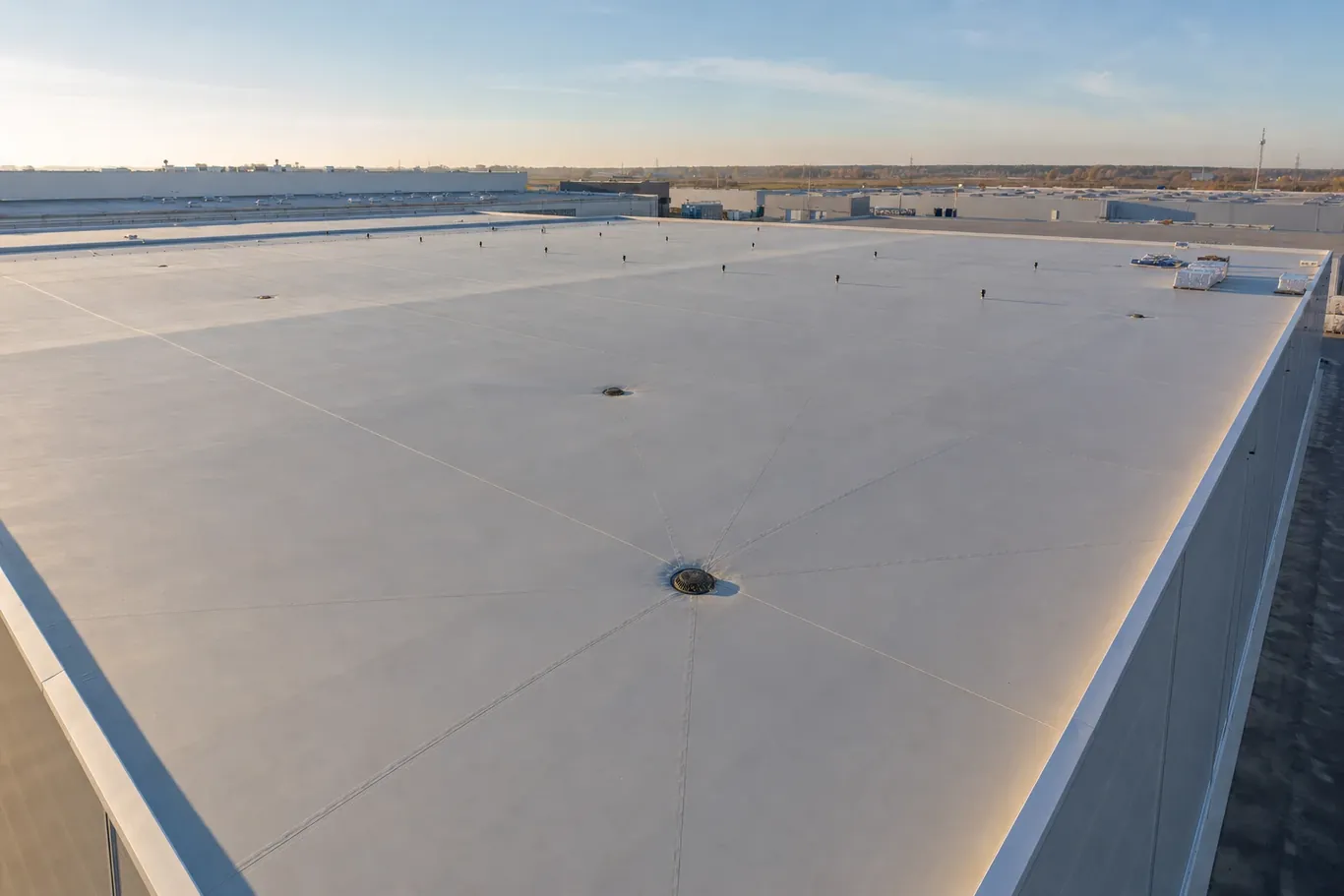
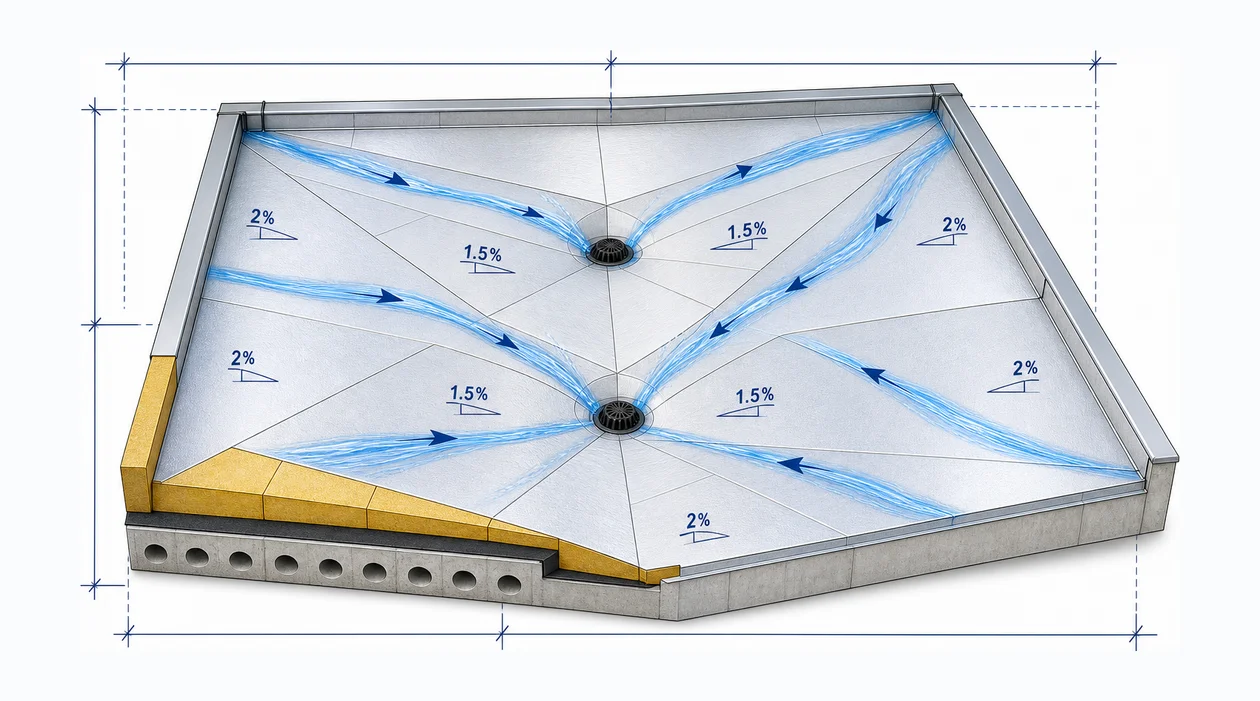
izoGRASS® Tapered Wedges are PIR core elements with a wedge-shaped cross-section, produced by BOKKA at its own facility in Wola Batorska. The wedges enable the fall required by the standards on flat roofs (min. 1.5–2%) without heavy concrete screeds — a roof load reduction of 80–90% compared with the traditional solution.
Maximum slope 8%. PIR core lambda (no facing): λD = 0.027 W/(m·K). Thicknesses from 0 to 220 mm, standard formats 1150×1150 mm or 1150×575 mm (formats made to order).
Three types of slope wedges
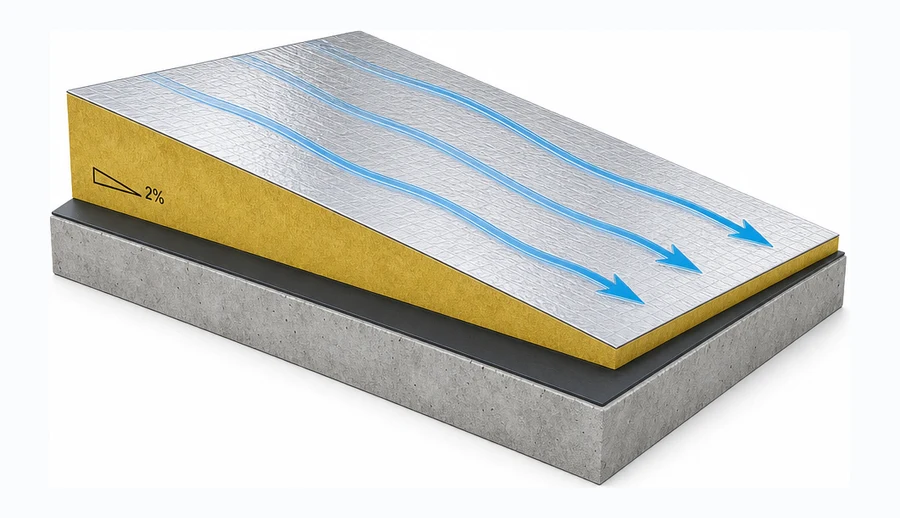
Unidirectional wedge
All wedges sloped in one direction — water flows parallel to a linear gully (gutter) along one roof edge. The simplest solution for narrow rectangular roofs.
Valley wedge
Two rows of wedges sloped symmetrically inward form a V-shaped valley along the roof length. Water from both sides flows to the central trough and on to a gully at the end of the valley. Used for wider roofs with point gullies.
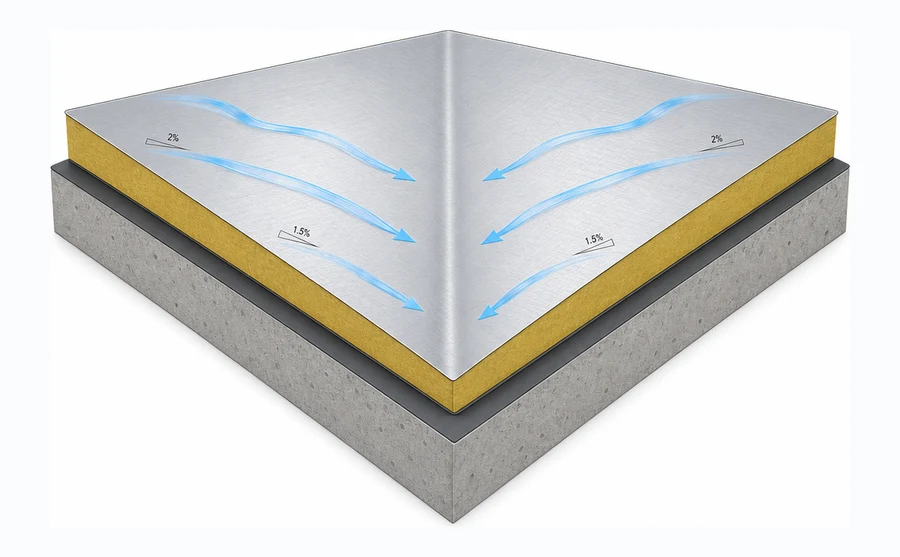
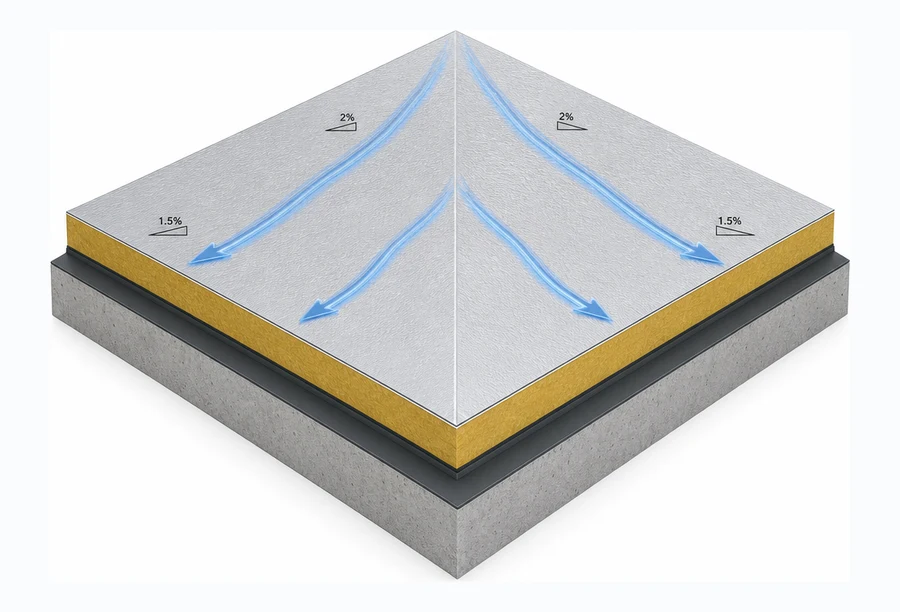
Ridge wedge
The opposite of the valley. Wedges laid symmetrically form a central ridge (the highest point in the middle of the roof) from which water flows outward to both sides to gullies arranged around the roof perimeter. Used on roofs where gullies are at the edges or corners and the middle of the roof has to “escape” from standing water.
Applications
- Flat roofs — creating a fall of 1.5–2% in new builds and renovations
- Inverted and green roofs — thermal-insulating fall layer beneath the waterproofing
- Terraces and balconies — under terrace waterproofing, fall correction to the drain
- Surface car parks — under waterproofing and the wearing surface
- Flat roof renovations — correcting the fall of existing roofs without dismantling the structure
Technical note: izoGRASS® tapered wedges are installed beneath the roof / terrace waterproofing (PVC, FPO, EPDM membrane, heat-welded bitumen). The PIR core alone has a fire reaction class of E per EN 13501-1. BROOF(t1) fire classification of the roof assembly requires selection of a compatible waterproofing and confirmation by testing the assembly in accordance with the ETA. Not to be used as a top layer without a facing.
Applications
- flat roofs (creating fall)
Benefits for designers and contractors
- Roof load reduction of 80–90% vs concrete screed — lower structural requirements
- Shorter installation time — wedges installed dry, no concrete curing wait
- Custom-made design — wedges precision-cut to the roof plan (architect or inspector)
- λD = 0.027 W/(m·K) — wedges also serve as thermal insulation
- 3 fall systems — unidirectional, valley, ridge — matched to any roof geometry
- PIR durability — resistant to biodegradation, rodents, fungi, mould; low water absorption
- BOKKA production in Wola Batorska — quality control of core parameters at every stage