Sandwich Panel Building Envelope — Selection Guide | BOKKA
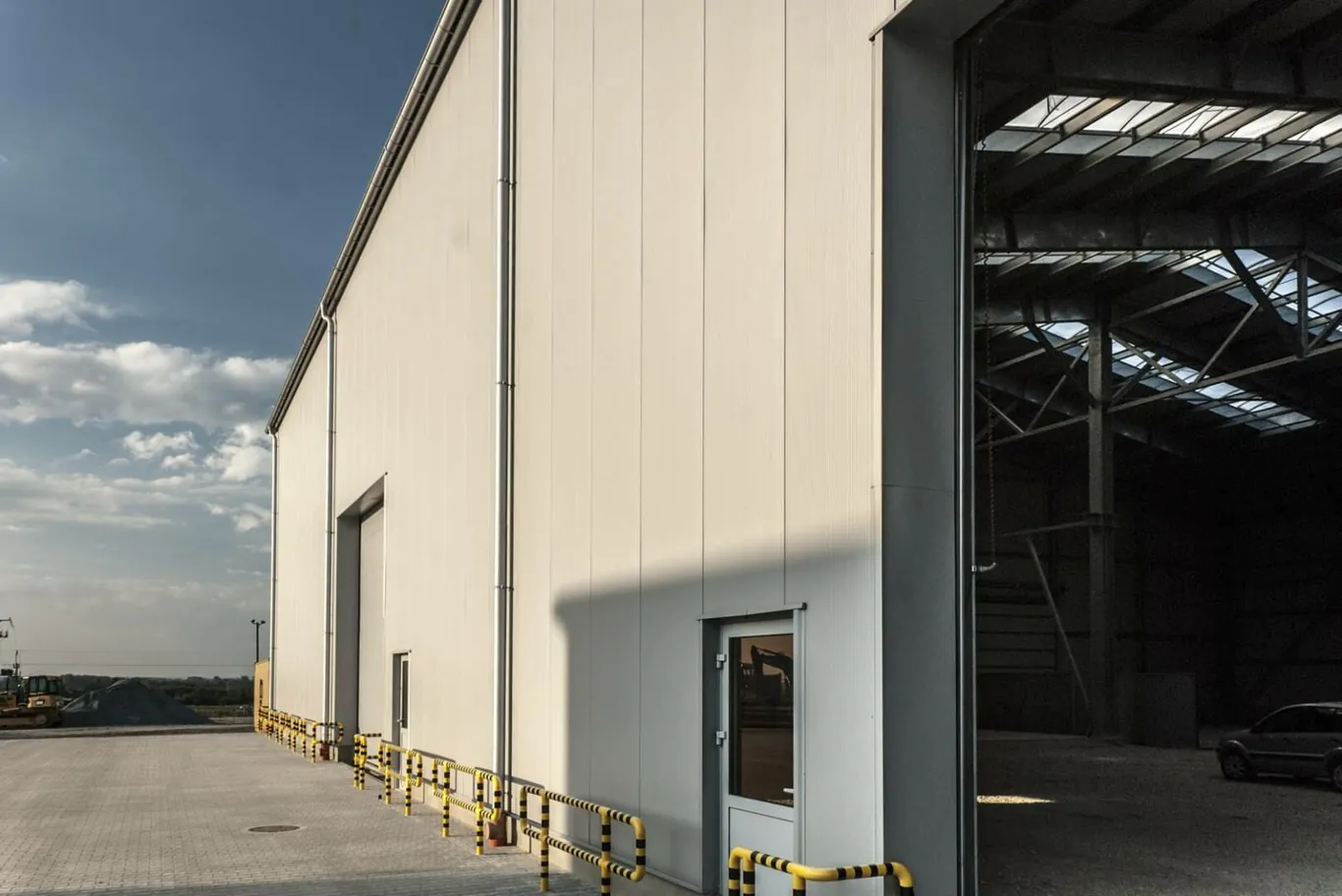
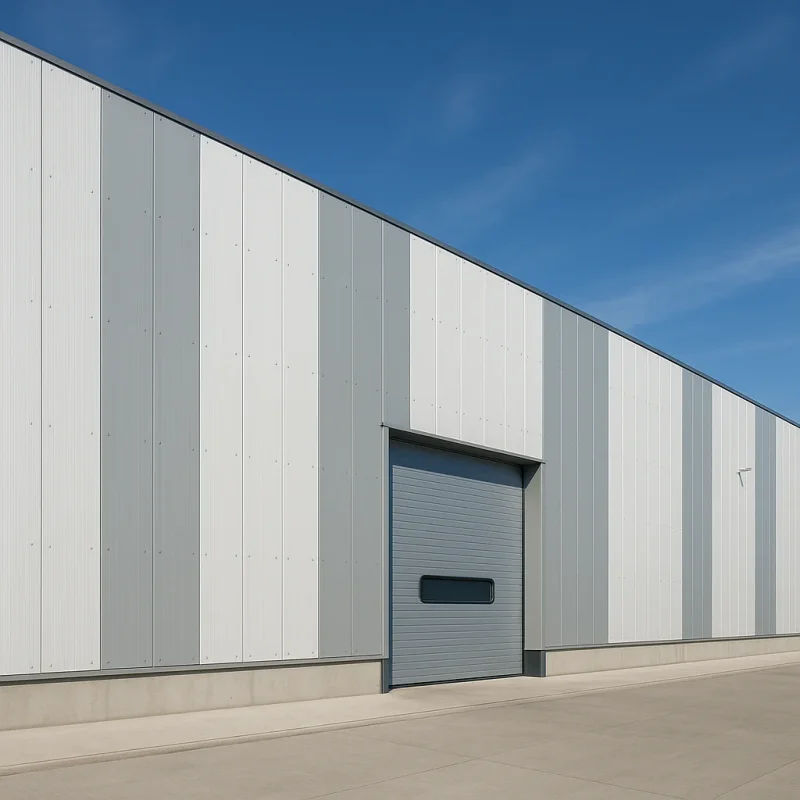
Sandwich panel building envelope — comprehensive application in industrial facilities
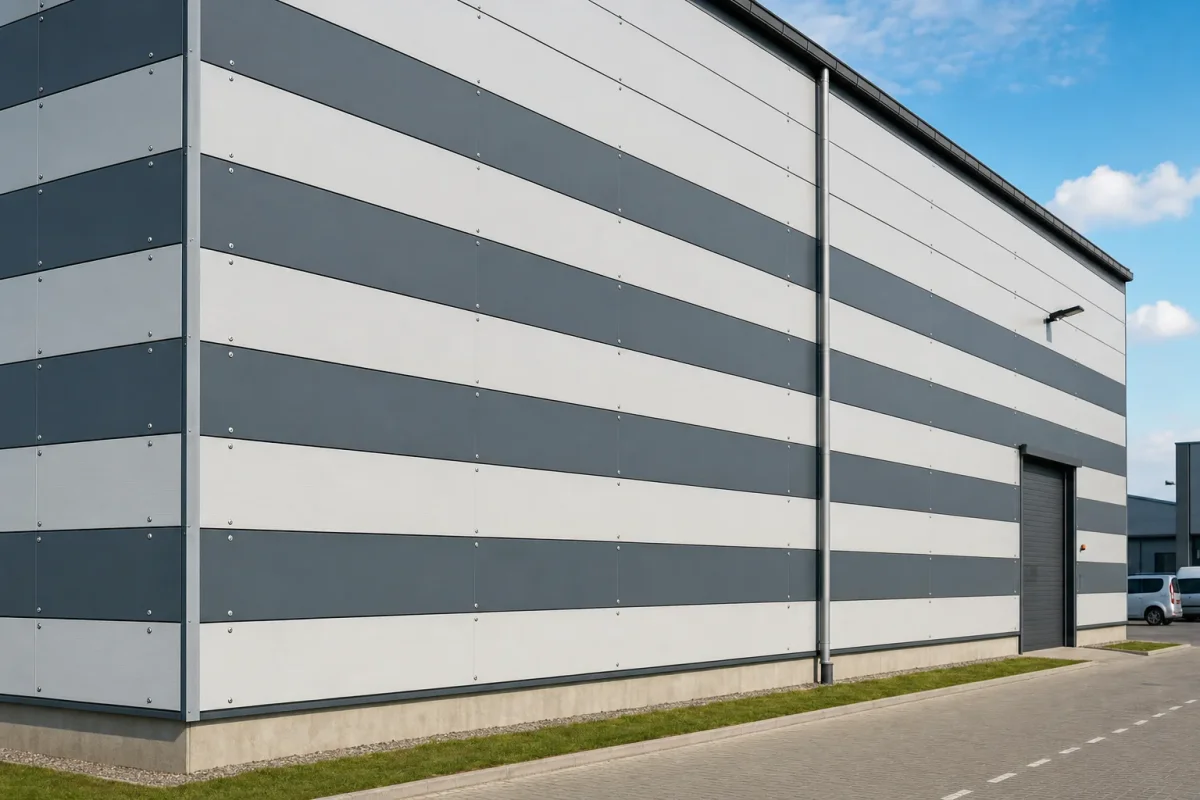
Expanding production, warehousing or logistics capacity confronts investors with a dilemma: how to reconcile a tight schedule, the strict energy requirements of WT 2021 (Polish Technical Conditions 2021) and a reasonable CAPEX budget. Sandwich panel envelope technology addresses all three needs simultaneously — these composite panels with double-sided steel facings and a thermal insulation core of PIR foam or mineral wool are installed directly onto the steel-frame structure of the hall. This article explains the principles of panel selection, the key technical parameters and the differences between wall, roof and cold-store variants.
Composite panel construction — what lies beneath the steel facing
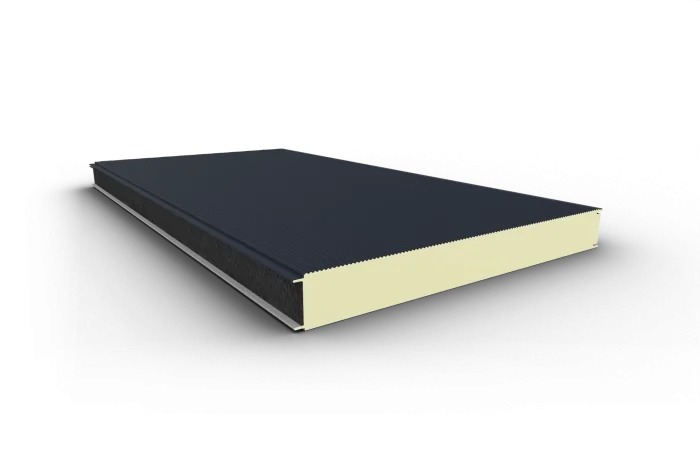
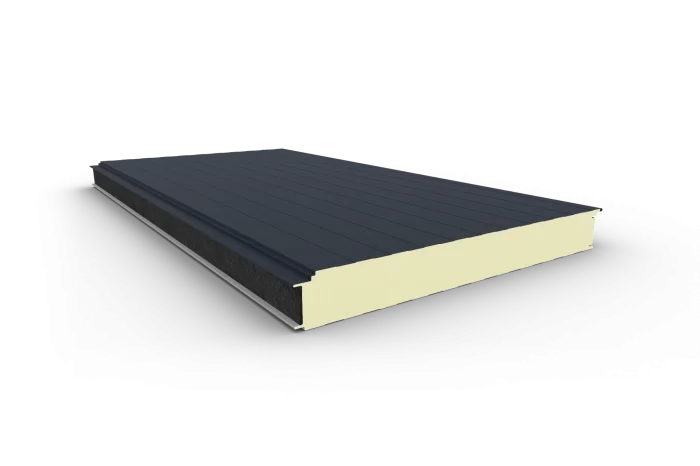
A sandwich panel is a classic composite compliant with EN 14509, combining two elements with very different mechanical and thermal characteristics. The outer facings consist of galvanised steel sheet with a coating system (standard 25 µm polyester), providing structural and protective functions. The insulation core — rigid PIR foam or mineral wool — determines the thermal, acoustic and fire properties of the partition.
The choice of core material is of primary importance:
| Core | λD [W/(m·K)] | Fire reaction class (system) | Typical application |
|---|---|---|---|
| PIR (insPIRe®) | 0.022 | B-s1,d0 | Halls, warehouses, chillers |
| PIR MAX | 0.019 | B-s1,d0 | Energy-efficient and NZEB buildings |
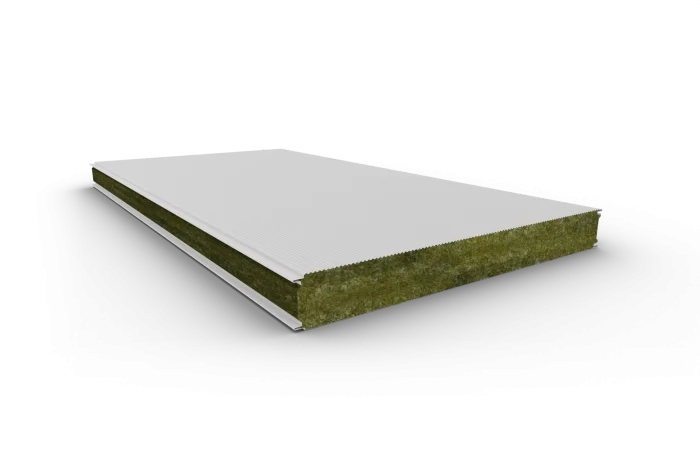
| Mineral wool (GS MW) | 0.038–0.040 | A2-s1,d0 | Fire zones, public buildings |
PIR panels offer nearly twice the thermal insulation performance at the same thickness, while mineral wool delivers non-combustible A2 class fire reaction and higher acoustic insulation — often crucial in facilities with noisy technological processes.
Applications — from warehouse to pharmaceutical cold store
The versatility of sandwich panels stems from the availability of variants dedicated to each partition type and operating environment. The insPIRe® line from Gór-Stal includes four basic profiles whose designations must not be interchanged:
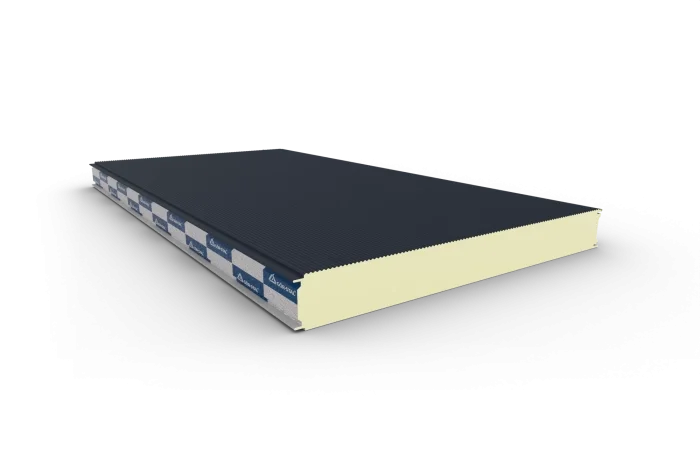
- insPIRe® S — wall panel with visible fastener, the classic solution for production and warehouse halls (wall system)
- insPIRe® U — wall panel with hidden fastener, preferred on aesthetic façades of office buildings and retail outlets (system)
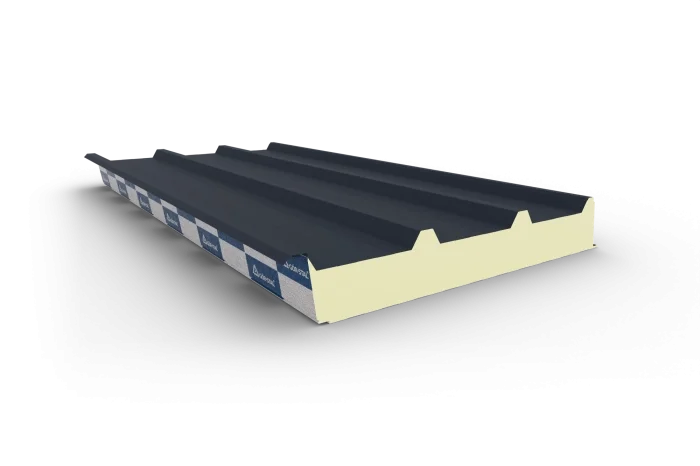
- insPIRe® D — roof panel with deeply profiled trapezoidal facing (multi-span roof system)
- insPIRe® CH — chiller/freezer panel with labyrinth joint, sealing compound and PZH (Polish National Institute of Hygiene) certification, dedicated exclusively to chillers and freezers
The most common design errors are attempts to apply the U panel in a cold store (the lack of a labyrinth lock leads to condensation in the joint and warranty claims) or the S panel in a roof partition (insufficient profile load capacity). Each letter in the name corresponds to a specific structural scheme and set of parameters — they must not be cross-applied.
For facilities requiring A2 fire reaction class (escape routes, fire-compartment walls, halls with large fire zones), mineral wool variants are used: GS MW S, GS MW U and GS MW CH. For urban and light-industrial atmospheres (corrosivity categories C1–C3) we recommend the GS MW QA line with enhanced joint durability.
Wall sandwich panels — parameters and thickness selection
Wall panels are available in thicknesses from 40 to 200 mm, in standard lengths of 2–12 m (up to approx. 16.5 m on request). The choice of thickness follows directly from WT 2021 requirements, which for external walls impose U ≤ 0.20 W/m²K.
| PIR core thickness [mm] | U [W/m²K] | Meets WT 2021 |
|---|---|---|
| 60 | 0.36 | no |
| 80 | 0.27 | no |
| 100 | 0.22 | borderline |
| 120 | 0.18 | yes |
| 150 | 0.14 | yes (margin) |
For mineral wool, achieving U ≤ 0.20 W/m²K requires a thickness of around 200 mm. External facings of wall panels are available in micro-profiled, linear or flat profiles — the choice affects both the aesthetics of the façade and the concealment of potential sheet waviness (oil canning).
Roof sandwich panels — load capacity and load transfer
In roof partitions, the outer facing must be deeply profiled in a trapezoidal shape, since it carries snow loads (zones II–V), wind pressure and, increasingly, photovoltaic installations. The lower facing remains flat or linear. Typical thicknesses are 100–200 mm, with a surface mass of 10–16 kg/m².
For roofs subject to WT 2021 requirements (U ≤ 0.15 W/m²K), 150 mm has become the standard PIR thickness (U ≈ 0.15), or 180 mm for insPIRe® D MAX with λD 0.019. The multi-span design allows the permissible purlin spacing to be significantly increased — details in the insPIRe® D roof system.
Panel lock — the detail that determines tightness and installation time
The design of the longitudinal joint (the so-called lock) is the detail that determines the durability of the entire partition. Two variants are available on the market:
- Exposed lock (S, D) — fastener visible from the outside, faster installation, lower cost, intended for industrial and warehouse facilities
- Hidden lock (U) — fastener concealed within the facing profile, no visible penetrations, visually uniform façade, preferred in prestigious buildings
For insPIRe® CH cold-store panels an additional labyrinth joint geometry with sealing compound is used — this is the only solution that ensures a vapour-tight seal under temperature gradients of -30 °C / +20 °C.
Fast installation as a budgetary advantage
The surface mass of PIR wall panels is 9–13 kg/m², and roof panels 10–16 kg/m². This allows installation using cranes of modest lifting capacity (typically 25–40 t with a jib), and the daily output of an installation crew reaches 200–400 m² of envelope. In practice, a 5,000 m² warehouse can be closed in 4–6 weeks — a timeline often decisive in projects financed with EU subsidies or investment loans with fixed settlement dates.
CTA
Planning a hall, warehouse, cold store or production facility in sandwich-panel technology? Explore the full range of insPIRe® sandwich panels and GS MW mineral wool sandwich panels, and for an individual quotation and parameter selection contact our technical department.
Frequently asked questions
What is the difference between PIR sandwich panels and mineral wool panels?
Can sandwich panels be used in an ETICS system?
What sandwich panel thickness should I choose to meet WT 2021?
Can a panel with a hidden fastener (insPIRe® U) be used in a cold store?
How long does installation of a sandwich-panel hall take?
Related products and systems
Products
Read next
PIR Sandwich Panels in Agricultural Construction | BOKKA
Pitched Roof Insulation with PIR Boards — Methods & Specs
Insulating a Steel Garage with PIR Boards — B2B Guide | BOKKA