Dog House Insulation with PIR Boards — Practical Guide | BOKKA
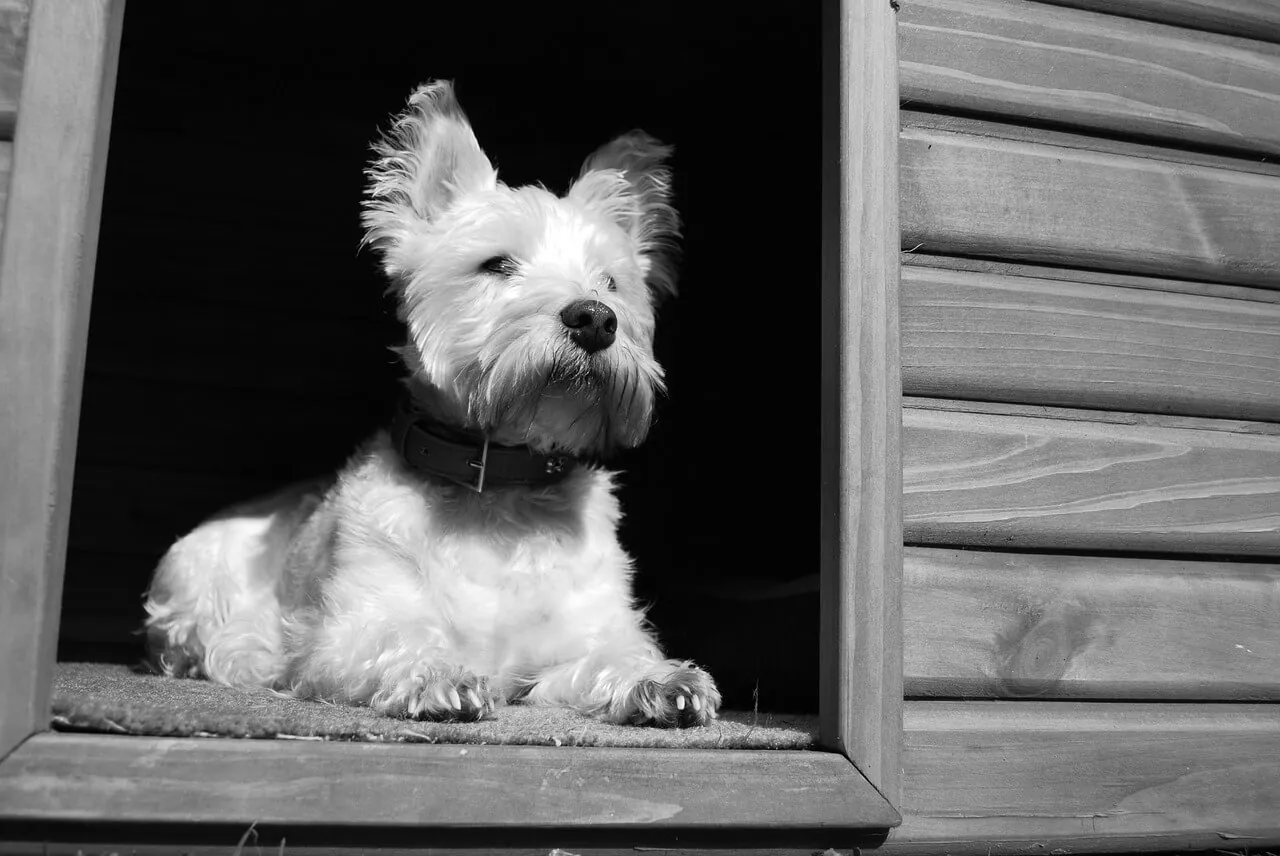
Dog house insulation — why PIR boards are the right choice
An outdoor dog house has no heating source — the only heat generator is the animal’s body. That is why winter comfort for the dog depends solely on the thermal performance of the building envelope and the airtightness of the structure. Thin softwood boards with a thermal conductivity of around λ = 0.16 W/(m·K) and loose-laid mineral wool are obsolete solutions — they freeze through, absorb moisture and develop mould. The contemporary standard is PIR insulation boards with λD = 0.022 W/(m·K), which at a thickness of just 30–50 mm deliver a thermal resistance comparable to 80–120 mm of mineral wool.
Why PIR rather than EPS or mineral wool
Polyisocyanurate (PIR) is currently the top-grade insulation material available on the construction market. In an application such as a dog house, three parameters are critical: low thermal conductivity, moisture resistance and dimensional stability.
| Material | λD [W/(m·K)] | Water absorption | Thickness for R = 1.5 m²K/W |
|---|---|---|---|
| termPIR® AL | 0.022 | <2% vol. | 33 mm |
| Mineral wool | 0.038 | high (requires vapour barrier) | 57 mm |
| EPS | 0.040 | medium | 60 mm |
| Pine board | 0.16 | very high | 240 mm |
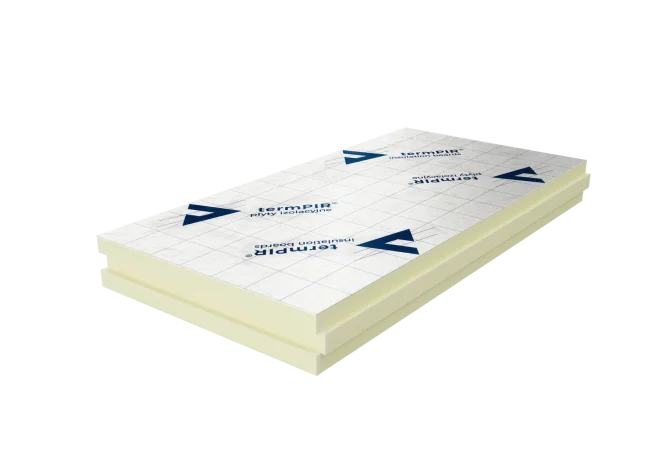
The termPIR® AL board features an aluminium foil facing that acts as a vapour barrier and additionally reflects thermal radiation back into the dog house. The material does not absorb water, does not rot, is not attacked by rodents or insects, and the fire reaction class of the faced system is B-s2,d0 (EN 13501-1). This matters when the dog house stands next to carports, garages or stored firewood.
Selecting insulation thickness — practical guidelines
For a dog house in year-round use in the Polish climate, we recommend:
- floor — 40–50 mm termPIR® AL (ground contact, largest heat losses);
- side walls — 30–40 mm termPIR® AL;
- roof — 40–50 mm termPIR® AL (stack effect, heat escapes upwards);
- entrance flap/curtain — a strip of rubber or thick felt, optionally a vestibule with a length equal to the length of the dog.
For short-haired breeds (greyhound, doberman, boxer) or puppies, it is worth increasing the thickness by 20 mm and applying two staggered layers, with joints sealed using aluminium tape. An envelope built this way eliminates thermal bridges and delivers a thermal resistance R above 4.0 m²K/W — a value comparable to the wall insulation of a single-family house according to WT 2021 (Polish Technical Conditions 2021), where U ≤ 0.20 W/m²K.
Floor construction — the most important element
The ground holds a steady temperature of 6–10 °C even in winter and acts as a heat sink if the dog house stands directly on the soil. A classic mistake is to place the dog house on grass or on loosely laid boards — moisture from the ground condenses underneath, the material moulds and loses its insulating properties.
The correct sequence of layers from the bottom up:
- Timber grate made of pressure-treated boards 30–40 mm, raised 50–80 mm above the ground (air circulation under the dog house).
- Waterproof plywood 12–15 mm or tongue-and-groove board.
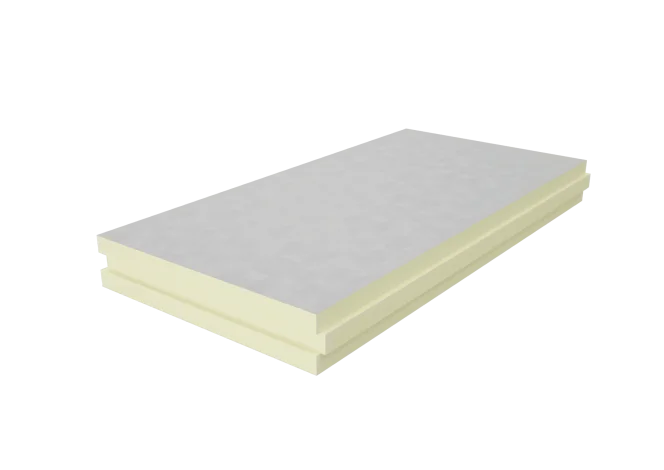
- PIR insulation board 40–50 mm — preferably termPIR® WS, dedicated to ground-bearing floors and assemblies exposed to moisture, or standard termPIR® AL.
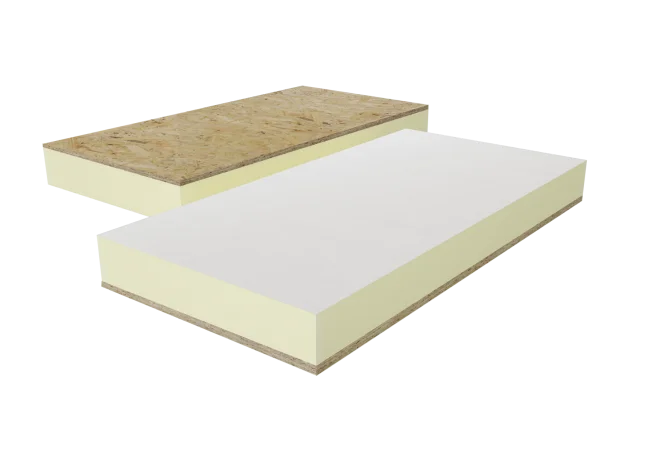
- Finishing board — hardwood plywood or 18 mm OSB; alternatively, the ready-made composite termPIR® AL/OSB, which combines insulation with a load-bearing layer in a single element and significantly simplifies installation.
- Bedding — a blanket, mat or straw (replaced every 2–3 weeks).
Walls and roof — layered installation
The walls of the dog house are most easily built using timber-frame construction: a frame of 40×60 mm battens, infilled with termPIR® AL boards cut to a tight fit, with pressure-impregnated cladding boards on the outside. The board joints are sealed with aluminium tape — this way, the facing foil maintains vapour-tight continuity and condensation within the assembly is avoided.
The roof should never be finished with bare sheet metal. Trapezoidal or smooth metal sheeting heats up to 70–80 °C in summer and acts as a radiator in winter — cooling the interior even with good insulation underneath. Recommended finishes:
- heat-weldable bitumen membrane on plywood — the cheapest and most watertight solution;
- bitumen shingles — aesthetic and easy to install;
- impregnated board over an underlay of bitumen sheeting.
A roof pitch of at least 5–10° is important so that water does not pool, along with an eaves overhang projecting 5–10 cm beyond the wall line — this protects the façade from runoff.
Ventilation and vestibule — don’t overlook the details
Paradoxically, an over-tight dog house is unhealthy. The dog exhales water vapour, which condenses on the walls at sub-zero temperatures and soaks the bedding. A small ventilation gap is required in the upper part of the rear wall (a 20×50 mm opening protected with mesh) or a slot under the ridge. A vestibule — a short corridor about 60–80% of the dog’s body length — drastically reduces draughts and air exchange while still maintaining adequate circulation.
It is worth covering the entrance with a heavy curtain made of conveyor-belt rubber or 8–10 mm thick felt, cut vertically into 2–3 strips so that the dog can pass through freely.
Frequently asked questions
Are PIR boards safe for a dog that might chew them?
What PIR thickness should I choose for year-round use?
Can I use unfaced boards instead of termPIR® AL?
Does a PIR-insulated dog house require maintenance?
Where can I buy PIR boards for a small project like a dog house?
Related products and systems
Read next

Energy Retrofit with PIR Boards and WT 2021 in Practice | BOKKA

Smog and Allergies — How PIR Thermal Upgrades Cut Emissions | BOKKA
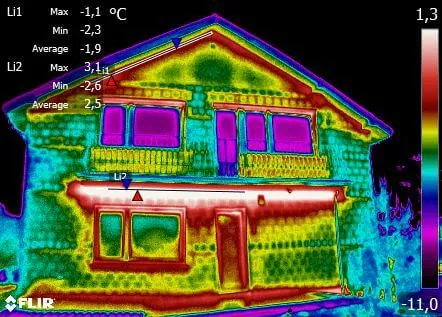
Thermal Bridges — How to Eliminate Them with PIR Boards (WT 2021)