Energy Retrofit with PIR Boards and WT 2021 in Practice | BOKKA

Energy retrofit — what it is and why it should be planned systemically
In Poland, around 400,000 buildings require improvements to their energy standard, and almost 46% of the multi-family housing stock fails to meet current EP-indicator requirements. The entry into force of the WT 2021 (Polish Technical Conditions 2021) tightened the limit values of the heat transfer coefficient U for all external partitions, which is why investors increasingly opt for a comprehensive energy retrofit — based on an energy audit, selection of materials with low λD and the elimination of thermal bridges. PIR polyurethane insulation boards play a key role here: thanks to the lowest thermal-conductivity coefficients available on the market, they make it possible to keep the wall or roof build-up at a reasonable thickness.
WT 2021 requirements — the reference point for any retrofit project
Under the current wording of the Technical Conditions (in force since 1 January 2021), external partitions must achieve the following maximum U-values:
| Partition | Umax [W/m²K] |
|---|---|
| Roof, flat roof | 0.15 |
| External wall | 0.20 |
| Floor slab above unheated basement / garage | 0.25 |
| Ground-bearing floor | 0.30 |
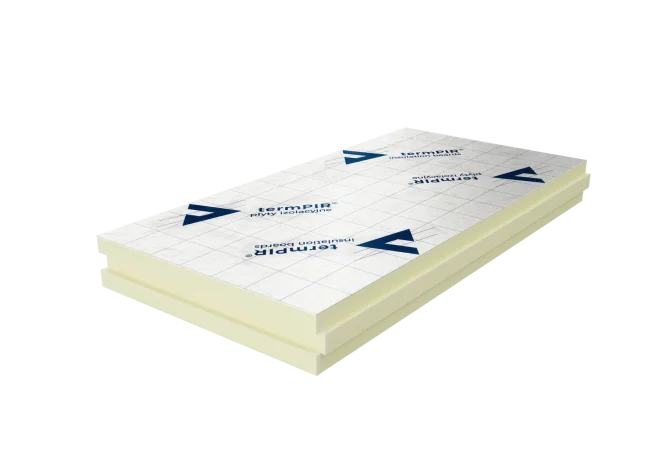
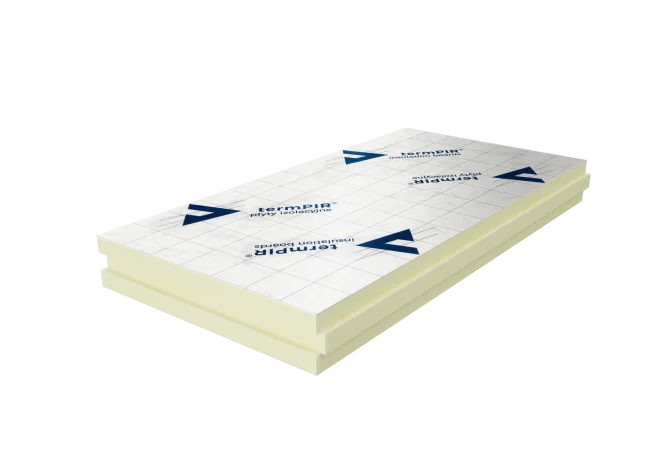
In existing buildings, reaching these levels with standard materials (EPS 0.038 polystyrene, mineral wool 0.036) forces insulation thicknesses of 20–25 cm on walls and 30+ cm on roofs. In practice — given existing eaves, balustrades, window reveals and storey heights — this is often unfeasible. This is where the argument for PIR comes in: the declared λD of termPIR® AL of 0.022 W/(m·K) achieves the same thermal resistance R at a thickness roughly 40% smaller.
Energy audit and the hierarchy of works
An energy audit (carried out in line with the Polish Regulation on Energy Audits) shows the EP indicator, identifies the points of highest heat loss (thermal bridges at corners, parapets, reveals, floor edges) and determines the sequence of works. The standard hierarchy in building energy retrofit is:
- Insulation of external partitions — walls, roof, flat roof, ground-bearing floor, foundations.
- Replacement of joinery — windows and doors (Uw ≤ 0.9 W/m²K for windows).
- Modernisation of the heat source — heat pump, condensing gas boiler, phase-out of solid fuels.
- Heat-recovery ventilation (>85% efficiency).
- Renewables — photovoltaics, solar collectors, energy storage.
The order is not random: installing a heat pump in an uninsulated building is counter-productive, because the unit operates outside its optimal power range. That is why the building’s thermal envelope is always tackled first.
Selecting PIR boards for each partition
A key design error in retrofit projects is choosing a “universal” PIR board — with no distinction between facings and edge profiles. In reality, every partition has its own requirements regarding vapour permeability, moisture resistance and compatibility with the finishing layer.
External wall in an ETICS system
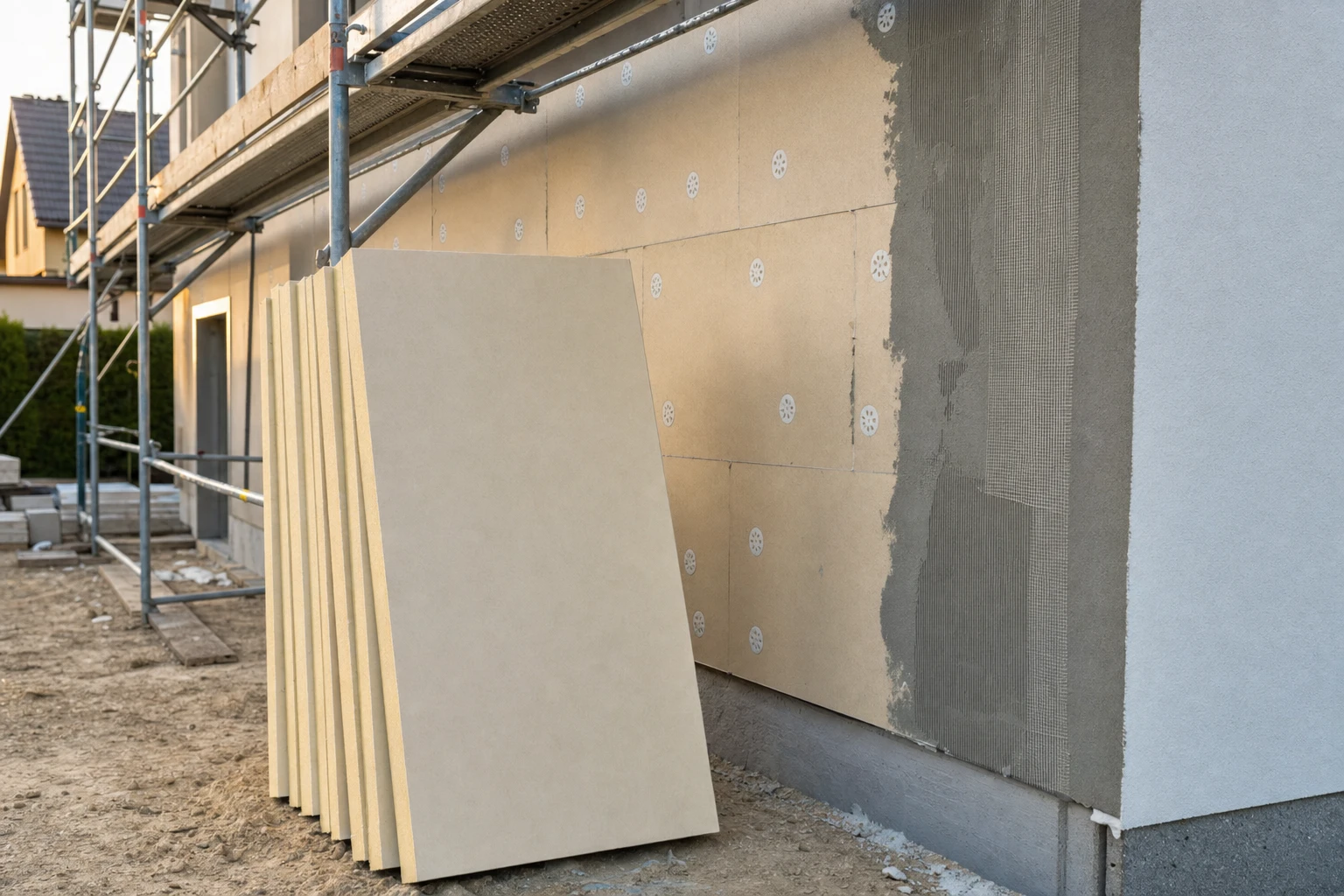
Boards with an aluminium facing must not be used in an external thermal insulation composite system (ETICS — thin-coat render on a reinforcement mesh): the Al foil is gas-tight, blocks water-vapour migration and cuts the render off from the substrate. The dedicated solution is termPIR® ETX — with a glass fleece facing, vapour-permeable, holding European Technical Assessment ETA 17/0066 for ETICS systems. λD = 0.025–0.027 W/(m·K). The layer build-up is described in the External wall ETICS — termPIR® ETX system.
Pitched roof and flat roof
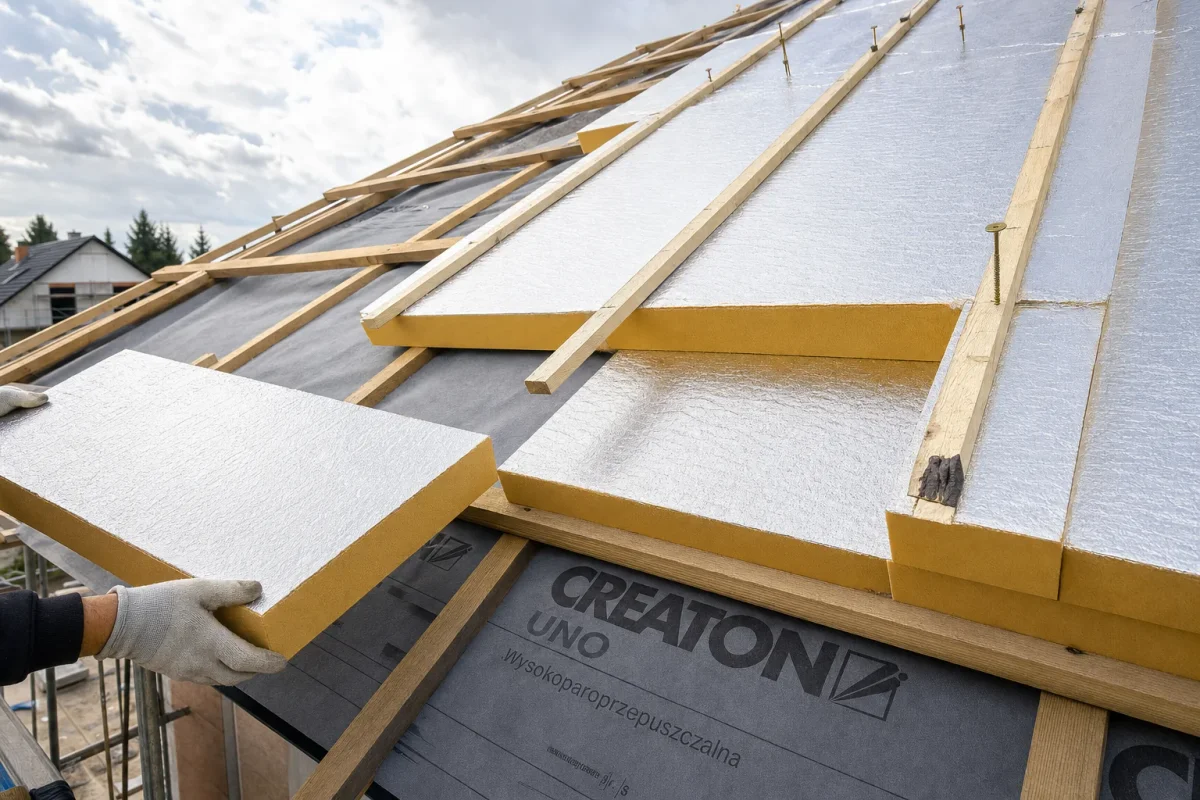
For a pitched roof the optimal solution is over-rafter insulation with termPIR® — it eliminates thermal bridges at the rafters and achieves U ≤ 0.15 W/m²K at a thickness of 14–16 cm. For timber flat roofs with extreme thickness constraints, it is worth considering termPIR® MAX 19 AL (λD = 0.019).
Foundation, plinth, ground-bearing floor
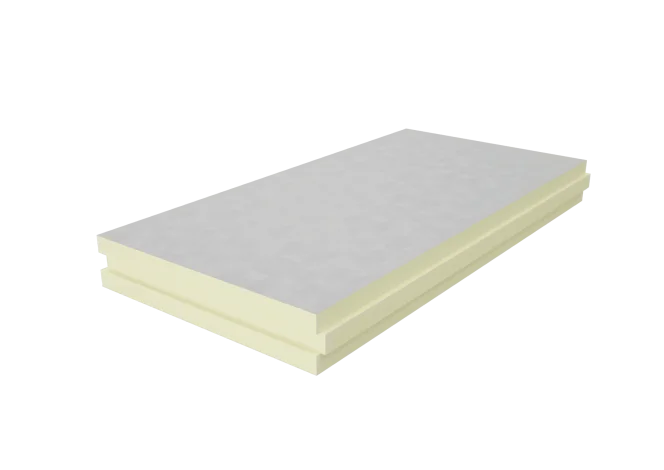
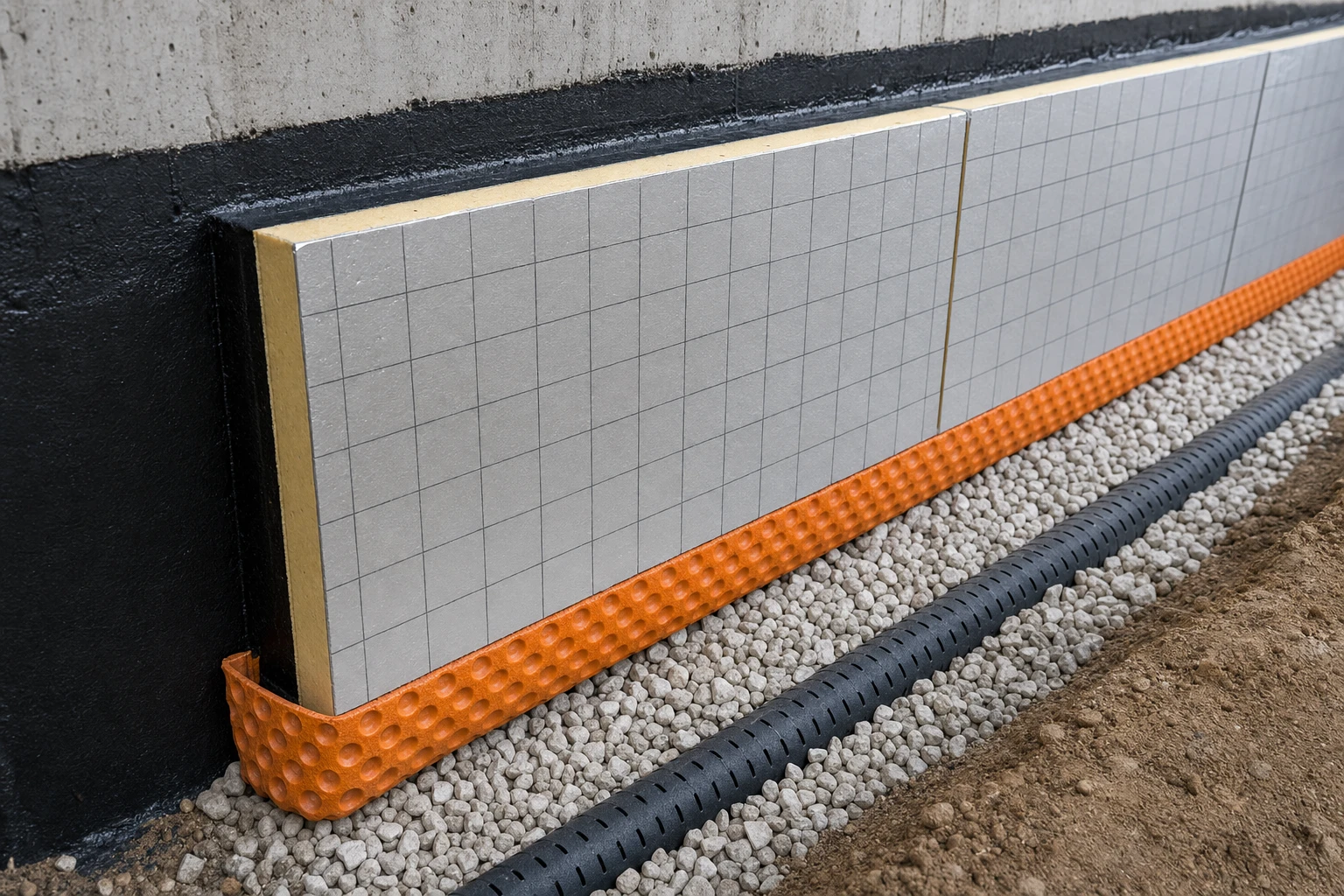
In the plinth and foundation zone, increased moisture resistance is required — the dedicated product is termPIR® WS. The standard build-up is shown in the Foundation and plinth — termPIR® AL system.
Internal insulation in heritage buildings
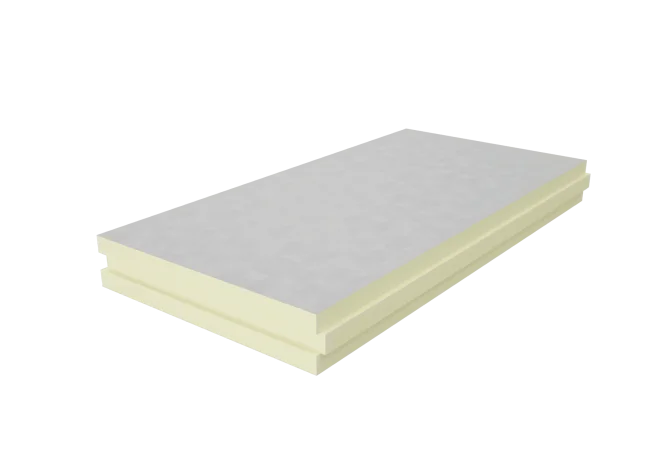
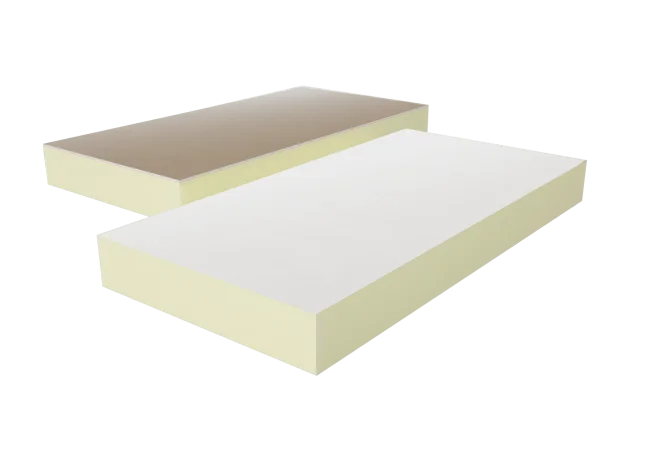
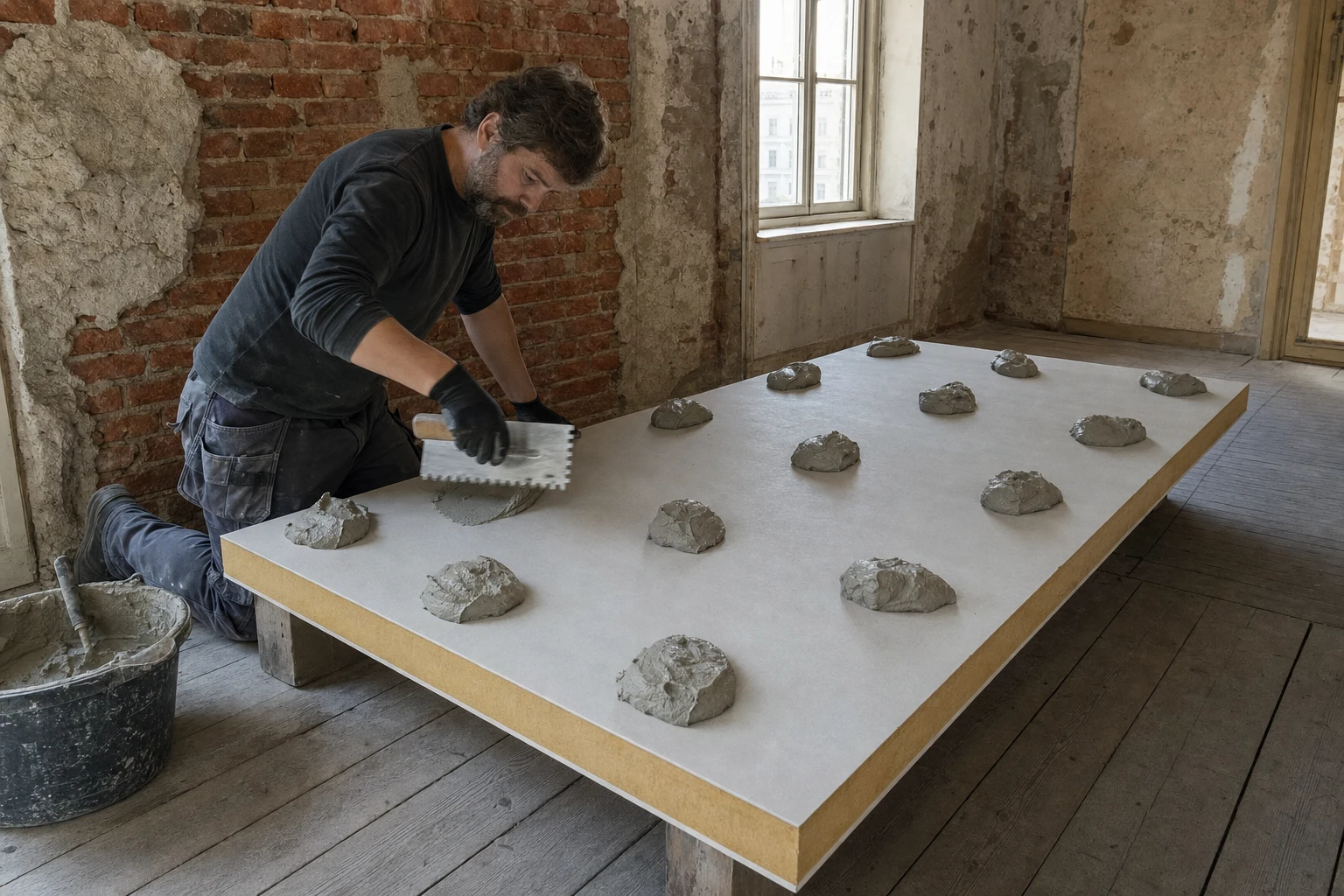
When the façade cannot be touched (listed buildings, tenement houses with ornamental detail), internal insulation is applied with the termPIR® AL/GK composite — PIR with a factory-bonded gypsum plasterboard, with aluminium foil acting as the vapour barrier. Application details: Heritage wall — termPIR® AL/GK system.
PIR thicknesses and resulting U-values
For design orientation — U-values for a sand-lime block masonry wall 18 cm thick (U without insulation ≈ 1.4 W/m²K) insulated with termPIR® ETX:
| PIR thickness [mm] | Rins [m²K/W] | Total U [W/m²K] |
|---|---|---|
| 80 | 3.08 | 0.28 |
| 100 | 3.85 | 0.23 |
| 120 | 4.62 | 0.19 |
| 140 | 5.38 | 0.17 |
| 160 | 6.15 | 0.15 |
To meet WT 2021 (U ≤ 0.20 W/m²K), 12 cm of termPIR® ETX is sufficient. For comparison — with EPS 0.038 polystyrene around 18 cm would be needed.
Financing an energy retrofit
The Polish market offers several parallel instruments:
- Termomodernizacja tax relief — deduction from the tax base of up to PLN 53,000 per taxpayer (PIT-36, PIT-37, PIT-28), covering materials and services in line with the regulation of the Ministry of Infrastructure.
- “Czyste Powietrze” programme (Clean Air) — grants and loans for single-family buildings, with a budget of around PLN 103 bn through 2029.
- BGK Thermal Modernisation and Renovation Fund — thermal modernisation premium for multi-family buildings and public utility facilities.
- Stop Smog — for municipalities covered by anti-smog resolutions.
The financing path is determined by the audit — some programmes require a minimum reduction in energy demand (e.g. 25% for the thermal modernisation premium).
Frequently asked questions
What U-values for partitions do the current regulations require?
Can boards with aluminium facing be used in an ETICS system?
How many centimetres of PIR are needed on the roof to meet WT 2021?
Is internal energy retrofit safe?
What should an energy audit cover before a retrofit?
Related products and systems
Products
Read next
Retrofitting Old Houses with PIR Boards — Energy Upgrade Guide
Silesia Anti-Smog Resolution and PIR Thermal Upgrades | BOKKA
Smog in Kraków 2024 — AGH study and the role of thermal upgrades | BOKKA