Energy Audit of a Building — Thermal Retrofit with PIR
Energy audit — the first step toward an effective thermal retrofit
A thermal upgrade carried out without an energy audit is an investment made in the dark. Only a sound diagnosis of the building’s technical condition — combining thermographic surveys, analysis of U-values and an energy balance — makes it possible to specify insulation solutions that will actually pay back through lower running costs. Under Polish conditions, where the stringent WT 2021 requirements apply, the use of materials with a low λD — such as PIR insulation boards — becomes critical: they deliver code-compliant U-values at a minimum build-up thickness.
What should a professional energy audit contain?
A sound energy audit is not merely an assessment of current energy use — above all, it is a thermal-retrofit roadmap. Pursuant to the Regulation of the Minister of Infrastructure on the detailed scope and form of an energy audit, the document should include:
- a technical and building inventory of the facility (envelope, joinery, services),
- U-value calculations for all external building elements,
- analysis of the annual usable energy demand (EU) and final energy demand (EK),
- variant proposals for improvements with cost estimates,
- economic analysis (SPBT — simple payback time, NPV),
- identification of the optimal variant and available funding sources.
This requirement applies when applying for the BGK thermal-retrofit bonus, co-financing under the “Czyste Powietrze” programme (Clean Air), and for projects financed from EU funds.
WT 2021 requirements — the auditor’s benchmark
The Polish Technical Conditions in force since 1 January 2021 have tightened the maximum permissible U-values. These figures form the benchmark for audit recommendations.
| Building element | Umax per WT 2021 |
|---|---|
| Roof, flat roof | 0.15 W/m²K |
| External wall | 0.20 W/m²K |
| Floor over basement/garage | 0.25 W/m²K |
| Ground-bearing floor | 0.30 W/m²K |
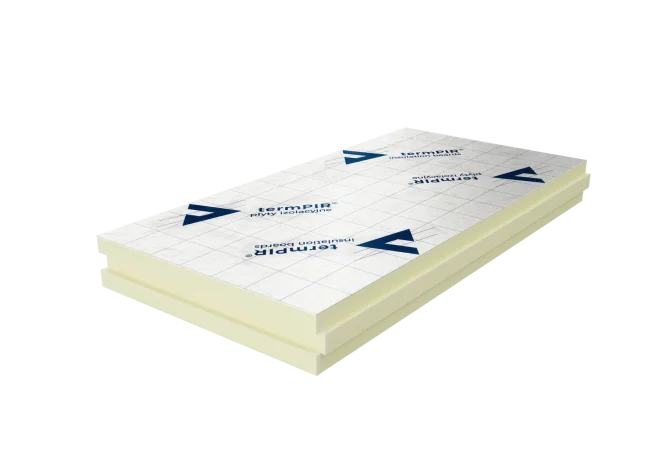
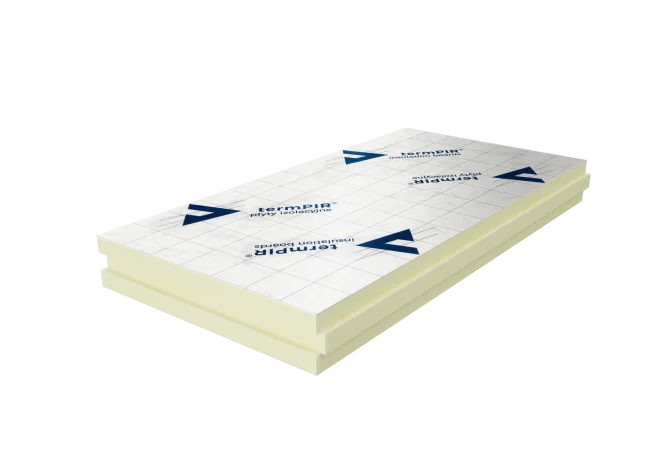
In existing buildings, where there is often no room for thick insulation layers, hitting these targets with traditional mineral wool (λD 0.035–0.040 W/(m·K)) requires 22–30 cm. The same parameters can be achieved with 14–18 cm of termPIR® AL at λD 0.022 W/(m·K), or with an even thinner layer of termPIR® MAX 19 AL at λD 0.019 W/(m·K).
How is a building energy audit conducted?
Stage 1: Review of design documentation
The auditor begins with the building’s design documentation — provided the investor’s archive still holds it. The documentation reveals the layered build-up of the envelope, the structural and insulation materials, and the joinery parameters. For buildings from the 1970s–1990s, where documentation is often incomplete, exploratory openings and in-situ measurements are essential.
Stage 2: Visual inspection and thermographic survey
A thermographic camera (compliant with PN-EN 13187) makes it possible to locate thermal bridges, air leaks and moisture within the building envelope. The auditor pays particular attention to critical details:
- window and door reveals,
- ring beams and lintels,
- parapets and roof eaves,
- balconies (a classic linear thermal bridge),
- the junction of the foundation wall with the ground.
Thermography is often complemented by an airtightness test (Blower Door test per PN-EN ISO 9972) — particularly for passive and low-energy buildings.
Stage 3: User interview
Design data is cross-checked against actual fuel consumption from the three most recent heating seasons. This allows the real EK indicator to be estimated and compared with the normative figure. A discrepancy of more than 20% signals problems with workmanship, infiltration or heat-source efficiency.
Stage 4: Calculations and variant analysis
The auditor models the building envelope in software compliant with PN-EN ISO 6946 and prepares 2–3 retrofit variants with cost analysis. Recommendations cover insulation thickness, material type, fire reaction class and a forecast of the reduction in energy demand.
PIR thermal insulation in audit recommendations
PIR boards appear ever more frequently in the optimal variants — particularly in projects where every centimetre of envelope thickness counts. The table below shows the thickness of termPIR® AL required to achieve U ≤ 0.15 W/m²K for a roof:
| termPIR® AL thickness | R [m²K/W] | U for a typical roof [W/m²K] |
|---|---|---|
| 100 mm | 4.55 | ~0.21 |
| 140 mm | 6.36 | ~0.15 |
| 160 mm | 7.27 | ~0.13 |
| 200 mm | 9.09 | ~0.11 |
Pitched roof — over-rafter layout
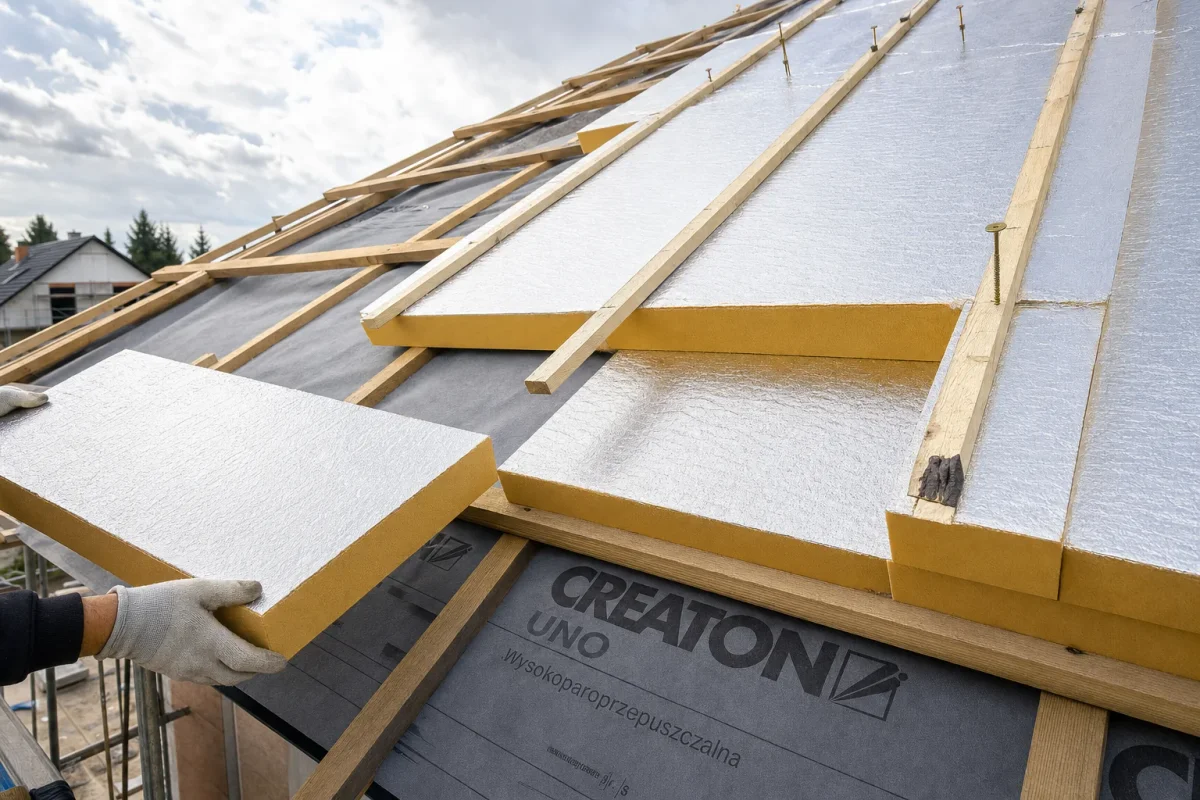
For the thermal retrofit of habitable lofts, auditors frequently recommend the over-rafter termPIR® layout — it eliminates thermal bridges at the rafters and preserves the full usable head height of the loft. Tongue-and-groove (TAG) boards are installed directly onto the sarking under the counter-battens.
External wall — ETICS
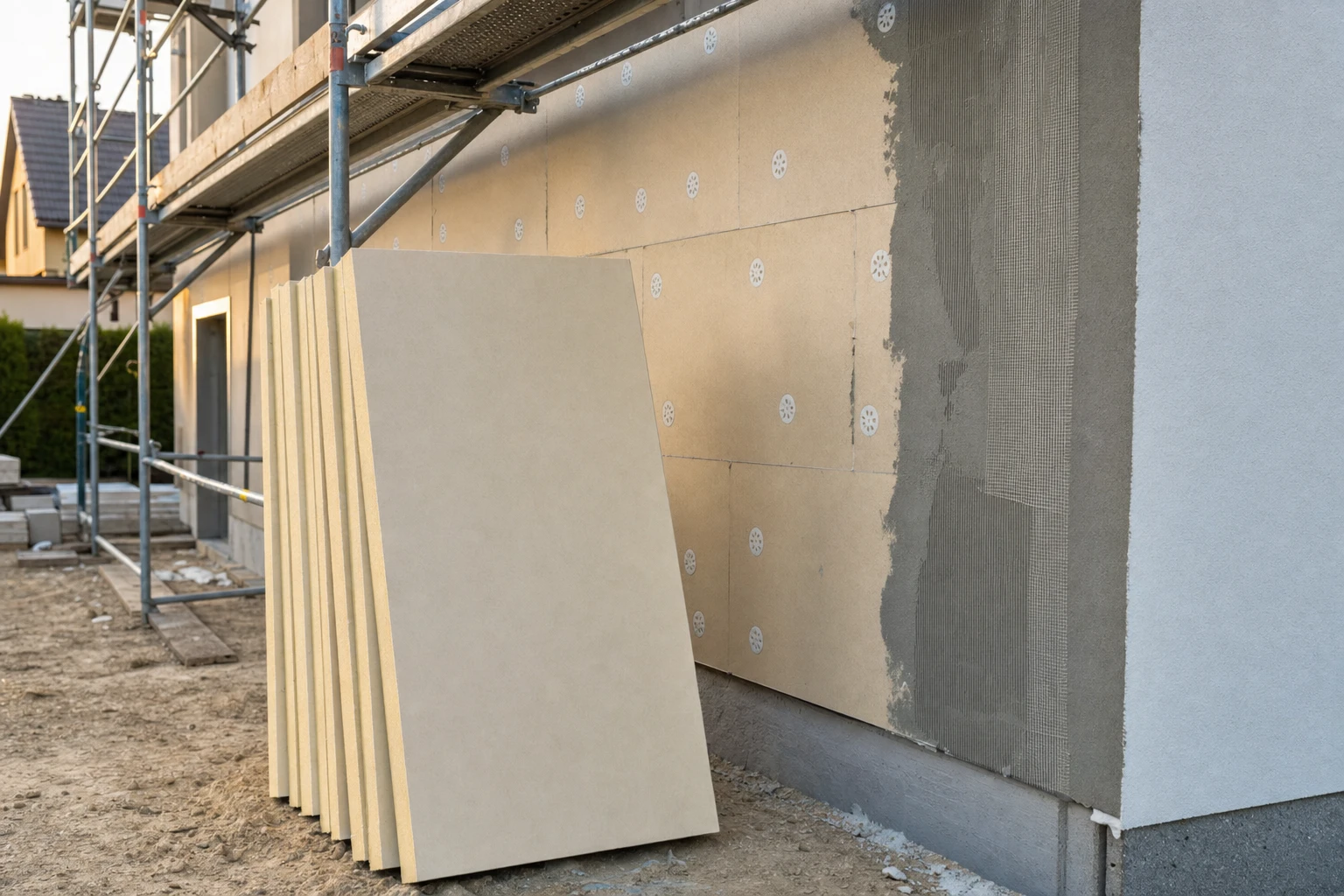
For an ETICS thermal upgrade, the only suitable PIR variant is termPIR® ETX with a vapour-permeable glass fleece (λD 0.025–0.027 W/(m·K), ETA 17/0066). Boards faced with aluminium are gas-tight and are NOT suitable for a thin-coat render — a frequent specification error that leads to system delamination.
Internal insulation — heritage walls
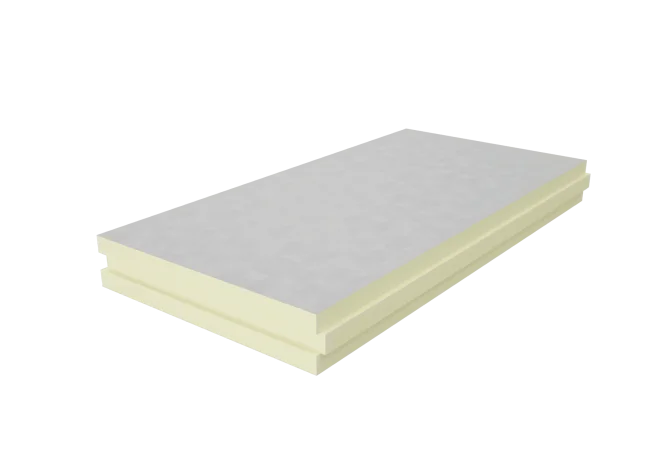
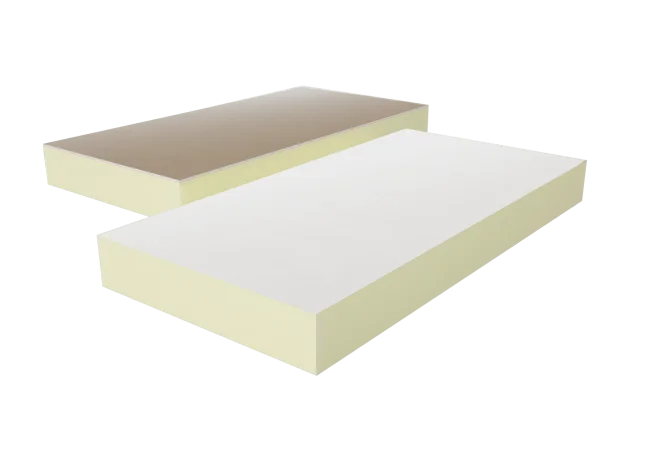
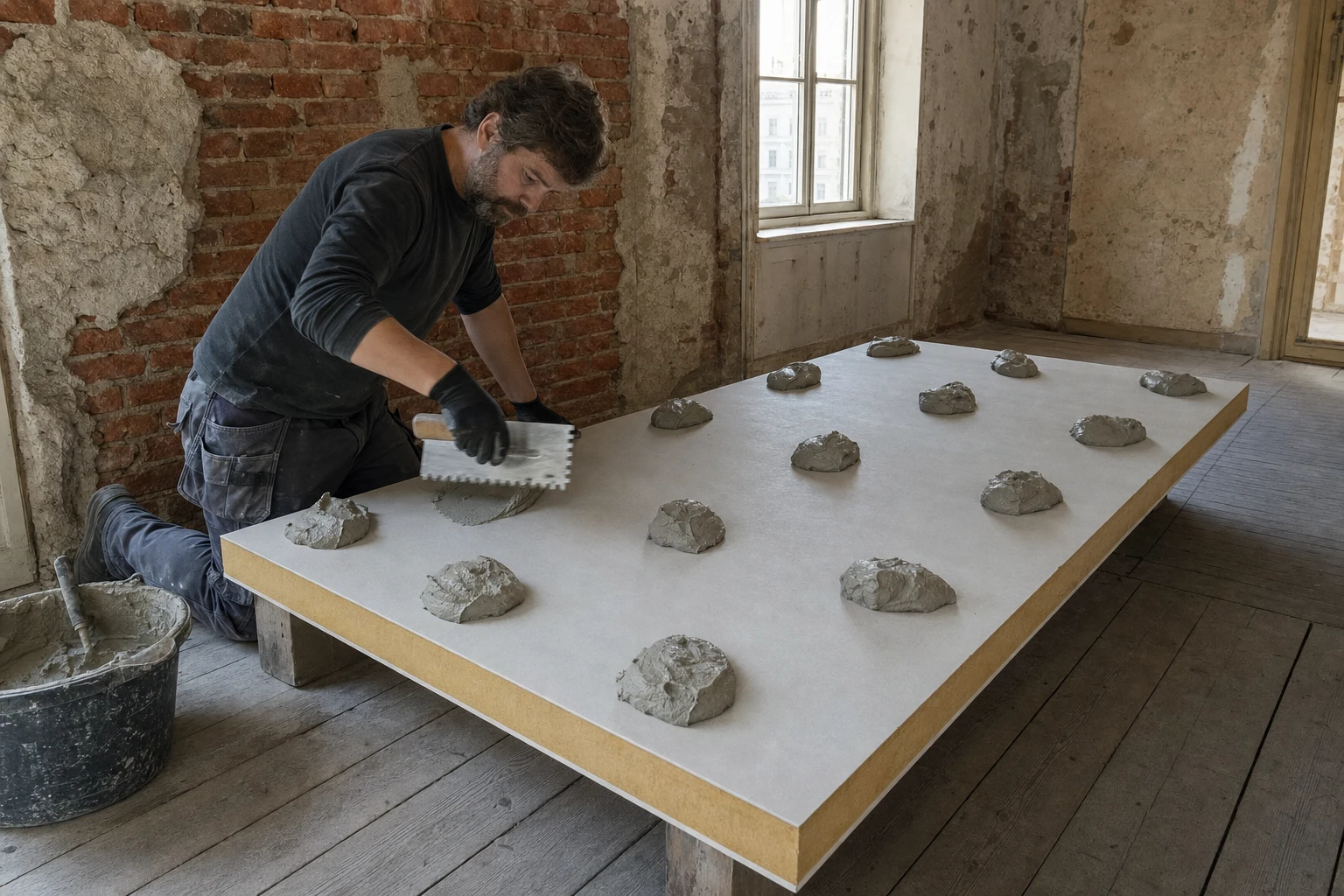
For listed buildings, where the façade cannot be altered, termPIR® AL/GK — a PIR composite with a gypsum plasterboard finish, ready for filling and painting — has proven itself. The system, however, requires a detailed condensation-risk assessment in accordance with PN-EN ISO 13788.
Final report — the decision-making document
The final audit document contains the complete data set needed by the investor to make an investment decision and by the financing institution to assess the merits of co-financing. A standard report covers:
- the energy characteristics of the existing state,
- a list of improvements with their technical parameters,
- an investor’s cost estimate broken down by trade,
- a forecast of EU/EK after the retrofit,
- SPBT and NPV analyses,
- a map of funding sources (thermal-retrofit bonus, “Czyste Powietrze”, REPowerEU, regional operational programmes).
Frequently asked questions
Is an energy audit mandatory for a thermal retrofit?
How much does a building energy audit cost?
What PIR thickness do auditors recommend for the roof of an existing building?
Can PIR boards be used in heritage buildings?
How long is the payback period for a thermal retrofit with PIR insulation?
Related products and systems
Products
Read next

Energy Retrofit with PIR Boards and WT 2021 in Practice | BOKKA
Retrofitting Old Houses with PIR Boards — Energy Upgrade Guide
Silesia Anti-Smog Resolution and PIR Thermal Upgrades | BOKKA