Retrofitting Old Houses with PIR Boards — Energy Upgrade Guide
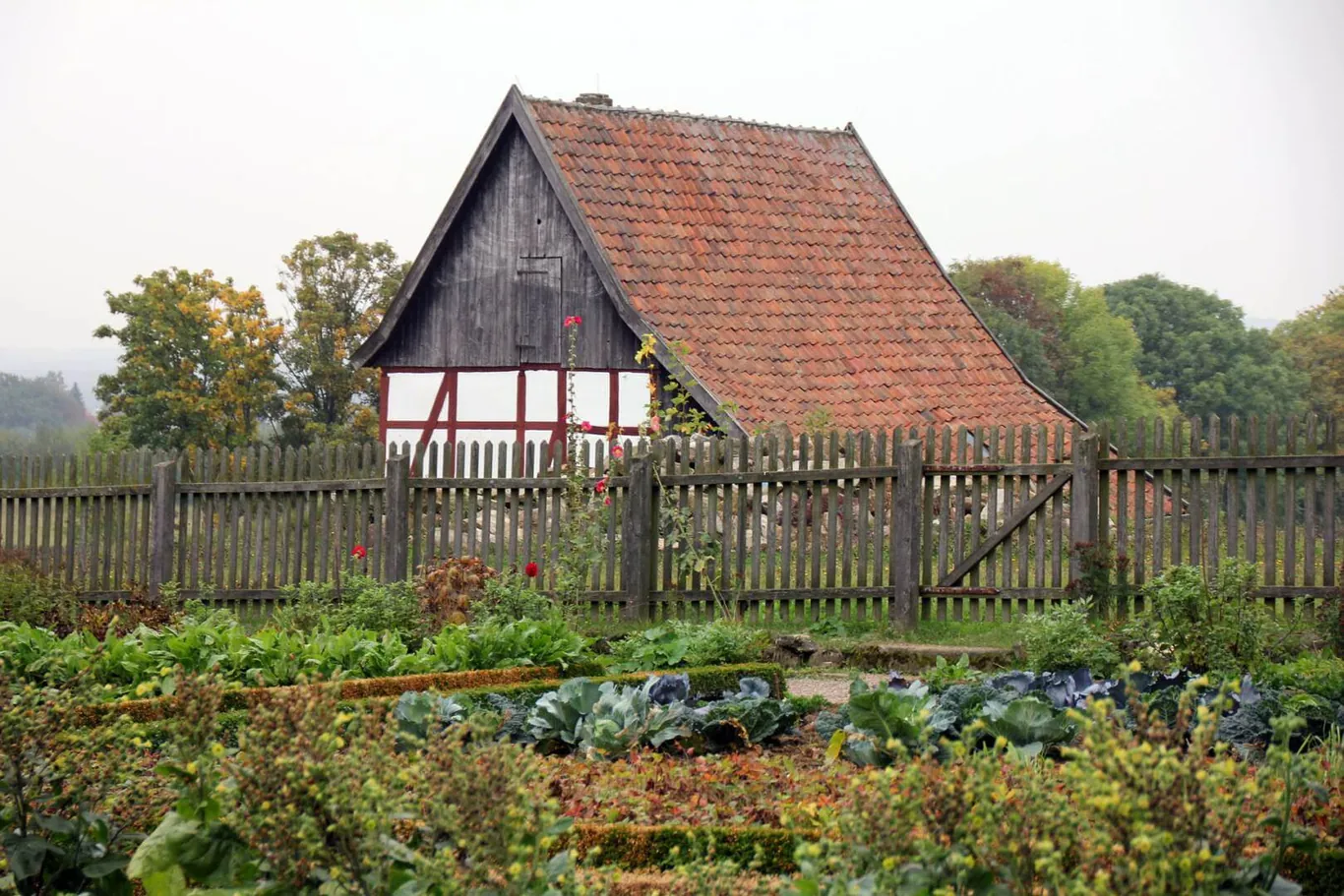
Energy retrofit of old houses with PIR boards — a comprehensive guide
Renovating a building from the 1950s–1980s is now one of the most common investments on the property market. Attractive plots in good locations, inherited family houses, tenement buildings with character — all share one common problem: catastrophic energy performance. The heat transfer coefficient of external walls in such buildings often exceeds 1.2 W/m²K, while WT 2021 (Polish Technical Conditions 2021) require U ≤ 0.20 W/m²K. Effective thermal upgrade therefore requires improving insulation performance up to sixfold — and this is exactly where PIR boards demonstrate their advantage over traditional materials.
Diagnosis: where an old house loses heat
Buildings erected before the late 1980s most often have no thermal insulation layer in the classical sense. At that time, three-layer constructions with a so-called “air cavity” between the load-bearing and outer wall were widely used — a solution that works only on paper, but in practice generates intense convection and thermal bridges at junctions.
Heat losses in a typical pre-1990 house break down as follows:
| Building element | Share of heat loss | U required by WT 2021 |
|---|---|---|
| External walls | 25–35% | ≤ 0.20 W/m²K |
| Roof / flat roof | 25–30% | ≤ 0.15 W/m²K |
| Windows and doors | 15–25% | ≤ 0.90 W/m²K (window) |
| Ground-bearing floor | 10–15% | ≤ 0.30 W/m²K |
| Thermal bridges and ventilation | 10–20% | — |
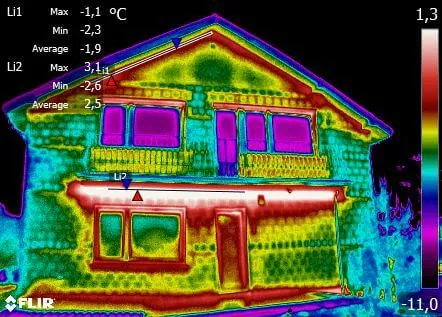
Without a thermal imaging camera survey, choosing the insulation thickness is a lottery. Thermography performed with a temperature difference of at least 15 °C between interior and exterior reveals real thermal bridges — ring beams, lintels, cantilevered balconies, poorly executed joints.
External vs. internal insulation — selection criteria
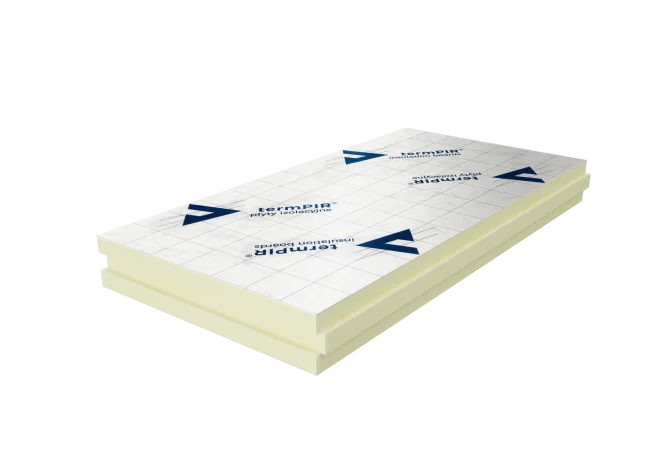
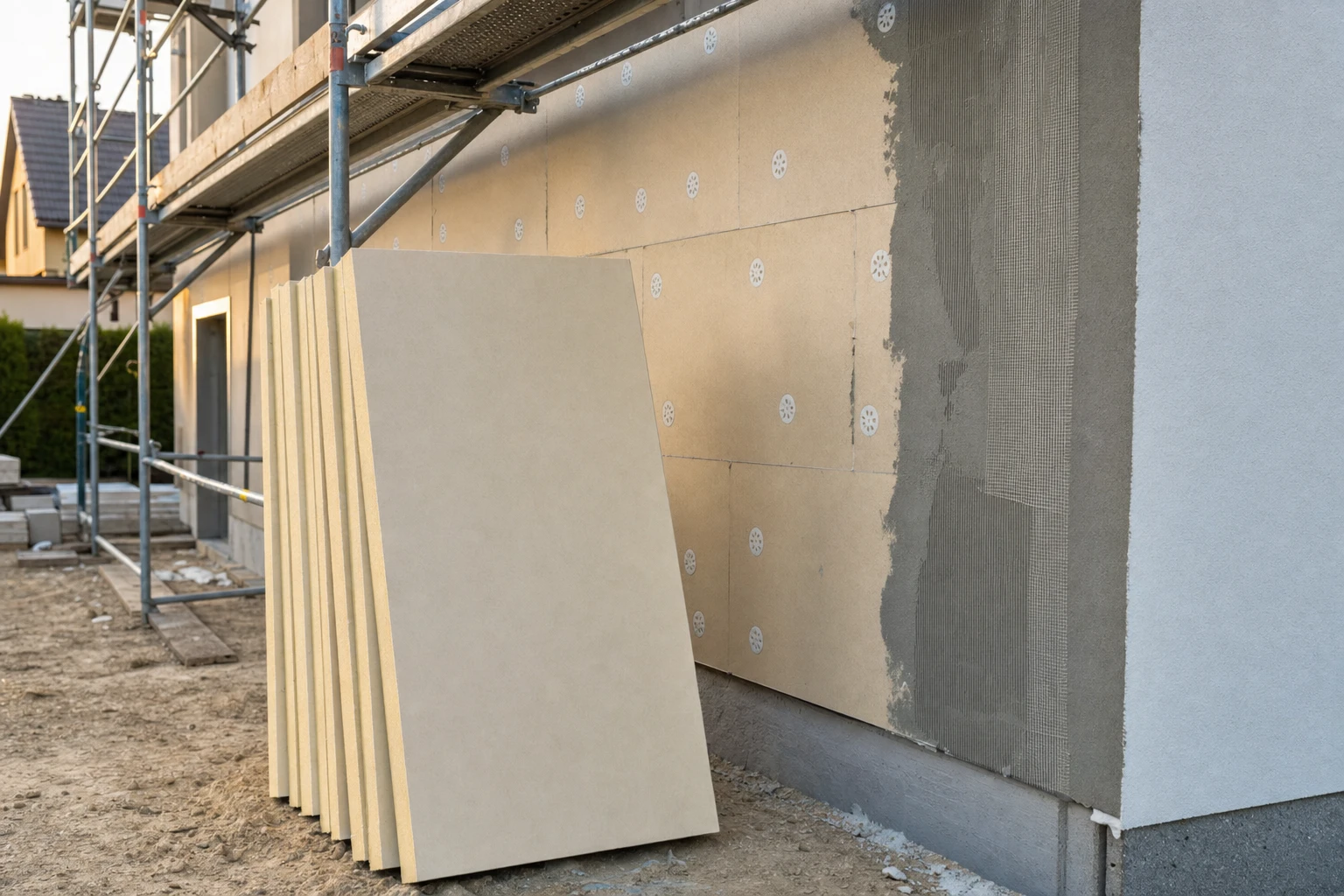
Insulating from the outside is always the preferred solution from a building physics standpoint: the dew point shifts to the outer side of the partition, the wall accumulates heat, and thermal bridges are effectively interrupted. The standard solution is an ETICS system using termPIR® ETX — a PIR board with glass fleece, vapour-permeable, holding European Technical Assessment ETA 17/0066 dedicated to external thermal insulation composite systems.
Technical note: in ETICS, PIR boards with aluminium facing (termPIR® AL, MAX 19 AL) must not be used — the gas-tight foil blocks water vapour diffusion and leads to destruction of the thin-coat render. Only the glass-fleece variant is intended for ETICS.
Insulating from the inside is justified when:
- the façade has heritage value or is under conservation protection,
- the building is located in dense urban development (tenement houses),
- the external layer cannot be thickened due to building-line restrictions.
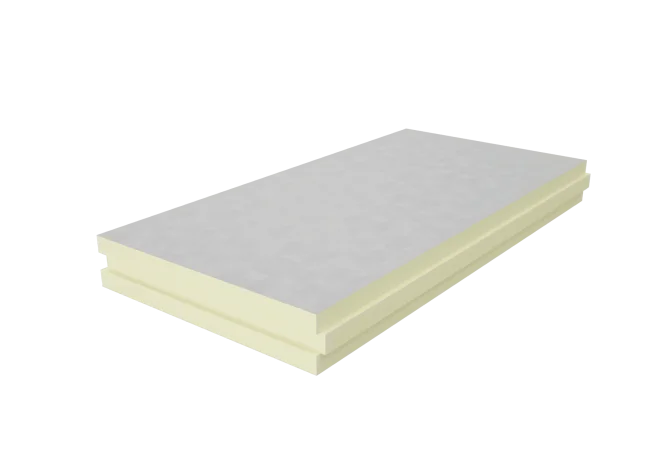
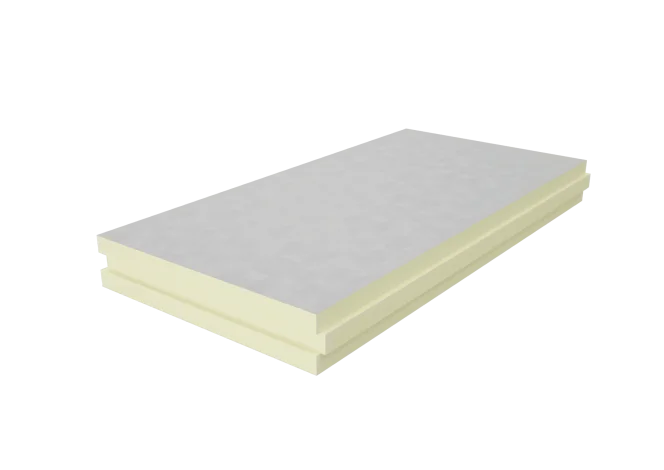
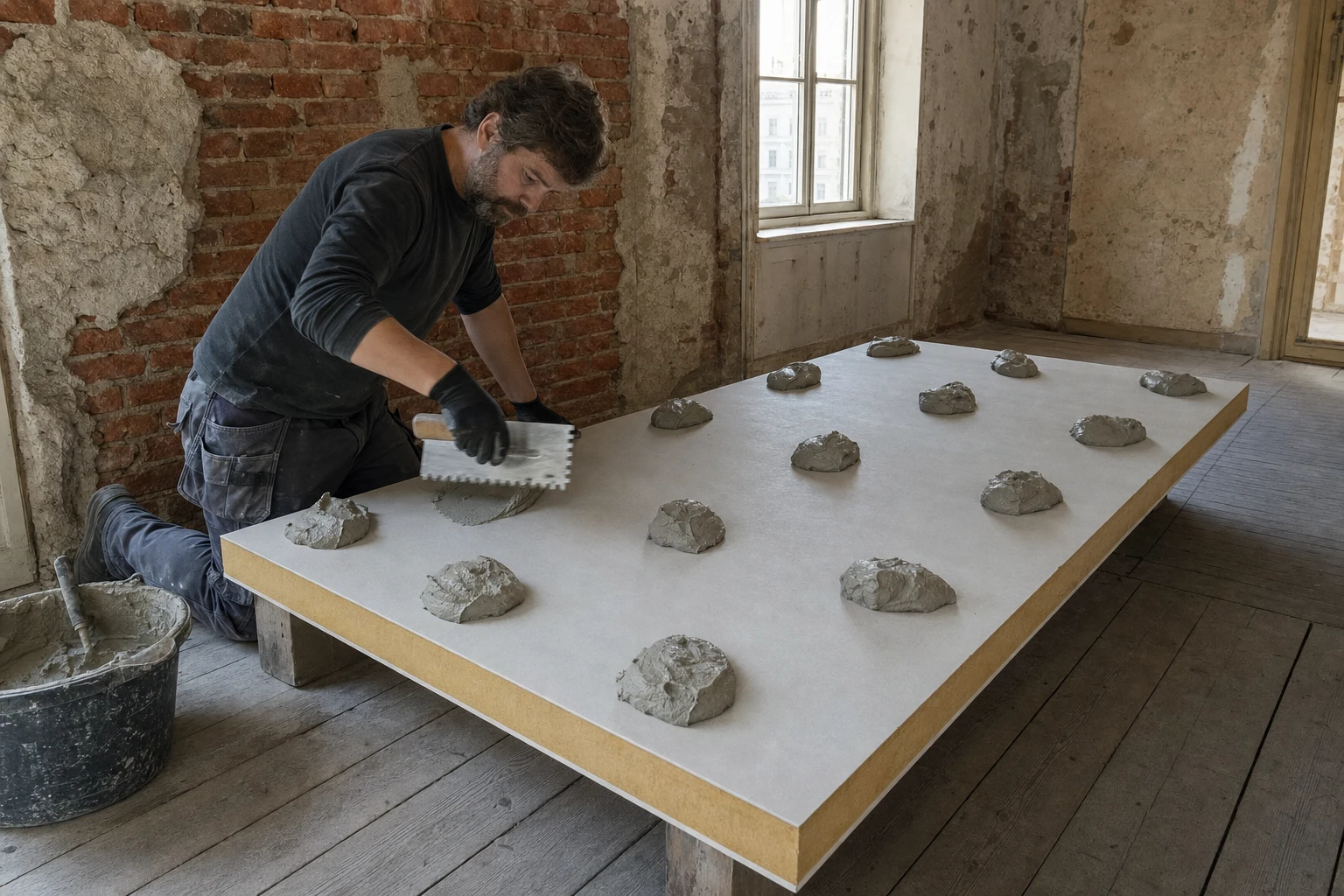
For internal insulation, the termPIR® AL/GK composite is used — a PIR board with gas-tight aluminium foil (acting as a vapour barrier) factory-bonded to a gypsum plasterboard. This solution eliminates the risk of condensation inside the partition, provides a ready-to-paint surface and is used in the heritage wall termPIR® AL/GK system.
Why PIR boards are optimal for old houses
The key parameter of any thermal insulation is the declared thermal conductivity λD. The lower the value, the thinner the layer that delivers the required U. For old houses — where there is often no room outside (building line, eaves) or inside (limited usable area) — the difference between PIR and traditional mineral wool/EPS is fundamental.
| Material | λD [W/(m·K)] | Thickness for U = 0.20 W/m²K |
|---|---|---|
| termPIR® MAX 19 AL | 0.019 | ~9.5 cm |
| termPIR® AL | 0.022 | ~11 cm |
| termPIR® ETX | 0.025 | ~12.5 cm |
| EPS 70 polystyrene | 0.038 | ~19 cm |
| Mineral wool | 0.038–0.040 | ~19–20 cm |
For a roof partition (U ≤ 0.15 W/m²K under WT 2021) the difference is even more pronounced — PIR with λD 0.022 requires about 14.5 cm, while mineral wool with λD 0.038 needs as much as 25 cm.
Practical benefits of a thinner layer
In old houses with deep window reveals, adding a 20 cm wool layer makes the windows “drown” in the insulation, reduces daylight inside, and forces complete replacement of sills and metal flashings. PIR boards cut this intrusion in half — which also translates into lower labour costs and reduced loading on the structure.
Sequence of retrofit works
Insulation is never the first stage of renovation. The correct sequence is as follows:
- Moisture diagnostics — measure wall moisture content (acceptable ≤ 4% by weight for brick, ≤ 3% for hollow blocks). Damp walls require drying by injection or microwave methods.
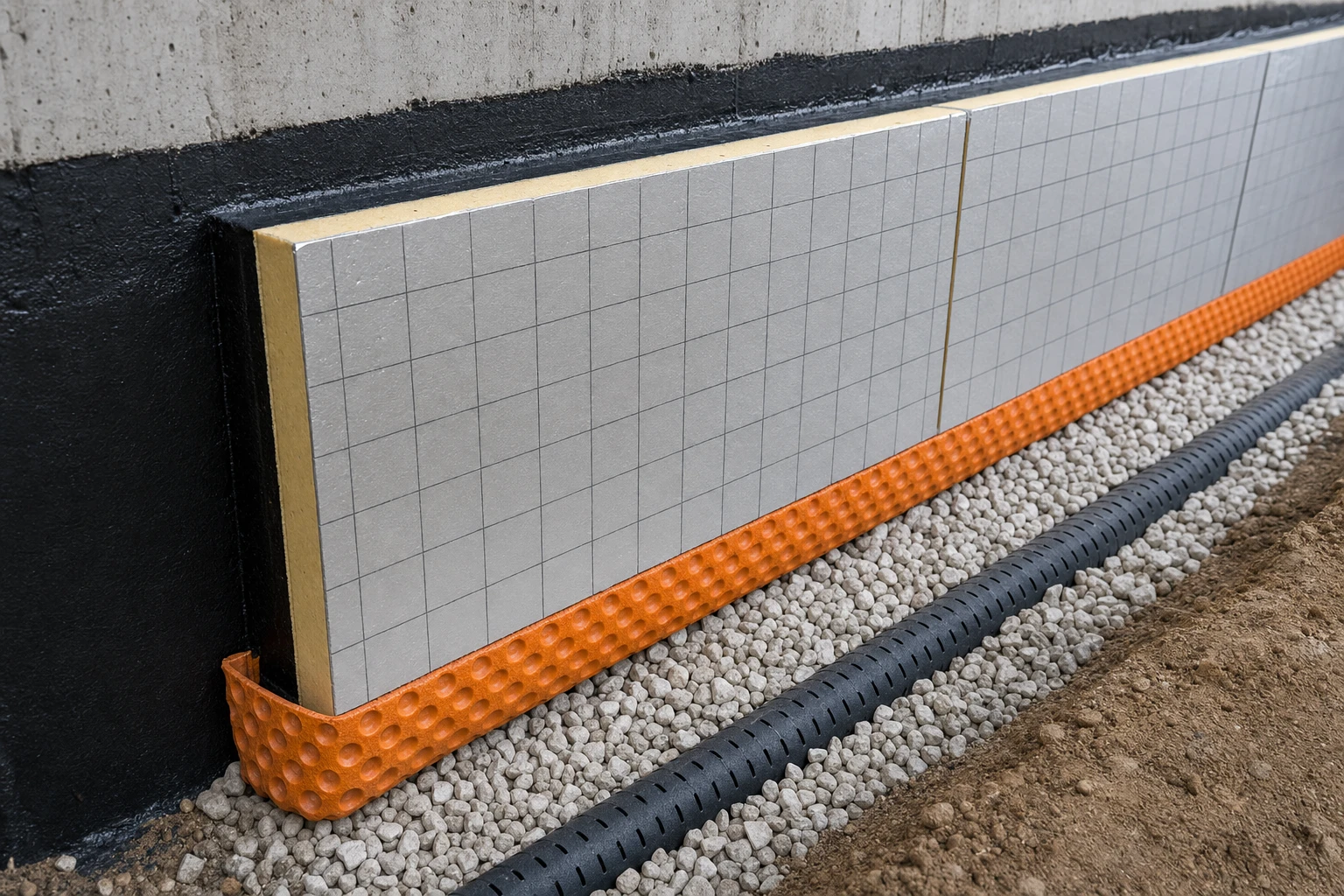
- Repair of damp-proofing — restoration of horizontal foundation damp-proofing, perimeter drainage, vertical insulation of basement walls using termPIR® WS with enhanced moisture resistance.
- Replacement of windows and doors — joinery should be installed within the planned insulation layer (“layered” mounting), which eliminates the linear thermal bridge of the frame.
- Renovation of terraces, balconies, cornices — all elements protruding from the building envelope require reconstruction in a way that interrupts thermal bridges (thermal break connectors, cantilever insulation).
- Control thermography — measurement before insulation, for precise thickness selection and identification of critical points.
- Installation of thermal insulation — according to the selected system.
- Replacement of gutters, sills and flashings — adapted to the new partition thickness.
Roof and ceiling insulation — the most cost-effective investment
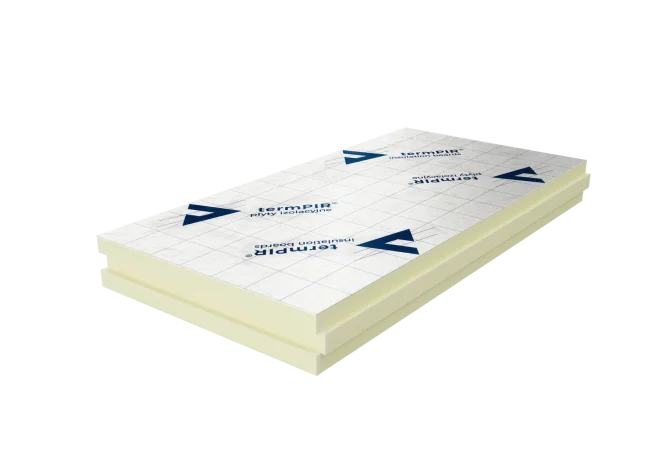
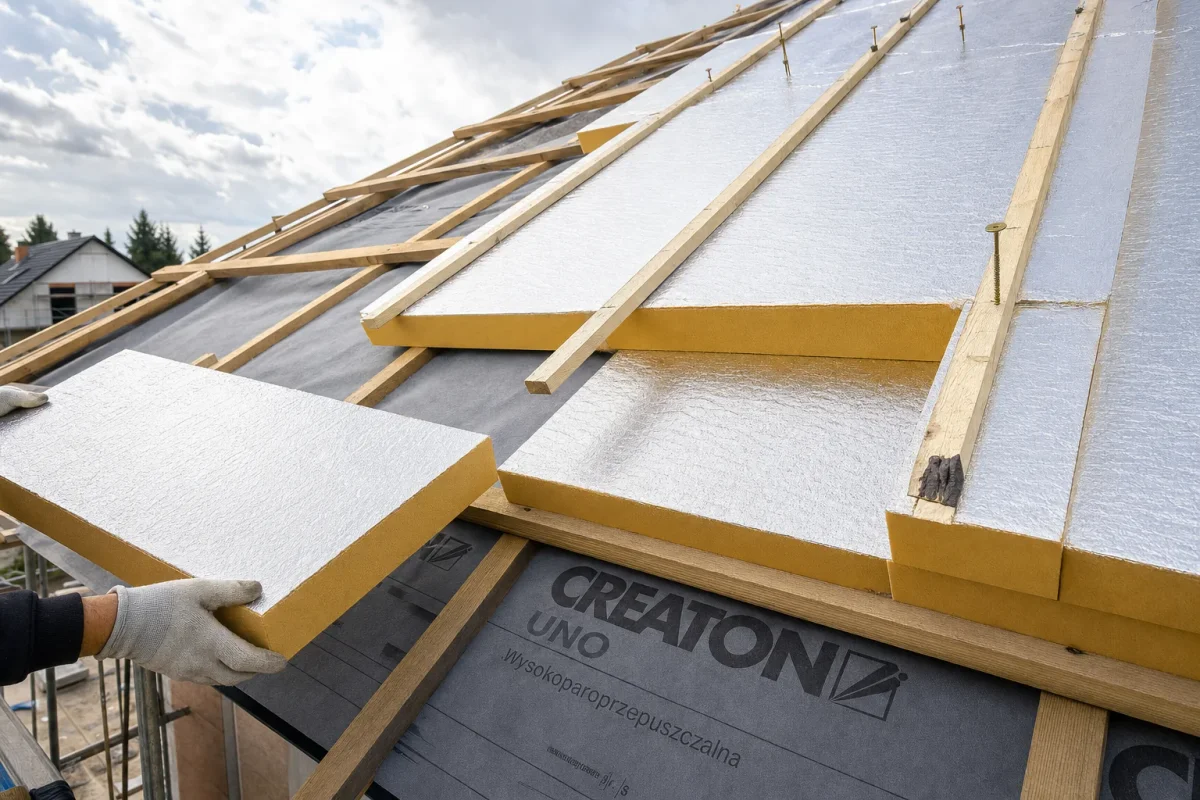
The roof generates 25–30% of heat loss, and the cost of insulating it is usually lower than the walls. In old houses with a pitched roof (habitable loft), the optimal solution is over-rafter termPIR® insulation, which completely eliminates thermal bridges at the rafters. If removing the roof covering is not feasible, the under-rafter variant is used.
For the ceiling slab above the top storey (unused attic), it is enough to lay termPIR® AL boards dry — without bonding, with joints sealed using aluminium tape — which provides a thermally full-value, dust-tight layer.
Frequently asked questions
Can an old house be insulated from the inside with PIR boards without a vapour barrier?
What thickness of PIR board should be chosen to insulate an old external wall?
Are PIR boards suitable for insulating basements and foundations?
How long does the energy retrofit of an old house take to pay back?
Are PIR boards fire-safe for residential buildings?
Related products and systems
Products
Read next

Energy Retrofit with PIR Boards and WT 2021 in Practice | BOKKA

Energy Audit of a Building — Thermal Retrofit with PIR
Thermal Bridges — How to Eliminate Them with PIR Boards (WT 2021)