Silesia Anti-Smog Resolution and PIR Thermal Upgrades | BOKKA
Fighting smog in Silesia — new regulations and the role of thermal upgrades
The Silesian Voivodeship is entering a new phase in the fight against low-stack emissions. From 1 January 2022, the region bans the use of off-class solid-fuel boilers — the so-called “smokers” (kopciuchy). Meanwhile, research by Polski Alarm Smogowy (Polish Smog Alert) shows that one in three residents of the region has not heard of the new rules, and 44% of single-family homeowners are unaware of the obligation to register their heat source in CEEB (Central Building Emissions Register). Effective emission reduction is not just about replacing the boiler — it also requires a comprehensive thermal upgrade of the building envelope in line with WT 2021 (Polish Technical Conditions 2021).
The Silesian anti-smog resolution — timeline and sanctions
The 2017 anti-smog resolution of the Silesian Voivodeship Assembly introduces a phased elimination of the most polluting heat sources. The key date for building owners is 1 January 2022 — from this day, using off-class (classless) boilers constitutes an offence punishable by a fine of up to PLN 500, or up to PLN 5,000 in court proceedings.
The schedule of subsequent phases is as follows:
| Date | What is no longer permitted |
|---|---|
| 01.01.2022 | Off-class boilers (kopciuchy) |
| 01.01.2023 | Class 3 boilers per PN-EN 303-5:2012 |
| 01.01.2026 | Class 4 boilers per PN-EN 303-5:2012 |
| 01.01.2028 | Class 5 boilers per PN-EN 303-5:2012 (other than ecodesign) |
In practice, this means tens of thousands of buildings across Małopolska and Silesia will need their heat sources replaced. The same applies to the Kraków metropolitan area and its surroundings — the region in which BOKKA operates as a distributor — where the ban on burning solid fuels has been in force since 1 September 2019.
CEEB — the building owner’s obligation
The Central Building Emissions Register (CEEB), maintained by the General Office of Building Supervision, collects data on heat sources in buildings with a nominal capacity of up to 1 MW. The obligation to file a declaration lies with the owner or property manager and covers:
- Declaration A — for residential buildings,
- Declaration B — for non-residential buildings.
Failure to file on time is punishable by a fine of up to PLN 500, or up to PLN 5,000 in court proceedings. CEEB data forms the basis for planning support programmes (including Czyste Powietrze — Clean Air, and Stop Smog) and for the enforcement of anti-smog resolutions by municipal and city guards.
WT 2021 — requirements that translate into air quality
In parallel with anti-smog measures, tightened Technical Conditions (WT 2021) apply, requiring significantly higher energy efficiency from new and deeply renovated buildings since 1 January 2021. Maximum thermal transmittance (U) values:
| Building element | Umax per WT 2021 |
|---|---|
| Roof, flat roof | 0.15 W/m²K |
| External wall | 0.20 W/m²K |
| Floor slab above unheated cellar/garage | 0.25 W/m²K |
| Ground-bearing floor | 0.30 W/m²K |
The tighter and better-insulated the envelope, the lower the building’s final energy demand — meaning less fuel burned in the boiler (even a modern, ecodesign unit) and lower emissions of PM10, PM2.5 and CO₂.
PIR boards in the thermal upgrade of buildings covered by the anti-smog resolution
A key challenge in retrofitting existing single-family housing in the Silesian and Małopolska voivodeships is limited structural space — low attics, narrow eaves, proximity to plot boundaries, cornices. In this context, PIR boards offer a technological advantage over traditional materials:
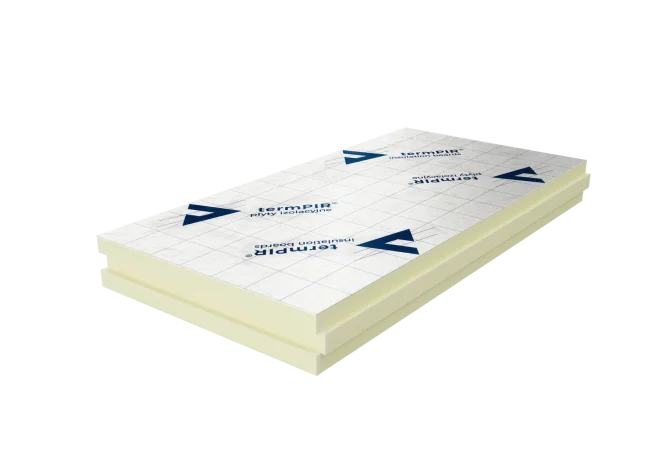
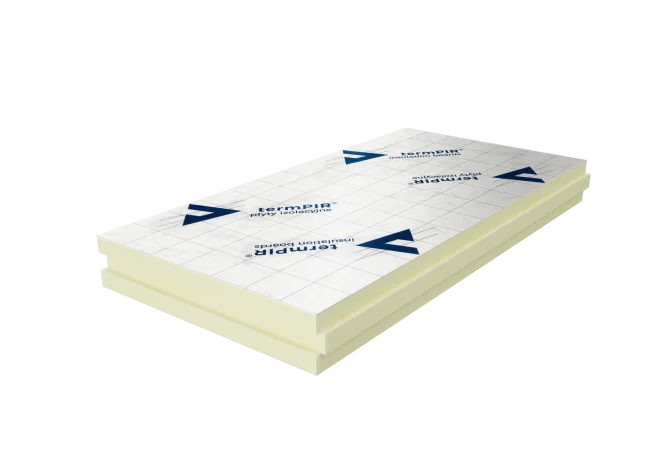
- λD = 0.022 W/(m·K) for termPIR® AL with gas-tight aluminium facing,
- λD = 0.025–0.027 W/(m·K) for termPIR® ETX with glass fleece for ETICS (ETA 17/0066),
- λD = 0.019 W/(m·K) for premium termPIR® MAX 19 AL.
A comparison of the insulation thickness required to achieve U = 0.15 W/m²K for a pitched roof (under the simplified assumption of a pure insulation layer):
| Material | λD [W/(m·K)] | Thickness for U ≈ 0.15 |
|---|---|---|
| termPIR® MAX 19 | 0.019 | ~12.5 cm |
| termPIR® AL | 0.022 | ~14.5 cm |
| termPIR® ETX | 0.026 | ~17 cm |
| Standard mineral wool | 0.038 | ~25 cm |
| EPS 040 polystyrene | 0.040 | ~26 cm |
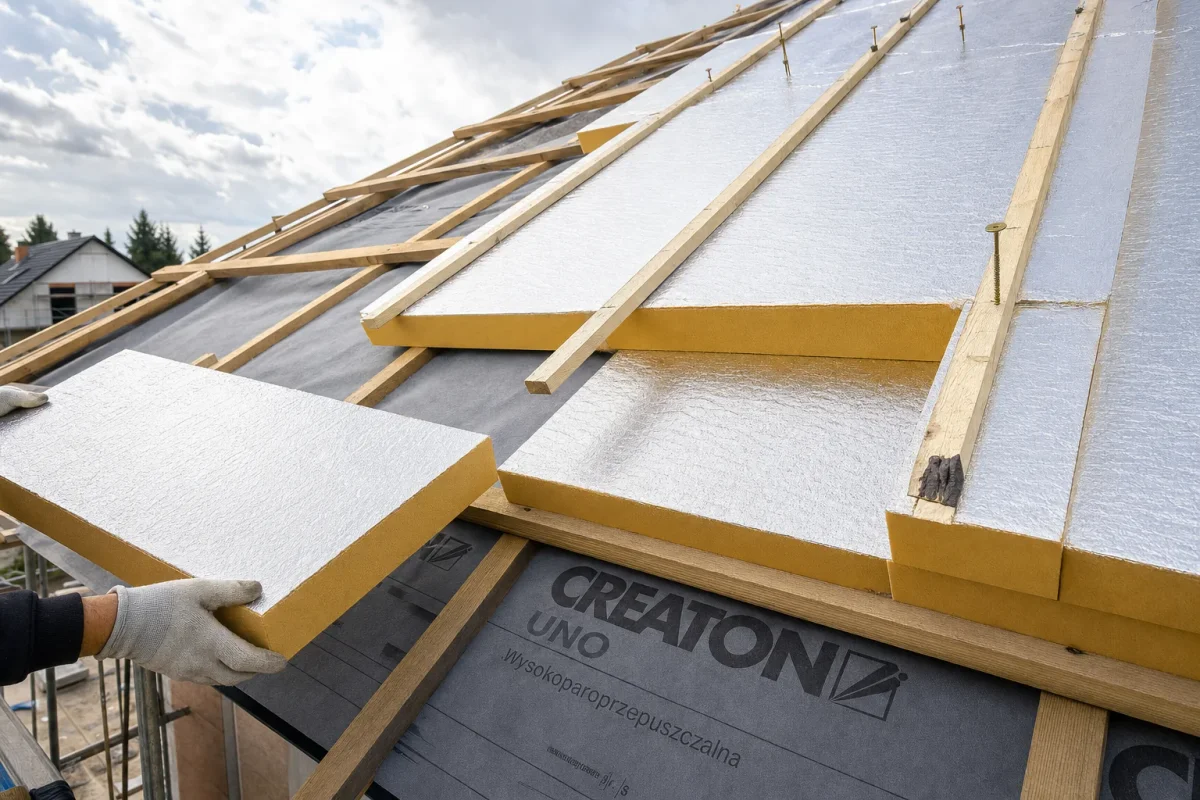
This means that when retrofitting a pitched roof with over-rafter insulation (system pitched roof — termPIR® over-rafter), WT 2021 requirements can be met without interfering with the roof geometry or the need to raise the ridge.
ETICS on external walls
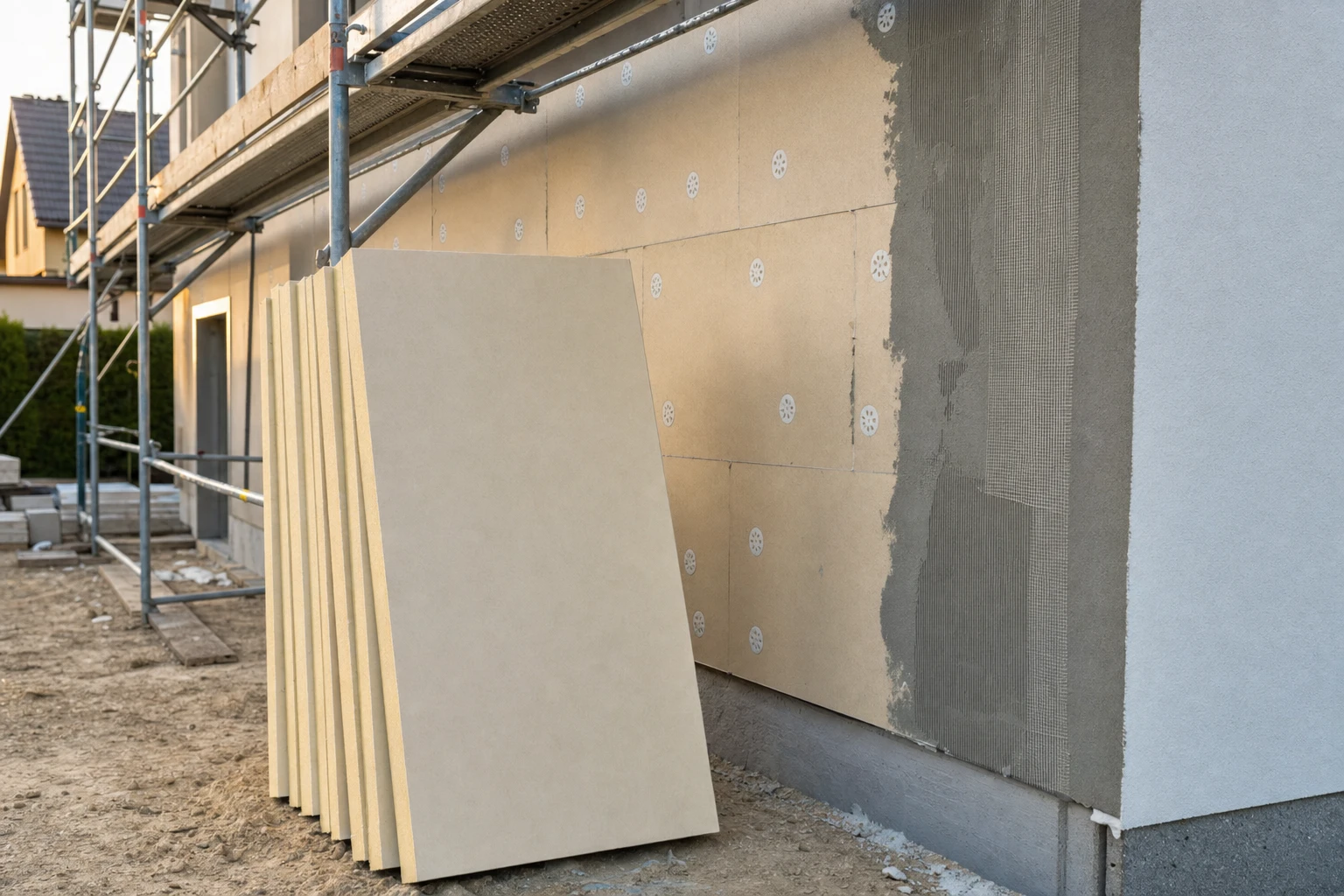
For external walls finished with thin-coat render, the right choice is termPIR® ETX with vapour-permeable glass fleece — a product covered by European Technical Assessment ETA 17/0066 and dedicated to ETICS. termPIR® AL boards with aluminium foil are gas-tight and are not suitable for rendering — only the ETX variant must be used in ETICS (system external wall ETICS — termPIR® ETX).
Internal insulation — heritage buildings
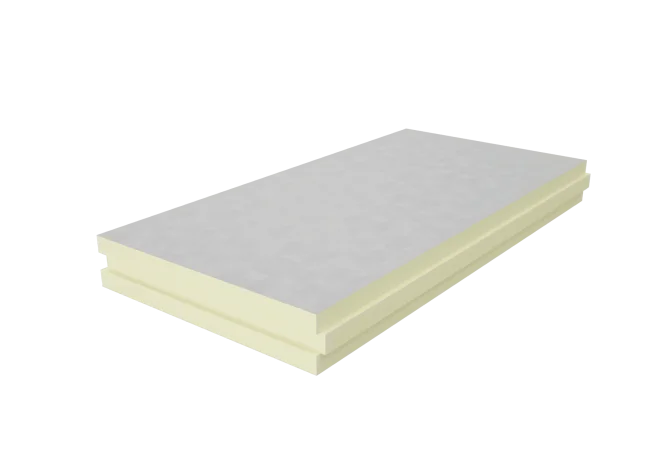
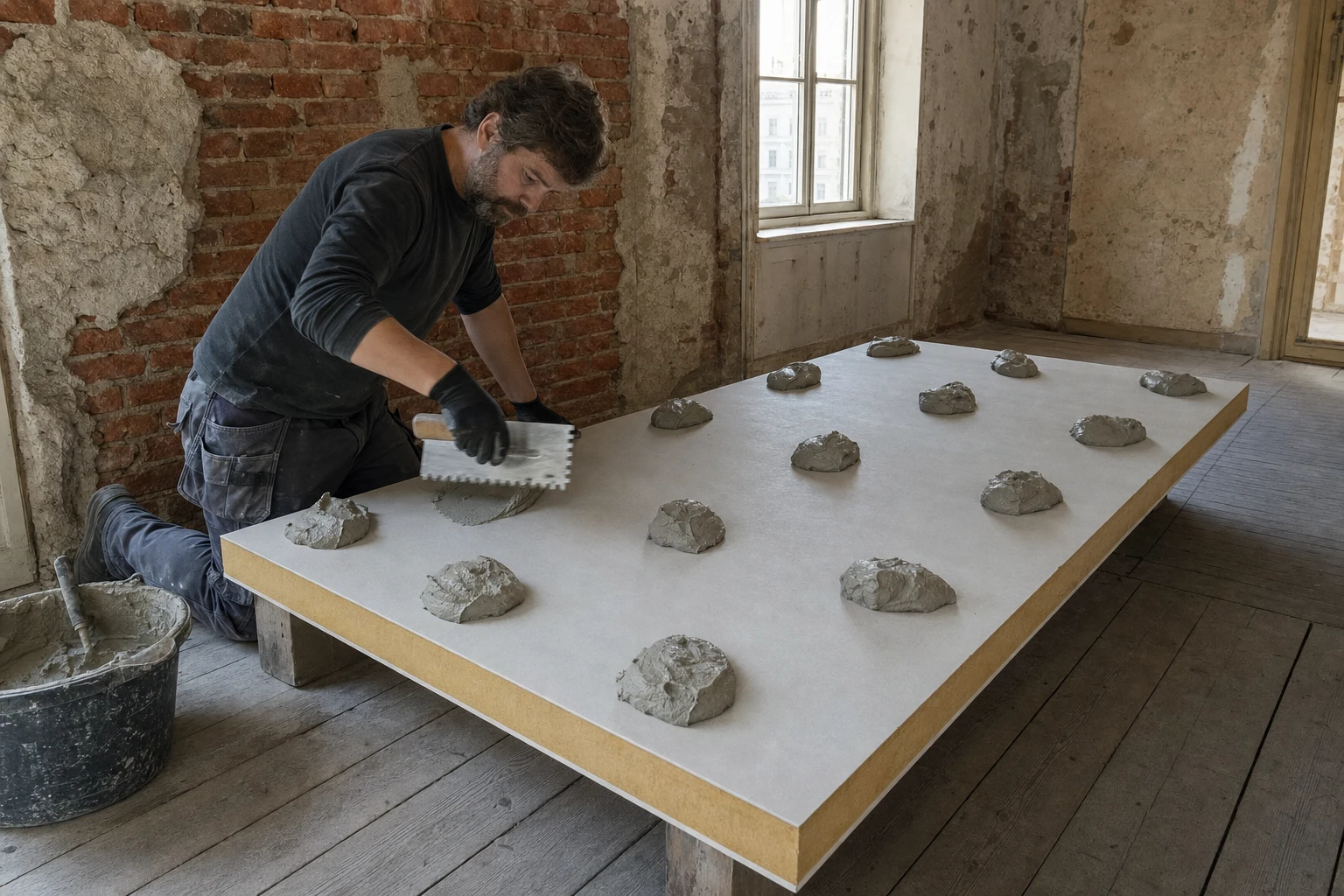
In Silesian and Kraków tenement houses, where the conservation officer does not permit interference with the façade, termPIR® AL/GK is used — a PIR composite with gypsum plasterboard, bonded to the wall from the inside (system heritage wall — termPIR® AL/GK). The aluminium foil simultaneously acts as a vapour barrier.
Fire classification and standards
In the built-in system, termPIR® boards achieve fire reaction class B-s2,d0 per EN 13501-1, meeting the requirements for residential buildings in the ZL IV category. The products comply with EN 13165 (thermal insulation products for buildings — factory-made products of polyisocyanurate foam, PIR).
Frequently asked questions
Is a thermal upgrade mandatory when replacing a boiler under the anti-smog resolution?
What PIR board thickness should be used on a pitched roof to meet WT 2021?
Can termPIR® AL be used in ETICS?
Does a thermal upgrade have to be reported to CEEB?
Where can I find funding for home insulation in the Silesian Voivodeship?
Related products and systems
Products
Read next

Energy Retrofit with PIR Boards and WT 2021 in Practice | BOKKA
Smog in Kraków 2024 — AGH study and the role of thermal upgrades | BOKKA
Energy Audit of a Building — Thermal Retrofit with PIR