Smog and Allergies — How PIR Thermal Upgrades Cut Emissions | BOKKA
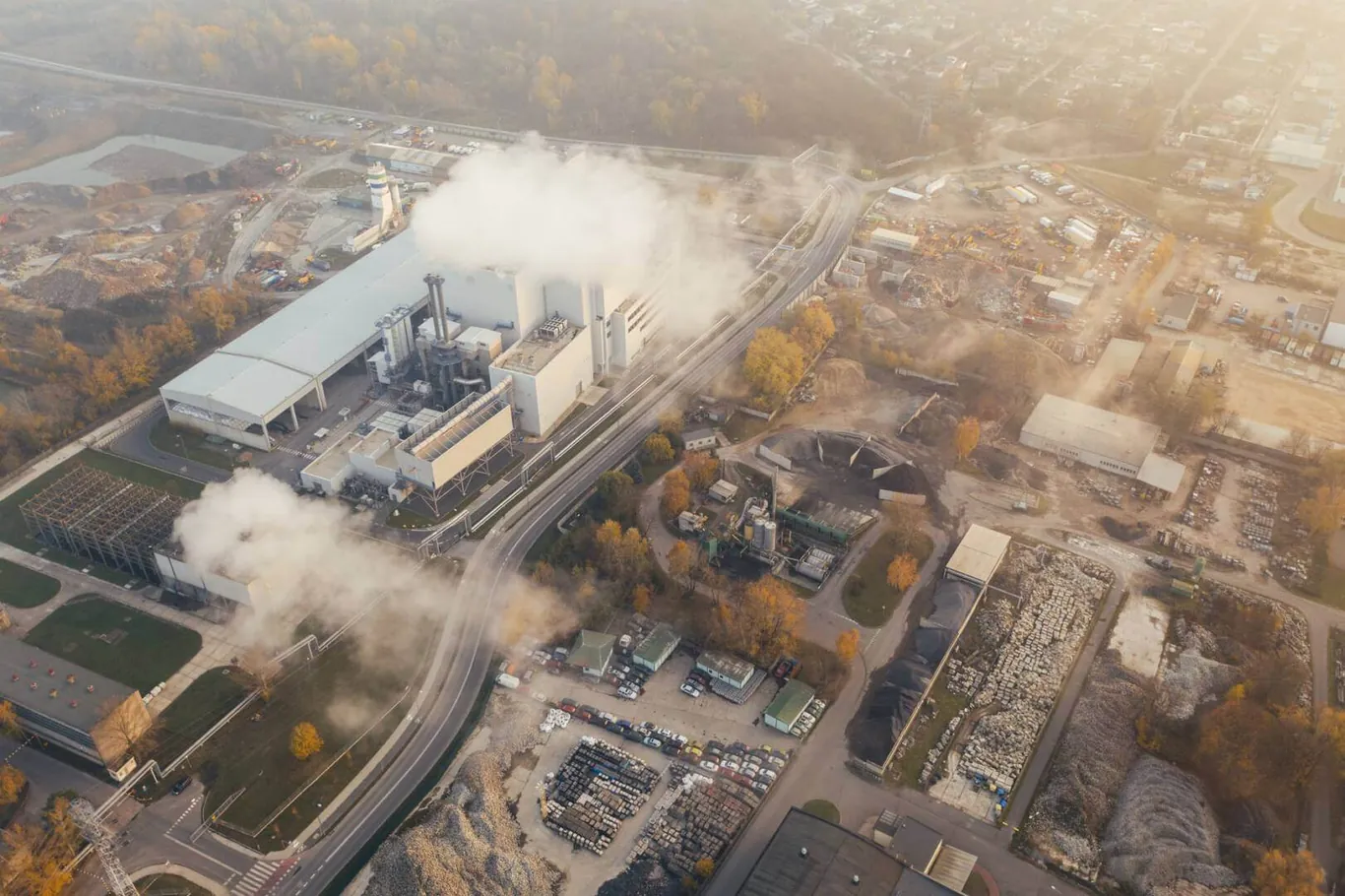
Smog triggers allergies — what Kraków doctors discovered and the role of thermal upgrades
A team at the Jagiellonian University Collegium Medicum has published the results of a three-year study that unambiguously confirms: PM2.5 suspended particulates contained in smog act as a strong allergen. Unlike classic allergies, smog exposure cannot be treated with desensitisation immunotherapy — only symptomatic care is available. This is another hard argument for cutting low-stack emissions at the source, and one of the most effective tools remains deep thermal upgrades of buildings using materials with a low thermal conductivity coefficient — primarily PIR insulation boards.
Jagiellonian University findings — PM2.5 triggers allergic reactions in 75% of healthy people
The study covered 30 volunteers, whose blood was sampled and exposed to PM2.5 suspended particulates isolated by a team from AGH from the atmosphere of Kraków. Participants were divided into two groups: people without diagnosed allergies and people allergic to birch pollen. All of them, however, complained of runny nose, breathlessness, cough and chronic respiratory complaints — which subsided during stays in regions with cleaner air.
Results:
- 75% of people without allergies showed an allergic reaction to PM2.5
- 83% of people allergic to birch additionally reacted to suspended particulates
- derivatives of carcinogenic benzo(a)pyrene were detected in the urine of test subjects
This is the first study in the world to demonstrate that suspended-particulate molecules constitute a standalone, strong allergen. Treatment? Strictly symptomatic — with no possibility of classic desensitisation.
Where smog in Polish cities comes from
The main source of PM2.5 and PM10 during the heating season is low-stack emission — burning solid fuels (coal, wood, sometimes waste) in obsolete domestic stoves. The higher a building’s heat demand, the more fuel goes into the boiler room and the more particulates reach the atmosphere. Every kilowatt-hour saved through effective insulation translates into a measurable reduction of emissions at the source.
That is why thermal upgrades of external envelopes — roofs, walls, floor slabs, ground-bearing floors — are among the cheapest anti-smog measures available to property owners, calculated per tonne of avoided CO₂ and per kilogram of avoided particulates.
WT 2021 — requirements that every thermal upgrade must meet
The Technical Conditions (WT 2021 — Polish Technical Conditions 2021), in force since 1 January 2021, tightened the maximum values of the U thermal transmittance coefficient for envelopes:
| Envelope | Umax per WT 2021 |
|---|---|
| Roof, flat roof | 0.15 W/m²K |
| External wall | 0.20 W/m²K |
| Floor slab over unheated basement/garage | 0.25 W/m²K |
| Ground-bearing floor | 0.30 W/m²K |
Reaching these values with traditional materials of λD ≈ 0.038–0.040 W/(m·K) requires considerable insulation thicknesses — often 20–25 cm on the roof and 18–20 cm on the wall. This is where PIR boards have the edge.
PIR boards — low lambda, smaller thickness, lower emissions
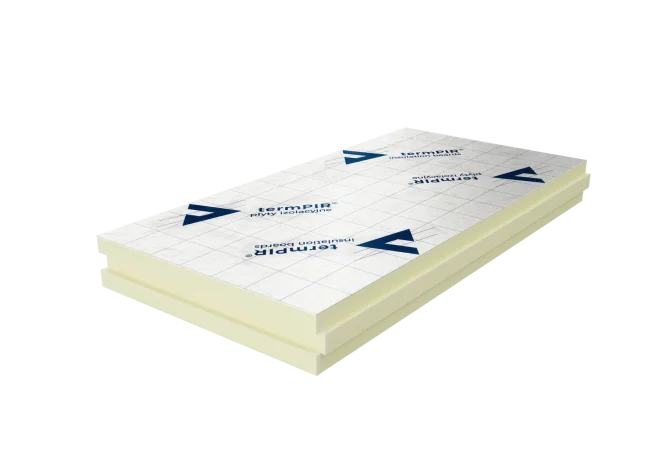
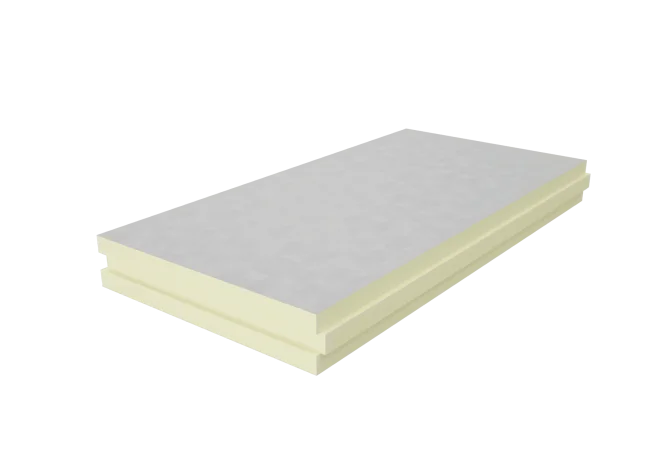
Polyisocyanurate (PIR) is a rigid thermoset foam with a thermal conductivity coefficient significantly lower than that of traditional insulation:
| Material | λD [W/(m·K)] | Thickness for U = 0.15 W/m²K |
|---|---|---|
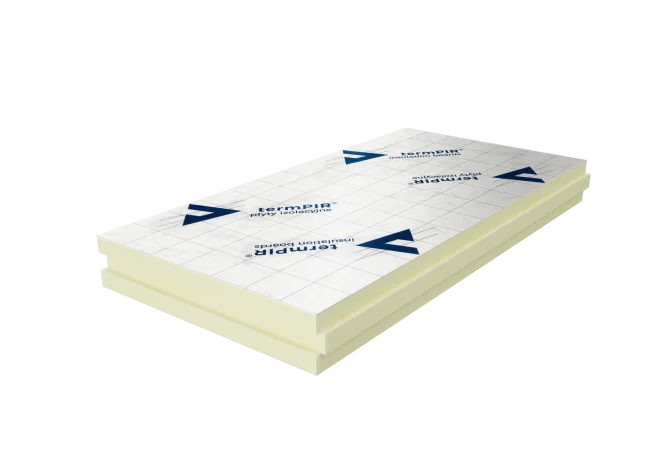
| termPIR® MAX 19 AL | 0.019 | approx. 13 cm |
| termPIR® AL | 0.022 | approx. 15 cm |
| termPIR® ETX (glass fleece, ETICS) | 0.025–0.027 | 17–18 cm |
| Mineral wool façade | 0.036 | 24 cm |
| EPS 70 polystyrene | 0.040 | 27 cm |
A lower lambda means not only a thinner insulation layer, but above all lower real heat losses during operation — meaning less burnt fuel and less PM2.5 emitted to the atmosphere over the entire service life of the building.
Matching a PIR board to the envelope — key principles
Each envelope has its own functional requirements. Using the wrong facing leads to installation errors and loss of warranty.
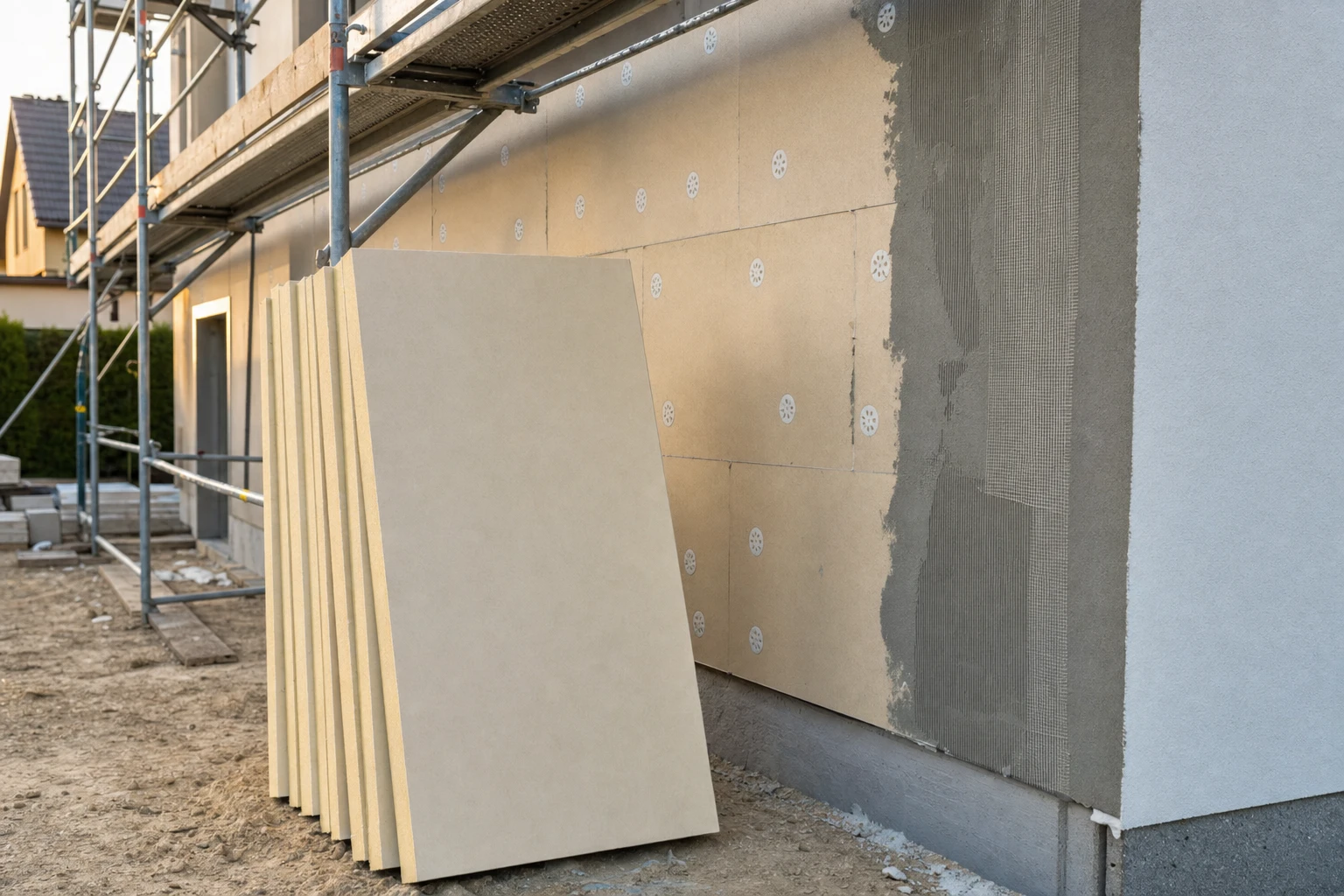
- External wall in an ETICS system (thin-coat render) — requires a vapour-permeable facing. We use termPIR® ETX with glass fleece (ETA 17/0066). System: ETICS wall — termPIR® ETX.
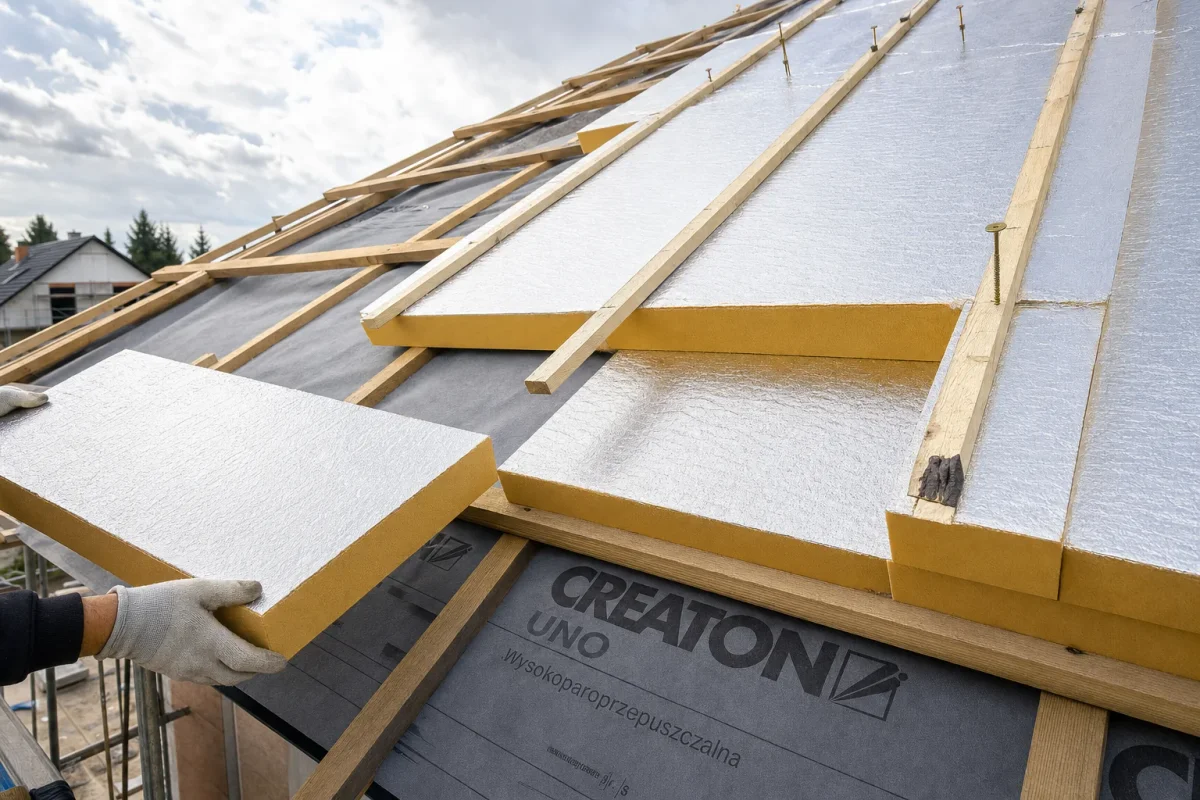
- Pitched roof, over-rafter — eliminates thermal bridges in the timber structure and makes optimum use of the attic. Solution: pitched roof — over-rafter termPIR® with the termPIR® AL board.
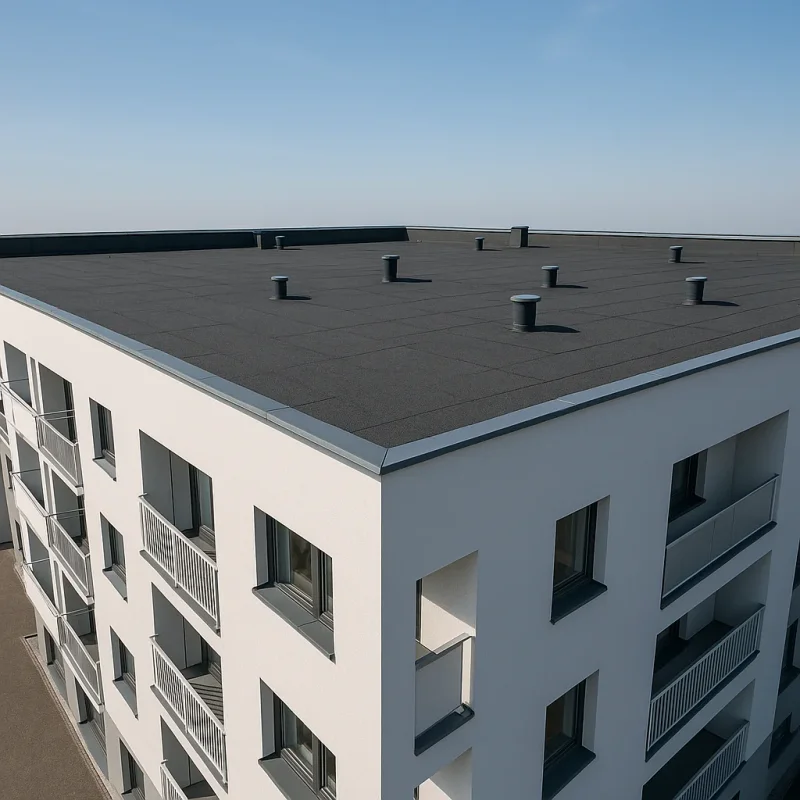
- Flat roof on a reinforced concrete slab — gas-tight aluminium facing, compatible with heat-welded bituminous membrane. System: flat roof — reinforced concrete deck.
- Ground-bearing floor and foundation — enhanced moisture resistance: termPIR® WS.
- Internal insulation (e.g. heritage buildings where the façade cannot be altered) — a PIR + GK plasterboard composite with vapour barrier, selected individually.
Energy and emission outcomes of a thermal upgrade
In a typical single-family house from the 1980s–1990s, heat demand reaches 180–250 kWh/(m²·year). After a comprehensive thermal upgrade (roof + walls + windows + replacement of the heat source) this value drops to 50–80 kWh/(m²·year), and in the passive standard below 15 kWh/(m²·year). For a 150 m² building this means a reduction of fuel consumption by 2–4 tonnes of coal per year — and a corresponding reduction in PM2.5, PM10 and benzo(a)pyrene emissions released into the air in the neighbourhood.
On the scale of the Kraków metropolitan area, where according to Jagiellonian University research PM2.5 particulates trigger allergic reactions in three quarters of the population, every modernised boiler room and every properly insulated roof represents a measurable contribution to public health.
Frequently asked questions
Are PIR boards safe for health during use?
What PIR thickness should I use on the roof to meet WT 2021?
Is termPIR® AL suitable for ETICS?
Does a thermal upgrade really reduce smog levels?
What technical support does BOKKA offer in selecting insulation?
Related products and systems
Products
Read next

Energy Retrofit with PIR Boards and WT 2021 in Practice | BOKKA
Thermal Imaging Survey: Detecting Thermal Bridges | BOKKA
WHO 2021 Air Quality Guidelines and Thermal Retrofit in Poland