WHO 2021 Air Quality Guidelines and Thermal Retrofit in Poland
New WHO 2021 guidelines — a challenge for Polish construction
On 22 September 2021 the World Health Organization published its updated Global Air Quality Guidelines, tightening the limits for key pollutants up to fourfold compared with the 2005 recommendations. For Poland — a country that regularly ranks among the worst-polluted in European smog league tables — this means the anti-smog policy must be stepped up, and thermal retrofitting of buildings plays a leading role in it. Modern insulation materials such as PIR boards with λD from 0.019 W/(m·K) make it possible to genuinely cut CO₂ emissions from the construction sector.
What exactly did WHO change in 2021?
The new WHO recommendations cover six key pollutants: PM2.5, PM10, O₃, NO₂, SO₂ and CO. The most restrictive changes apply to particulate matter and nitrogen oxides — i.e. precisely the substances that in Poland originate largely from so-called low emissions (individual building heating) and road transport.
| Pollutant | 2005 annual limit | 2021 annual limit | Change |
|---|---|---|---|
| PM2.5 | 10 µg/m³ | 5 µg/m³ | −50% |
| PM10 | 20 µg/m³ | 15 µg/m³ | −25% |
| NO₂ | 40 µg/m³ | 10 µg/m³ | −75% |
| SO₂ (24h) | 20 µg/m³ | 40 µg/m³ | methodology revision |
For comparison — the current EU legal limits (Directive 2008/50/EC) still allow 25 µg/m³ for PM2.5 and 40 µg/m³ for NO₂. The gap between the WHO recommendations and the binding EU law is a signal that tighter EU regulations should be expected in the coming years, which will also feed through into Polish legislation.
The construction sector — a key emitter of CO₂ and particulates
According to data from the National Centre for Emissions Management (KOBiZE), households in Poland account for roughly 50% of PM2.5 emissions and more than 80% of benzo(a)pyrene emissions. The main cause is the combustion of solid fuels in obsolete boilers combined with high heat losses through uninsulated or poorly insulated buildings. The worse the insulation, the more fuel must be burned to maintain thermal comfort — and the higher the emissions.
WT 2021 (Polish Technical Conditions 2021), in force since 1 January 2021, introduced tighter requirements for the envelopes of new buildings:
| Building element | Umax WT 2021 |
|---|---|
| Roof / flat roof | 0.15 W/m²K |
| External wall | 0.20 W/m²K |
| Floor over basement/garage | 0.25 W/m²K |
| Ground-bearing floor | 0.30 W/m²K |
The problem is that new buildings represent only about 1% of the housing stock added annually. Real emission reductions require thermal retrofitting of existing buildings — and according to the “National Building Renovation Strategy” report, Poland has more than 5 million of them, of which about 70% need deep energy renovation.
PIR boards as a tool for emission reduction
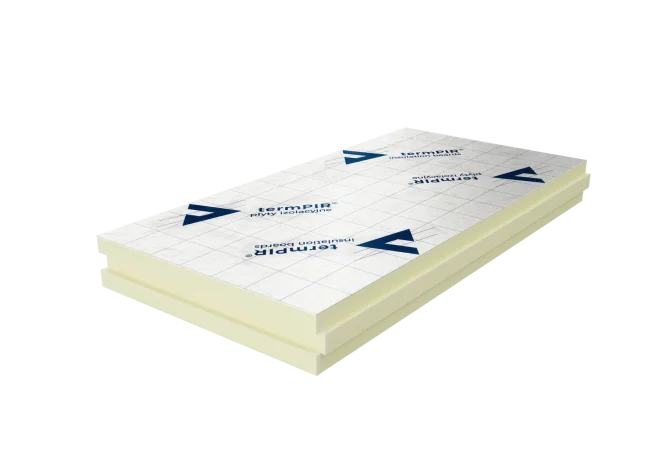
Polyisocyanurate (PIR) is currently the most thermally efficient insulation material available on a mass scale. In line with EN 13165, PIR boards with gas-tight facings achieve λD as low as 0.019 W/(m·K) — nearly twice as good as classic mineral wool (0.035–0.040 W/(m·K)) or EPS (0.031–0.040 W/(m·K)).
In practice, this means the same thermal performance is achieved with a much thinner insulation layer. Below is a comparison of the thickness required to reach U = 0.15 W/m²K (the WT 2021 requirement for a roof), ignoring the thermal resistance of other layers:
| Material | λD | Thickness for U = 0.15 |
|---|---|---|
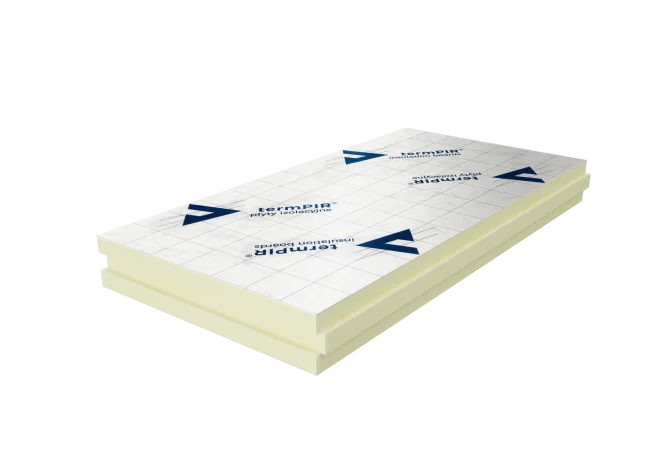
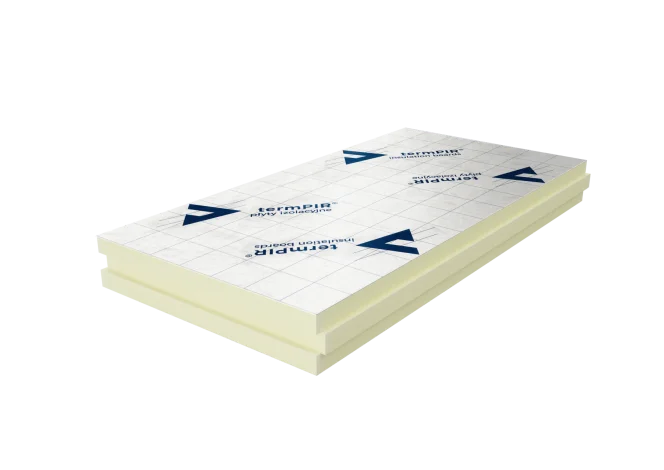
| termPIR® MAX 19 AL | 0.019 W/(m·K) | ~127 mm |
| termPIR® AL | 0.022 W/(m·K) | ~147 mm |
| Mineral wool | 0.038 W/(m·K) | ~253 mm |
| White EPS | 0.038 W/(m·K) | ~253 mm |
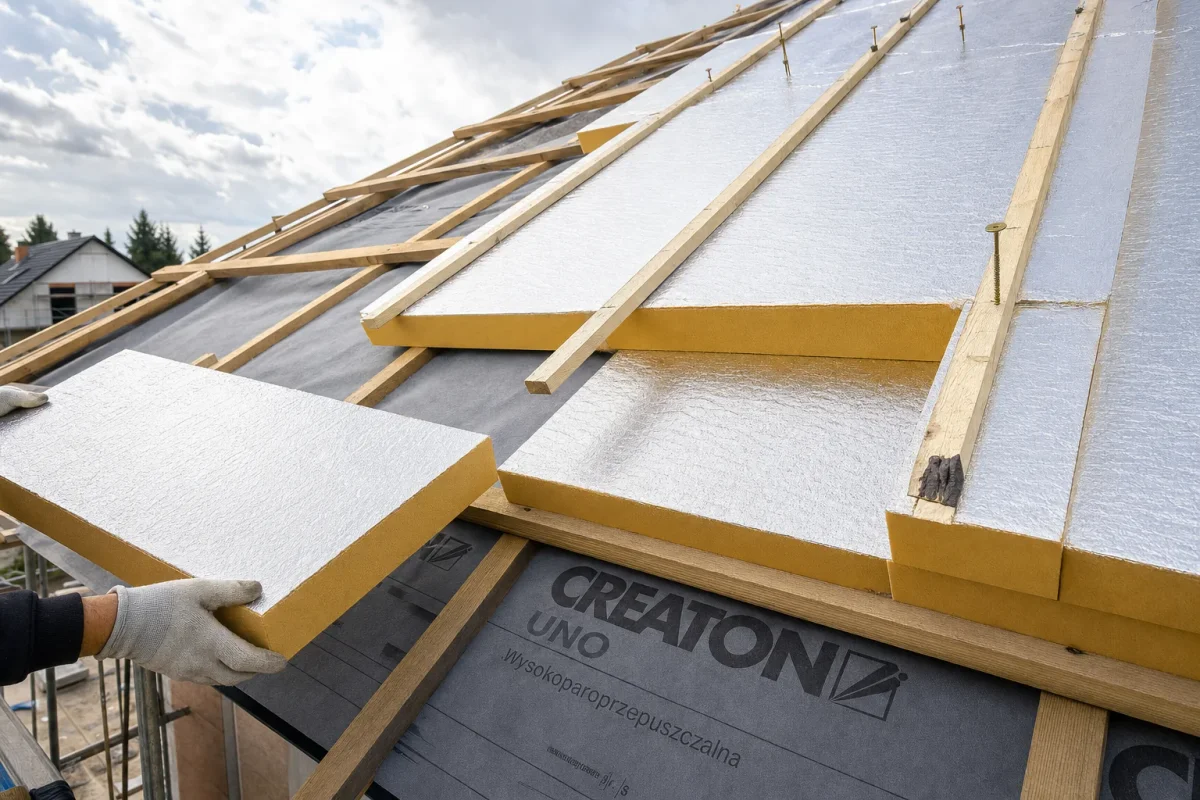
For flat and pitched roofs — where limited structural space is a frequent challenge — a difference of nearly 100 mm means not only material savings but also a lower load on the structure and less metal flashing. In retrofitting pitched roofs with a habitable attic, over-rafter installation of termPIR® works well, eliminating thermal bridges at the rafters and not encroaching on interior volume.
ETICS and façades — the role of vapour-permeable PIR boards
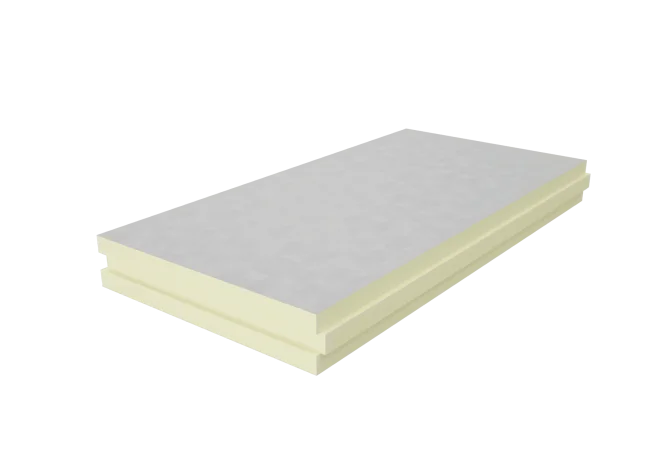
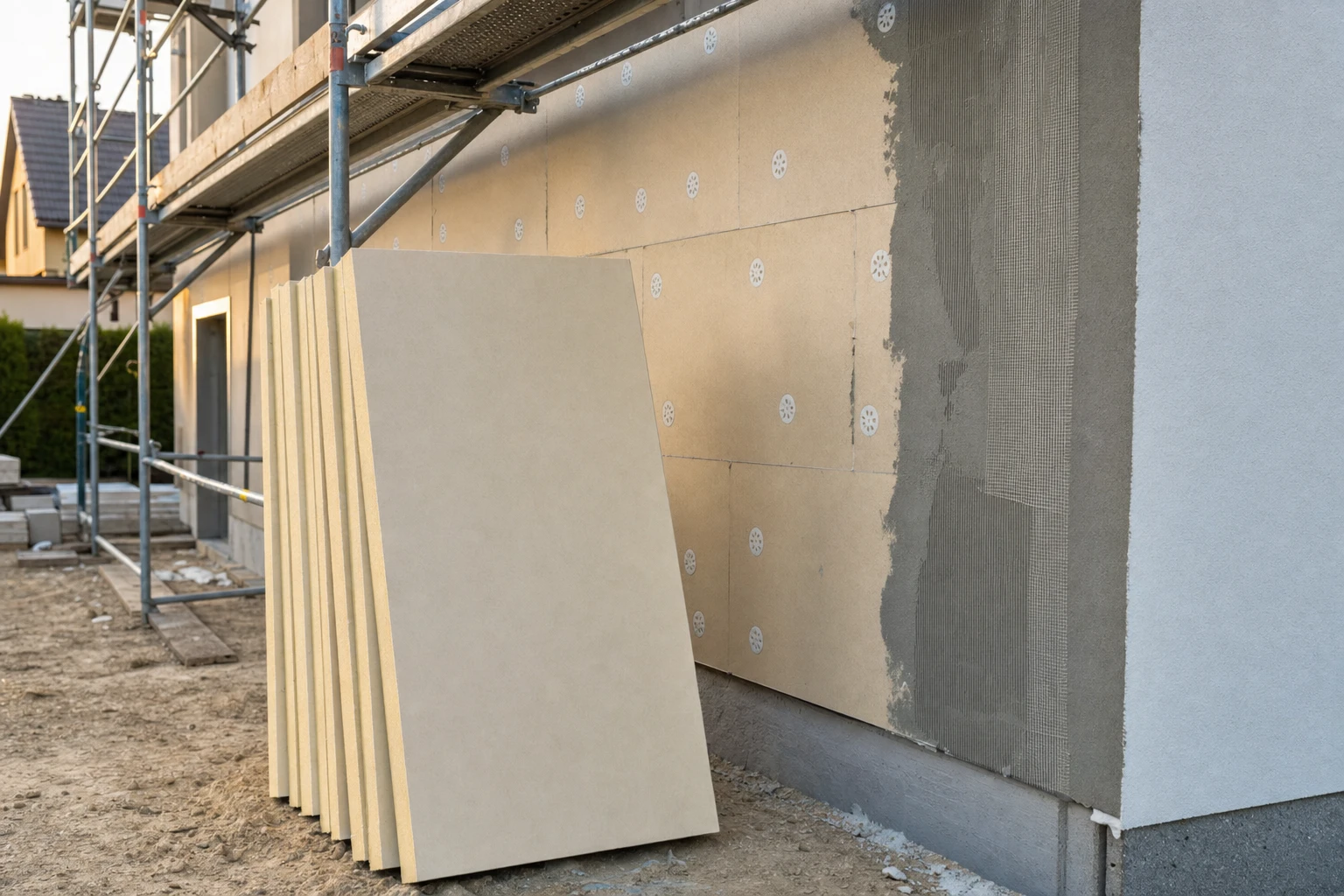
For external walls in the ETICS system (bonded external thermal insulation system, thin-coat render), standard PIR boards with aluminium foil are not suitable — the foil is gas-tight and blocks water vapour diffusion as well as the bonding of adhesive and reinforcing mortar. The dedicated solution is termPIR® ETX with a glass-fleece facing, holding European Technical Assessment ETA 17/0066, λD 0.025–0.027 W/(m·K) and fire reaction class E. The board is vapour-permeable and its surface ensures proper adhesion of cementitious adhesives — the ETICS on termPIR® ETX system enables U ≤ 0.20 W/m²K at an insulation thickness of around 120–140 mm.
For investors concerned about carbon footprint, the manufacturer also offers the termPIR® AL R-eco variant, with glass fleece embedded in the core, characterised by a lower life-cycle CO₂ footprint (LCA per EN 15804).
What next? Direction of climate and energy policy
Implementing the new WHO guidelines at national level requires coordinated action:
- accelerating retrofit support programmes (Czyste Powietrze – Clean Air, Stop Smog, the Thermal Modernisation Tax Relief),
- introducing clean transport zones in cities,
- monitoring solid-fuel quality and speeding up the replacement of below-class boilers,
- promoting deep thermal retrofits using materials with the lowest λD.
The forthcoming revision of the EPBD (Energy Performance of Buildings Directive) introduces the concept of ZEB (Zero-Emission Building) — from 2030 all new buildings in the EU are to be zero-emission. These requirements will not be achievable without high-performance thermal insulation.
Frequently asked questions
Are the new WHO guidelines legally binding?
How does thermal retrofitting reduce CO₂ emissions?
Can PIR boards be used in existing buildings?
What PIR thickness should be chosen to meet WT 2021?
Is PIR insulation environmentally friendly across its life cycle?
Related products and systems
Products
Read next
Smog and Allergies — How PIR Thermal Upgrades Cut Emissions | BOKKA

Energy Retrofit with PIR Boards and WT 2021 in Practice | BOKKA
Thermal Imaging Survey: Detecting Thermal Bridges | BOKKA