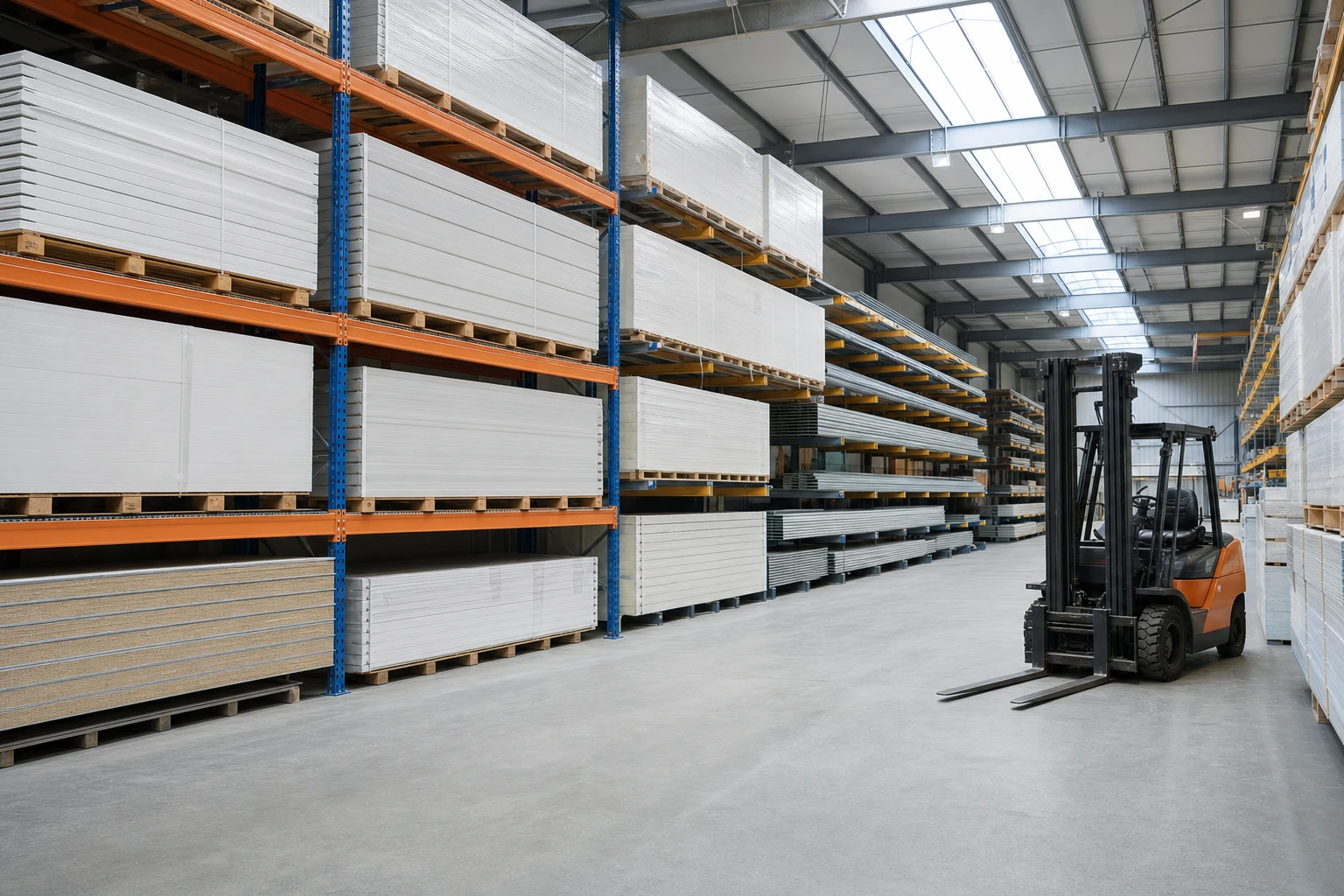
ETICS on termPIR® ETX — Complete System + 5 Most Common Contractor Mistakes
What is ETICS — in one paragraph
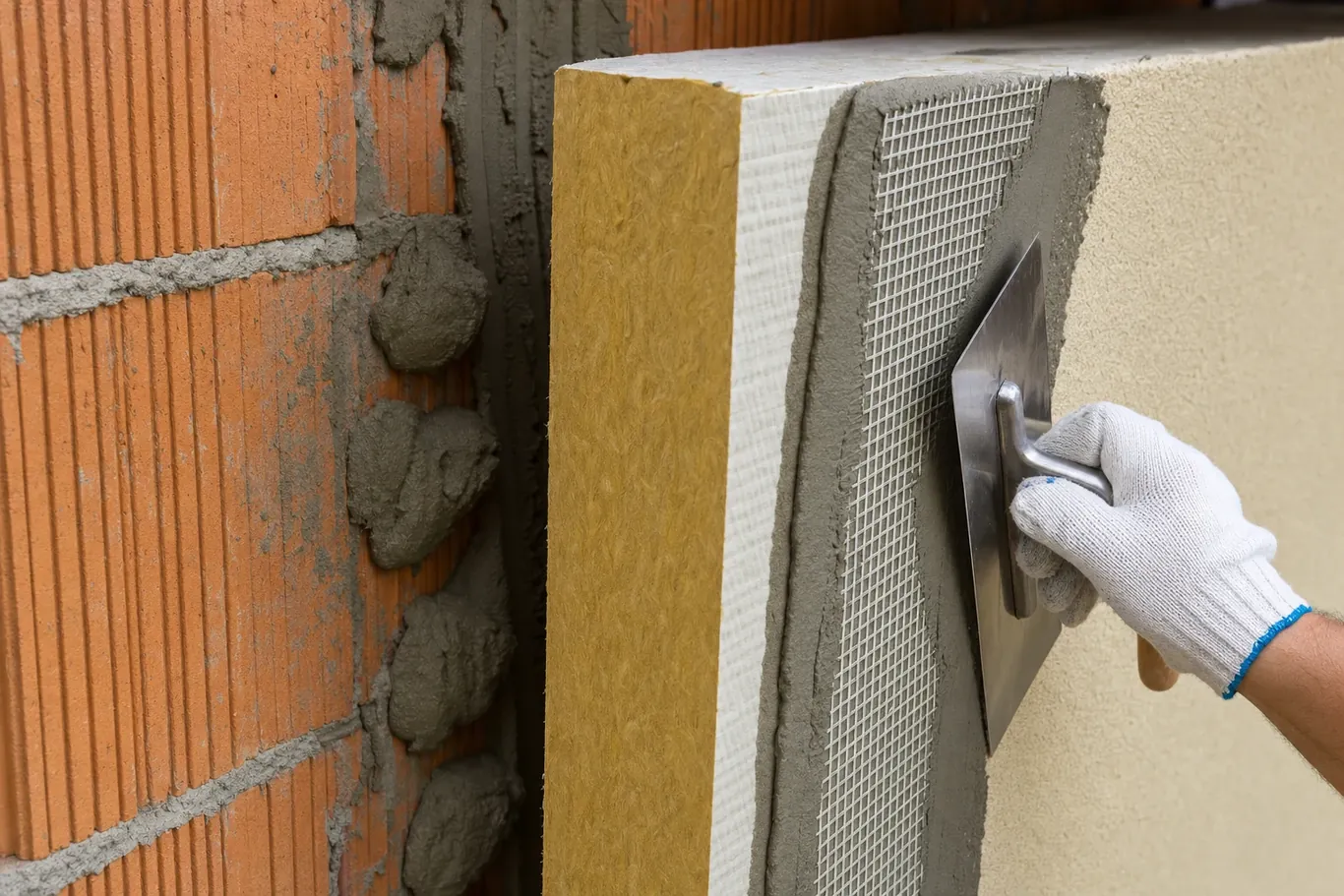
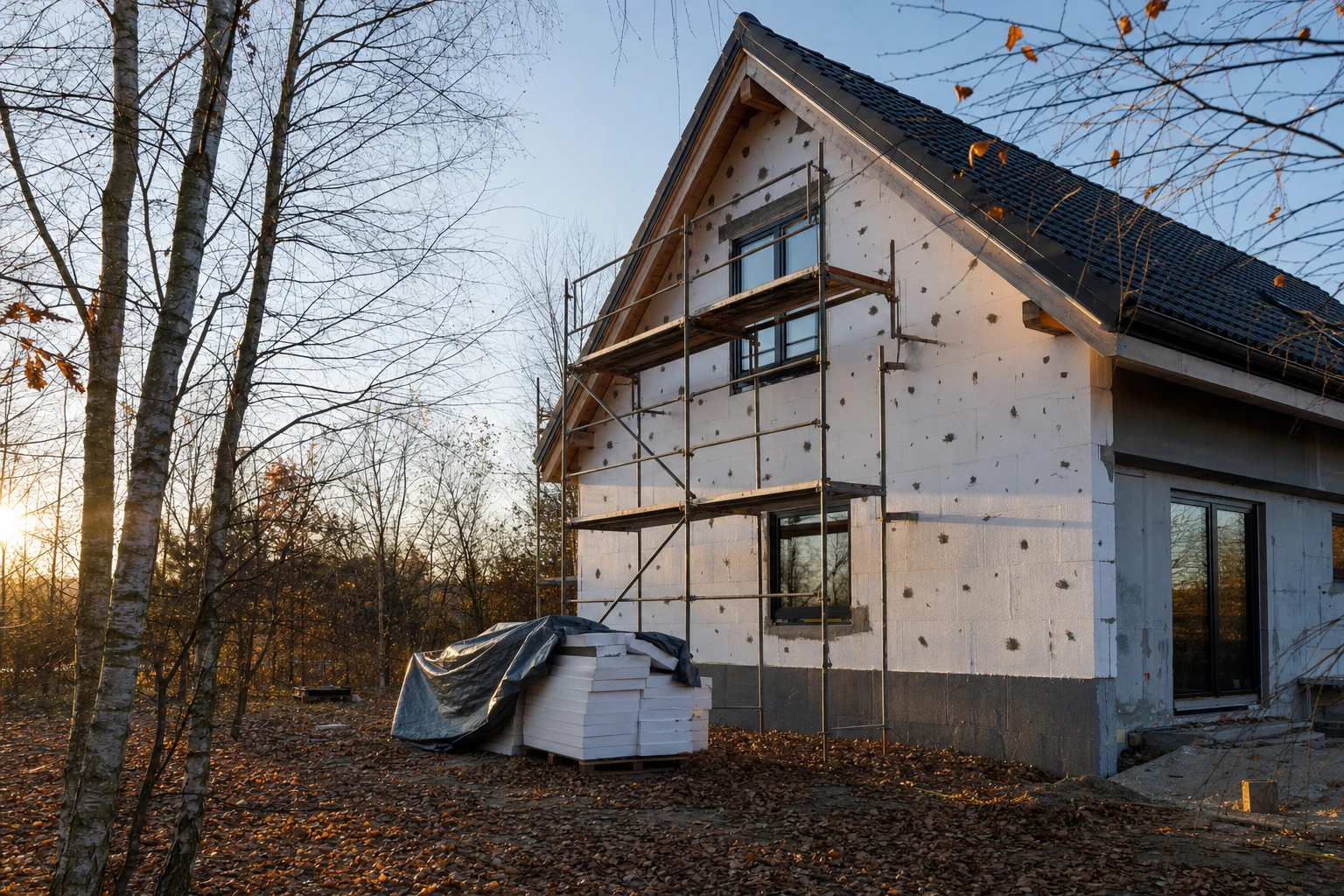
ETICS (External Thermal Insulation Composite System) is a layered system for insulating external walls from the outside. Insulation board → adhesive → anchors → reinforcing mesh → thin-coat render. An additional partition 16–25 cm thick across the entire façade.
The first ETICS in PL (1990s) was polystyrene (EPS) + acrylic render. An industry standard. But energy requirements are rising — WT 2021 requires U ≤ 0.20 for a wall, WT 2030 will require 0.16. For EPS that means 30–35 cm of thickness. Few investors want to lose that much usable area.
This is where PIR comes in: λD 0.022 instead of 0.036–0.040 for EPS = a 2× thinner wall for the same R. 15 cm of PIR instead of 30 cm of EPS. For a house with a 200 m² façade that is a saving of 30 m² of plot area (setting the storey back from the boundary).
But PIR + ETICS is a demanding system. It requires a specific board (NOT every PIR is suitable under render), a specific adhesive, anchors, mesh, render. All covered together by the ETA certificate. Improvisation = risk.
The ETICS termPIR® ETX system per ETA 17/0066
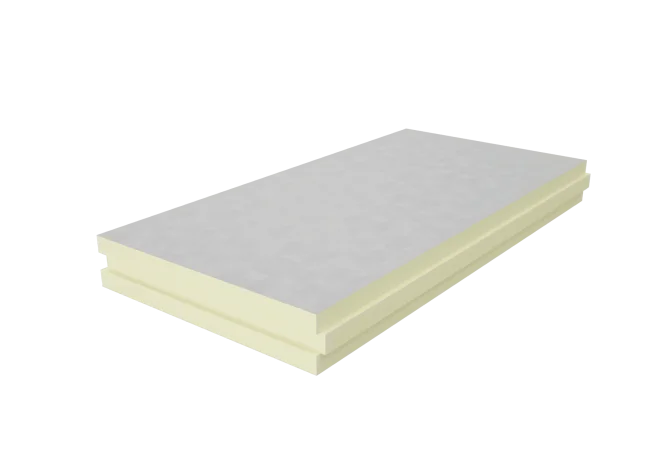
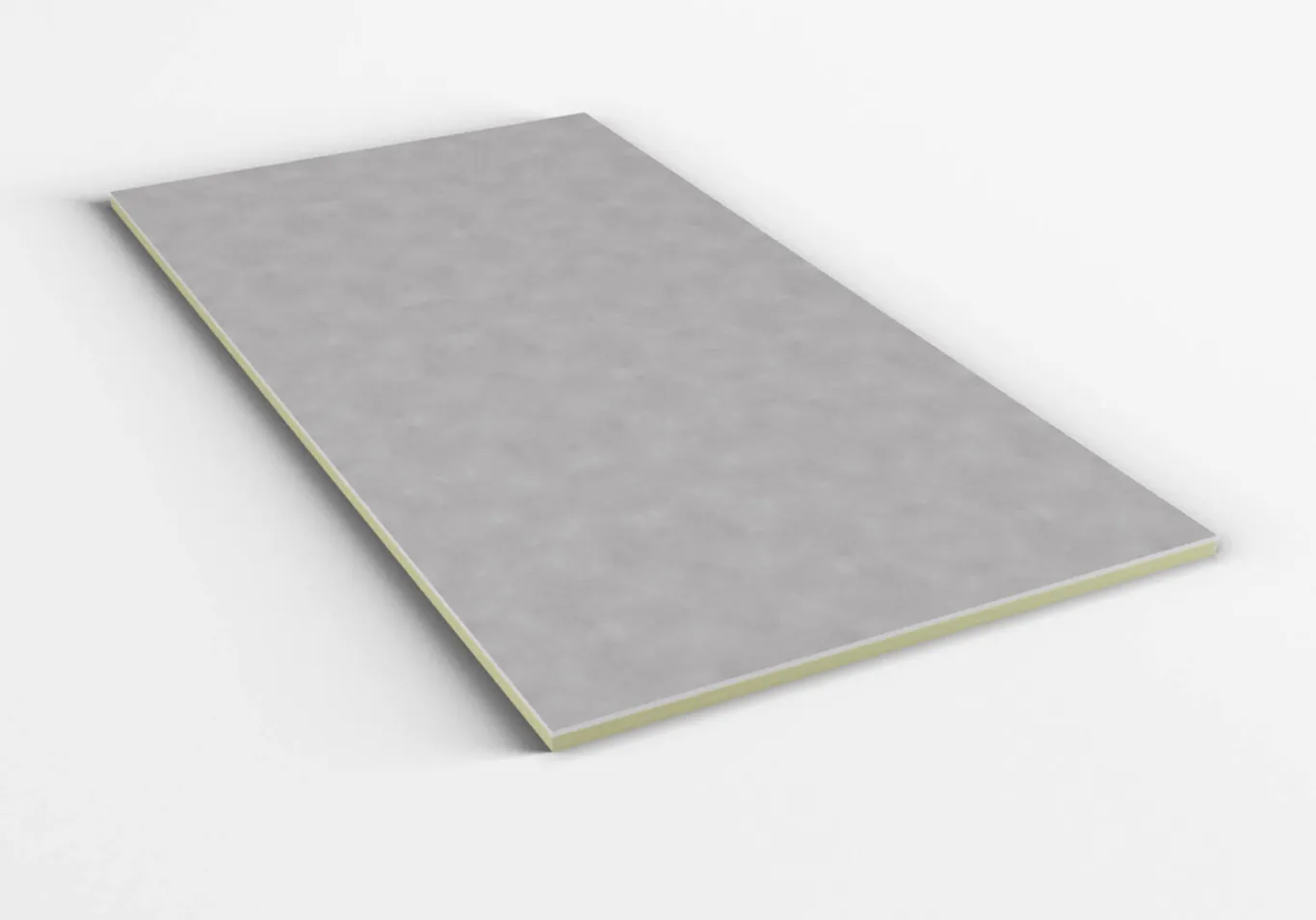
ETX is the only termPIR® board approved for the ETICS system. The reason: a glass veil instead of aluminium foil. The glass veil is:
- Gas-permeable (needed for the exchange of vapour between the wall and the façade)
- Chemically compatible with cement adhesive (cement does not react with the veil; it reacts with Al foil → corrosion and loss of adhesion)
- A strong substrate for the reinforcing mesh (the veil does not detach under pressure from the trowel)
The system holds the ETA 17/0066 certificate issued by ICiMB in 2017 (regularly renewed). Full specification — each element has specific requirements.
Layer by layer
Load-bearing wall (brick / silicate / hollow block / concrete)
  ↓
System cement adhesive specified in ETA 17/0066
  (4–5 kg/m², bead-and-dab method, min 40% of surface)
  ↓
termPIR® ETX 50–250 mm (glass veil on both sides)
  ↓
Plastic anchors (per EAD 330196-00-0604)
  (4–8 pcs/m², length +50 mm relative to PIR thickness + render layers)
  ↓
Cement reinforcing layer 3–5 mm (system mortar per ETA)
  ↓
Glass fibre mesh 145–165 g/m² (system per ETA)
  ↓
Cement finishing layer 1–2 mm
  ↓
Thin-coat render (silicate, silicone, mineral)
  (1.5–3 mm thick, scratch or grooved texture)
Each of the elements has a manufacturer and a number in the ETA. The system holds together as a whole. A single change (e.g. an adhesive from another manufacturer) requires an additional ETA assessment — which in practice does not exist, so the system loses its certificate.
What ETA 17/0066 provides in practice
- System reaction-to-fire class: B-s1 d0 (for PIR + cement render)
- U-value for various thicknesses:
- 50 mm → U 0.42 W/(m²·K) — too little for WT 2021
- 100 mm → U 0.21 W/(m²·K) — the WT 2021 limit
- 140 mm → U 0.15 W/(m²·K) — comfortably WT 2021
- 200 mm → U 0.11 W/(m²·K) — passive standard
- System durability: 25 years (declared by the manufacturer)
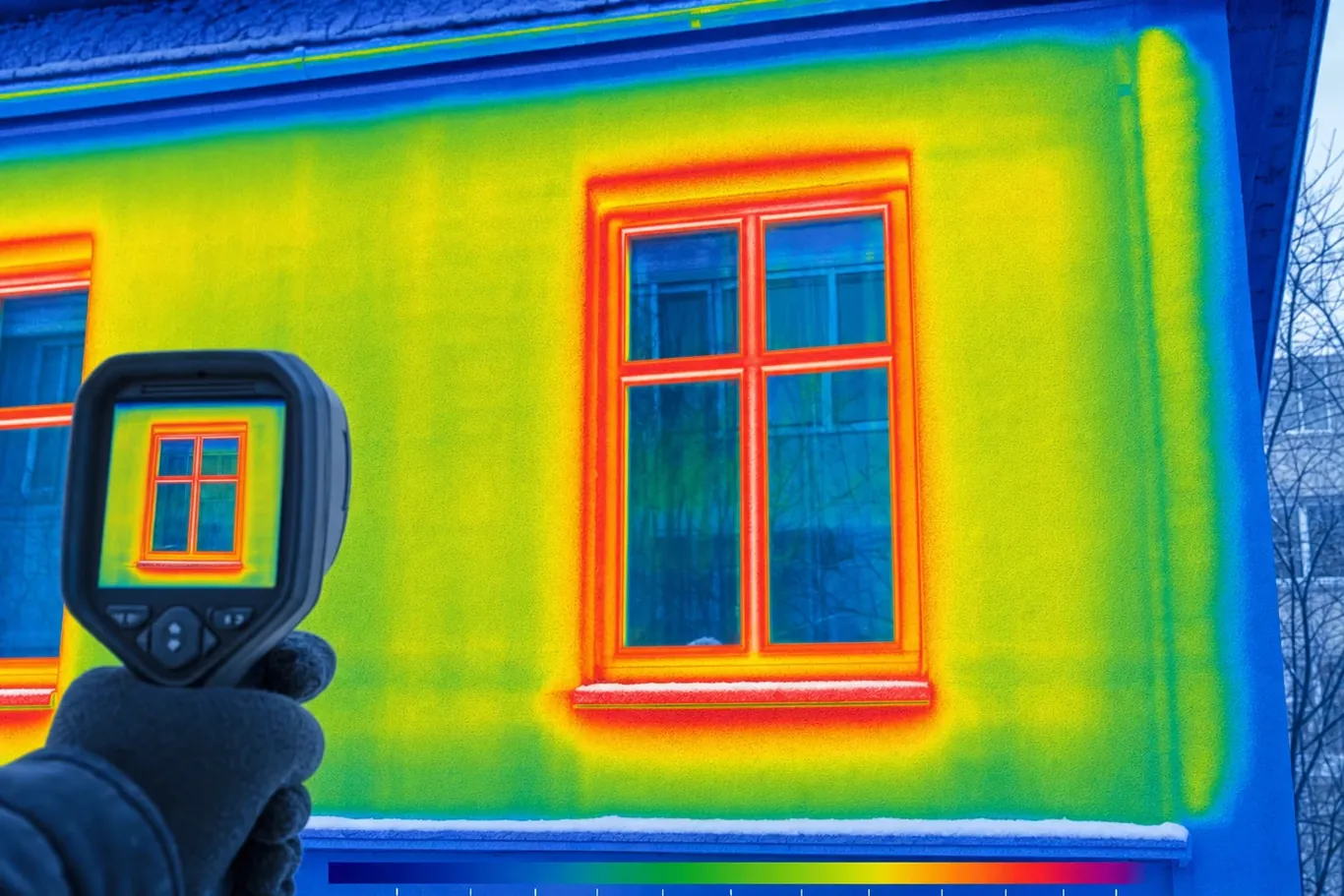
- No thermal bridges with correct installation (uniform layers)
The 5 most common contractor mistakes
We see these mistakes regularly during technical site visits. Each of them voids the ETA warranty + lowers the insulation parameters.
Mistake 1 — Adhesive from outside the ETA system
What happens: The contractor buys “polystyrene adhesive” at a DIY market (Atlas, Ceresit, Knauf — all OK for EPS, but not certified for termPIR ETX). The adhesive has different chemistry and bonds differently with the glass veil.
Consequence:
- Weaker adhesion (4–6 kPa instead of the required >10 kPa)
- In extreme cases: boards falling off after 2–3 years (frost-sun cycles → the adhesive cracks)
- ETA voided → no system warranty
Cure: Only the system adhesive listed in ETA 17/0066. Any other product = a separate assessment.
Mistake 2 — Adhesive only around the board perimeter
What happens: Adhesive applied only around the perimeter of the board (like a frame), the centre empty. The contractor thinks “I’m saving adhesive, it’ll hold anyway”.
Consequence:
- An air gap in the middle of the board = a moisture accumulator (condensation)
- A thermal bridge around the perimeter (cement adhesive insulates worse than PIR)
- The board vibrates on impact = low long-term adhesion
Cure: The bead-and-dab method: perimeter + 3–4 dabs in the centre = min. 40% of the board surface covered with adhesive. An ETA requirement.
Mistake 3 — Wrong anchors or anchors too short
What happens: The contractor uses polystyrene anchors (e.g. Termodysk 100 mm on 140 mm PIR + 5 mm render + wall). The fastener is 25 mm too short — it anchors in the PIR itself instead of in the wall.
Consequence:
- Wind (gusts ≥100 km/h) tears out the anchors
- The board detaches from the wall, the adhesive cracks
- In extreme cases the façade falls off during a storm
Cure:
- Anchor length = PIR thickness + render thickness (3–5 mm) + min. 50 mm into the load-bearing wall (brick) or 80 mm in concrete
- Number: 4–6 pcs/m² for heights <8 m, 8 pcs/m² for heights >8 m (edge zone up to +50%)
- Per EAD 330196-00-0604
Mistake 4 — No reinforcing mesh or the wrong mesh
What happens: The contractor omits the mesh (rarely) or uses a low-weight mesh (110 g/m² instead of the required 145–165 g/m²).
Consequence:
- The mesh cracks under the influence of temperature (render expansion 0.5 mm/m)
- Cracks on the façade after the first summer
- The render falls off at window corners (the weakest point)
Cure: Only glass fibre mesh 145–165 g/m² (system from the ETA or an equivalent with a certificate). The mesh is embedded into the middle of the reinforcing layer (NOT on the surface). Window + door corners = an additional diagonal mesh patch 25×40 cm.
Mistake 5 — Wrong thin-coat render
What happens: The contractor chooses an acrylic render (the cheapest at the markets). Acrylic render has low gas permeability (Sd > 0.5 m).
Consequence:
- Water vapour from the inside cannot escape through the façade
- Condensation inside the PIR layer + glass veil
- In winter: a layer of ice at the PIR-wall boundary → internal cracking → an R drop of 15–25%
- In summer: fungal growth inside the insulation
Cure: A silicate or silicone render (Sd ≤ 0.2 m). Acrylic NOT for PIR. Acrylic works only for EPS (where the water vapour already condenses on the EPS itself within the wall).
Practical installation procedure (summary)
Day 1 — Wall preparation
- Wall check (flatness ±5 mm/2 m, no loose elements)
- Priming the substrate (deep-penetrating primer)
- Aluminium starter profile on the plinth
Day 2 — Bonding the termPIR® ETX boards
- System adhesive (per ETA), mixed with water as instructed
- Bead-and-dab application (min. 40% of surface)
- Bonding the boards from the bottom up, in a staggered pattern (like bricks)
- Board pressed in with a float or wooden board, checked with a spirit level
Day 3 — Adhesive curing time (24 h)
No pressing in anchors during the first 24 h.
Day 4 — Anchors and reinforcing render
- Drilling holes (depth = anchor length)
- Driving in the anchors to the depth in accordance with the ETA
- Cement reinforcing layer 3–5 mm (system mortar)
- 145 g/m² mesh embedded into the layer (50% overlap)
- Smoothing with a float
Day 5 — Curing time (48 h)
Day 6 — Thin-coat render
- Primer for the render (silicate or silicone)
- Textured render (scratch 1.5–2.5 mm or grooved 2–3 mm)
- Finishing by floating (chosen texture)
The full procedure: 6–8 days for a 100 m² façade (allowing time for drying).
What BOKKA provides for ETICS projects
We sell termPIR® ETX across the full thickness range 50–250 mm. For ETICS projects we offer:
- The full ETA 17/0066 package in the documentation delivered with the pallet
- A specification of compatible elements (adhesive, anchors, mesh, render — compliant with the ETA)
- Technical advice: R calculation + thickness selection for a specific U
- Construction-site audit for larger projects (>500 m² of façade)
🤝 Free BOKKA technical consultation — we’ll help select the product and complete documentation for your project.
FAQ
Can I use termPIR® AL (Al foil) instead of ETX (glass veil)? NO. AL has aluminium foil — incompatible with cement adhesive (corrosion, no adhesion). An ETICS system on AL does not exist and has no ETA certificate.
What about termPIR® WS (glass veil on BT)? WS has a glass veil like ETX, but has no ETA for the ETICS system. The ETA is issued specifically for ETX. Using WS in ETICS = no system certificate.
Are anchors always needed? YES, for a masonry wall. Adhesive + anchors = two fastening methods, safety redundancy. Some ETICS systems on reinforced concrete façades (an ideal substrate) allow bonding only without anchors, but this requires an additional ETA assessment from the manufacturer.
Is ETICS on PIR more expensive than on EPS? In terms of material YES (~30% more for the insulation). But in the total system cost the difference is smaller (~10–15%), because PIR needs a thinner layer → less render, less plaster, fewer anchors, less surface to render.
What is the best time of year for ETICS? Spring and autumn (15–25°C, low humidity). In summer (>30°C) — the adhesive dries quickly, a problem with open time. In winter — sub-zero temperatures void the contractor’s warranty.
How many years does ETICS last? Manufacturer’s declaration: 25 years. In practice a well-made system + a quality render = 35–40 years without a major renovation (minor render touch-up every 8–12 years).
Summary
ETICS on termPIR® ETX is a high-performance façade system for facilities requiring:
- WT 2021 / WT 2030 / passive standard
- A thinner wall than EPS (a saving of plot area)
- A durable façade (25–40 years)
It requires full compliance with ETA 17/0066: system adhesive per ETA, anchors per EAD, 145 g/m² mesh, silicate or silicone render. Improvisation = loss of warranty + a drop in R.
The 5 most common contractor mistakes (wrong adhesive, adhesive only around the perimeter, short anchors, no mesh, acrylic render) are easy to avoid with the right design specification and supervision on site.
🤝 Free BOKKA technical consultation — we’ll help select the product and complete documentation for your project.
Sources:
- ETA 17/0066 — European Technical Assessment of the termPIR® ETICS system (ICiMB, 2017, renewed)
- EAD 330196-00-0604 — European Assessment Document for ETICS anchors
- PN-EN 13499:2018 — Thermal insulation products for buildings — Specifications for ETICS systems
- Guidelines of the ETICS system holder (system adhesive and mesh per ETA 17/0066)
Related products and systems
Read next
termPIR® ETX — PIR Boards with Glass Fleece for ETICS | BOKKA
Thermal Bridges at Window Joints with PIR — 6 Details with Isotherms
Insulating before winter — what you can still finish in October and November