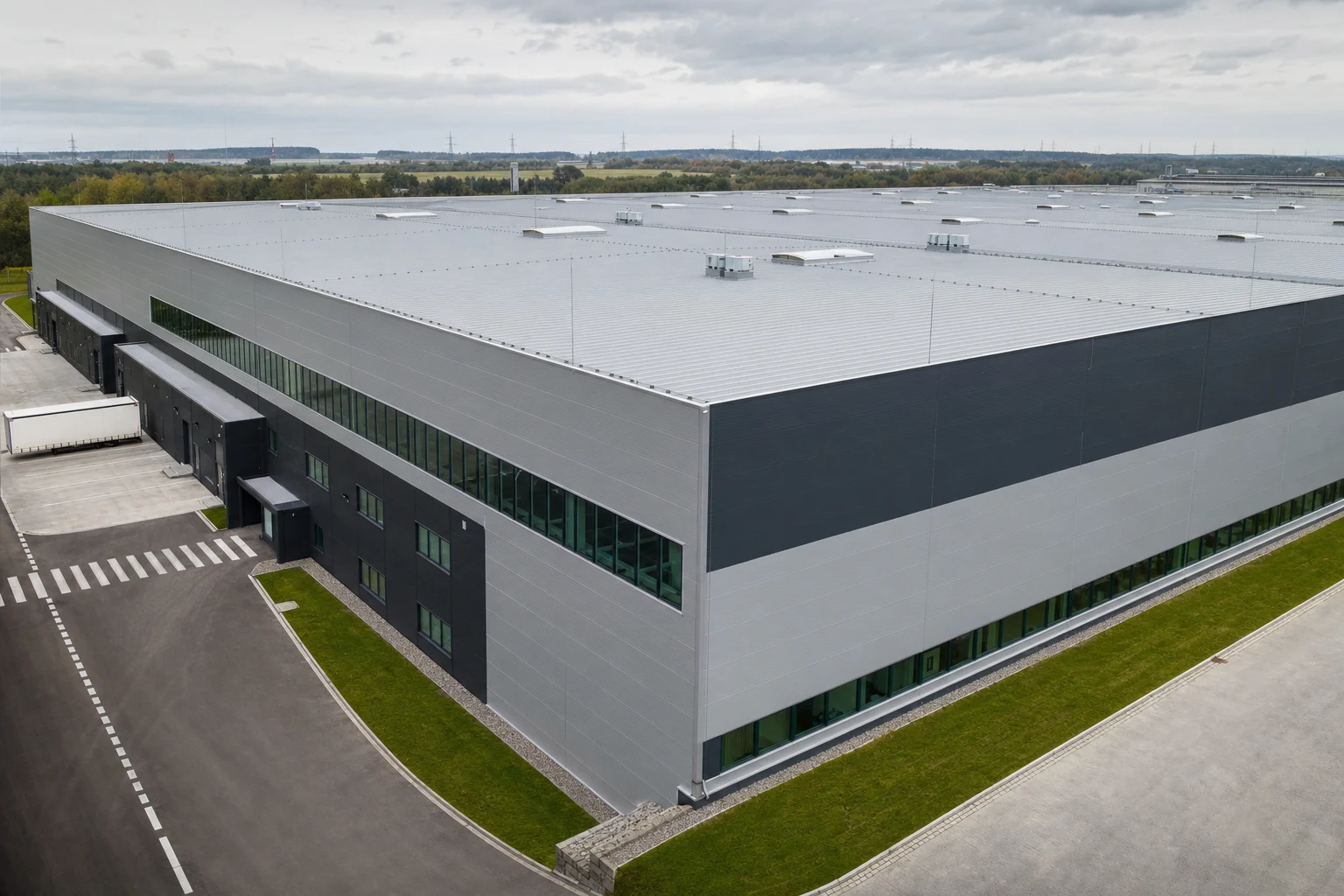
EPD and carbon footprint of sandwich panels and PIR — ESG in construction
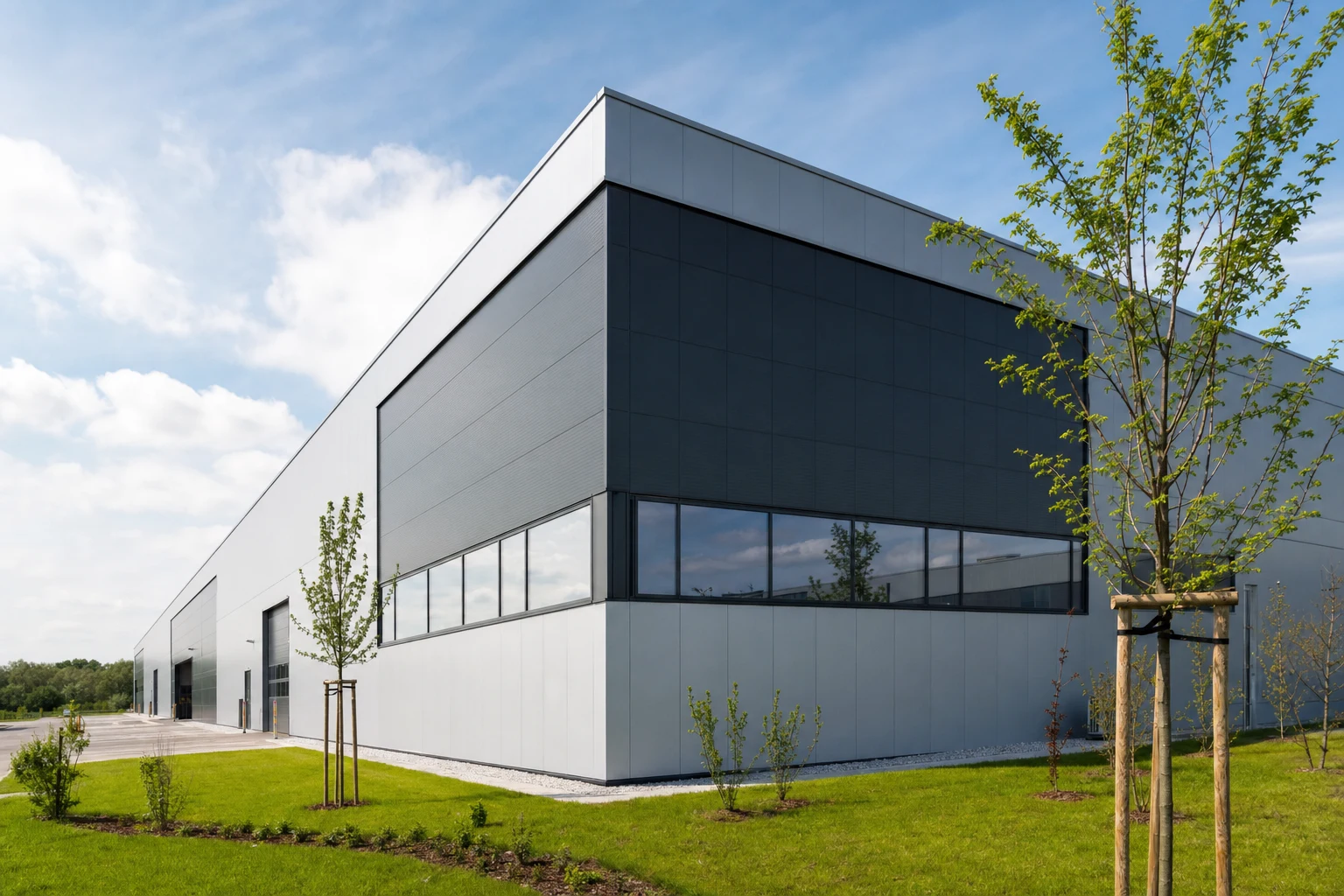
Sustainable construction has ceased to be a marketing slogan and has become a documentation requirement. Investors reporting ESG, designers in the BREEAM/LEED systems and entities bidding in green tenders increasingly ask not “how much does it cost”, but “what is its carbon footprint and is there an EPD”. For envelope materials — sandwich panels and PIR insulation — this question goes straight into the specification. In this article we explain what an EPD is, how to read the carbon footprint (GWP) and what role they play in certifications, the EU taxonomy and procurement.
What an EPD is
An EPD (Environmental Product Declaration) is an environmental product declaration — a document describing a product’s impact on the environment over its whole life cycle. It is a so-called type III declaration: prepared according to standardised rules, independently verified and comparable between products of the same category.
For construction products the basis is the EN 15804 standard (in combination with the product category rules, PCR). It sets out how to calculate and present the environmental indicators so that the EPDs of different manufacturers can be set against one another. This is the key difference from general “eco” declarations — an EPD is not a marketing statement but a verified data set.
LCA — where the numbers in an EPD come from
Behind an EPD stands a life cycle assessment (LCA) — a methodical calculation of environmental impacts at the individual stages of a product’s life. EN 15804 divides the life cycle into modules, among them:
- A1–A3 — the product stage: raw material extraction, transport to the plant, manufacture (the so-called “cradle to gate”),
- A4–A5 — transport to the site and installation,
- B1–B7 — use, maintenance, repairs, energy use in operation,
- C1–C4 — end of life: demolition, transport, processing, disposal,
- D — the potential for recovery, recycling and reuse beyond the system boundary.
When reading an EPD, you must always know which modules the declaration covers and what the functional unit is (e.g. 1 m² of product of a given thickness and parameters). Without this, comparisons lead astray.
How to read the carbon footprint (GWP)
The most frequently cited indicator is GWP (Global Warming Potential) — the potential to create the greenhouse effect, expressed in kg of CO₂ equivalent. It is this that hides behind the popular term “carbon footprint”.
Three rules for reading GWP correctly:
- The same modules — we compare A1–A3 with A1–A3, not the A1–A3 of one product with the full A–C cycle of another.
- The same functional unit — e.g. the same square metre of comparable performance parameters (insulation, capacity), because only an equivalent function makes the comparison honest.
- The current EPD version — values change with the production technology and the plant’s energy mix; we take them from the current document, not from memory.
In construction the significance of embodied carbon is growing — the emissions “locked in” the materials (the A modules), as opposed to the operational emissions from using the building. For the envelope this means that what counts is not only how the building heats/cools, but also what it was built from.
We do not give specific GWP values here for individual panels — these should be read from the current EPD of the given product. We are happy to point you to the right document for a chosen product — write to us.
EPD in BREEAM, LEED and tenders
In the multi-criteria building certification systems — BREEAM and LEED — products with an EPD translate directly into points. The categories concerning materials and the carbon footprint reward the use of products with independently verified declarations, and in some pathways — products with a lower GWP. The more items in the specification with a credible EPD, the higher the building’s potential rating.
Increasingly, an EPD is also required or rewarded in green public procurement and in the internal purchasing policies of large investors and main contractors. The lack of an EPD can simply exclude a product from the shortlist.
It is worth adding that some products (more precisely, the facing coatings) also carry certificates of responsible sourcing of raw materials, such as BES 6001 — another argument in ESG documentation, supplementing the EPD with the supply-chain aspect.
EU taxonomy and EPBD — why this is accelerating
The regulatory direction is unambiguous. The EU taxonomy classifies economic activities by sustainability and influences the financing of investments, while the amended EPBD directive shifts construction towards buildings with very low energy demand and — increasingly clearly — towards reporting the carbon footprint across the whole life cycle of the building, not only the energy used in operation.
The consequence for envelope materials: the EPDs of products are input data for calculating the building’s embodied carbon. The earlier the designer has the EPDs of the panels, insulation and facings, the easier it is to balance the building against ESG goals and financing requirements. We write about this context more broadly in the article on zero-emission buildings and the EPBD 2030.
The most common mistakes when comparing EPDs
An EPD gives comparability, but only if it is read carefully. In design practice the same traps recur:
- Mixing module scopes — setting a product with a “cradle to gate” declaration (A1–A3) against a product with a full cycle (A–C) as if they were the same; this understates one of them.
- Ignoring module D — the potential for recycling and recovery can significantly change the balance, especially for steel; omitting it distorts the picture.
- Different functional units — comparing a square metre of different thickness, insulation or capacity, i.e. products performing a different function.
- Sector vs product EPD — a declaration averaged for the industry (sectoral) is not the same as the EPD of a specific product of a given manufacturer; for precise calculations it is better to reach for the product declaration.
- An outdated version — an EPD has a validity date; a change in technology or energy mix can shift the values.
The rule is simple: we compare like with like — the same module scope, the same functional unit and current documents. In case of doubt, it is worth asking the manufacturer or distributor to point to the right declaration.
Sandwich panels and PIR under ESG
In design practice what counts is to document, not just declare. For an envelope of sandwich panels and PIR insulation this means access to the product EPD and — where applicable — to the supply-chain certificates of the facing. In the GS insPIRe and termPIR range we select solutions for the specific application and help compile the environmental documentation:
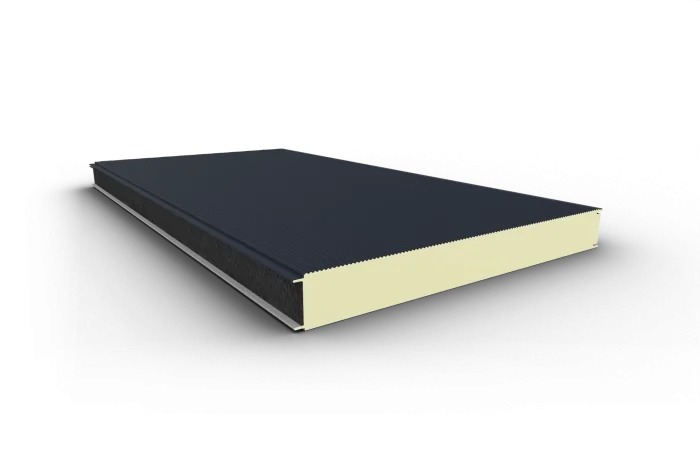
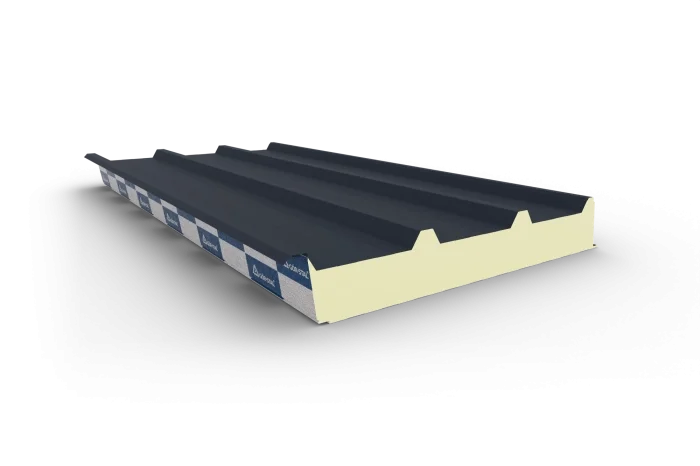
- insPIRe S sandwich panels and insPIRe D — wall and roof of industrial buildings,
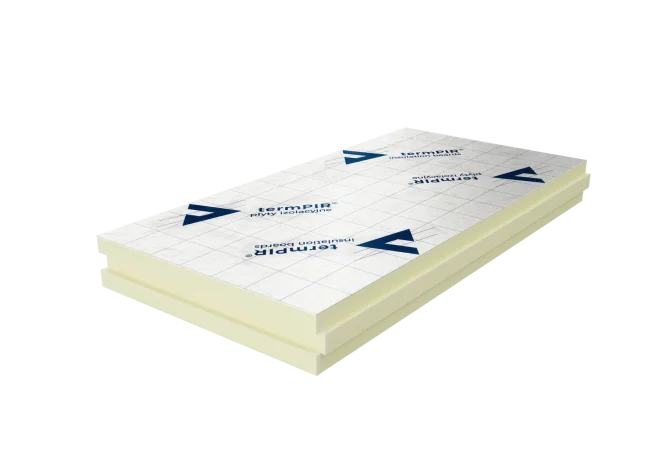
- termPIR AL insulation boards and termPIR ETX — PIR thermal insulation.
A good example of a facing coating with full environmental documentation (EPD per EN 15804 and BES 6001) is the premium coating for a C5 environment that we have described. We always give the specific GWP values and the EPD scope on the basis of the current document of the given product.
Summary
An EPD is today not an add-on but the documentation currency of sustainable construction: a verified declaration per EN 15804, based on LCA, giving among other things the carbon footprint (GWP) broken down by life-cycle modules. A correct comparison requires the same modules and the same functional unit. An EPD translates into points in BREEAM/LEED, is sometimes required in green tenders, and in the light of the EU taxonomy and the EPBD becomes input data for a building’s embodied carbon. We read the GWP values from the current document of the product — and we will help point you to the right one.
🤝 Contact a BOKKA technical adviser — we will indicate the current EPD and environmental documentation for selected sandwich panels, PIR insulation and facing coatings for your ESG project.
Sources:
- EN 15804 — Sustainability of construction works. Environmental product declarations. Core rules for the product category of construction products
- ISO 14025 — Environmental labels and declarations. Type III environmental declarations
- ISO 14040 / 14044 — Environmental management. Life cycle assessment (LCA)
- BES 6001 — Responsible Sourcing of Construction Products (supply-chain certification)
- The EPBD directive and the EU Taxonomy Regulation — context for reporting the carbon footprint of buildings
Frequently asked questions
What is an EPD and how does it differ from an ordinary declaration?
What is GWP and how do I read the carbon footprint in an EPD?
Is an EPD needed for BREEAM and LEED?
Do sandwich panels and PIR have EPDs?
How does an EPD relate to the EU taxonomy and the EPBD?
Related products and systems
Read next

How to calculate the U-value of a sandwich panel and PIR assembly (step by step)
Summer overheating of attics and halls — thermal phase shift and comfort
How many PIR or sandwich panels for a roof — how to calculate (formulas + calculator)