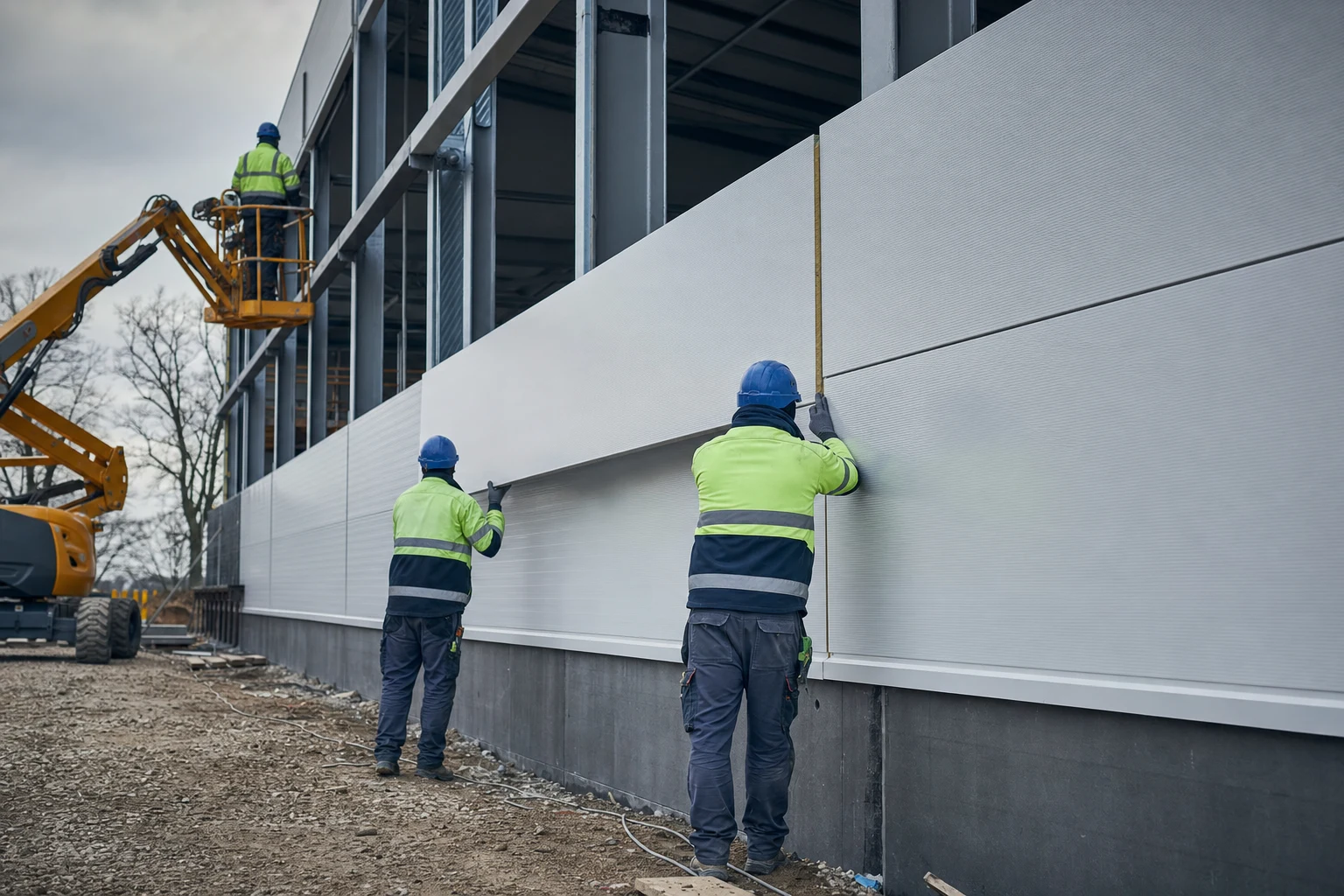
Gór-Stal sandwich panels and a facing for a C5 environment
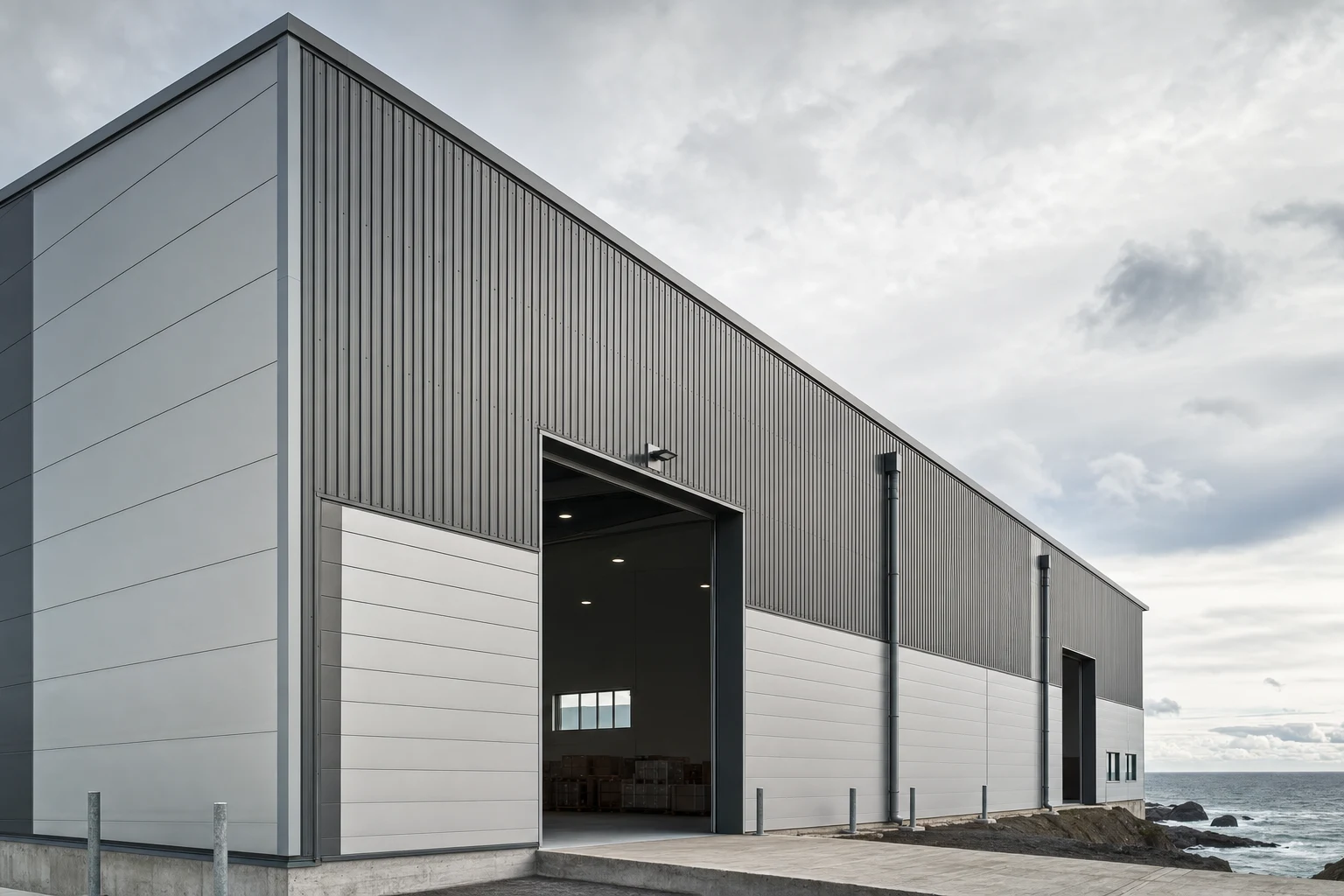
The durability of a façade and roof from sandwich panels in an aggressive environment is decided not in the core but on the surface of the steel facing. It is the organic coating that decides whether the envelope will survive decades in a coastal or industrial atmosphere, or begin to corrode after a few seasons. In this article we explain what the C5 corrosivity category per ISO 12944 is, why standard coatings are not enough in it, and which facing is today the new C5 standard on GS insPIRe sandwich panels — Colorcoat Prisma, which replaces the withdrawn HPS coating.
The facing decides durability
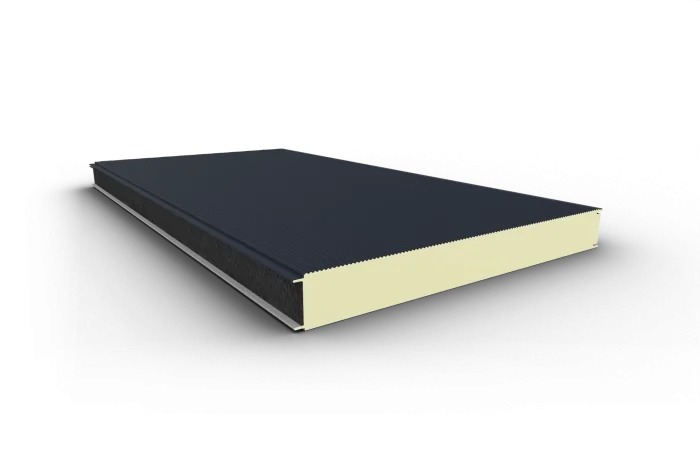
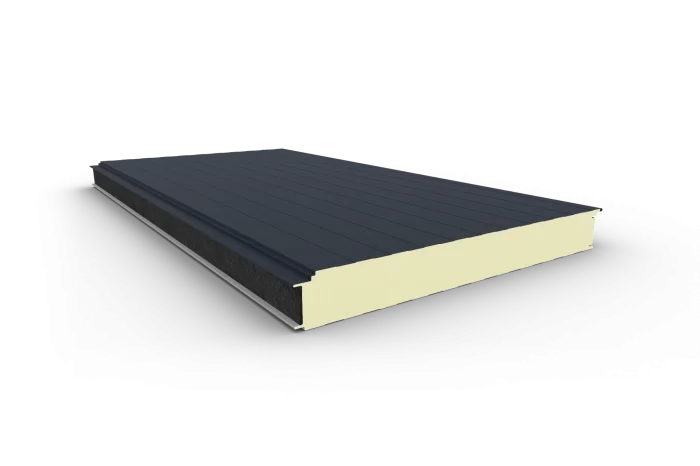
A sandwich panel is a sandwich: an insulating core (PIR or mineral wool) enclosed by two steel facings. The core is responsible for insulation and fire resistance, but it is the facing that meets the environment — rain, salt, chemical vapours, UV radiation. The steel itself is galvanised or coated with a zinc-aluminium alloy, and over that an organic coating is applied, which forms the actual anti-corrosion barrier and gives the colour.
The selection of this coating is not a matter of aesthetics but of durability engineering. In a mild environment a thin polyester coating is enough. In an aggressive environment the same coating will corrode, fade and lose its warranty long before the end of the building’s assumed service life. That is why the classification of the environment must precede the choice of facing.
What a C5 environment is (ISO 12944)
The EN ISO 12944-2 standard divides atmospheric environments into corrosivity categories — from the mildest to the extreme:
| Category | Corrosivity | Typical environment |
|---|---|---|
| C1 | very low | heated interiors, offices |
| C2 | low | rural areas, low pollution |
| C3 | medium | cities, moderate industry, coastal areas of low salinity |
| C4 | high | chemical plants, swimming pools, industrial and coastal areas |
| C5 | very high | industry of high humidity and aggressive atmosphere; coastal zones of high salinity |
| CX | extreme | offshore marine zones, extreme industry |
C5 is the second-to-last, very demanding level. Buildings that typically require it:
- halls and warehouses in the coastal belt (salt in the air drastically accelerates corrosion),
- chemical plants and buildings with aggressive process vapours,
- wastewater treatment plants,
- swimming pools and water parks (chlorine + high humidity),
- heavy industry with high emissions and dampness,
- selected agricultural and cold-store buildings, where the atmosphere can be especially aggressive.
For such locations the designer should deliberately specify a facing of a confirmed corrosion resistance category corresponding to C5 — otherwise the investor is exposed to premature repairs and loss of warranty.
Why standard coatings are not enough in C5
The most popular, cheapest facing is standard polyester (SP) — a thin coating of the order of a few tens of micrometres. It works in mild environments (roughly up to C3), but in C4–C5 its barrier is too thin to stop under-film corrosion and UV degradation. The effects in an aggressive environment are:
- corrosion starting from cut edges and damage,
- fading and chalking of the surface,
- loss of the manufacturer warranty (most warranties on thin coatings do not cover C5),
- the need for costly renovations long before the end of the building’s life.
For a C5 environment, premium coatings are needed — thicker and/or of a higher class of corrosion and UV resistance. Historically this role was played, among others, by the HPS coating, and today — by Colorcoat Prisma.
HPS vs Colorcoat Prisma — what is changing
HPS is a thick, textured polymer coating, valued for years for its high mechanical resistance and proven in harsh and coastal conditions. It was a frequent choice for corrosive environments.
Currently HPS is being withdrawn from the range, and its place is taken by Colorcoat Prisma — a coating dedicated to a C5 environment, which we are introducing on the GS insPIRe sandwich panels (manufactured by Gór-Stal, distributed by BOKKA). For the designer this means a simple recommendation: if HPS appears in the specification, it should be updated to Colorcoat Prisma.
In short, the difference in the character of the two coatings: HPS relied on thickness and mechanical resistance, whereas Prisma is a modern, three-layer chromium-free coating of the highest class of resistance to corrosion and UV radiation, with better colour stability and aesthetics. Below are the hard parameters of Prisma — they come from the technical data sheet of the coating manufacturer (Tata Steel).
Colorcoat Prisma — the hard data
| Parameter | Value | Meaning |
|---|---|---|
| Metallic substrate | Galvalloy (95% Zn + 5% Al) | Enhanced cathodic protection, including at cut edges |
| Corrosion resistance category | RC5+ (EN 10169:2022) | Highest class — dedicated to C5 |
| UV resistance category | Ruv5 (EN 10169:2022) | Highest class of resistance to radiation |
| Internal environment influence | CPI5 | Highest class |
| Salt spray / humidity | 1000 h / 5000 h | Confirmed resistance in tests |
| Max. continuous service temperature | 90°C | Stability under solar exposure |
| Reaction to fire | A1 (for sections ≥0.4 mm) | Highest class of non-combustibility |
| BBA durability | over 40 years | Protection against corrosion in industrial, urban and rural conditions |
| Confidex® warranty | up to 40 years | Comprehensive warranty of the coating manufacturer |
| Composition | chromium-free (REACH compliant) | Environmental safety |
The RC5+ and Ruv5 resistance is also confirmed in Poland by an ITB opinion. Prisma has an environmental product declaration (EPD per EN 15804) and a responsible sourcing certificate BES 6001, supports the BREEAM and LEED systems, and in tests to GOST standards retains its properties in the range from -60°C to +60°C. It is a coating conceived with durability in the harshest environments in mind — exactly where HPS was previously reached for.
It is worth remembering the colour warranty: under Confidex® it covers colour stability for 20 years in northern Europe (Zone 1) and 15 years in the south (Zone 2). For buildings in the immediate coastal belt (up to about 1 km from the shore) separate conditions apply — which is why it is worth declaring the building location already at the quotation stage.
Colours of the Prisma facing
Colorcoat Prisma comes in a wide, standardised range covering solid, metallic and matt colours, plus a separate metallic line Elements. Characteristic shades include:
- solid: Hamlet (RAL 9002), Cream (RAL 1015), White (RAL 9010), Anthracite (RAL 7016), Slate Grey (RAL 7012), Alaska Grey (RAL 7000), Sargasso (RAL 5003), Oxide Red (RAL 3009), Black (RAL 9005);
- metallic: Sirius (RAL 9006), Orion (RAL 9007), Zeus, Ephyra, Ariana;
- Elements (natural metal effect): Seren Silver, Seren Gold, Seren Copper, Seren Black;
- matt: White/Sirius/Orion/Zeus Matt.
The full colour chart is provided by the coating manufacturer (Colorcoat / Tata Steel). The availability of specific colours on GS insPIRe sandwich panels may be introduced in stages — for the current range and lead times please contact us.
Prisma on GS insPIRe panels — what it means in practice
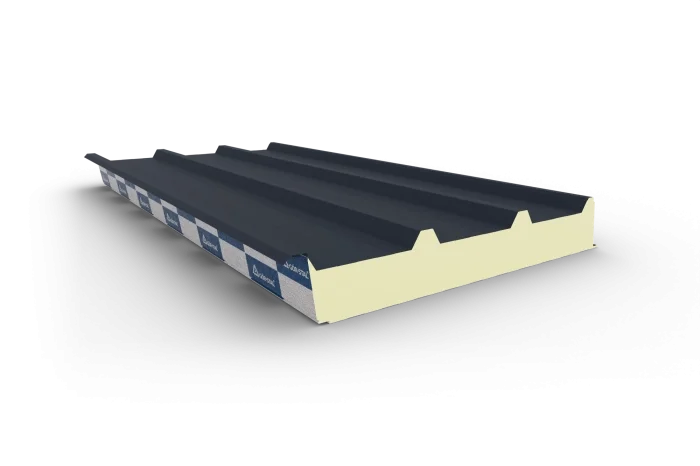
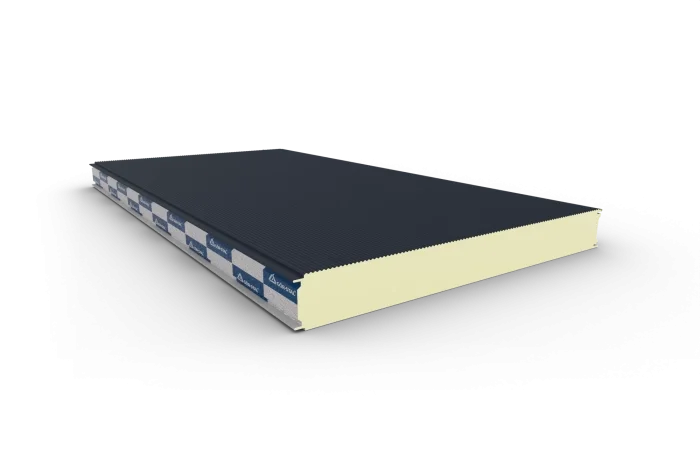
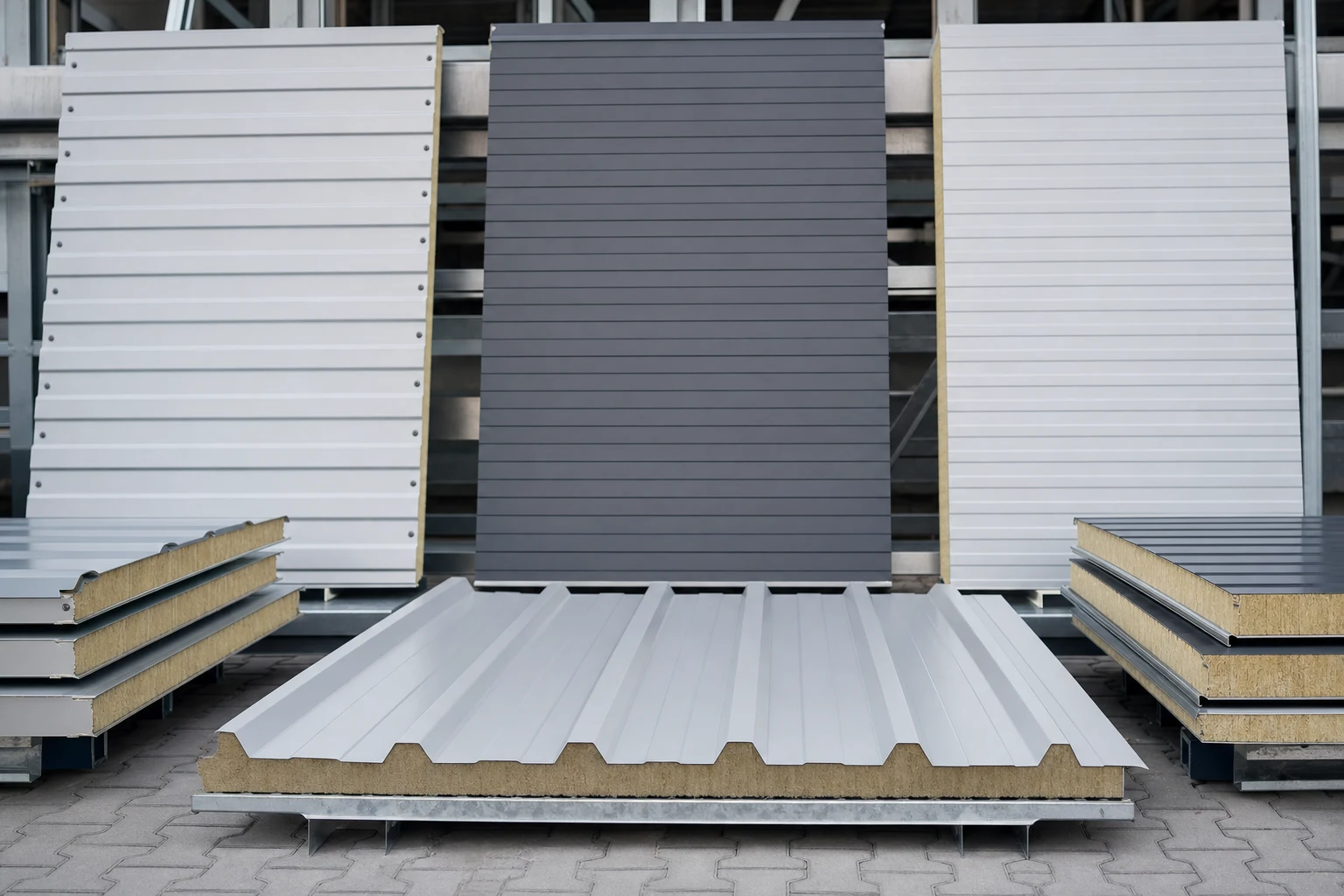
Colorcoat Prisma as a C5 facing combines with the GS insPIRe sandwich panel system, covering wall and roof variants and controlled-temperature solutions:
- insPIRe S — standard wall panel,
- insPIRe U — wall with hidden fixing,
- insPIRe D — roof panel,
- insPIRe CH — the line for cold stores and freezers.
The range of insPIRe variants for which the Prisma facing is available, and the environments below C5 in which it is also worth considering, are established individually — the offer is being introduced and developed. Likewise, the selection of core thickness and U-value parameter remains dependent on the purpose of the envelope (wall, roof, cold-store building).
As for cost: a premium C5-class facing comes with a surcharge over the standard — its amount depends on the colour, quantity and current conditions, which is why we give it in an individual quotation.
Summary
For buildings in a C5 environment — coastal, industrial, chemical — the facing of the sandwich panel is a decision about durability for decades. Standard polyester is not enough here. The new C5 standard on GS insPIRe panels is Colorcoat Prisma (RC5+, Ruv5, Confidex up to 40 years, chromium-free), which replaces the withdrawn HPS coating. If you are designing or building a structure in a corrosive environment — or have an HPS coating in your documentation — we will help select the right facing, the insPIRe variant and the complete documentation.
🤝 Contact a BOKKA technical adviser — we will select the facing for the corrosivity category of your building and provide the current colour availability and a quotation.
Sources:
- EN ISO 12944-2 — Corrosivity categories of atmospheres and examples of environments
- EN 10169:2022 — Continuously organic coated (coil coated) steel flat products (RC / Ruv categories)
- Technical data sheet and colour chart of Colorcoat Prisma® (Tata Steel)
Frequently asked questions
How does category C4 differ from C5 per ISO 12944?
Is a sandwich panel with a Prisma coating suitable by the sea?
What about the HPS coating that was previously used for harsh environments?
In what colours is the C5 facing available?
Related products and systems
Read next
insPIRe S, U, D and CH — which sandwich panel variant to choose
Sandwich panels second grade — what it exactly means and when it makes sense
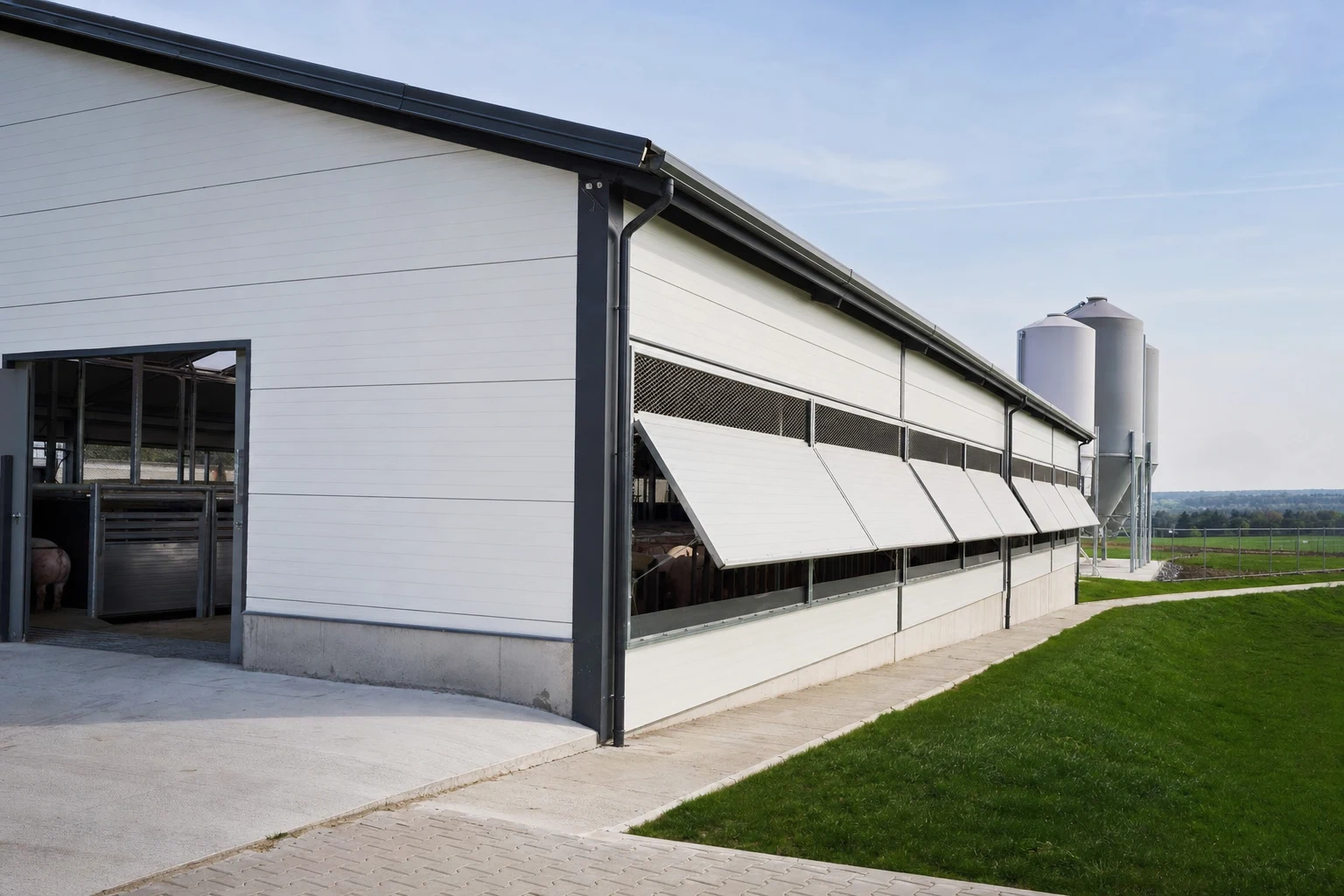
Livestock buildings from sandwich panels — piggery, cowshed, poultry house