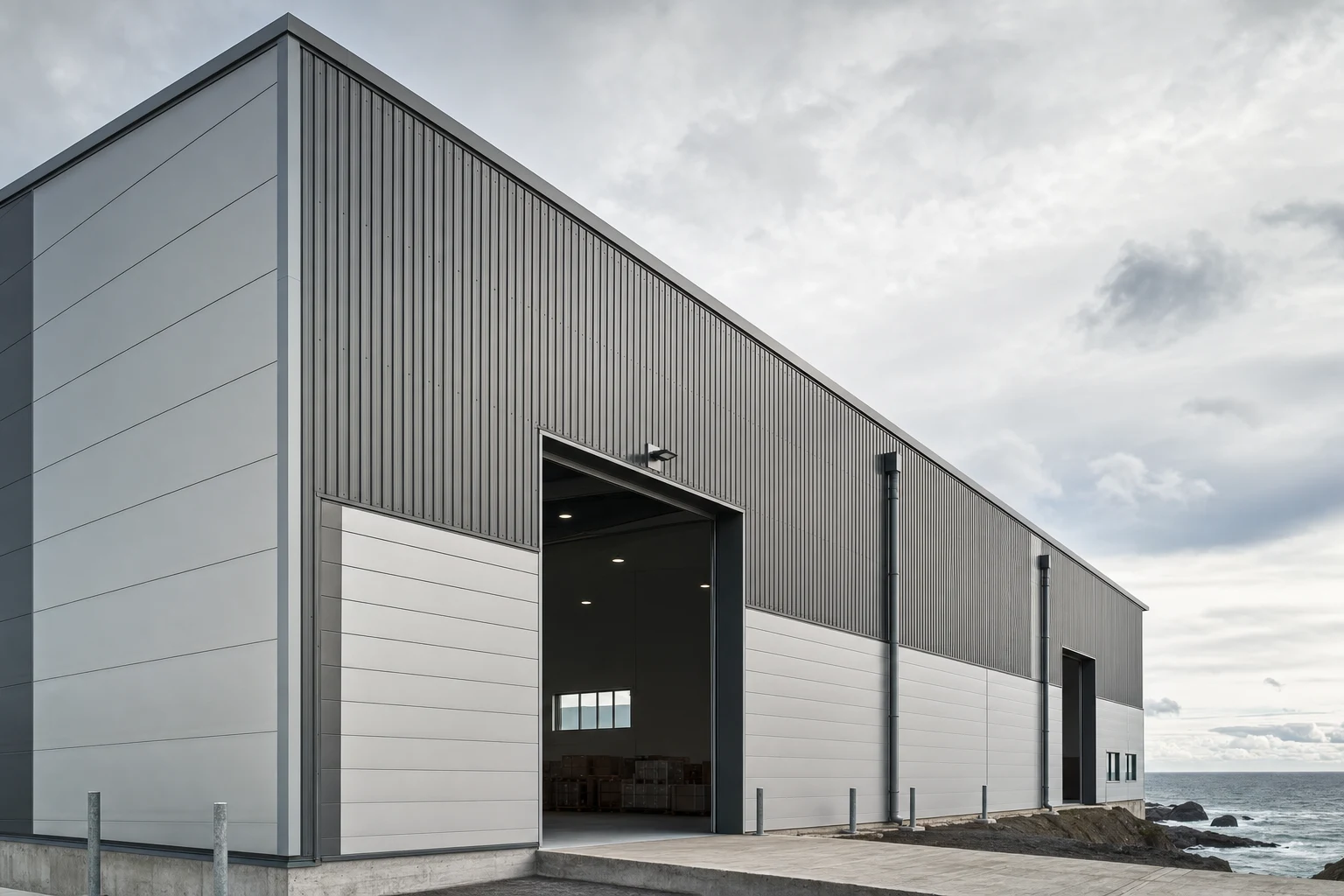
Cold Store / Freezer with GS insPIRe CH — Wall Build-Up for -30°C
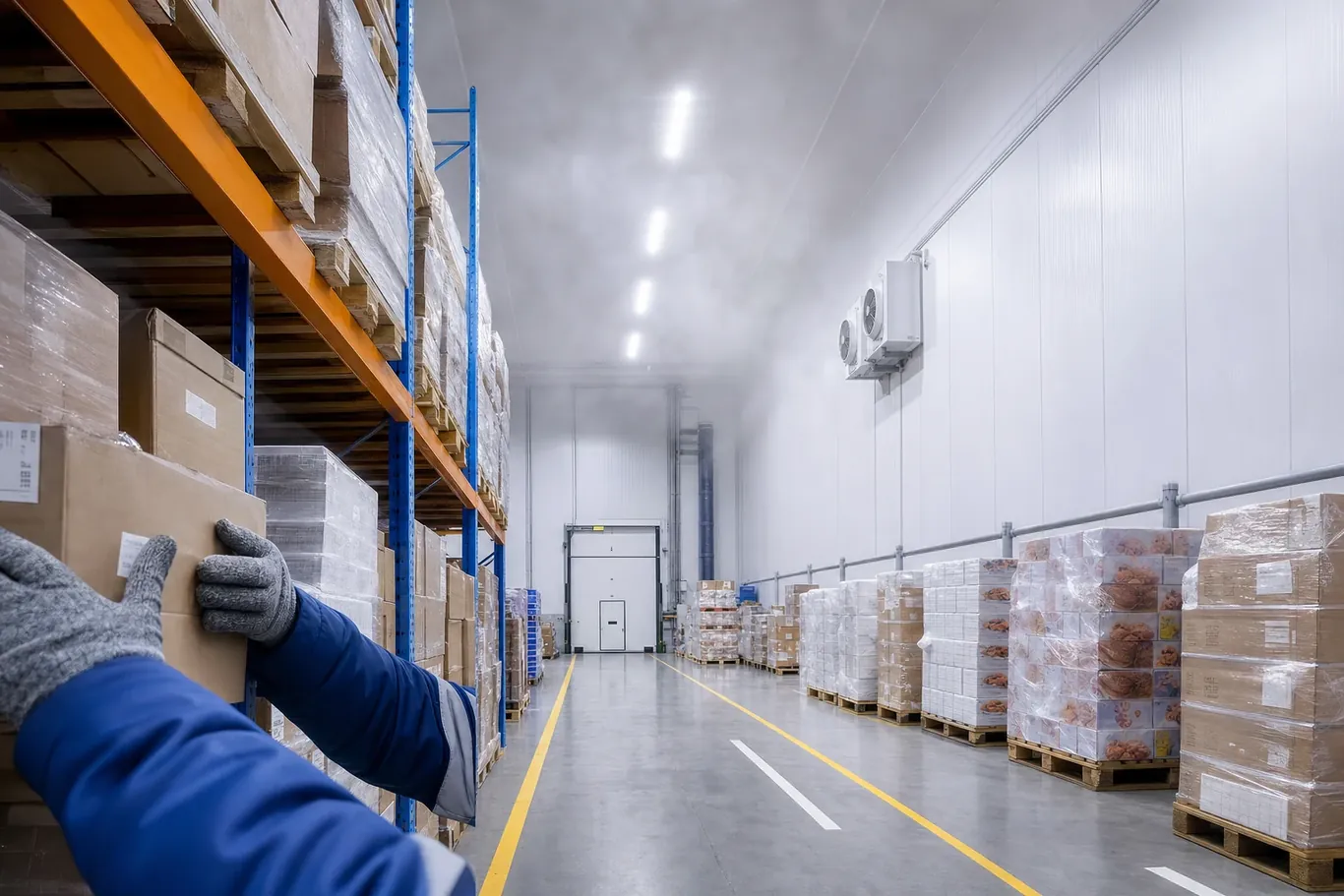
Cold store or freezer — practical definitions
| Facility type | Temperature | Typical products | Insulation standard |
|---|---|---|---|
| Cold store | +2°C to +8°C | dairy, fresh meat, vegetables | 100–150 mm PIR |
| Freezer | -18°C to -25°C | frozen food, deep-frozen meat | 150–200 mm PIR |
| Deep freezer | -25°C to -40°C | seafood, industrial ice cream | 200–250 mm PIR |
| ATEX warehouse | +5°C to +18°C, controlled conditions | chemicals, pharmaceuticals | 100–150 mm PIR |
For each of these facilities, insulation choice is not just about thickness. It is the choice of a dedicated sandwich panel with the right core, hygienic facing, fire class, and resistance to temperature cycling.
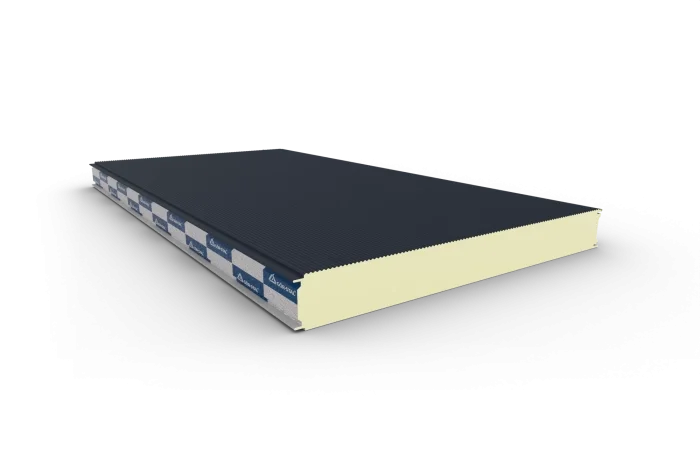
GS insPIRe CH is our line of sandwich panels dedicated to controlled temperatures — manufactured by Gór-Stal, distributed by BOKKA.
What sets GS insPIRe CH apart
| Parameter | Value | What it means |
|---|---|---|
| Core | PIR polyurethane, density ~40 kg/m³ | Rigid closed-cell core, low λ |
| λD | 0.022 W/(m·K) (CH MAX variant: 0.019) | Leading class for sandwich panels |
| Thicknesses | 80, 100, 120, 140, 160, 200, 250 mm | Full range for every temperature |
| Internal facing | Galvanized steel sheet with 25 µm polyester coating, white/blue, 0.5–0.6 mm | Hygienic, smooth, easy to clean |
| External facing | Galvanized steel sheet with 25 µm polyester coating, 0.5 mm | Aesthetic standard |
| Reaction-to-fire class | B-s2 d0 (system) / E (material) | Acceptable for most facilities |
| PZH certificate | HK/B/0123/02/2024 | Food contact OK |
| HACCP | Compliant | Food safety system |
| AVCP class | System 1 | Fire class consistency |
Standard GS insPIRe CH has λD 0.022, and the CH MAX variant reaches 0.019 — about 14% better. For freezers, where thermal differences are enormous (-25°C inside vs +25°C in summer), the MAX variant lets you reach the same U-value with a thinner panel.
Specific build-ups for different temperatures
Build-up A — Cold store +5°C (typical)
[exterior wall: GS insPIRe CH 100 mm]
[load-bearing steel structure]
[ceiling: GS insPIRe CH 120 mm]
[floor: concrete with 100 mm XPS beneath the concrete]
Parameters:
- Wall U-value: 0.19 W/(m²·K)
- Ceiling U-value: 0.16 W/(m²·K)
- Annual cooling consumption (for 50 m² × 30 m³): ~6,000 kWh
- Annual cooling cost: ~5,000 PLN (at 0.80 PLN/kWh)
Applications: butchery cold store, dairy warehouse, discount store.
Build-up B — Freezer -18°C (standard)
[exterior wall: GS insPIRe CH 150 mm]
[load-bearing steel structure]
[ceiling: GS insPIRe CH 180 mm]
[floor: concrete with 150 mm XPS beneath the concrete]
[under-slab heating (prevents ground freezing)]
Parameters:
- Wall U-value: 0.13 W/(m²·K)
- Ceiling U-value: 0.10 W/(m²·K)
- Annual consumption: ~12,000 kWh
- Cost: ~9,600 PLN/year
Applications: logistics freezer, retail frozen-food warehouse.
Build-up C — Deep freezer -30°C (industrial)
[wall: GS insPIRe CH 200 mm]
[load-bearing steel structure]
[ceiling: GS insPIRe CH 250 mm]
[floor: concrete + 200 mm XPS + vapour barrier]
[forced under-slab heating (against frost heave)]
Parameters:
- Wall U-value: 0.094 W/(m²·K)
- Ceiling U-value: 0.076 W/(m²·K)
- Annual consumption: ~20,000 kWh (very demanding)
- Cost: ~16,000 PLN/year
Applications: seafood, industrial ice cream, very-low-temperature pharmaceutical warehouses.
Key challenges of cold stores and freezers
Challenge 1 — Thermal tightness of joints
Every joint between panels = a potential heat-exchange channel. For a cold store with a 30–60°C temperature difference → minimal gaps cause dramatic losses.
Solution:
- Panels with a labyrinth tongue-and-groove (GS insPIRe CH standard) — physical geometric sealing
- Butyl tape in the joints (density 1.6 g/cm³, limits heat exchange and condensation)
- Fire-resistant silicone in corners and connections to the structure
- Aluminium finishing profiles at corners (suppress structural thermal bridges)
Challenge 2 — Vapour barrier
In a freezer, water vapour migrates from the warm side (exterior) towards the cold side (interior). Without a barrier → vapour freezes inside the insulation → drop in λ + bursting of the panel.
Solution:
- Tight internal facing (GS insPIRe CH has a steel sheet ~0.5 mm with a 25 µm polyester coating; the airtightness of the assembly comes from the labyrinth lock geometry and butyl tape at the joints, not from the coating itself)
- Additional vapour barrier foil on the exterior side (for deep freezers)
- Barrier on the warm side — sealing of doors, windows, penetrations
Challenge 3 — Under-slab heating (anti-frost)
For freezers below -10°C, frost heave develops in the floor — moisture from the ground freezes and lifts the slab.
Solution: heating cables under the slab (3–5 W/m²) keeping the ground temperature above 0°C. An industry standard. Without it — slab cracking within 5–10 years.
Challenge 4 — Thermal bridges at corners and penetrations
Corners + doors + inspection windows + cable penetrations are the weakest points. Thermal bridges in a freezer = water condensing on the outside of the freezer → puddles, slip risk.
Solution:
- Full corner insulation with dedicated profiles
- PUR cold-store doors (100–150 mm) with an insulating frame and gaskets
- PIR penetrations around cables and pipes
- Thermal imaging at handover — check every detail
Challenge 5 — Hygiene and cleaning
The interior of a cold store is constantly damp + in food contact → HACCP standards, PZH certificate.
Solution:
- Facing sheet with a smooth polyester coating (dust-free, easy to wash)
- No 90° corners inside — everywhere radius coves (50 mm) where the wall meets the floor / ceiling
- Floor slope 0.5–1% towards drainage gullies
- Cleaning with water + detergents OK (facing is resistant)
The 4 most common cold-store mistakes
Mistake 1 — Wrong insulation material
The investor buys GS insPIRe S (a standard PIR wall panel) instead of GS insPIRe CH (the line dedicated to cold stores and freezers). The PIR core is similar in both lines (~40 kg/m³) — the real difference is not in core density:
- Thickness range: CH goes up to 250 mm (deep U-values for freezers), whereas S stops at 120 mm — too thin for low temperatures.
- Complete cold-store detailing: CH has refined junctions and cold/freezer profiles (corners, radiused HACCP coves, vapour-tight joints) and the correct labyrinth lock profile.
The real mistake is choosing a too-thin S wall panel instead of the full CH thickness range and omitting the complete junctions — the result is thermal bridges, condensation and an under-insulated envelope, not a “worse core”.
Mistake 2 — No under-slab heating in a freezer
The investor saves 8,000 PLN on heating cables. After 6 years the slab cracks → repair cost 80,000 PLN (freezer dismantling, panel replacement, operations halted for 2 months).
Remedy: for every freezer below -10°C, heating cables under the slab are standard.
Mistake 3 — Ordinary doors in a freezer
Standard doors (GK board + aluminium frames) in a freezer → 30% of heat losses go through the doors. Plus vapour condensing in the frame → corrosion, frame freezing in the open position.
Remedy: dedicated cold-store doors (e.g. PUR 100–150 mm + thermally insulating frame). Cost 8,000–15,000 PLN, but they pay back in 2–3 years through reduced cooling bills.
Mistake 4 — Wrong lighting inside
Old incandescent or fluorescent fixtures emit heat (~60–80% of the energy goes to heat, not light). In a cold store — counterproductive, an additional load on the chiller.
Remedy: LEDs resistant to low temperatures (tested down to -40°C, e.g. the Cold Storage series from Philips/Osram). They emit 5–10× less heat and use 60% less energy.
Legal and certification standards
HACCP
The food safety system covers the entire cold store. It requires:
- A PZH certificate for all materials in food contact (BOKKA has it)
- Easy cleaning of surfaces (the smooth polyester coating complies)
- No hidden recesses for contaminants (radius coves at corners)
- Documentation of conformity (with delivery)
Sanitary inspection (Sanepid)
The sanitary inspectorate checks cold stores used commercially for food. It requires:
- A PZH certificate for walls + ceiling
- An epoxy or PVC floor (easy to clean)
- Ventilation
- Clean light sources
GS insPIRe CH meets all requirements as standard.
Thermal imaging after handover
The best way to verify the quality of a cold store before handover. A thermal imaging camera reveals:
- Thermal bridges (hot spots outside a freezer / cold spots outside a cold store)
- Leaks (temperature gradients in unexpected places)
- Incorrectly installed doors
Cost of thermography: 800–2,500 PLN for a typical cold store. Worth doing — no workmanship defects in the first 2 warranty years = saving tens of thousands in later repairs.
What BOKKA offers
GS insPIRe CH across the full thickness range 80–250 mm. Plus:
- Dedicated corner profiles (external and internal, 50 mm radius for HACCP)
- Cold-store doors (made to order, based on our panels)
- Accessories (butyl tapes, fire-resistant silicones, finishing profiles)
- Design advice for the entire cold store (wall, ceiling, floor, door and under-slab heating build-up)
- Full documentation: DoP + PZH certificate + AVCP1 classification + HACCP report
🤝 Free BOKKA technical consultation — we’ll help select the product and complete documentation for your project.
FAQ
Is GS insPIRe CH also suitable for a pharmaceutical (medical) cold store? Yes, combined with additional certificates (e.g. microbiological cleanliness, antistatic properties). The standard GS insPIRe CH has a PZH food certificate — for pharmaceuticals it may require additional testing. Contact us before ordering.
What about cold stores outside the building (refrigerated containers)? GS insPIRe CH is also suitable for outdoor cold stores (containers, refrigerated garages). An additional sun-resistant external finish is required — e.g. a sheet with a PVDF coating (at extra cost).
Which refrigeration unit should I select for a freezer with GS insPIRe CH 200 mm? It depends on the interior volume + external temperature (Polish summer +30°C) + product mass (full/empty cold stores). For guidance: a 50 m² × 3 m high freezer = 150 m³ → an 8–12 kW unit for -25°C. Consult the unit manufacturer (Daikin, Carrier, Mitsubishi, Kaeser).
Can GS insPIRe CH panels be dismantled and moved? YES, they are mechanically fastened to the steel structure. Dismantling requires care (do not damage the tongue-and-groove at the joints) but is feasible. A practical advantage during company relocations or extensions.
Does a cold store with GS insPIRe CH require an energy audit? For commercial facilities over 250 m² of usable area, an audit is voluntary but advisable (thermal retrofit tax reliefs, EU programmes). The audit shows actual consumption + suggests optimisations.
How long does a cold store with GS insPIRe CH last? Declared durability is 20–25 years with proper construction and maintenance. In practice cold stores serve 30–35 years (the panels are long-lasting; mainly door replacement every 8–12 years and the refrigeration unit every 10–15 years are required).
Summary
GS insPIRe CH is the standard solution for cold stores and freezers in Poland — from small facilities (a 30 m² butchery cold store) to large logistics centres (a 5,000 m² freezer).
Key parameters:
- λD 0.022 W/(m·K) (CH MAX variant: 0.019) — leading sandwich-panel class
- PZH certificate + HACCP compliance
- Thicknesses 80–250 mm for every temperature
For freezers below -10°C, under-slab heating + cold-store doors + thermal imaging after handover are essential.
🤝 Free BOKKA technical consultation — we’ll help select the product and complete documentation for your project.
Sources:
- PN-EN 14509:2013 — Self-supporting double skin metal faced insulating sandwich panels
- Codex Alimentarius — HACCP requirements for food processing plants
- Regulation EC 852/2004 — on the hygiene of foodstuffs
- Cold-store door manufacturers’ guidelines (Profrigo, ChłodTechnik, Berner)
Related products and systems
Read next
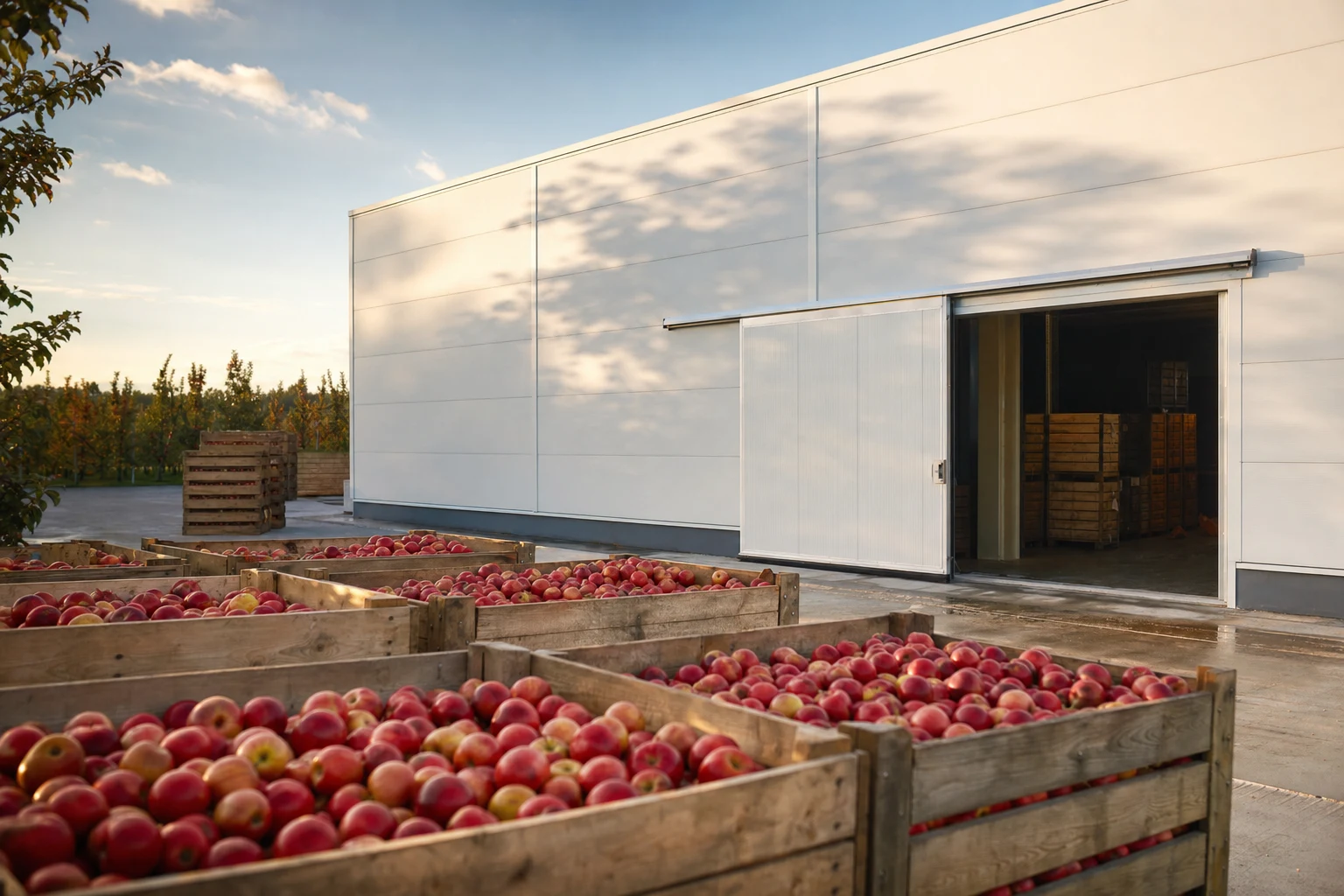
Fruit and vegetable storage — how to build the envelope from cold store sandwich panels
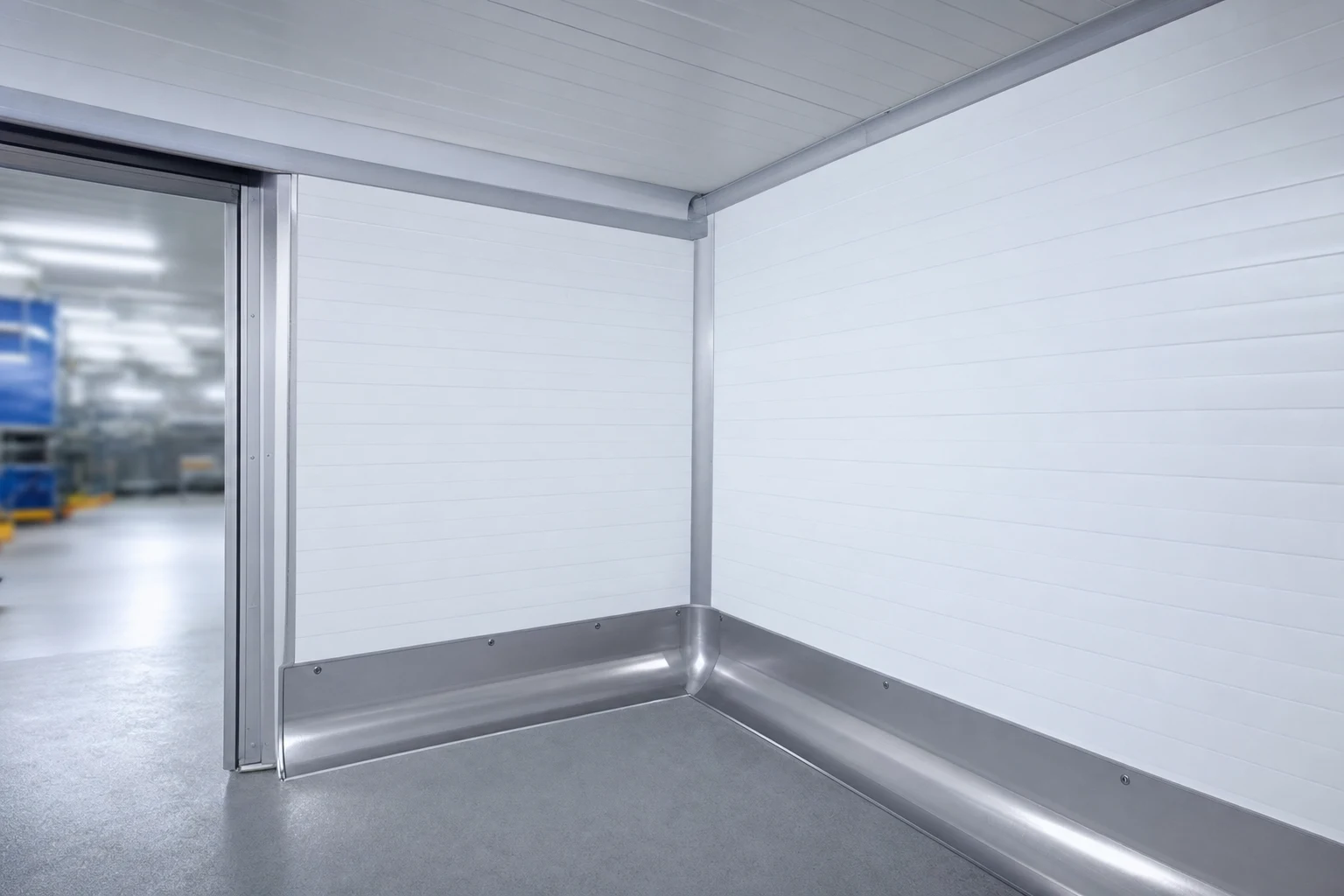
Details and plinths in cold stores and freezers — floor, corner and door junctions
Sandwich panels second grade — what it exactly means and when it makes sense