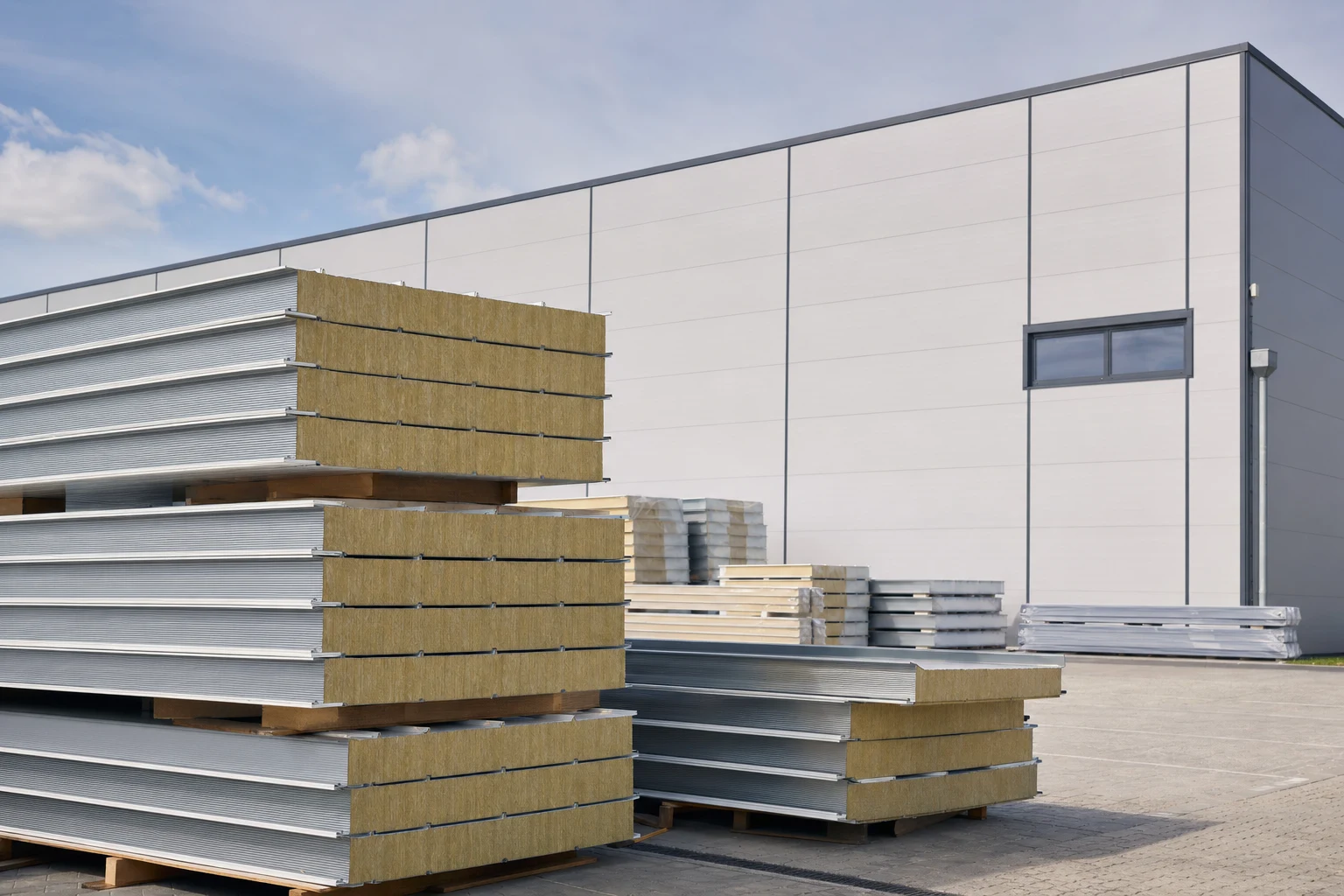
FM Approved for roofs and sandwich panels — what it means for the investor and insurer
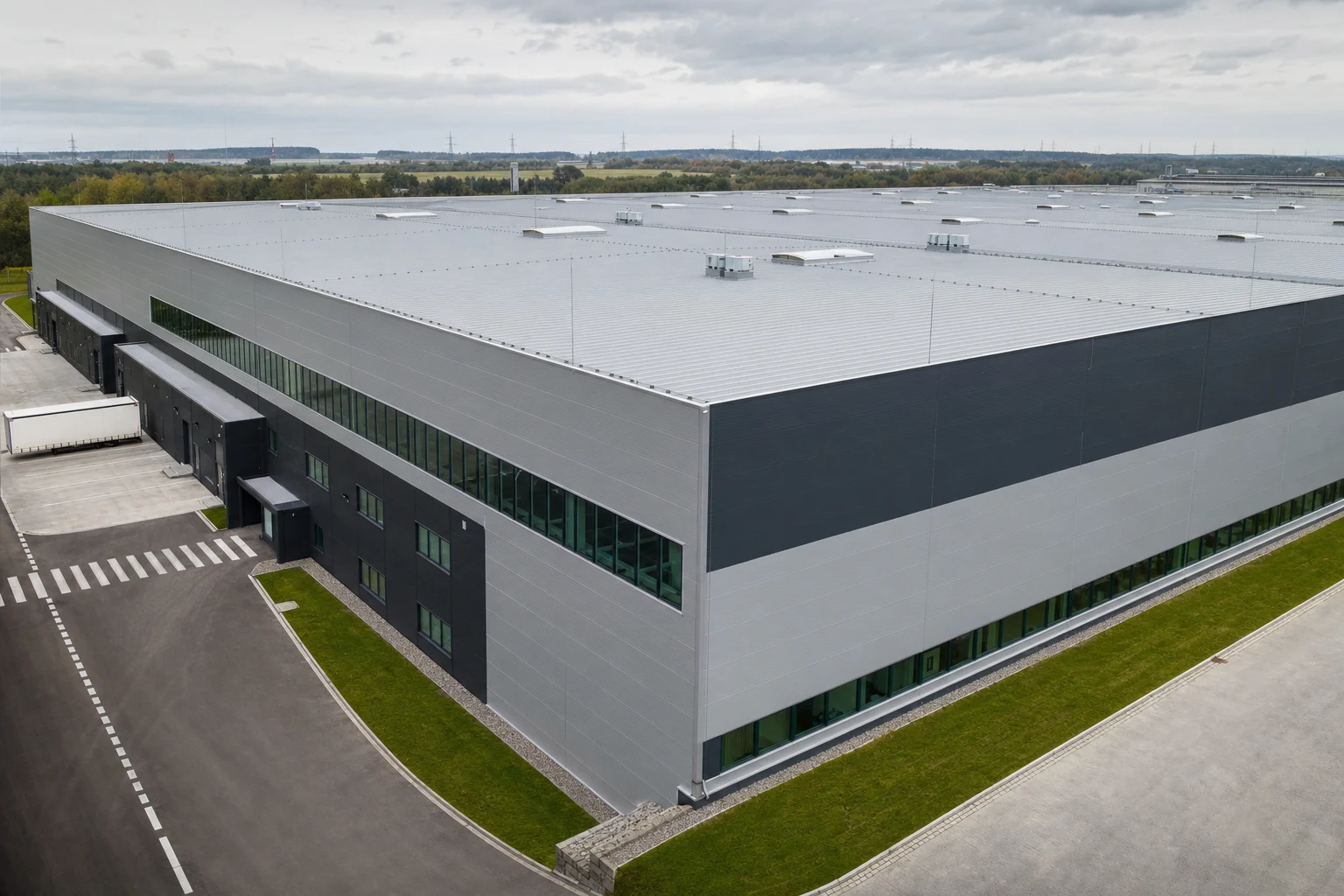
On large warehouse and industrial buildings, the specification increasingly features the term FM Approved alongside the familiar fire classifications. For the designer and the investor this signals that the building is subject to a different, private assessment regime — driven not by building regulations, but by property insurance. In this article we explain what FM Approvals / FM Global is, how this system differs from European CE marking and Euroclasses, and what FM Approved status means in practice for the policy, the fire risk and the wind risk of a building made of sandwich panels.
What FM Approvals and FM Global are
FM Global is one of the world’s largest insurers of commercial and industrial property, operating on a model in which limiting losses is just as important as paying out a claim. Part of this organisation is the certification body FM Approvals, which tests and approves building products and installations against real property-loss risk — mainly fire, but also wind, hail, leakage and flooding loads.
The logic here is inverted relative to typical “market” certification. FM Approvals does not only ask whether a product meets the minimum requirements of the law, but whether its use reduces the likelihood and scale of the damage the insurer would have to cover. As a result, the tests can be tougher and more “systemic” than a product standard requires — often the entire assembly is assessed (e.g. panel + fixing + roof structure), rather than the product in isolation.
The second pillar of the FM ecosystem is the FM Global Property Loss Prevention Data Sheets — extensive design guidance that tells you how to design and build a facility to minimise risk. An FM Approved product is therefore only one element; the full benefit appears when the whole building is designed in accordance with these data sheets.
FM Approved vs CE and Euroclasses — they are not the same
The most common misunderstanding is to treat FM Approved as a “better version” of a fire classification. These are two parallel, independent worlds.
The European (regulatory) system:
- CE marking — the mandatory passport for a product onto the EU market, based on harmonised standards (for sandwich panels this is EN 14509).
- Reaction to fire (Euroclasses) — classification to EN 13501-1, e.g. B-s1,d0, describing how the product behaves as “fuel” in a fire (spread, smoke, burning droplets).
- Fire resistance — classes of the EI type (e.g. EI 30, EI 120), describing how long the partition holds back fire. We write about this in more detail in the article EI 120 from a sandwich panel — under what condition.
- Roofs — BROOF(t1) — classification of a roof’s resistance to external fire; we described it in the piece on BROOF(t1) configurations for PIR roofs.
This system is required by law — without it a product may not be built in, and the fire classifications stem from technical-building regulations and fire-protection conditions.
The FM (insurance) system:
- voluntary — it does not stem from building law, but from a contract: the policy, the tenant’s corporate standard, or the investor’s decision;
- focused on property loss, not on a minimum regulatory requirement;
- often systemic and configuration-oriented — it assesses the behaviour of the complete set of solutions under conditions close to a real event.
The practical conclusion: a product can be fully CE-compliant and have an excellent reaction-to-fire class, yet not be FM Approved — because no one carried out the (costly and voluntary) FM procedure for that specific configuration. And conversely — FM status does not exempt a product from the obligation to hold CE marking and the appropriate fire classifications required in Poland. For projects covered by an FM Global policy, in practice both sets of documents are needed.
What FM Approved means for risk and the policy
For the investor and the risk department, the key point is that FM Approved translates into concrete, measurable aspects of operating the building, not just “paper for the binder”.
Fire risk. Sandwich panels are a particularly sensitive element here, because they form both the roof and wall envelope over an enormous area. The core, the way it is enclosed in the facings, and the joint details determine how the building behaves in a developed fire. FM assessment focuses precisely on this loss scenario — hence its weight for large-volume high-bay warehouses, where the goods and the building itself are a multi-million exposure. The mechanisms of selecting a core for fire class are also discussed in the analysis of a 1000 m² hall — termPIR or sandwich panels.
Wind and weather risk. FM Approvals also tests the resistance of the roof sheathing to wind uplift, hail load and leakage — that is, the events that generate the most claims aside from fire. For a sandwich panel roof this means assessing the entire assembly: the panels, the fasteners and the method of fixing to the structure.
Policy and premium. The most tangible effect concerns insurance. A building designed in accordance with FM Global guidance and using FM Approved solutions may obtain:
- a more favourable risk assessment, and with it a lower premium;
- in some cases, the very possibility of insurance with a given insurer that conditions cover on meeting its standards;
- a stronger negotiating position with a corporate tenant that itself requires the FM standard in the buildings it leases.
It must, however, be stressed: the insurer defines the requirements. There is no universal “tariff for FM” — the scope of expected certificates and the impact on the premium is set by the specific insurance company for the specific class of building and location.
Scope of certification — what must not be assumed
The most important principle when specifying FM Approved solutions: the status applies to a specific product in a specific configuration and scope of application, not to an entire product family or brand. The certificate may cover, for example, a specific roof panel type, within a defined core-thickness range, with a defined fixing pattern and roof pitch — and not automatically extend to other variants or wall applications.
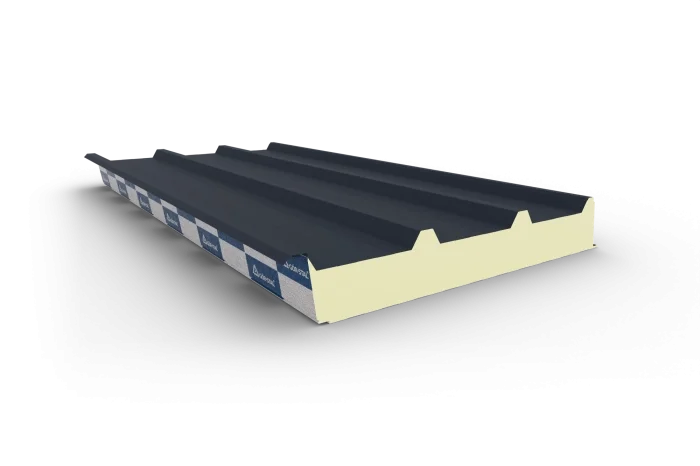
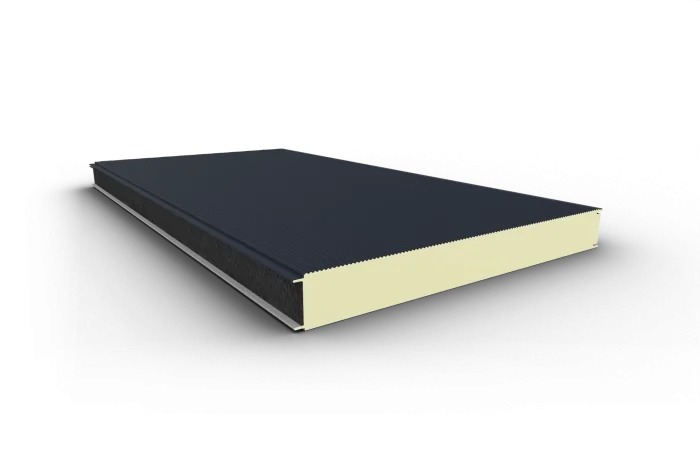
That is why at BOKKA we do not declare in advance that a given product from our range is FM Approved on the basis of the name alone. If your project is covered by an FM Global policy or a corporate standard requiring this status, give us the exact requirement from the documentation (which element, what loads, which roof type) — we will check the current scope of certification for that configuration and confirm it with a document, rather than a marketing claim. The same applies to selecting the envelope variant: for walls and roofs we use sandwich wall panels and roof panels respectively, and the choice of fire-resistant configuration depends on the project requirements.
Summary
FM Approved is the language of the insurer, not the authority. CE and Euroclasses answer the question “may this be built in legally”, while FM Approvals asks “does it reduce the property-loss risk the insurer would have to cover”. For large-volume warehouses, logistics buildings leased by corporations, and projects covered by an FM Global policy, FM status can be a contractual requirement with a real impact on the premium and on the possibility of insurance. It is essential to treat it as a complement, not a replacement, for the mandatory fire classifications — and to confirm it for the specific configuration rather than assume it from the name.
🤝 Contact a BOKKA technical advisor — if your project requires FM Approved solutions or compliance with FM Global guidance, we will check the available scope of certification and select an envelope configuration to match your policy requirements.
Sources:
- FM Approvals — product assessment and certification system (FM Global)
- FM Global Property Loss Prevention Data Sheets — design guidance for loss prevention
- EN 14509 — Self-supporting double skin metal faced insulating sandwich panels (CE marking)
- EN 13501-1 — Fire classification of construction products: reaction to fire (Euroclasses)
Frequently asked questions
How does FM Approved differ from CE marking and the Euroclass classification?
Does a building in Poland have to use FM Approved products?
How does FM Approved status affect a building's insurance?
How do you know whether a given sandwich panel is FM Approved?
Related products and systems
Read next
EPD and carbon footprint of sandwich panels and PIR — ESG in construction

How to calculate the U-value of a sandwich panel and PIR assembly (step by step)
Summer overheating of attics and halls — thermal phase shift and comfort