Summer overheating of attics and halls — thermal phase shift and comfort
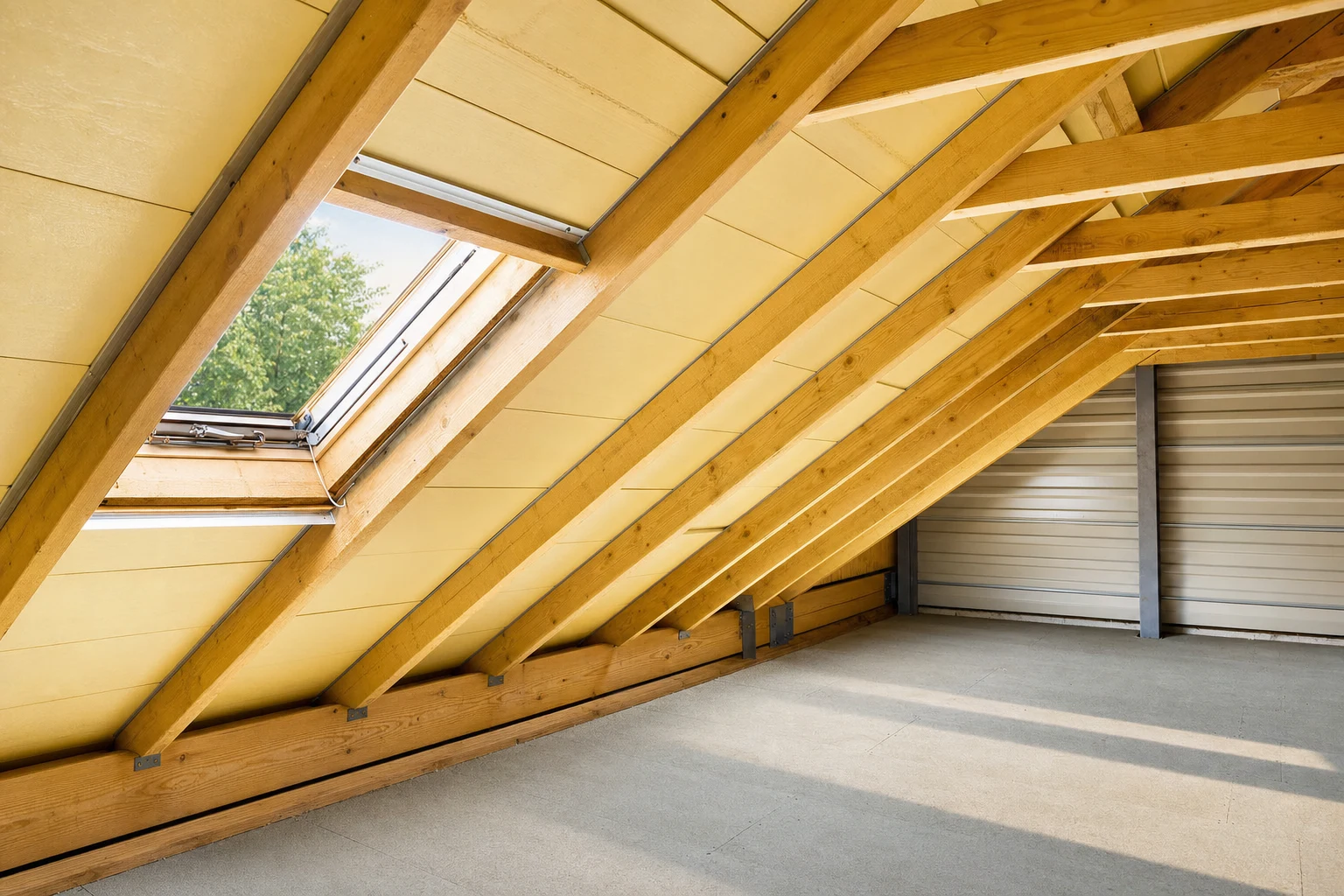
In winter, everyone thinks about heat escaping outside. In summer the problem is the reverse and often underestimated: heat forces its way in. An attic under a baking roof and a hall under a vast sheet of metal can become unbearable, even though the same envelope performs flawlessly in winter. That is because summer comfort follows a different logic from winter. In this article we explain the mechanism of summer overheating, the concepts of phase shift and amplitude damping, and we show what really decides whether you can live and work under a roof in summer. It is a development of our general post on protecting a building from heatwaves — here we go deeper into the technical side.
The mechanism of summer overheating
In summer, intense solar radiation falls on the roof and walls. The surface of the covering — especially a dark one — heats up to temperatures far higher than the air. This heat begins to travel through the envelope to the interior by two routes: through conduction (slowly, through the material) and, where there are leaks and bridges, faster at the weakened points.
The key difference from winter: the temperature outside changes over the course of the day — rising to an afternoon peak and falling at night. The envelope does not react to this instantly. The better it is designed, the more it delays and smooths this heat wave before it reaches the interior. And it is these two features that the parameters of phase shift and amplitude damping describe.
Phase shift and amplitude damping
These are two concepts from building physics that together describe how an envelope copes with the variable heat wave.
Phase shift is the delay with which the peak temperature from outside reaches the inner surface of the envelope. If the maximum on the roof falls at noon but the heat reaches the room only in the evening or at night, the heat wave can simply be “waited out” — and the interior ventilated with cooler night air, instead of letting the blaze in at noon. A larger phase shift therefore means better comfort during the day.
Amplitude damping is the degree to which the envelope smooths temperature fluctuations. A large swing outside (a cool night, a hot afternoon) is flattened at the inner surface to a much gentler one. The stronger the damping, the more stable the temperature inside, regardless of what is happening outdoors.
Both parameters depend not only on thermal performance (the U-value), but above all on the thermal inertia of the envelope — that is, how much heat the materials can absorb and “store” before passing it on. And this is where the role of mass comes in.
The role of insulation and the role of mass — not the same thing
In summer, two different mechanisms are at work and are easy to confuse.
Steady thermal resistance (U). Regardless of the time of day, a well-insulated envelope limits the inflow of heat. The lower the U-value, the slower heat penetrates around the clock. This is the “foundation” — without good insulation, no tricks will help.
Thermal inertia (mass). This is what is responsible for the phase shift and damping. A material of greater density and heat capacity “charges up” with heat for longer before passing it to the interior — hence the greater delay of the peak. Light materials react faster.
Hence the common simplification that “light PIR heats up in summer, while heavy wool protects”. In reality:
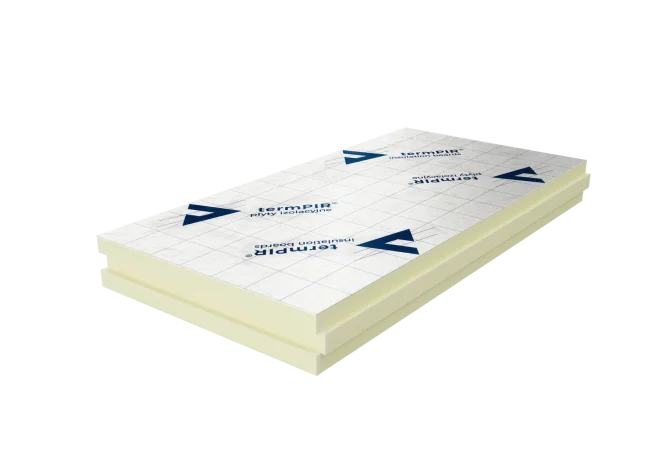
- PIR (e.g. termPIR insulating boards) has a very low lambda, so it excellently limits the steady inflow of heat at a small thickness. It is light, so its contribution to the phase shift is smaller than that of a heavy material of the same thickness.
- Mineral wool has greater mass at a given thickness, so it gives a larger phase shift, but a higher lambda — to achieve the same thermal resistance, a thicker layer is needed.
The conclusion is not that “one material wins”. Summer comfort is decided by the whole envelope assembly — a combination of thermal resistance, the mass of the individual layers, tightness and the absence of bridges — and not by a single parameter of one material. In practice, a well-designed attic with PIR, with the right thickness and proper ventilation, is comfortable in summer; just like an envelope with wool. The worst is no insulation, or insulation that is too thin. We wrote about choosing thickness in the guide what thickness an attic’s insulation should be.
It is worth adding that the same mass parameter that gives thermal inertia also affects the acoustics of the envelope — heavier assemblies damp sound better, which we described in connection with sandwich panels with increased acoustic insulation.
Halls: a lightweight envelope, a vast surface
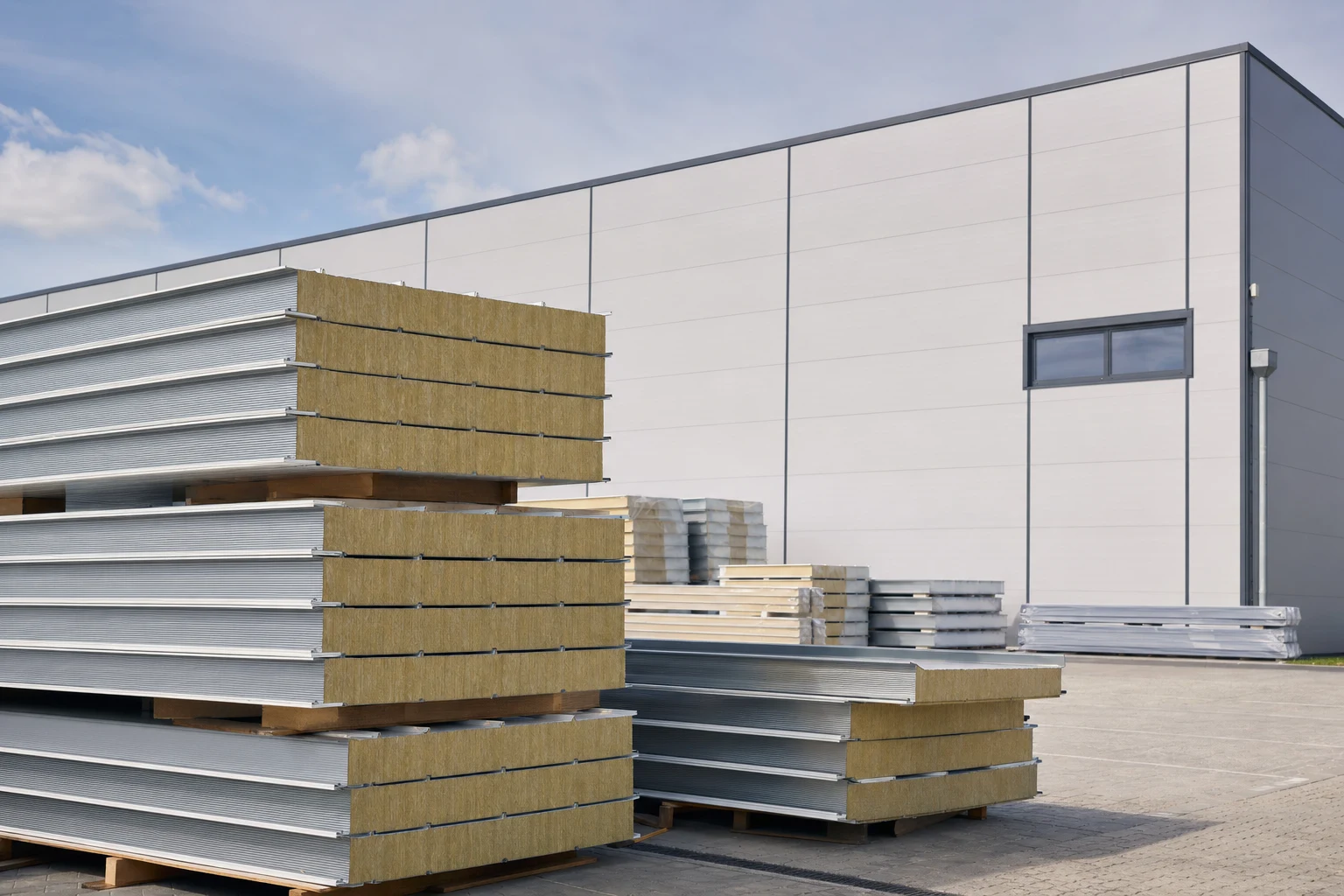
An industrial or warehouse hall is an extreme case of a lightweight envelope: little thermal inertia and enormous roof and wall areas exposed to the sun. Without a considered envelope, the hall’s interior heats up quickly, which worsens working conditions and raises cooling costs.
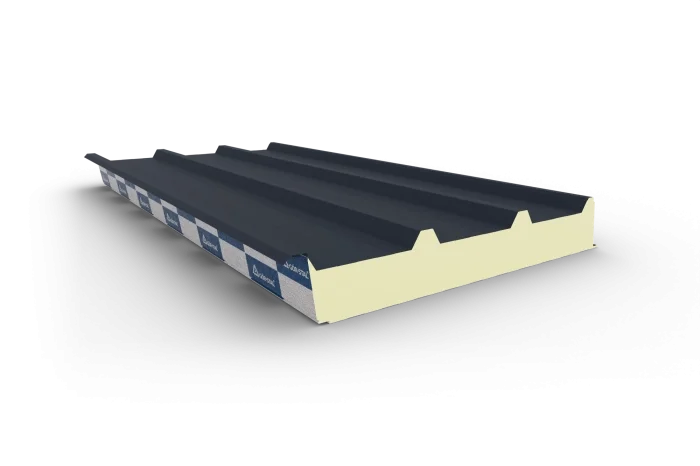
Here the envelope’s thermal performance is the first line of defence. Roof and wall sandwich panels with a PIR core — such as insPIRe D for the roof or insPIRe S for the walls — provide good thermal resistance at a small thickness, which significantly limits the daily inflow of heat across the whole surface. The second line is ventilation and roof colour, discussed below. In halls with special requirements (e.g. maintaining a stable temperature) the choice of a thicker core also comes into play.
Ventilation and roof colour
Two measures work independently of the insulation itself and often decide comfort.
Ventilation. The best envelope is not enough if warm air has no way to escape. Night ventilation — when the outside temperature falls — allows the heat accumulated during the day to be “dumped” and the phase-shift effect to be used. In attics, a well-designed ventilation gap under the covering is also important; in halls — gravity and mechanical ventilation matched to the volume.
Roof colour. A light surface reflects more solar radiation and heats up less than a dark one — the difference in surface temperature between a white and a graphite roof can be considerable. Less heat on the surface means less heat to “push” through the envelope. The choice of facing colour is therefore not only aesthetics but also a real factor in the summer heat balance — one that must be balanced against the winter balance and the project requirements.
What really improves comfort in summer
If we gather the above into a practical list, thermal comfort in summer is most strongly affected by, in this order:
- Sufficient insulation (low U). Without it, the other measures give little. A layer that is too thin is the main cause of overheating, regardless of material.
- Tightness and the absence of bridges. Leaks and weakened junctions let heat in at points and spoil the effect of even a good envelope.
- Ventilation, especially at night. It allows accumulated heat to be “dumped” and the envelope’s phase shift to be used.
- Colour and shading of the covering. A light surface and limiting direct sunlight reduce heat gains at the source.
- Thermal inertia of the assembly. Where we want the maximum delay of the peak, the mass of the layers matters — but as part of the whole, not a replacement for insulation.
It is important that these measures work together. Good insulation without ventilation, or a dark roof despite a thick layer of PIR, are typical mistakes that cancel out part of the benefit. The best effect comes from a considered, complete assembly — and that is exactly how it is worth designing.
Summary
Summer overheating of attics and halls is a different problem from winter heat loss. It is governed by two parameters — phase shift (the delay of the heat peak) and amplitude damping (the smoothing of fluctuations) — alongside the envelope’s steady thermal resistance. The material’s mass affects thermal inertia, but comfort is decided by the whole envelope assembly plus ventilation and roof colour, not a single parameter. PIR and sandwich panels, well chosen in terms of thickness and supported by proper ventilation and a considered colour, provide comfortable, cooler interiors in summer — just as they protect against losses in winter.
🤝 Contact a BOKKA technical advisor — we will help select the insulation and envelope for the thermal comfort of your attic or hall, with both summer and winter in mind.
Sources:
- Building physics: phase shift and amplitude damping of the temperature wave in envelopes (general issues)
- Technical data sheets for termPIR insulating boards and GS insPIRe sandwich panels (manufactured by Gór-Stal, distributed by BOKKA)
- Principles of attic and hall ventilation and the influence of covering colour on heat gains (general guidance)
Frequently asked questions
What is the thermal phase shift of insulation?
Does PIR protect against heat worse than wool because it is light?
Why do steel halls overheat in summer?
Does a light roof colour help in summer?
Related products and systems
Read next
EPD and carbon footprint of sandwich panels and PIR — ESG in construction
How to calculate the U-value of a sandwich panel and PIR assembly (step by step)
FM Approved for roofs and sandwich panels — what it means for the investor and insurer