Attic Insulation Thickness per WT 2021 — PIR Boards | BOKKA
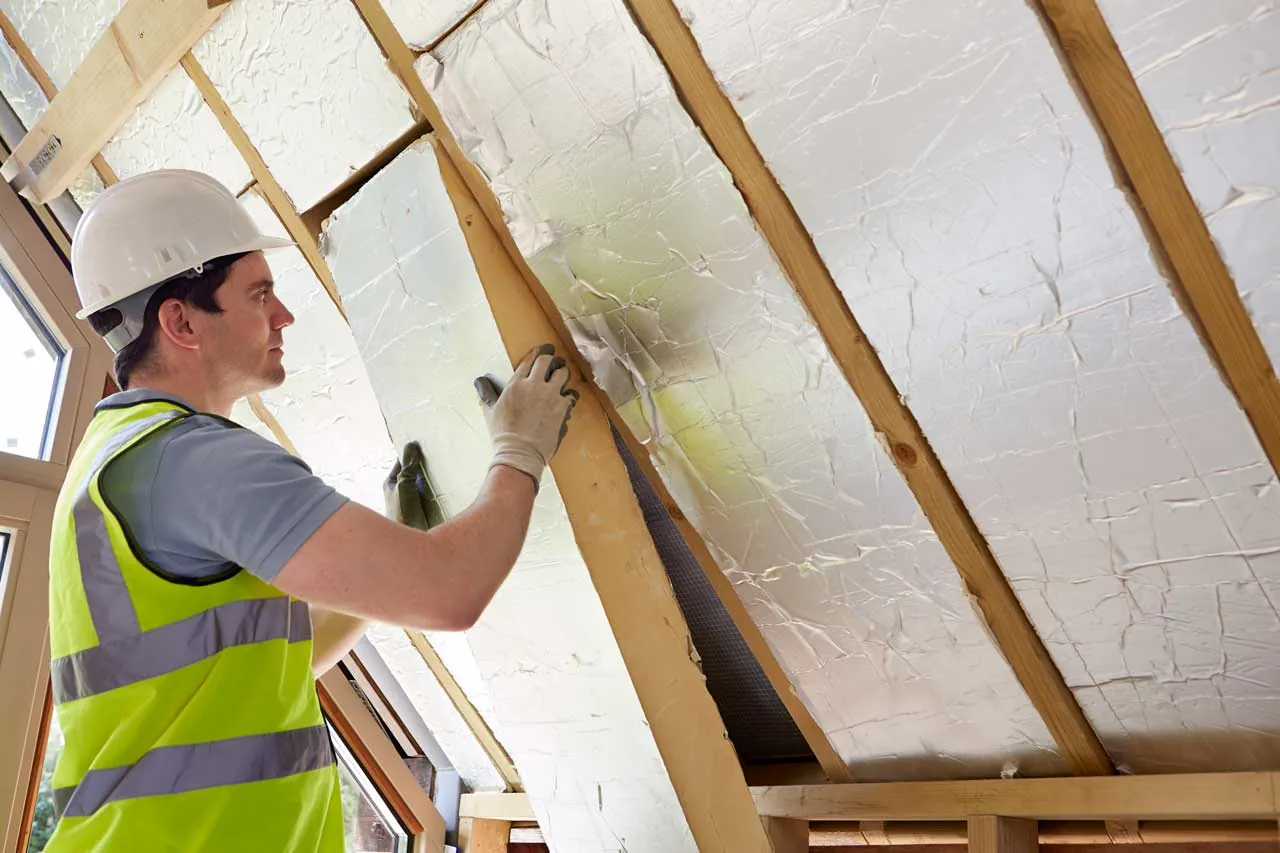
Attic insulation thickness — how to size insulation for WT 2021
A pitched roof accounts for up to 25–30% of heat losses in a single-family building, and a habitable attic is the most thermally demanding building envelope element of the whole structure. Since 1 January 2021, the Technical Conditions have required the thermal transmittance of roofs and flat roofs to be U ≤ 0.15 W/m²K. Achieving this value depends not so much on the thickness of the insulation as on the thermal conductivity λD of the chosen material. In this article we show how many centimetres are needed for different technologies and why PIR boards allow the assembly thickness to be reduced by as much as half.
WT 2021 requirements and the physics of the roof assembly
In accordance with the Regulation on Technical Conditions (WT 2021), the following maximum U-values apply to new buildings and renovations:
| Building element | Umax WT 2021 |
|---|---|
| Roof, flat roof, ceiling slab under an unheated attic | 0.15 W/m²K |
| External wall | 0.20 W/m²K |
| Ceiling slab above an unheated cellar | 0.25 W/m²K |
| Ground-bearing floor | 0.30 W/m²K |
The thermal transmittance U depends on the thermal resistance R of the individual layers of the assembly: U = 1 / ΣR, where R = d/λ (d — layer thickness in metres, λ — thermal conductivity of the material). The lower the λD, the smaller the thickness needed to achieve the same thermal resistance R. For a pitched roof, the target thermal resistance of the insulation is approximately R ≈ 6.5 m²K/W (accounting for surface resistances and structural layers).
Insulation thickness comparison for different materials
The table below shows the layer thickness required to achieve U = 0.15 W/m²K for a roof assembly (approximate values, for the thermal insulation layer only):
| Material | λD [W/(m·K)] | Thickness for U = 0.15 |
|---|---|---|
| Standard mineral wool | 0.038–0.040 | ~26–28 cm |
| White EPS | 0.038–0.042 | ~26–28 cm |
| Graphite EPS | 0.031–0.033 | ~22 cm |
| XPS (extruded polystyrene) | 0.033–0.036 | ~22–24 cm |
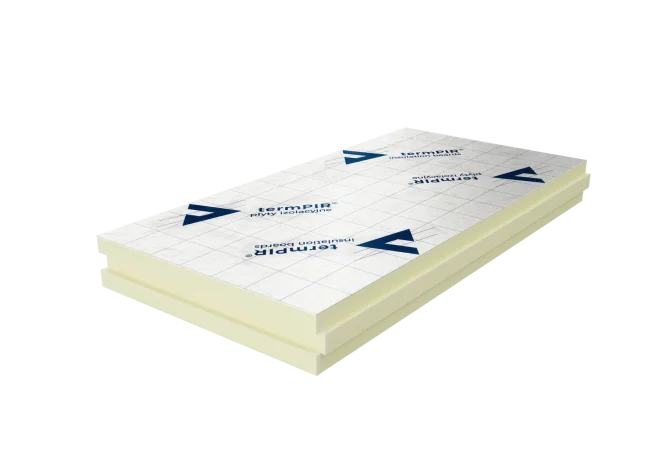
| termPIR® AL | 0.022 | ~14–15 cm |
| termPIR® MAX 19 AL | 0.019 | ~12–13 cm |
The difference is fundamental: the same U-value requires a PIR board layer almost twice as thin as mineral wool. In practice this means more usable attic volume, lower load on the truss structure and far easier detailing (dormers, roof windows, chimneys).
Three techniques for insulating the attic with PIR boards
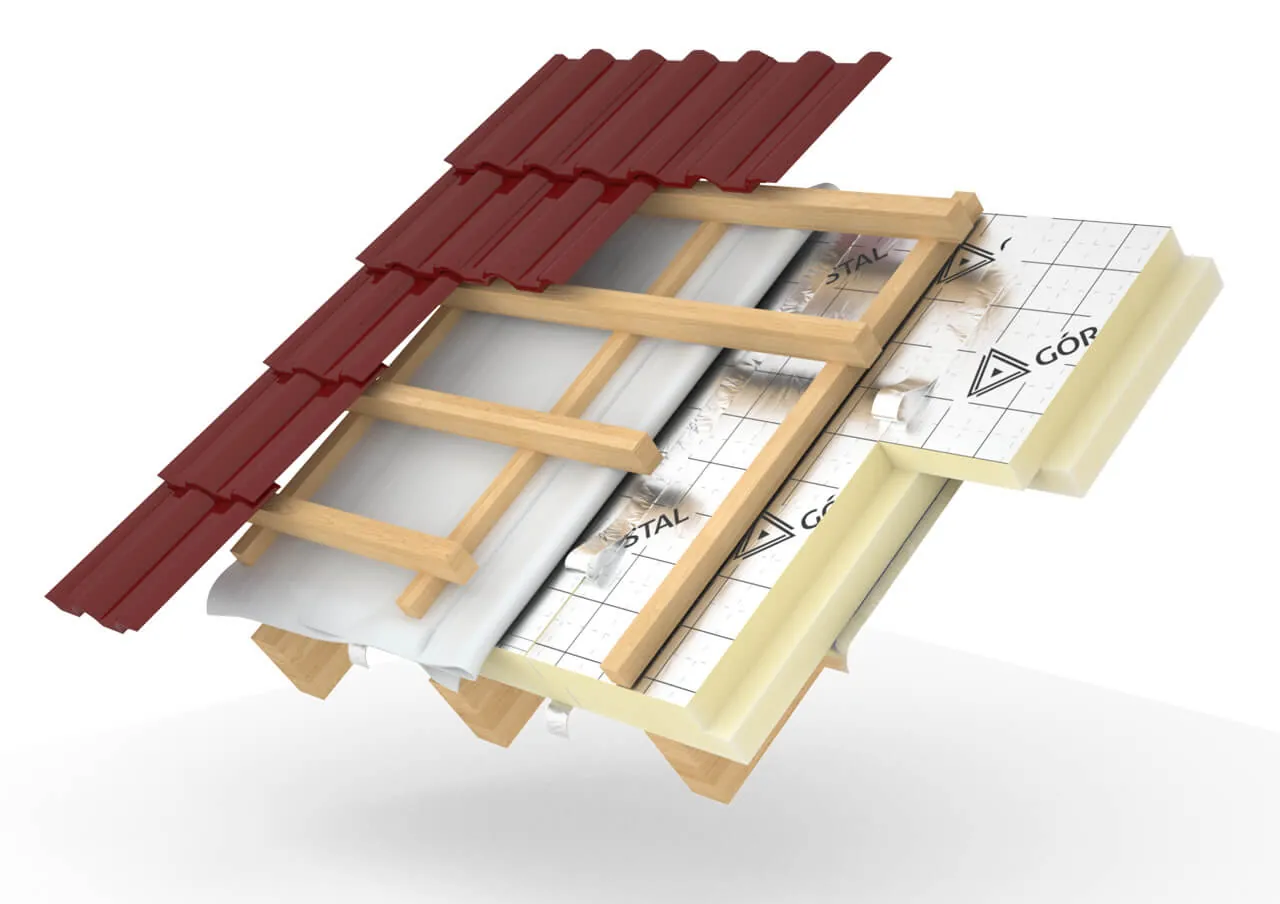
Over-rafter insulation — eliminating thermal bridges
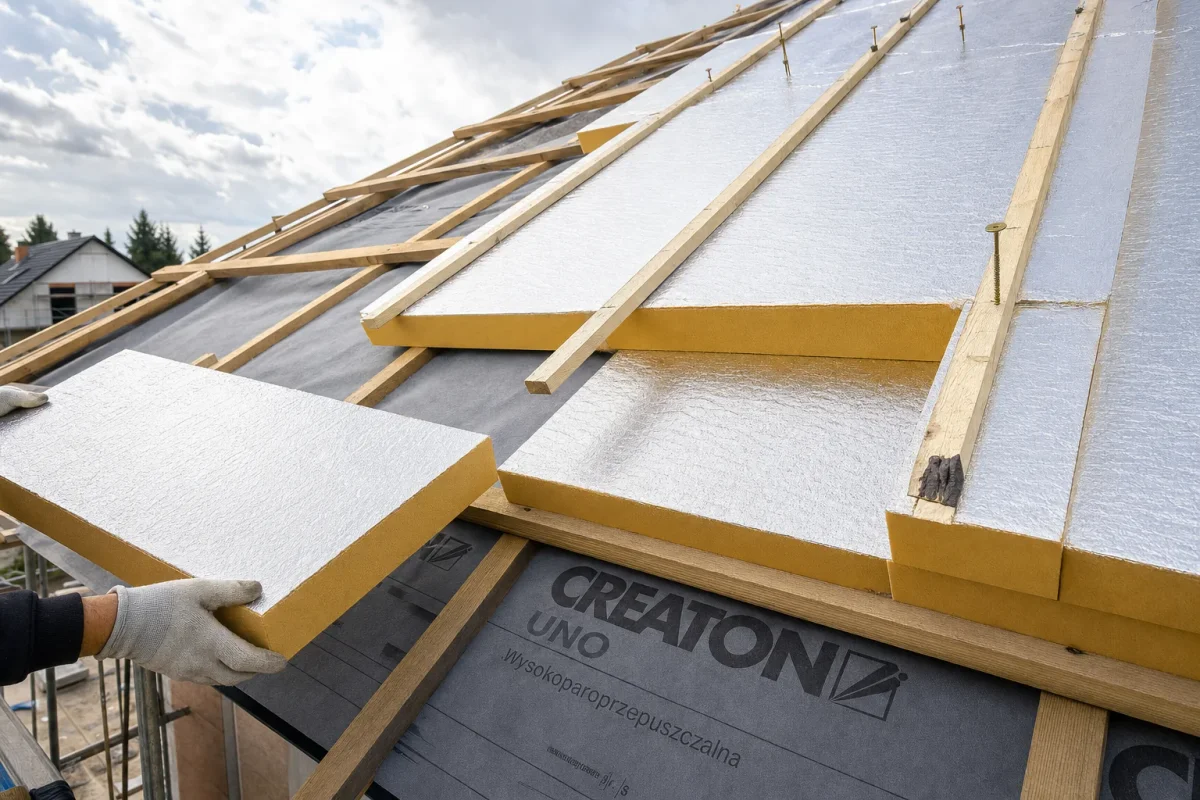
The over-rafter system is now the standard in energy-efficient construction. termPIR® AL or termPIR® MAX 19 AL boards are laid as a uniform layer on top of the rafters, so the timber sits within the “warm zone” — no thermal bridges form on the rafters (which, with mineral wool laid between the rafters, account for up to 10% of the roof area).
The TAG tongue-and-groove edge profile on the perimeter of the boards ensures tight joints. The boards are fixed with long timber screws through the counter-batten into the rafters. The upper aluminium facing serves as a preliminary roof covering, while the lower foil acts as a radiant heat reflector directing thermal radiation back inside.
Between- and under-rafter insulation (W I layout)
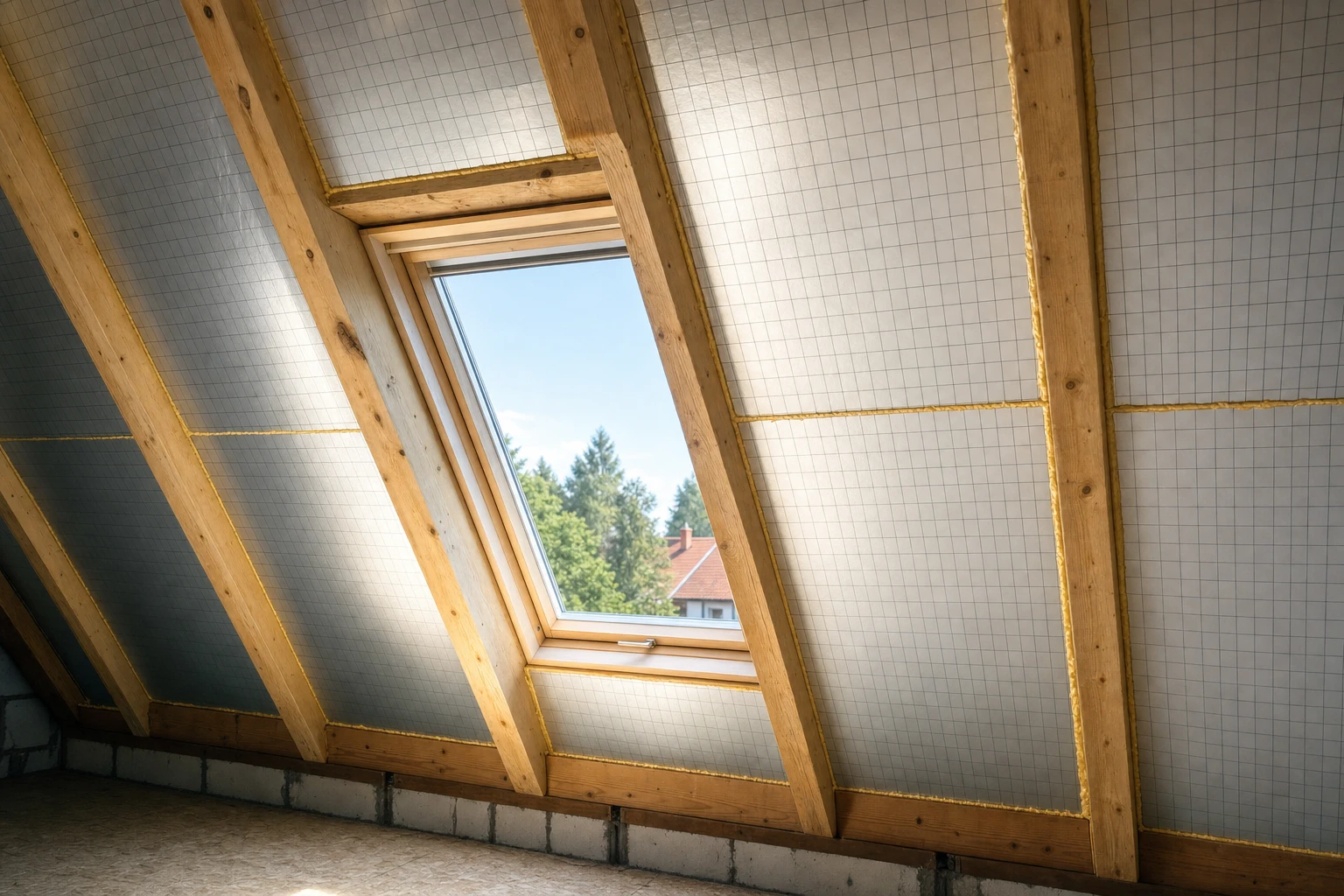
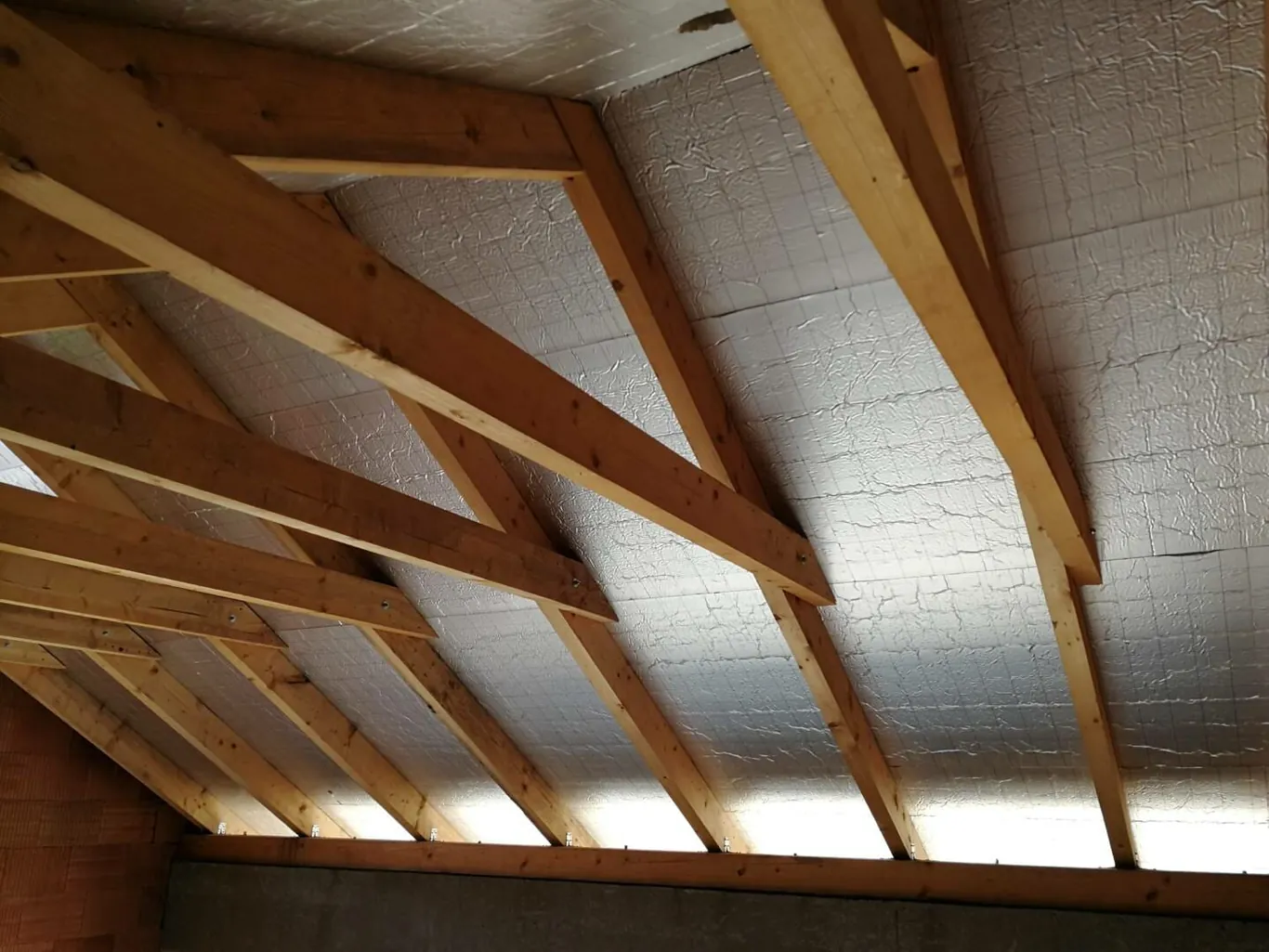
In the between- and under-rafter system, PIR boards are friction-fitted between the rafters, with a second layer under the rafters laid as a continuous plane that eliminates thermal bridges. This solution works well for energy retrofits of existing roofs where the covering cannot be disturbed. The combined layout makes it possible to achieve U = 0.15 W/m²K while preserving the full headroom of the attic space.
Composite boards with OSB — a roof ready for the covering
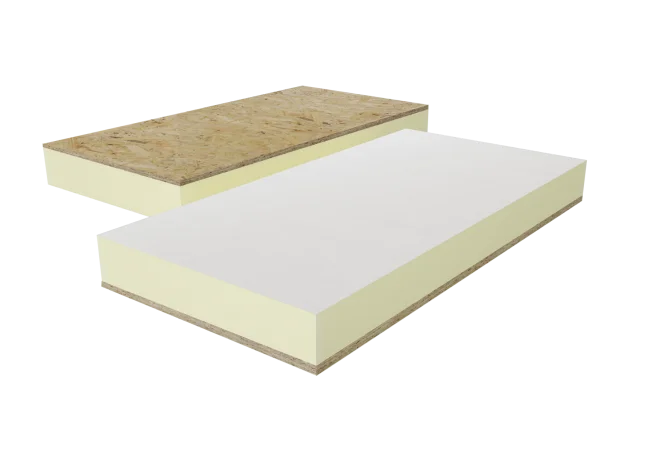
The termPIR® AL/OSB variant is a PIR core factory-bonded to a 12 or 18 mm OSB-3 board. The board simultaneously serves as a load-bearing layer for battens/counter-battens or for a roof membrane. This shortens the installation schedule and eliminates the need for separate decking.
Specific thicknesses — what to choose?
For a new building meeting WT 2021 (U ≤ 0.15 W/m²K) with over-rafter insulation using termPIR® AL boards (λD = 0.022 W/(m·K)), a thickness of 14–15 cm is sufficient. The standard stock thicknesses are 140 or 150 mm.
For passive buildings or when aiming for the nZEB standard, it is worth using termPIR® MAX 19 AL with λD = 0.019 W/(m·K) — a thickness of 12 cm will give U ≈ 0.15 W/m²K, and 16 cm — U below 0.12 W/m²K (the reference level for passive houses).
In retrofits of old roofs (with existing 15 cm wool between the rafters), it is often enough to add 8–10 cm of PIR under the rafters from the interior side to bring U down from approximately 0.30 to the required 0.15 W/m²K.
Additional advantages of PIR technology in the attic
- Dimensional stability — PIR boards do not settle during service life (a problem typical of mineral wool in vertical and inclined applications), so thermal resistance remains constant throughout the operating period.
- Fire reaction class B-s2,d0 (system) — in accordance with EN 13501-1.
- Compressive strength class ≥ 150 kPa — allows walking on the roof during installation of the covering.
- Biological resistance — provides no nutrient base for mould, fungi, rodents or insects.
- EN 13165 standard — declared technical parameters confirmed by CE certification.
- No fibre emissions — important for habitable attics from an indoor air quality perspective.
Frequently asked questions
What thickness of PIR boards is required to meet WT 2021 for a pitched roof?
Is over-rafter insulation better than between-rafter insulation?
Can PIR boards be laid directly on the battens beneath roof tiles?
Are PIR boards vapour-permeable — is a vapour barrier needed?
Does increasing insulation thickness above WT 2021 make economic sense?
Related products and systems
Products
Read next
Pitched Roof Insulation with PIR Boards — Methods & Specs
Over-Rafter Roof Insulation with PIR Boards — Complete Guide
Roof Thermal Insulation — Why PIR Boards Set the WT 2021 Standard