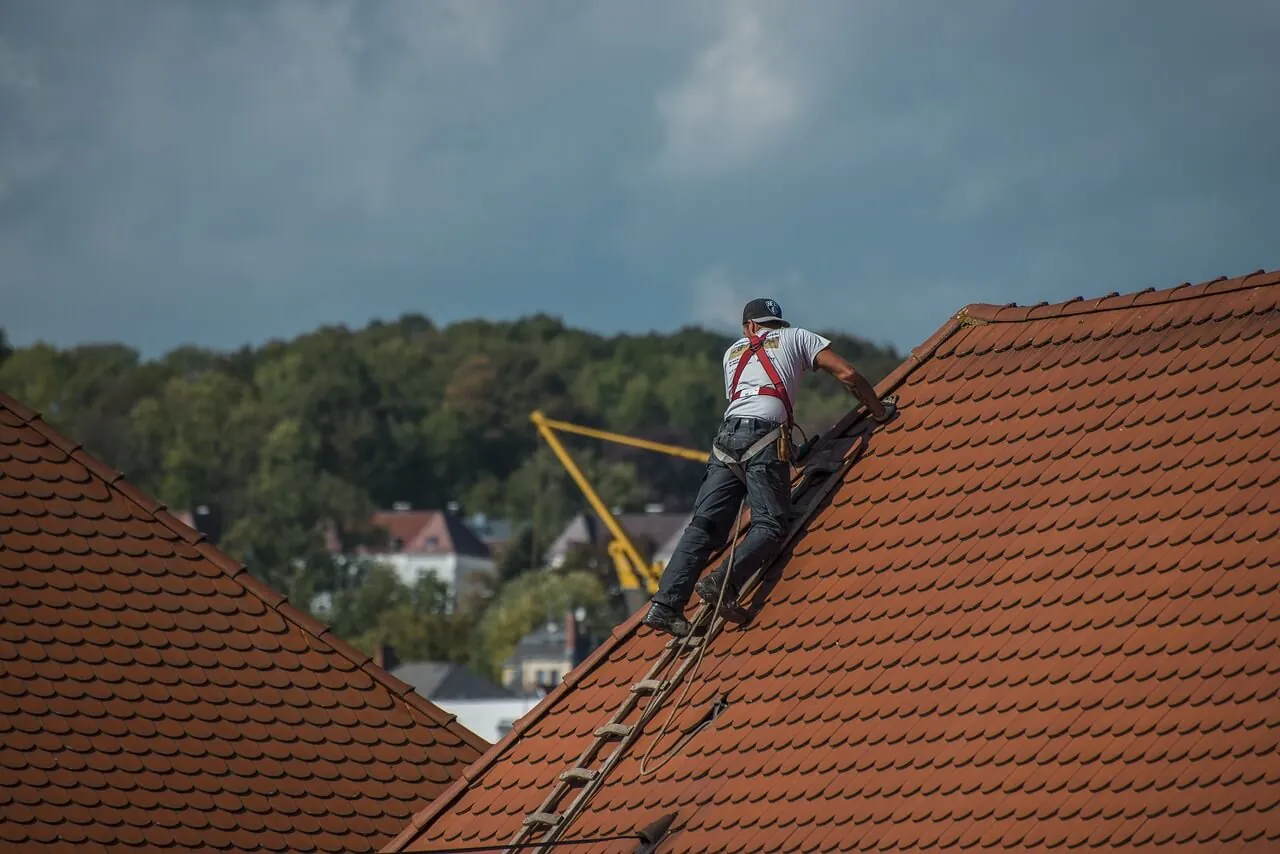
How to Get Rid of Martens in the Attic? PIR as a Barrier
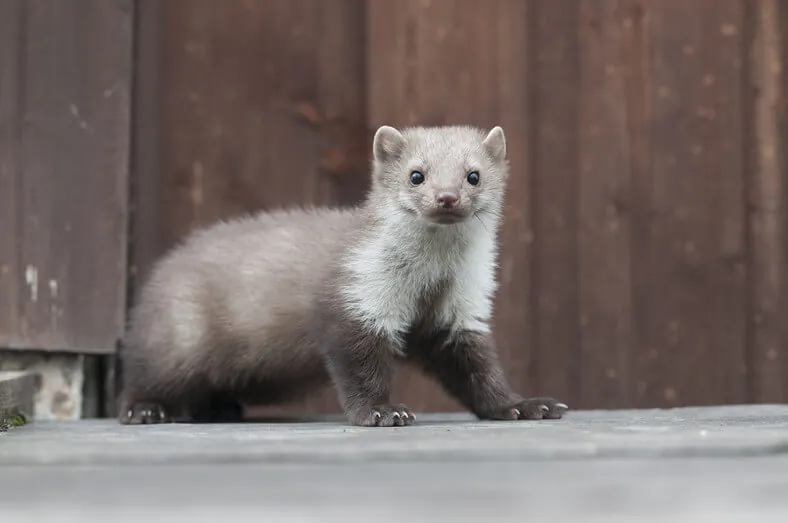
Martens in the attic — a costly problem that begins with the choice of insulation
Nocturnal scampering above the ceiling, the characteristic stench of urine soaking into the roof truss, gnawed electrical wiring and shredded mineral wool — this is daily life for owners of single-family homes whose attics have been colonised by stone martens (Martes foina). This predator is subject to partial species protection, so any solution must be humane. The key to permanently solving the problem, however, is not just scaring the animals away but, above all, eliminating the conditions that draw them into the attic in the first place — including replacing vulnerable thermal insulation with a material that a marten cannot tear apart with its claws.
Why martens choose attics insulated with mineral wool and EPS
The stone marten looks for a shelter that meets three criteria: warm, dry and with a soft material for nesting its young. A standard attic insulated with mineral wool between the rafters meets all three criteria almost perfectly. To a marten, wool is literally building material — the animal tears it out in clumps, shapes a nest, and in the process destroys the vapour barrier and roof underlay membranes.
Expanded polystyrene (EPS), contrary to appearances, is no barrier either — a marten easily shreds it with claws and teeth, tunnelling through it. This also applies to EPS boards in flat-roof structures and unused-attic floor slabs. Damage can be considerable:
- destroyed insulation → roof U-value increase of up to 30–50%
- damaged electrical installation → fire risk
- biologically contaminated structural elements of the roof truss
- the need to disinfect and replace roofing membranes
The cost of restoring an attic to its pre-invasion state often exceeds PLN 15,000–25,000 in a 120 m² home.
Prevention — sealing the building envelope
Before turning to insulation, it is worth ruling out points of entry. A marten can squeeze through an opening just 5 cm wide — a gap at the eaves, chimney or roof hatch is all it takes.
Prevention checklist:
- Ventilation openings and eaves grilles — stainless-steel mesh with apertures ≤ 10 mm
- Downpipes — anti-climb collar (a smooth PVC flange about 40 cm in diameter) fitted approx. 1.5 m above ground
- Eaves and gutter aprons — check the continuity of metal flashing and eaves combs
- Chimneys and ventilation ducts — chimney cowls with mesh
- Trees growing close to the house — trim branches that reach the roof (a marten can jump up to 2 m)
- Roof windows and hatches — check seals and fittings
This stage eliminates around 70% of potential entry routes, but it does not protect the thermal insulation itself from an animal that has already made it into the roof slope.
PIR boards as a mechanical and thermal barrier
Rigid closed-cell polyurethane foam behaves quite differently from wool or EPS. Core density of 30–35 kg/m³, a hard surface and an aluminium or glass-fleece facing mean the material puts up genuine resistance to a marten — the animal cannot tear out a chunk with its claws or chew a tunnel for a nest. PIR boards also do not absorb moisture or odours, so they do not act as an attractant.
Key technical parameters that argue in favour of PIR for pitched-roof insulation:
| Parameter | termPIR® AL | Mineral wool | EPS 040 |
|---|---|---|---|
| λD [W/(m·K)] | 0.022 | 0.036–0.040 | 0.040 |
| Thickness for U = 0.15 W/m²K | ~15 cm | ~24 cm | ~26 cm |
| Tear-resistance against rodents | high | very low | low |
| Water absorption | < 2% | high | low |
| Fire reaction class (system) | B-s2,d0 | A1 | E |
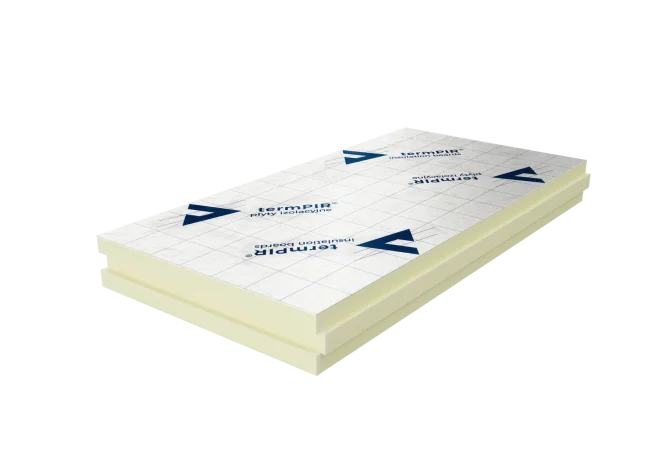
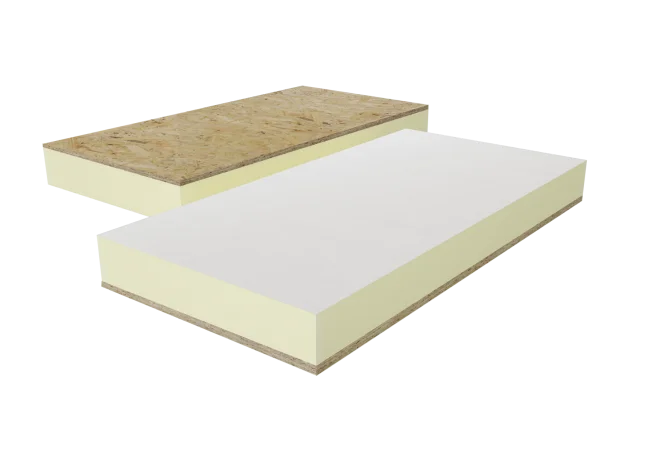
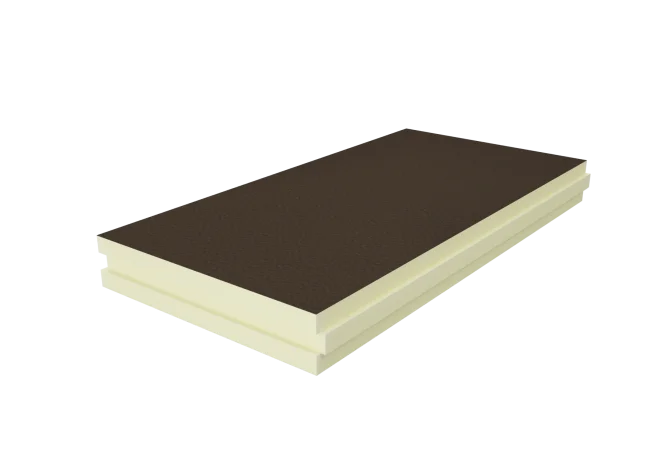
For a typical pitched roof, we most often use termPIR® AL with a gas-tight aluminium facing — λD = 0.022 W/(m·K) — which doubles as a vapour barrier. The eco variant termPIR® AL R-eco delivers the same parameters with a reduced carbon footprint. For premium applications there is the termPIR® Prime line and the composite termPIR® AL/OSB, in which the OSB layer forms an additional hard shell that is impenetrable to animals.
Above-rafter vs below-rafter installation — which to choose
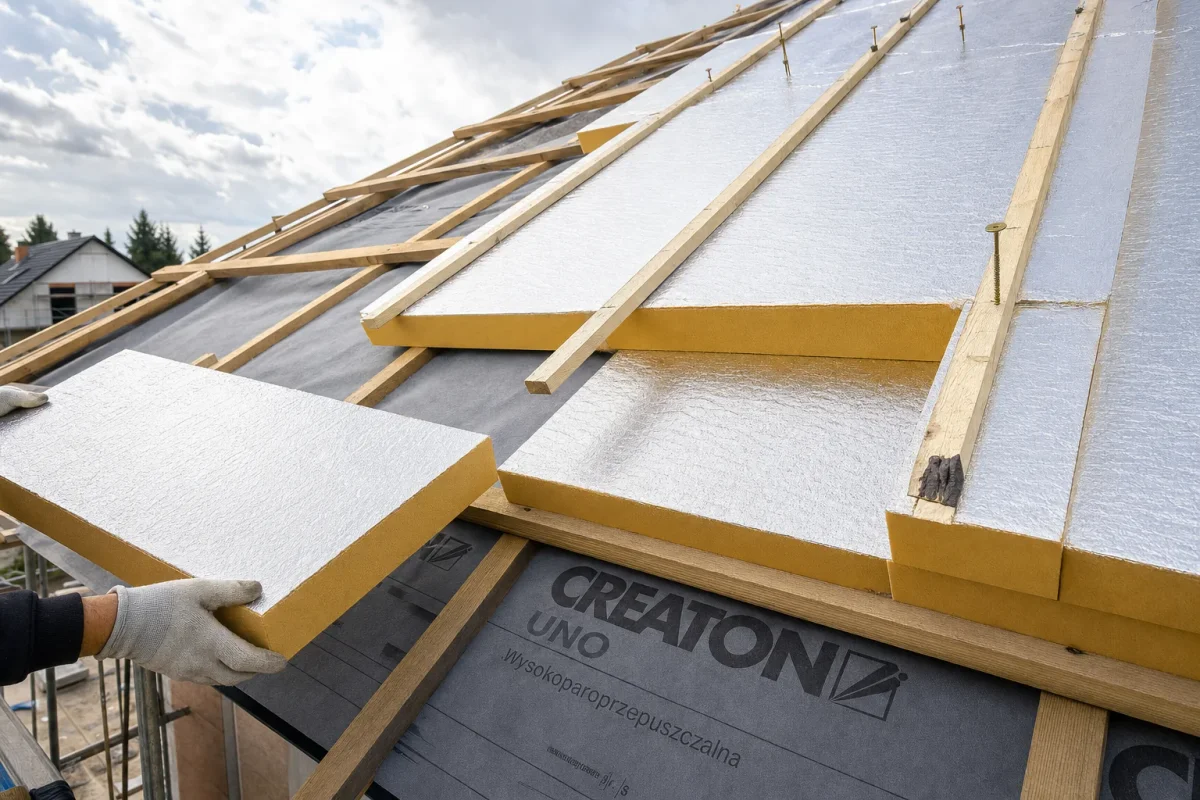
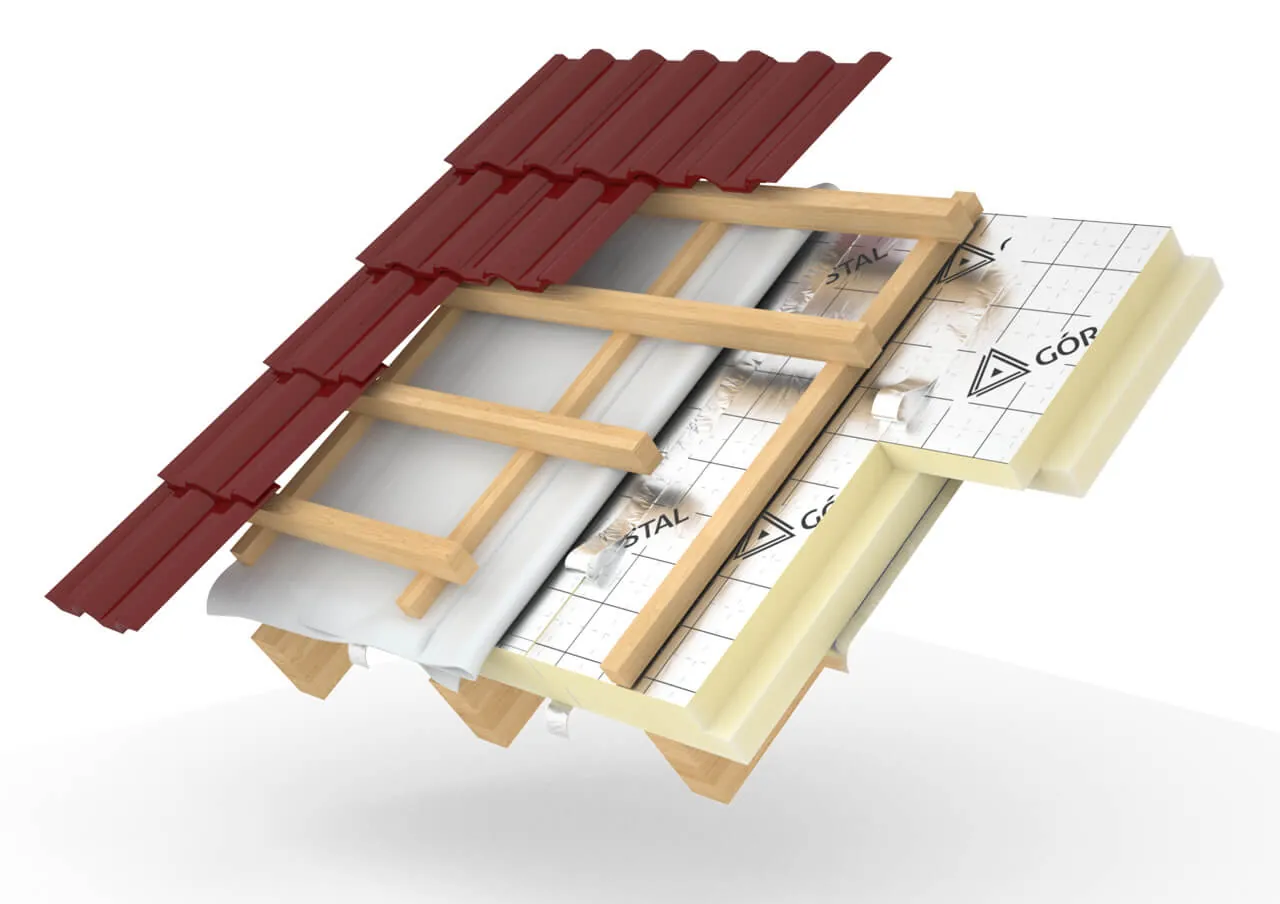
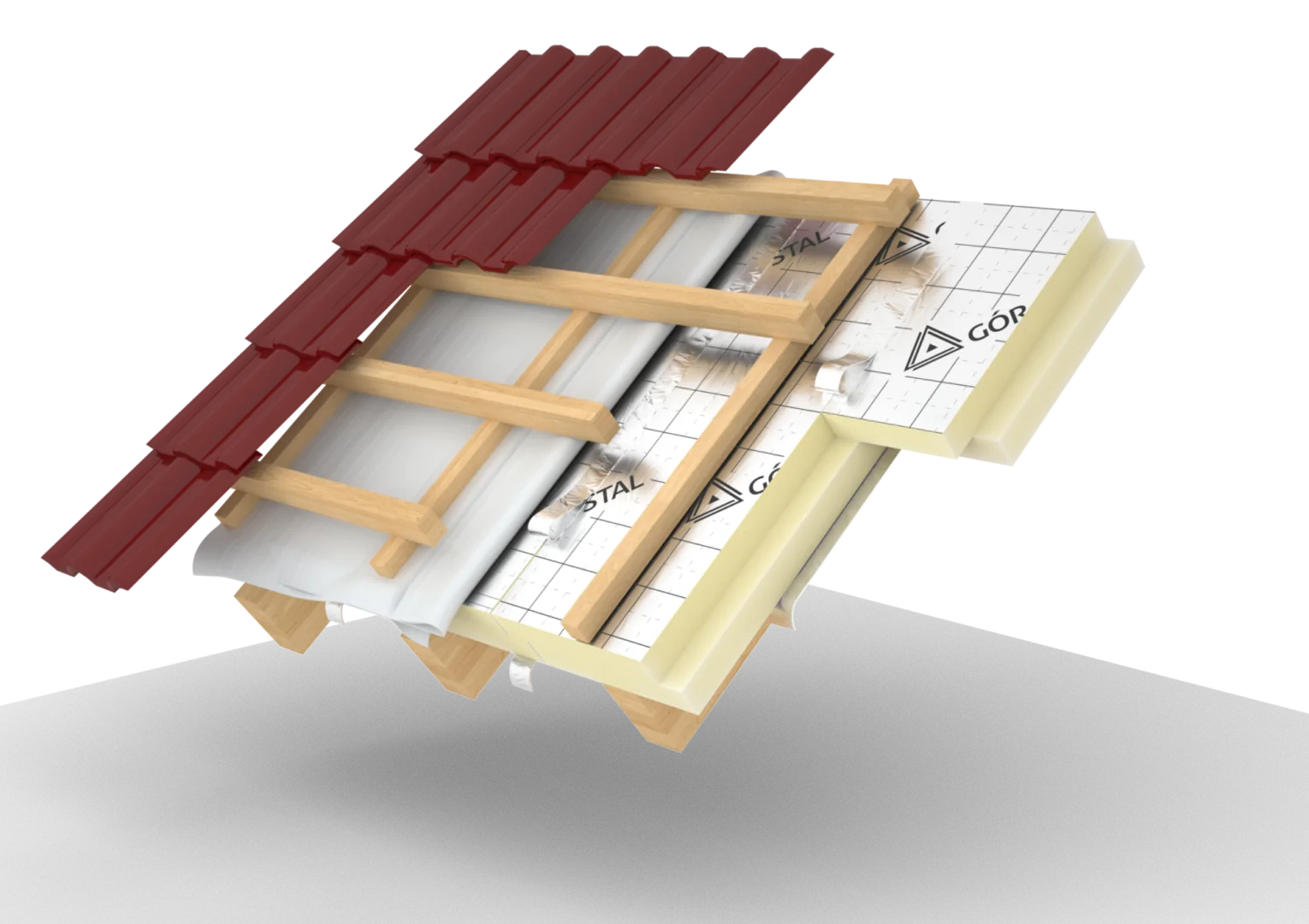
For maximum airtightness and the elimination of thermal bridges, we recommend above-rafter installation of termPIR®. The boards are laid on top of the rafters, forming a continuous insulating shell with no gaps a marten could squeeze into. This solution follows the principle of thermal envelope continuity recommended for designs compliant with WT 2021 (Polish Technical Conditions 2021) (requirement U ≤ 0.15 W/m²K for roofs).
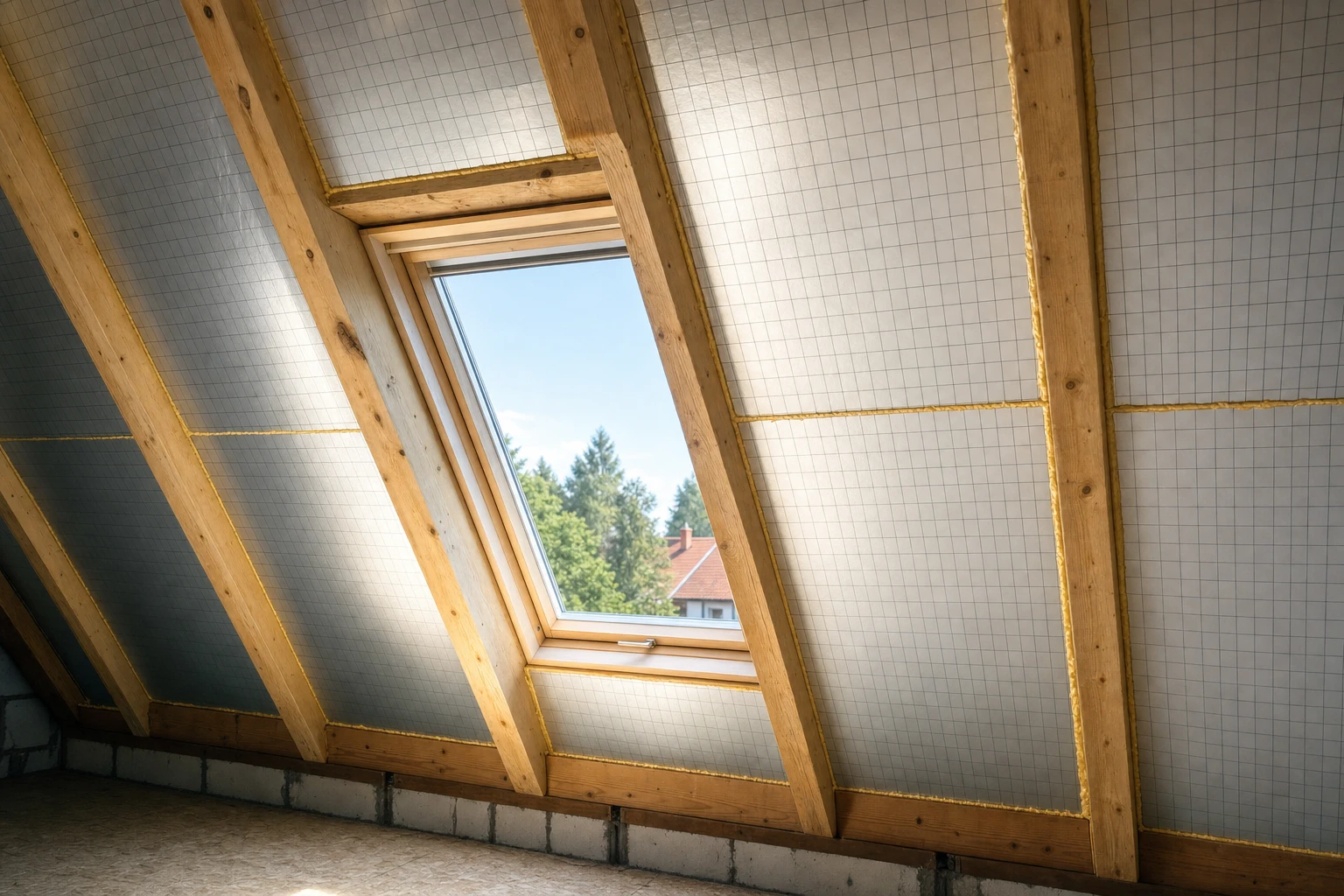
In refurbishments where the roof covering cannot be dismantled, we use a below-rafter/between-rafter layout. Boards cut to size between the rafters, sealed with low-expansion foam and aluminium tape, form a closed enclosure that a marten cannot breach.
Thickness selection for the most common scenarios:
| termPIR® AL thickness | R [m²K/W] | Roof U* [W/m²K] | WT 2021 compliance |
|---|---|---|---|
| 14 cm | 6.36 | 0.15 | ✓ borderline |
| 16 cm | 7.27 | 0.13 | ✓ |
| 18 cm | 8.18 | 0.12 | ✓ with margin |
| 20 cm | 9.09 | 0.11 | ✓ passive-house standard |
*indicative, taking into account the resistance of accompanying layers
Fire reaction class of the system with facing — B-s2,d0 to EN 13501-1. Product standard: EN 13165.
What to do when martens have already settled in the attic
The order of operations matters — replacing insulation without first removing the animals will only seal them inside the assembly.
- Identify the signs — droppings, fur, grease marks on beams, worn paths
- Ultrasonic repellents — emitters at 20–60 kHz, effective when permanently mains-powered; non-invasive, inaudible to humans
- Scent repellents — preparations based on menthol or camphor oils; caution with pets
- Live traps — baited (egg, piece of raw meat); the animal must be released at least 10 km outside built-up areas
- Disinfection and replacement of damaged insulation — removal of contaminated wool, ozone treatment of the roof truss
- Installation of new PIR insulation — combined with sealing of all potential entry routes
In the case of females with young (May–July), any intervention must be agreed with the Regional Director for Environmental Protection — the stone marten is under partial species protection.
Frequently asked questions
Are PIR boards 100% resistant to martens?
What thickness of termPIR® AL should I choose for a pitched roof?
Can I lay PIR over existing mineral wool?
Is PIR insulation safe for fire performance in the attic?
Won't ultrasonic repellents harm pets?
Related products and systems
Products
Read next
Over-Rafter Roof Insulation with PIR Boards — Complete Guide
Over-rafter PIR Roof Insulation — Technical Guide
Attic Insulation with PIR Boards — WT 2021 Compliance | BOKKA