Pitched Roof Insulation with PIR Boards — Methods & Specs
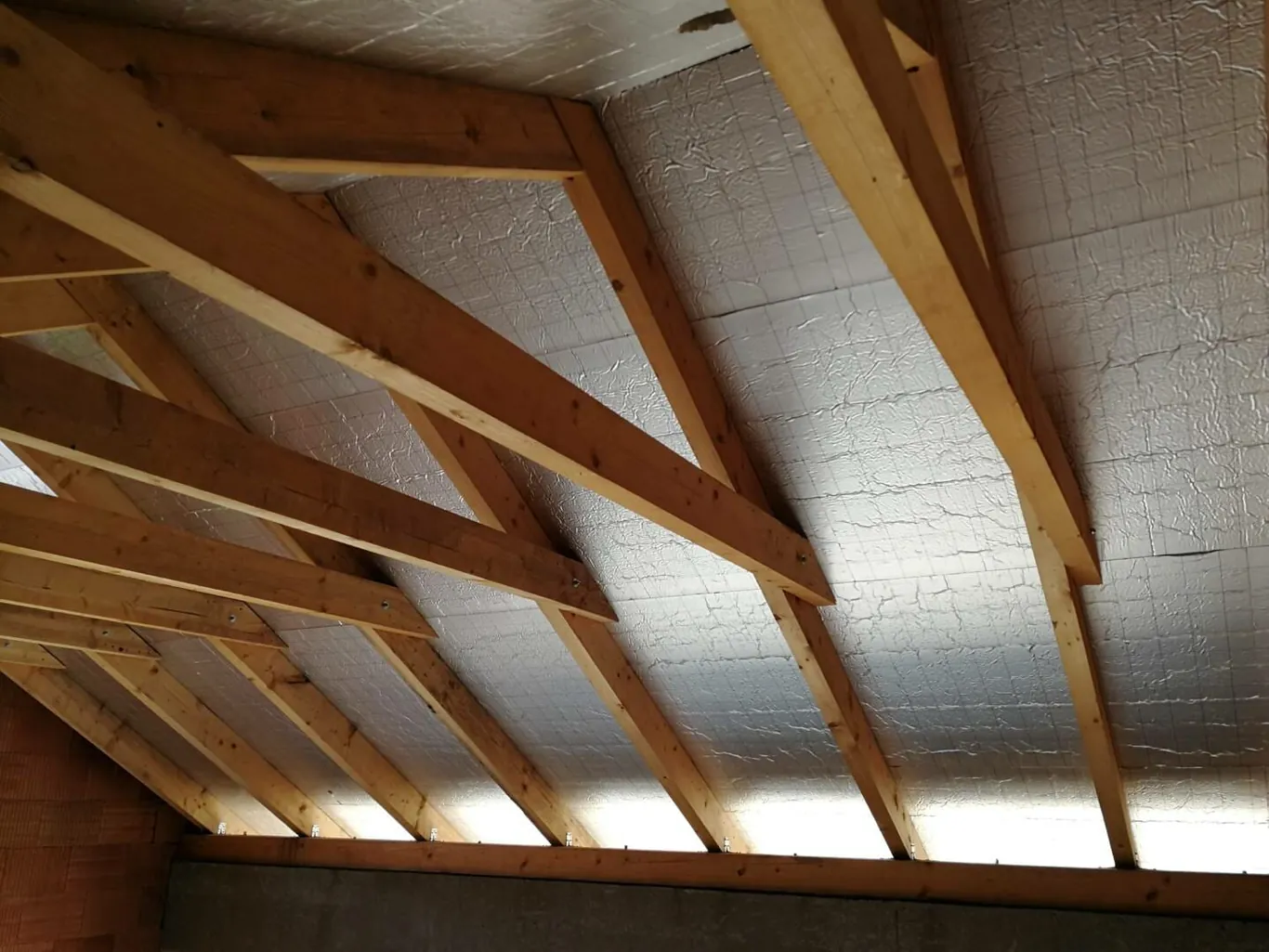
Pitched roof insulation — choosing the method and material for WT 2021 compliance
The roof is the building envelope element with the highest heat losses — up to 25–30% of energy can escape through a poorly insulated roof slope. Polish Technical Conditions 2021 (WT 2021) require a thermal transmittance of U ≤ 0.15 W/m²K for the roof, which with traditional materials means insulation layers of 25–30 cm. PIR boards with thermal conductivity of λD 0.019–0.022 W/(m·K) allow the same thermal performance to be achieved at a significantly smaller thickness — crucial when converting attics and renovating older roofs. Below we discuss the three basic insulation methods and material selection.
Three methods of pitched roof insulation — technical overview
In practice, three insulation arrangements are used, often combined:
| Method | Insulation location | Thermal bridges | Roof covering interference |
|---|---|---|---|
| Between-rafter | Between the rafters | Present at rafters | None |
| Under-rafter | Below rafters (from inside) | Eliminated from below | None |
| Over-rafter | Above rafters (from outside) | Fully eliminated | Covering must be removed |
Method selection depends on the existing roof condition, attic headroom, budget and target U-value. In new buildings, the over-rafter or mixed (over-rafter + between-rafter) arrangement is most commonly designed; in retrofits — between-rafter with a supplementary under-rafter layer.
Over-rafter method — the reference solution with PIR boards
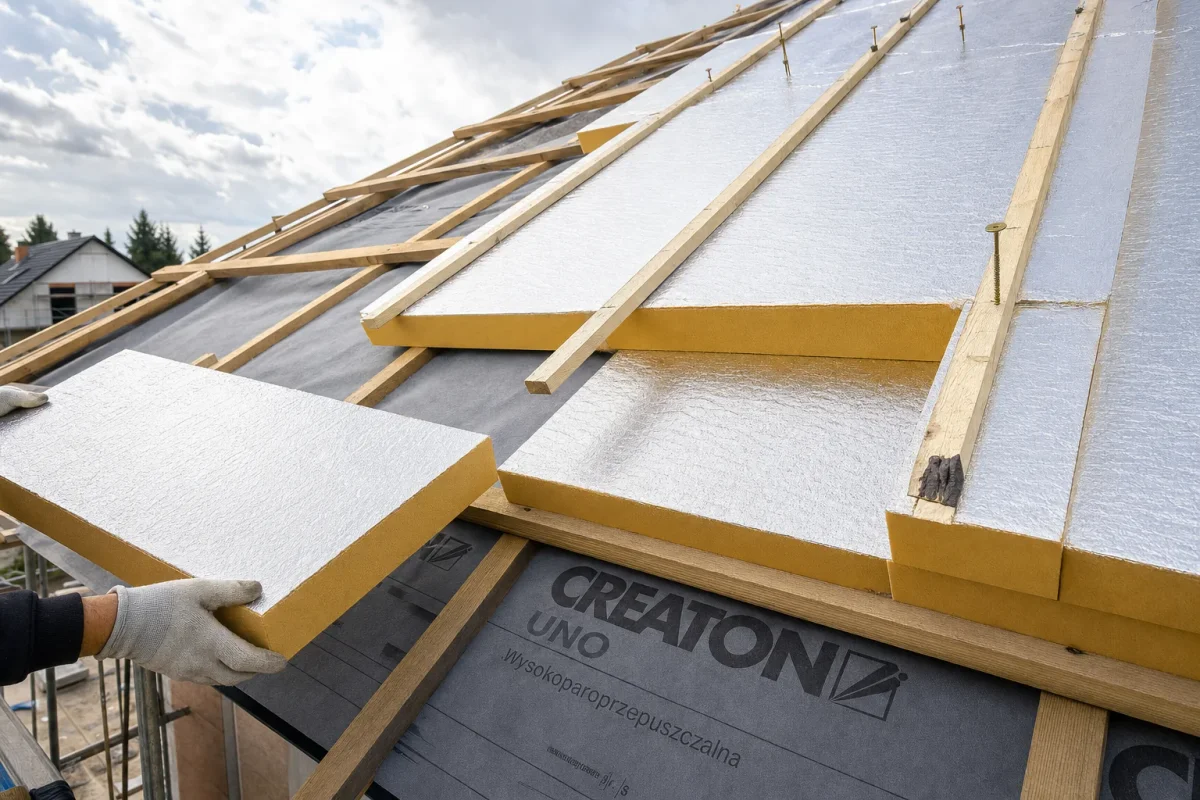
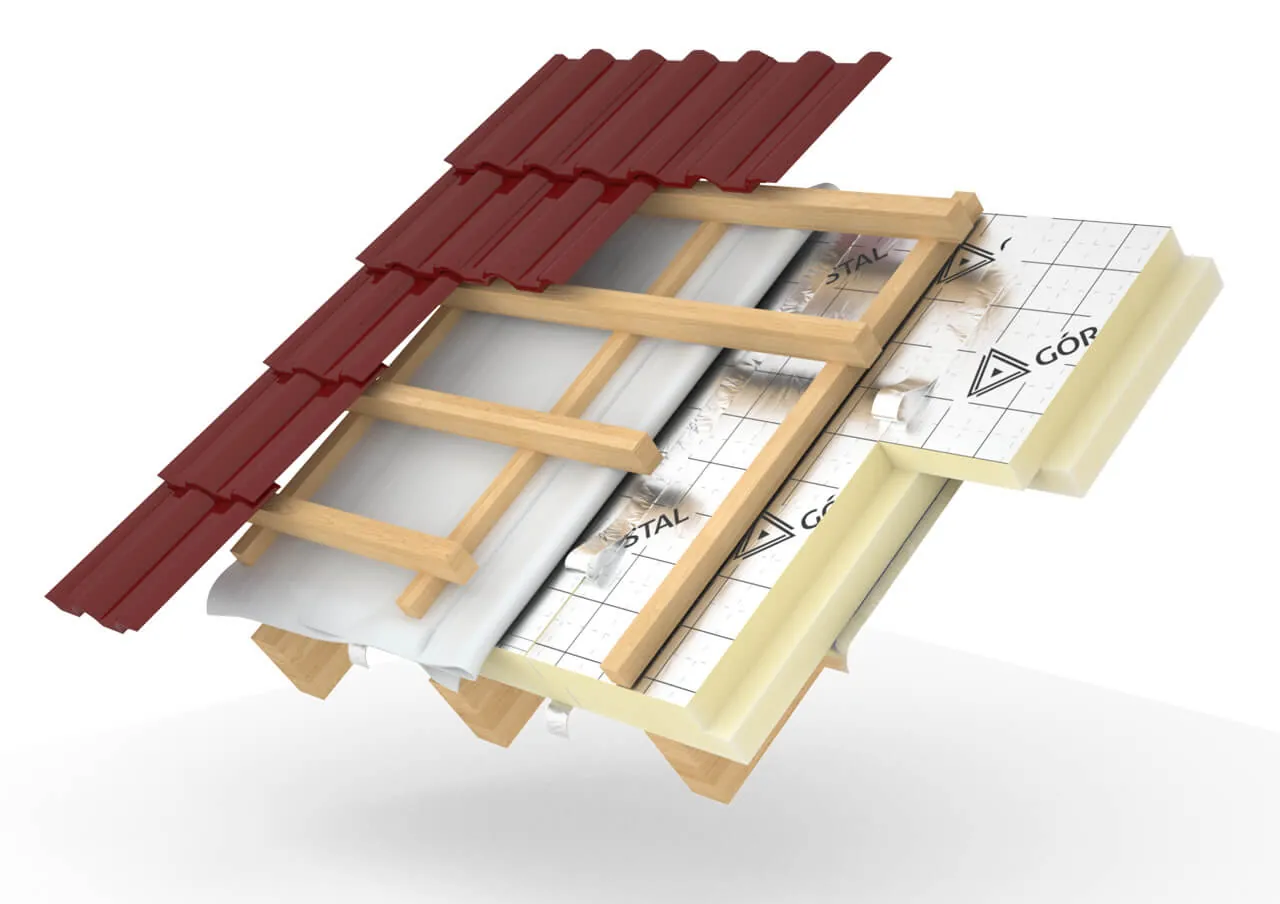
The over-rafter arrangement consists of laying a continuous insulation layer on top of the rafters, beneath the counter-battens and roof covering. This is the reference solution for energy-efficient buildings — it completely eliminates linear thermal bridges at the rafters (which with between-rafter mineral wool reduce the effective thermal resistance by as much as 10–15%).
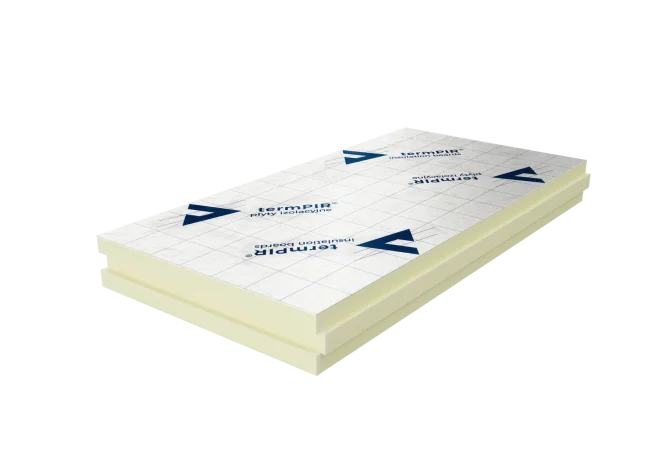
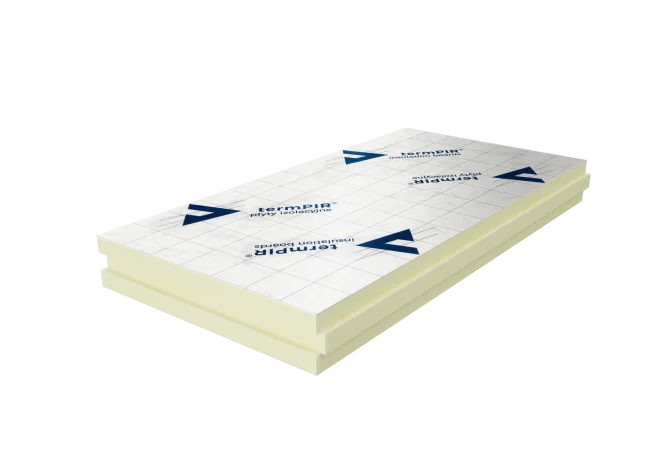
The boards dedicated to this method are termPIR® AL (λD 0.022 W/(m·K)) and the premium variant termPIR® MAX 19 AL (λD 0.019). The boards feature a gas-tight aluminium facing and TAG (tongue-and-groove) or LAP (stepped) edge profiles, which ensure tight joints.
Approximate thicknesses required to achieve U ≤ 0.15 W/m²K (PIR layer alone, excluding structural elements):
| Material | λD [W/(m·K)] | Thickness for U ≈ 0.15 |
|---|---|---|
| termPIR® AL | 0.022 | ~15 cm |
| termPIR® MAX 19 AL | 0.019 | ~13 cm |
| Mineral wool | 0.038 | ~25 cm |
| EPS polystyrene | 0.036 | ~24 cm |
The detailed layer arrangement — from rafters through vapour control layer, boarding, PIR board, hydro-insulation (highly vapour-permeable membrane), counter-battens and battens — is described in the system datasheet pitched roof — termPIR® over-rafter.
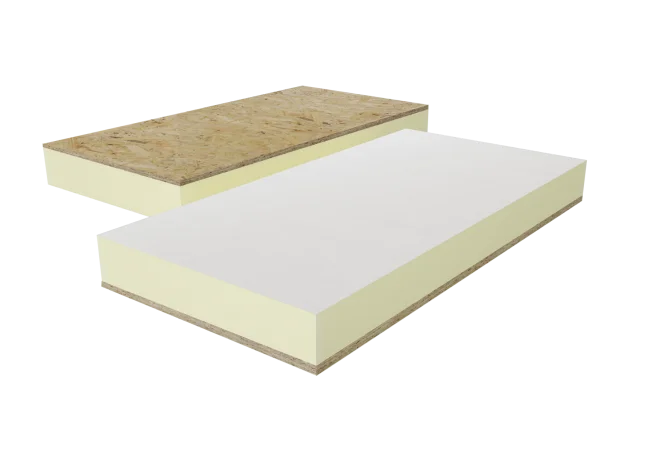
An alternative for over-rafter arrangements in timber construction is the termPIR® AL/OSB composite, which combines a PIR core with an OSB panel providing a ready substrate for counter-battens or system roof coverings.
Between-rafter and under-rafter methods — retrofit from inside
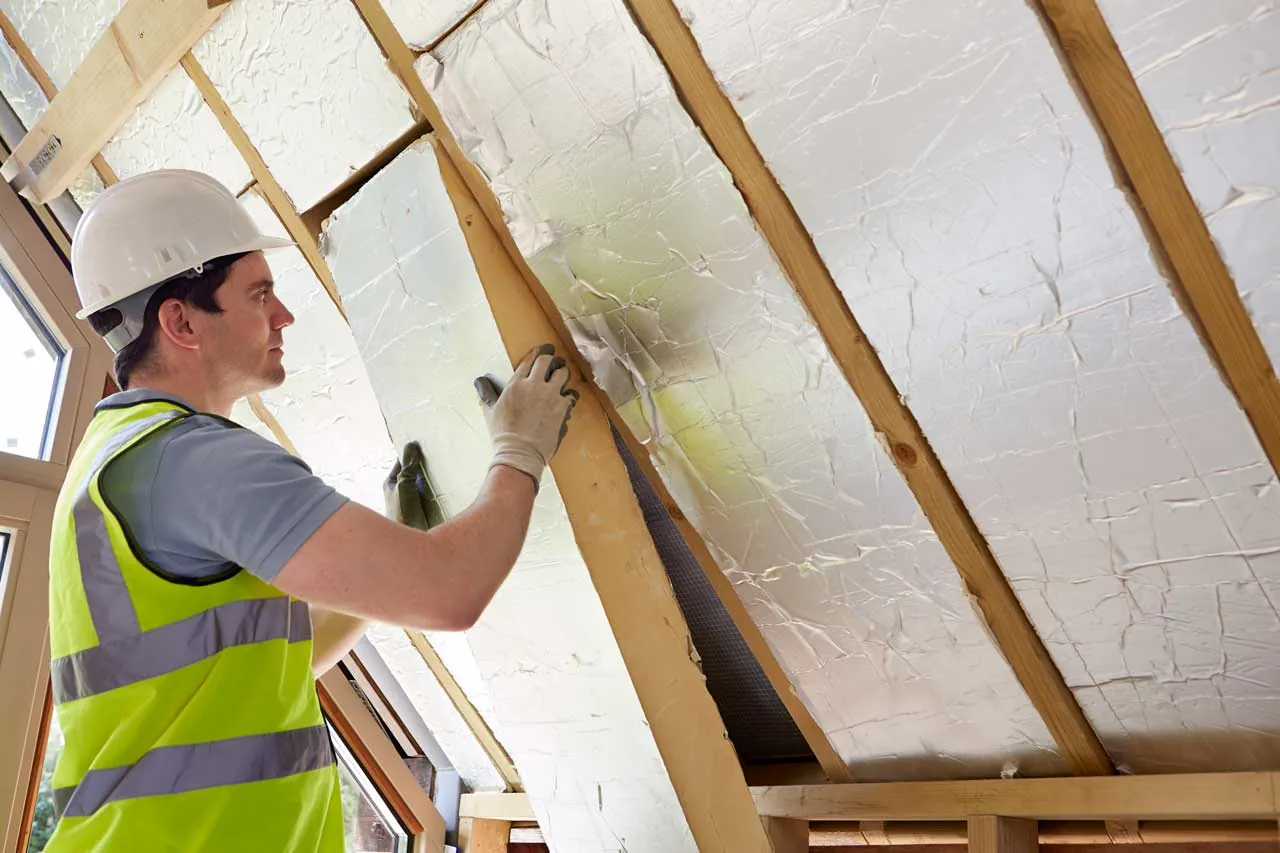
When the roof covering is in good condition and its removal is not economically justified, insulation is installed from the attic side. The between-rafter layer alone is usually insufficient — rafters are typically 16–20 cm deep, which with mineral wool (λ 0.038) yields U ≈ 0.22 W/m²K, i.e. above the WT 2021 threshold.
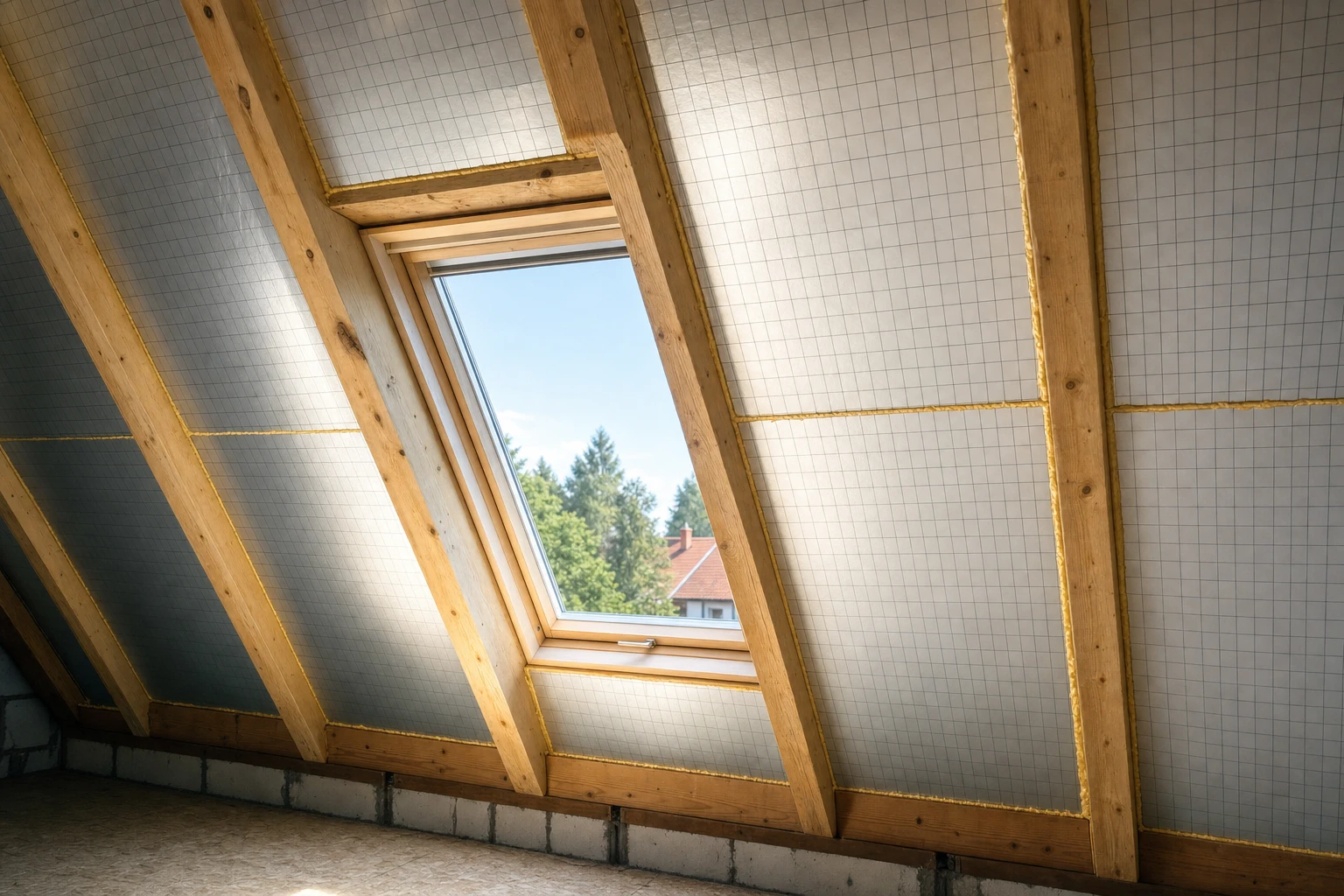
The solution is to supplement the insulation with an under-rafter layer of termPIR® AL boards. A 5–8 cm board fitted below the rafters:
- breaks thermal bridges at the timber rafters,
- acts as an airtight vapour barrier (Al foil is gas-tight — diffusion resistance Sd > 1500 m),
- halves the total layer thickness compared with pure mineral wool.
Example arrangements with system datasheets: pitched roof — termPIR® under-rafter. It is worth remembering that in a between-rafter arrangement, a ventilation gap of 2.5–4 cm is required beneath the hydro-insulation if the membrane used has low vapour permeability.
PIR sandwich panels — fast roofing for industrial halls and large-volume buildings
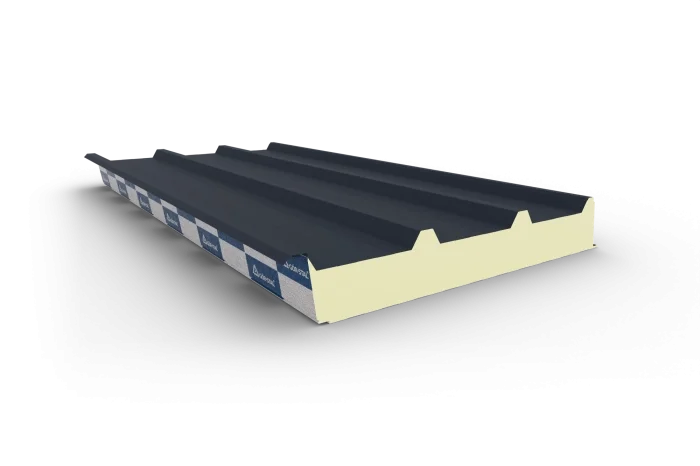
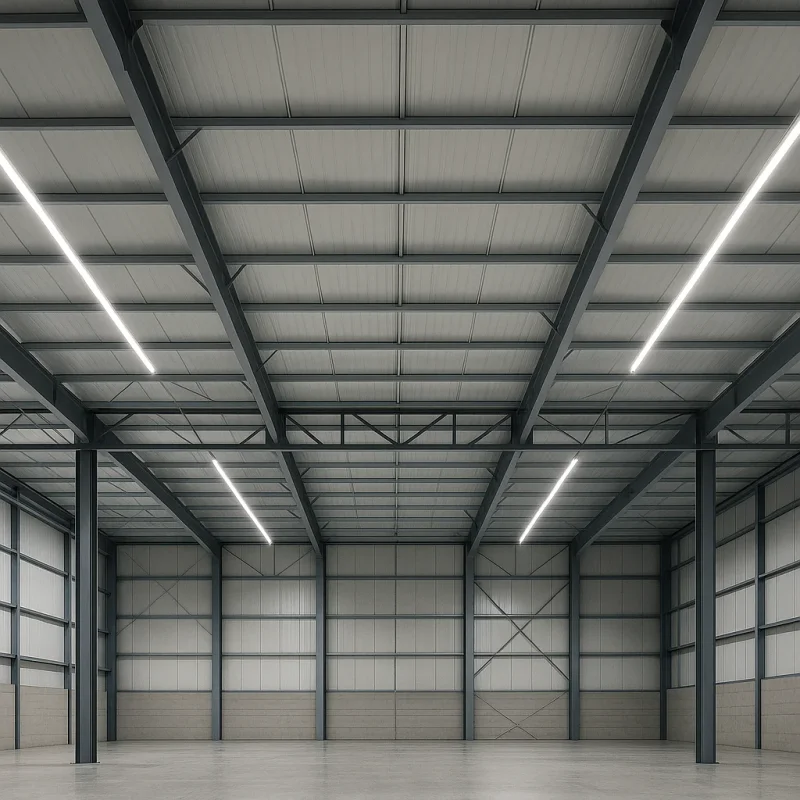
For pitched roofs of large-volume buildings (production halls, warehouses, retail facilities), PIR sandwich panels with double-sided steel facings are the standard. insPIRe® D is a roof panel with a load-bearing trapezoidal profile, available in thicknesses of 40–160 mm and lengths up to 16.5 m, installed in multi-span configurations on steel purlins.
The B-s1,d0 fire reaction class (per EN 13501-1 and EN 14509) and core λD of 0.022 (or 0.019 for the MAX variant) allow U ≤ 0.15 W/m²K to be achieved at a thickness of ~140 mm. Details in the system datasheet pitched roof — insPIRe® D multi-span.
What to avoid when insulating a pitched roof
- Omitting the vapour barrier on the room side in mineral-wool arrangements — water vapour condenses on the cold side of the insulation and degrades its performance.
- Mixing gas-tight and vapour-permeable facings in a single envelope without a condensation analysis (PN-EN ISO 13788).
- Underestimating thickness — WT 2021 requires U ≤ 0.15 W/m²K, and subsidy programmes (Czyste Powietrze / Clean Air, Mój Prąd / My Electricity) often set even stricter requirements.
- Lack of counter-battens in over-rafter arrangements — covering ventilation is essential for tiles and metal sheet.
Frequently asked questions
What thickness of PIR board is required for a pitched roof under WT 2021?
Is PIR board better than mineral wool on a roof?
Can a pitched roof be insulated with PIR boards from the inside?
Are PIR boards suitable for every type of roof covering?
Can over-rafter insulation be installed in an existing building?
Related products and systems
Products
Read next
Attic Insulation Thickness per WT 2021 — PIR Boards | BOKKA
Over-Rafter Roof Insulation with PIR Boards — Complete Guide
Roof Thermal Insulation — Why PIR Boards Set the WT 2021 Standard