Building Insulation for Heatwaves — PIR Boards & Summer Comfort
Heatwaves are intensifying — air conditioning treats the symptom, not the cause
Summer heatwaves exceeding 35°C are no longer an exception in Poland — they are the rule. Investors reflexively reach for air conditioning, treating it as the only remedy for overheating buildings. Meanwhile, the cooling unit fights the symptom, while the cause is insufficient thermal insulation of external envelope components. A properly designed PIR-board insulation — with λD = 0.022 W/(m·K) — can lower indoor temperatures by as much as 8–10°C relative to ambient, reducing cooling demand by 30–50% over the season.
Why a building overheats — physics, not magic
In summer, the heat flux flows from outside into the building, and its intensity depends on three factors: the temperature difference, the surface area of the envelope, and — crucially — its thermal transmittance U. The most exposed components are flat roofs and roof slabs, where the surface temperature of a bituminous covering on a sunny day reaches 70–80°C. A floor slab without adequate insulation becomes a giant radiator releasing heat into the rooms below, often long after sunset.
The second critical element is external walls with western and southern exposure, and the third — envelopes in lightweight buildings (warehouses, storage halls, retail facilities), where the absence of thermal mass causes the interior to heat up rapidly. The solution is not a thicker layer of average-lambda material, but the material with the lowest available thermal conductivity — and this is exactly where PIR boards excel.
PIR boards — the lowest lambda on the insulation market
Polyisocyanurate foam (PIR) has the most favourable λD among commonly used thermal insulation materials. For comparison:
| Material | λD [W/(m·K)] | Thickness for U = 0.15 W/m²K |
|---|---|---|
| termPIR® MAX 19 AL | 0.019 | ~13 cm |
| termPIR® AL | 0.022 | ~15 cm |
| termPIR® ETX | 0.025 | ~17 cm |
| Mineral wool | 0.035–0.040 | 24–27 cm |
| EPS polystyrene | 0.038–0.042 | 26–28 cm |
The difference is significant especially where every centimetre counts — when insulating flat roofs, terraces, mezzanines or walls with limited insulation-layer thickness. termPIR® boards are manufactured to EN 13165, in fire reaction class B-s2,d0 (system with facing).
Flat roof — the first line of defence against heat
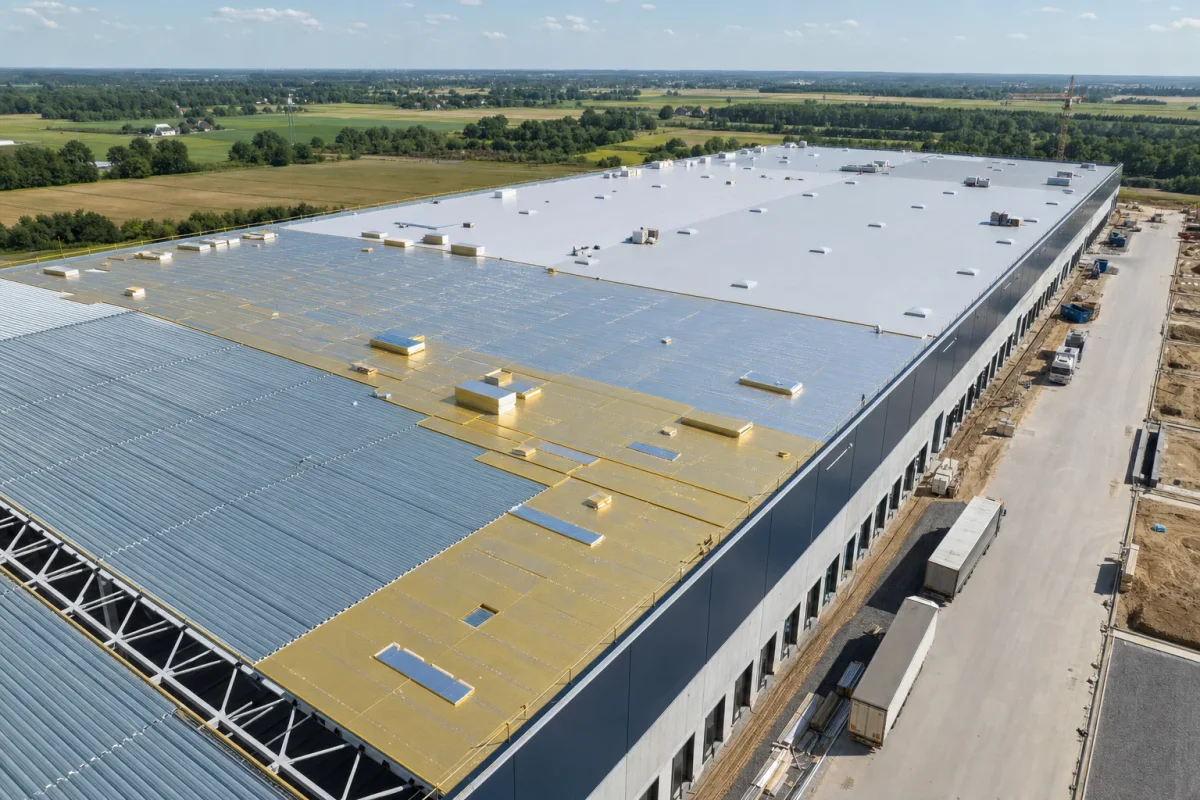
In buildings with a flat roof, this envelope generates the largest heat gains in summer. Per WT 2021 (Polish Technical Conditions 2021) the roof must achieve U ≤ 0.15 W/m²K, but for summer thermal comfort it is worth going lower — to 0.12–0.13 W/m²K.
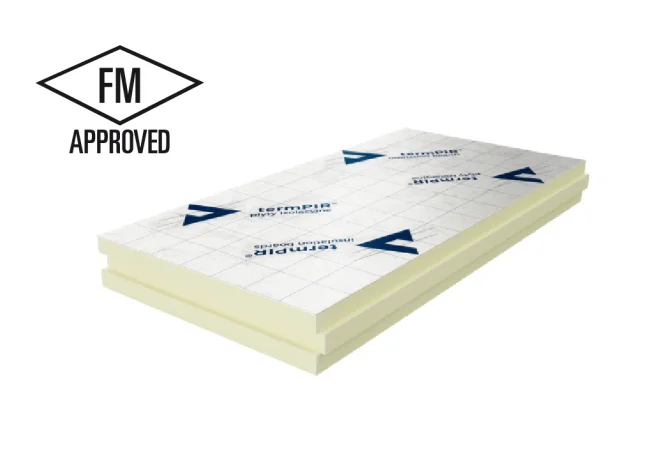
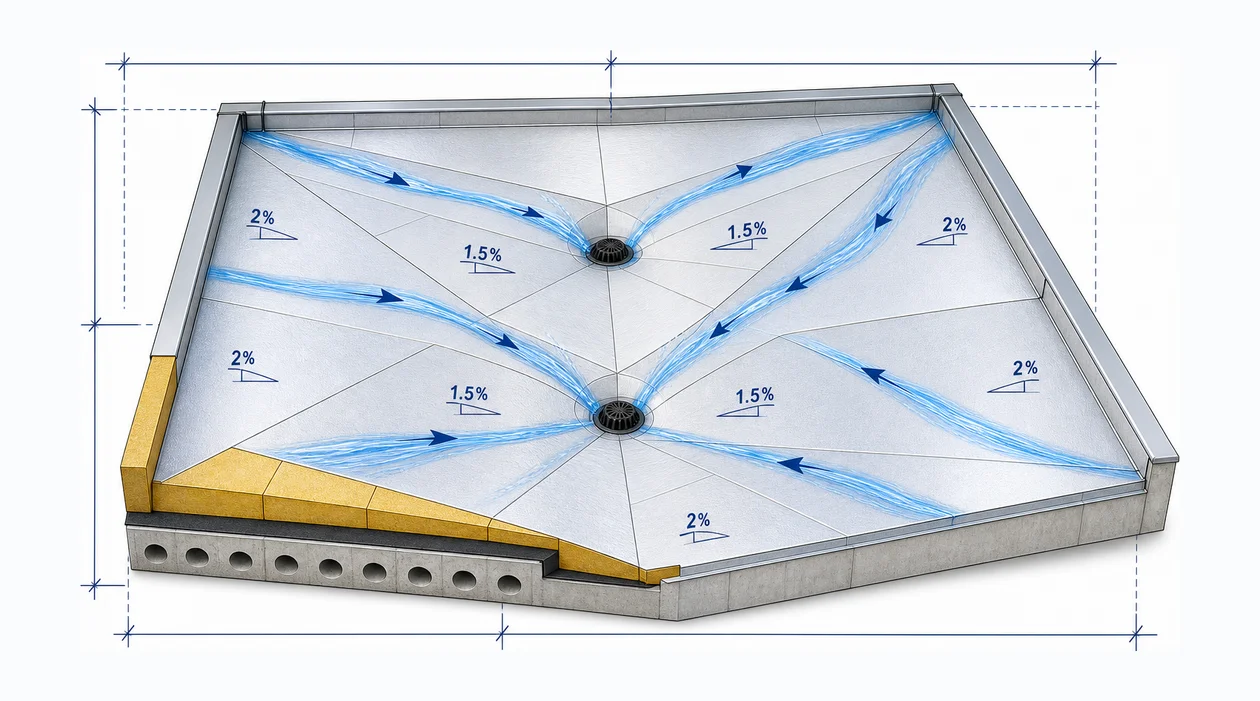
For roofs covered with PVC/TPO/EPDM membranes, the recommended solution is termPIR® Pro-F with glass fleece — the board is FM Approved and suitable for mechanical fastening or bonding. A key complement is izoGRASS® tapered insulation, which ensures proper water drainage (PN-EN 14964) while at the same time increasing the average insulation thickness.
For roofs on trapezoidal sheeting, the termPIR® AL system works well, where the aluminium facing additionally reflects infrared radiation from the covering side.
Roof slab and top-storey ceiling — a critical detail
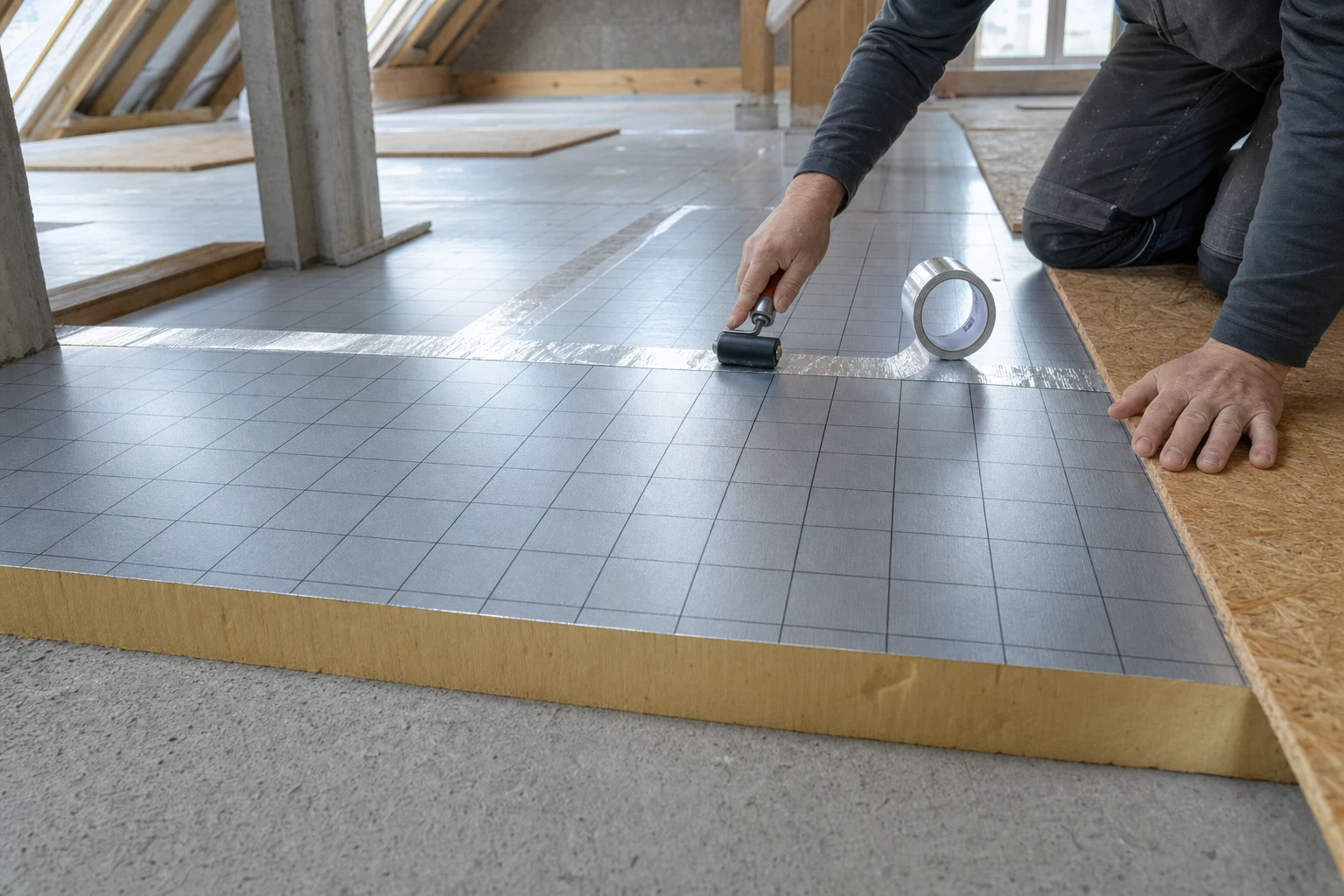
In tenement houses and residential buildings, the top storey overheats the most. The solution is insulation of the top-storey ceiling with termPIR® AL — laid from the unused attic side, where the gas-tight aluminium foil acts both as a vapour barrier and a reflective barrier.
For habitable attics, the appropriate solution is over-rafter installation, which eliminates thermal bridges at the rafters and ensures a continuous, airtight insulation layer.
External walls — ETICS with PIR instead of polystyrene
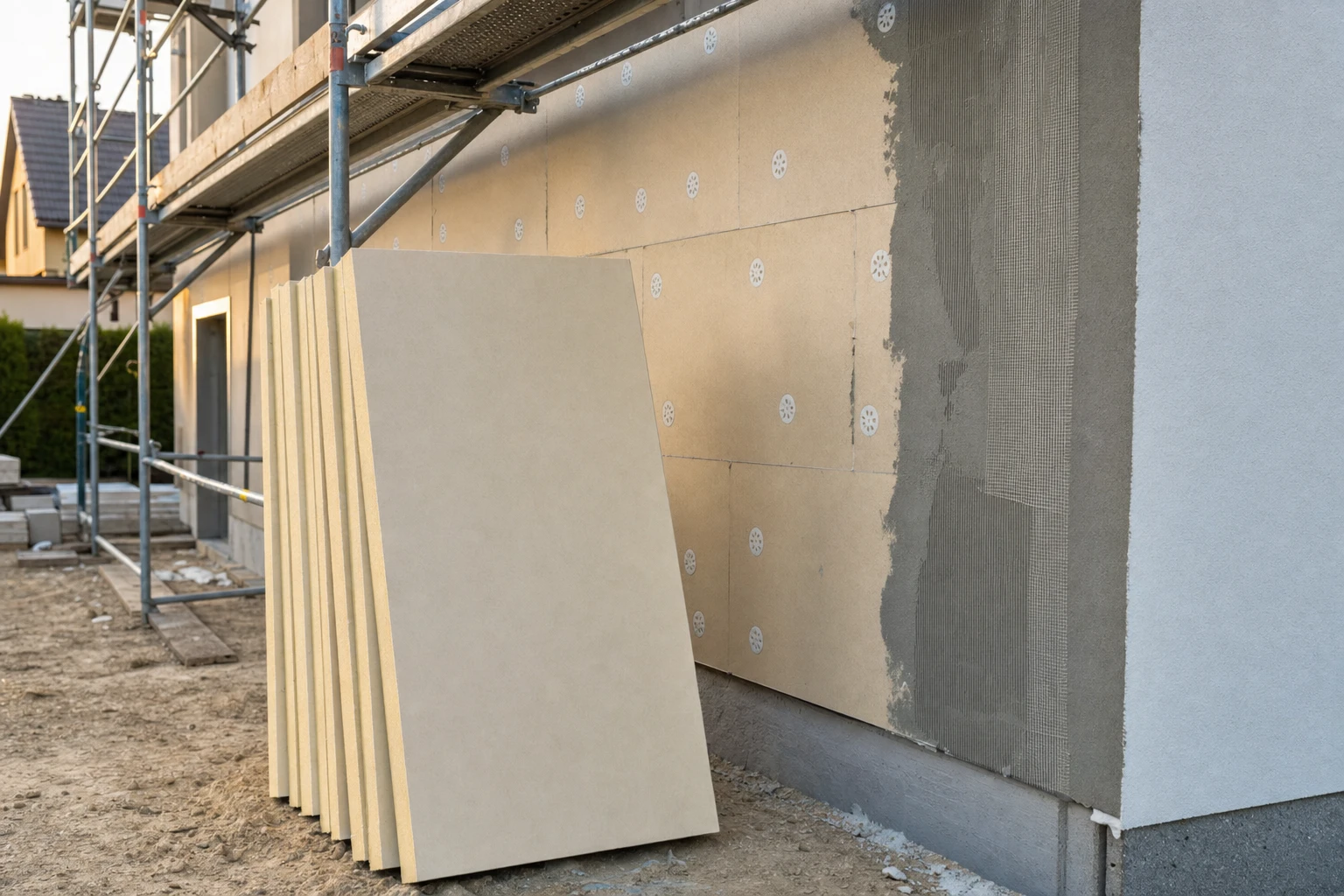
For external walls, WT 2021 requires U ≤ 0.20 W/m²K. In an ETICS system (thin-coat render), the only PIR variant approved for use is termPIR® ETX with vapour-permeable glass fleece, holding ETA 17/0066. Boards with aluminium facing are gas-tight and are not suitable for rendering — a common design error.
For three-layer (cavity) walls, the optimal solution is termPIR® AL in a three-layer arrangement, where the aluminium facing additionally functions as a vapour barrier.
What else lowers indoor temperature in summer
Beyond thermal insulation of envelope components, complementary measures are worth keeping in mind:
- limiting solar gains through windows — external roller blinds, façade louvres, awnings (an unshaded window generates 4–8× more heat gain than a well-insulated wall),
- night ventilation — cool air introduced between 22:00 and 06:00 dissipates heat from the building structure,
- light-coloured roof coverings — white or grey PVC membranes instead of black bitumen felt reduce surface temperature by 20–30°C,
- greenery — a green roof or vegetation around the façade limits the heat-island effect.
The greatest efficiency, however, comes from investing in structural thermal insulation — it works 24/7, requires no operation and reduces costs both in summer (cooling) and in winter (heating).
Frequently asked questions
Do PIR boards really protect against heat better than polystyrene?
What PIR thicknesses are needed to meet WT 2021?
Is PIR insulation suitable for a flat roof covered with a membrane?
Are PIR boards safe in terms of fire performance?
How long does the investment in better insulation pay back?
Related products and systems
Products
Read next
Roof Thermal Insulation — Why PIR Boards Set the WT 2021 Standard

Thermal Conductivity λ — B2B Guide to PIR Insulation | BOKKA
Building Law Reform & PIR Insulation: Impact on B2B Investors