When to use this system
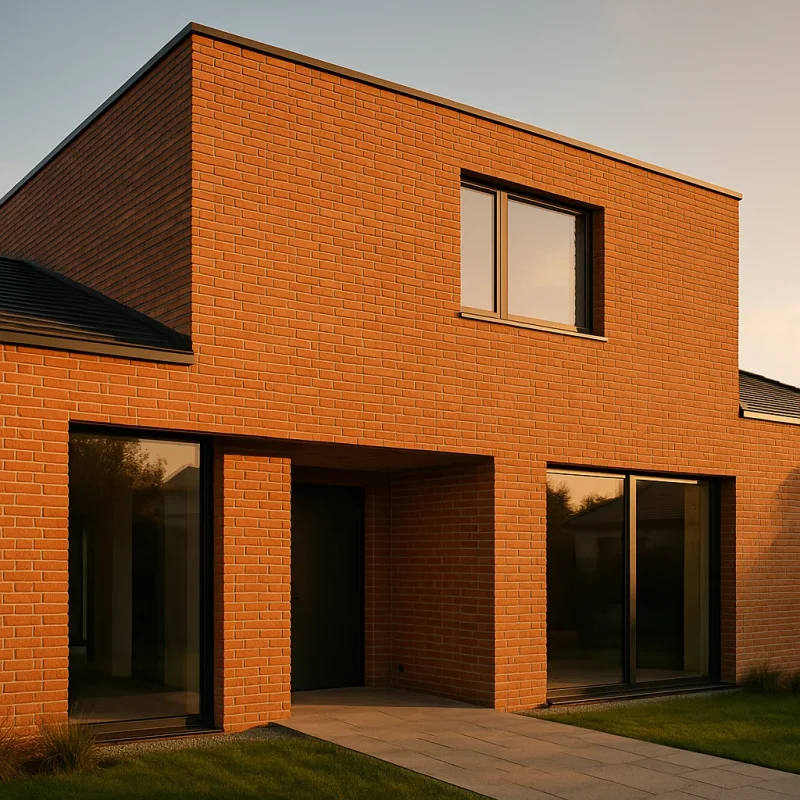
The three-layer wall is a classic of premium construction — a fully finished facade without render, unmistakably associated with high design quality:
- Premium villas and single-family homes — a facade made of clinker brick, natural stone, architectural concrete or gothic brick is an aesthetic choice.
- Thermal upgrades of historic buildings — recreating a brick facade with a modern U-value.
- Public buildings — office buildings, corporate headquarters where the facade also serves as a calling card.
- Buildings requiring facade durability — clinker and stone require no maintenance for decades (vs. silicone render repainted every 8–15 years).
System characteristics
Unlike ETICS (light-wet), where the insulation is on the outside under render, in a three-layer wall the insulation is inside the partition — between two walls:
- No external render — the facing layer acts as both facade and insulation protection.
- Connection between loadbearing and facing walls — via steel anchors (typically 4 pcs/m² of stainless steel for durability).
- Optional ventilation cavity ~20 mm between insulation and facing layer — removes construction and condensation moisture. Often omitted in single-family houses; recommended for larger buildings.
Installation requirements
- Construction sequence: loadbearing wall → anchors (embedded every 0.5 m of height) → termPIR® AL boards bonded to the loadbearing wall → facing wall.
- Board fixing — PU adhesive or cement-based adhesive + mechanical support for taller walls (e.g. point anchors with washers).
- Board joints sealed with aluminium tape (prevents convective air flows within the cavity).
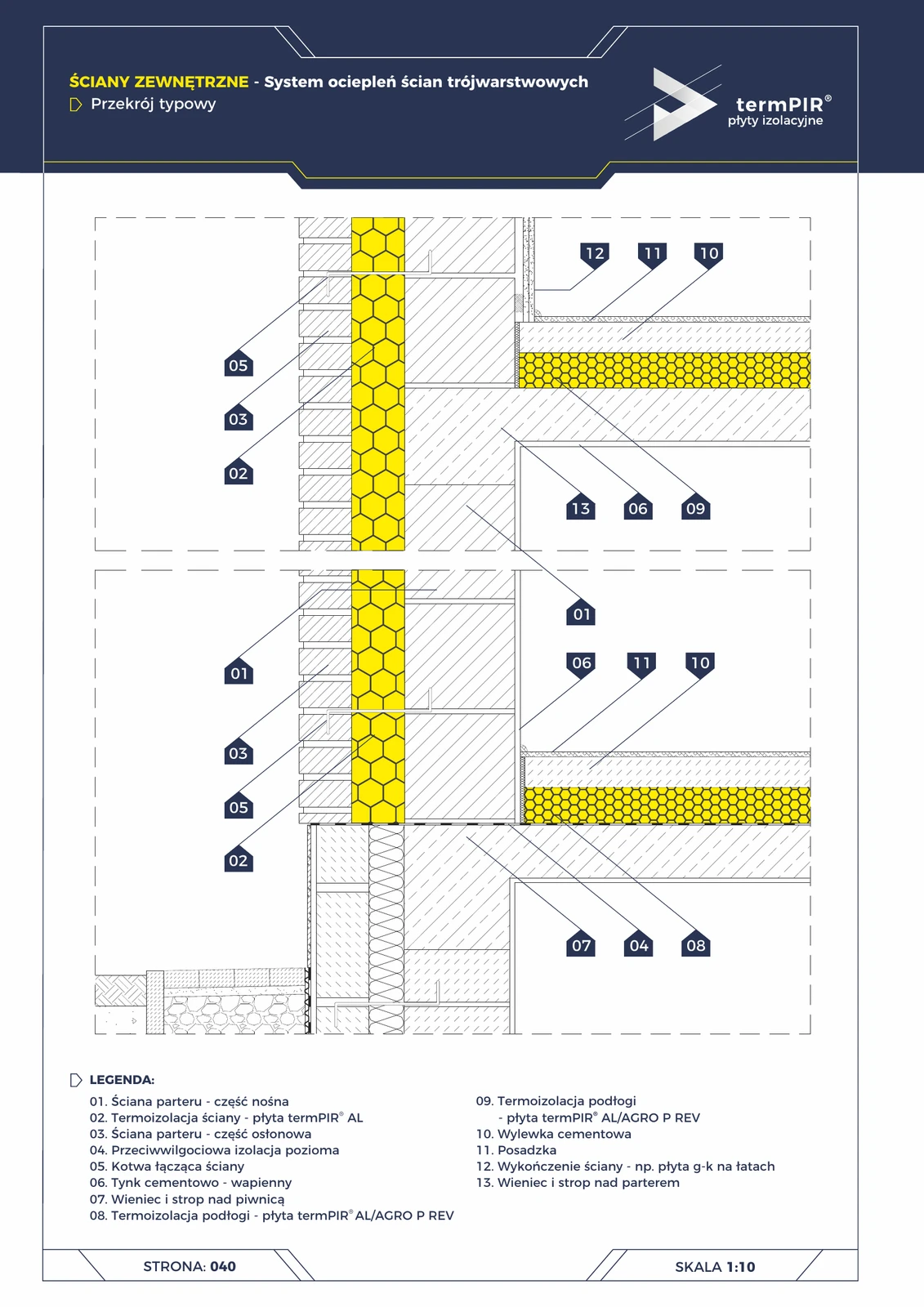
- Horizontal damp-proof course at the plinth — interrupts capillary rise of ground moisture into the insulation.
- Ventilation cavity — outlet at the bottom (e.g. vertical joints every 1 m), inlet at the top (under the cornice).
Why PIR rather than mineral wool in the cavity
Mineral wool in a ventilated cavity is prone to absorbing convective moisture (air flow through the layer), which reduces λ by 10–20% seasonally. PIR with aluminium foil on the cavity side:
- does not absorb convective moisture (the foil tightly seals the core)
- the aluminium reflects thermal radiation back into the building in winter and outwards in summer
- capillary water absorption < 2% (negligible)
Technical documentation
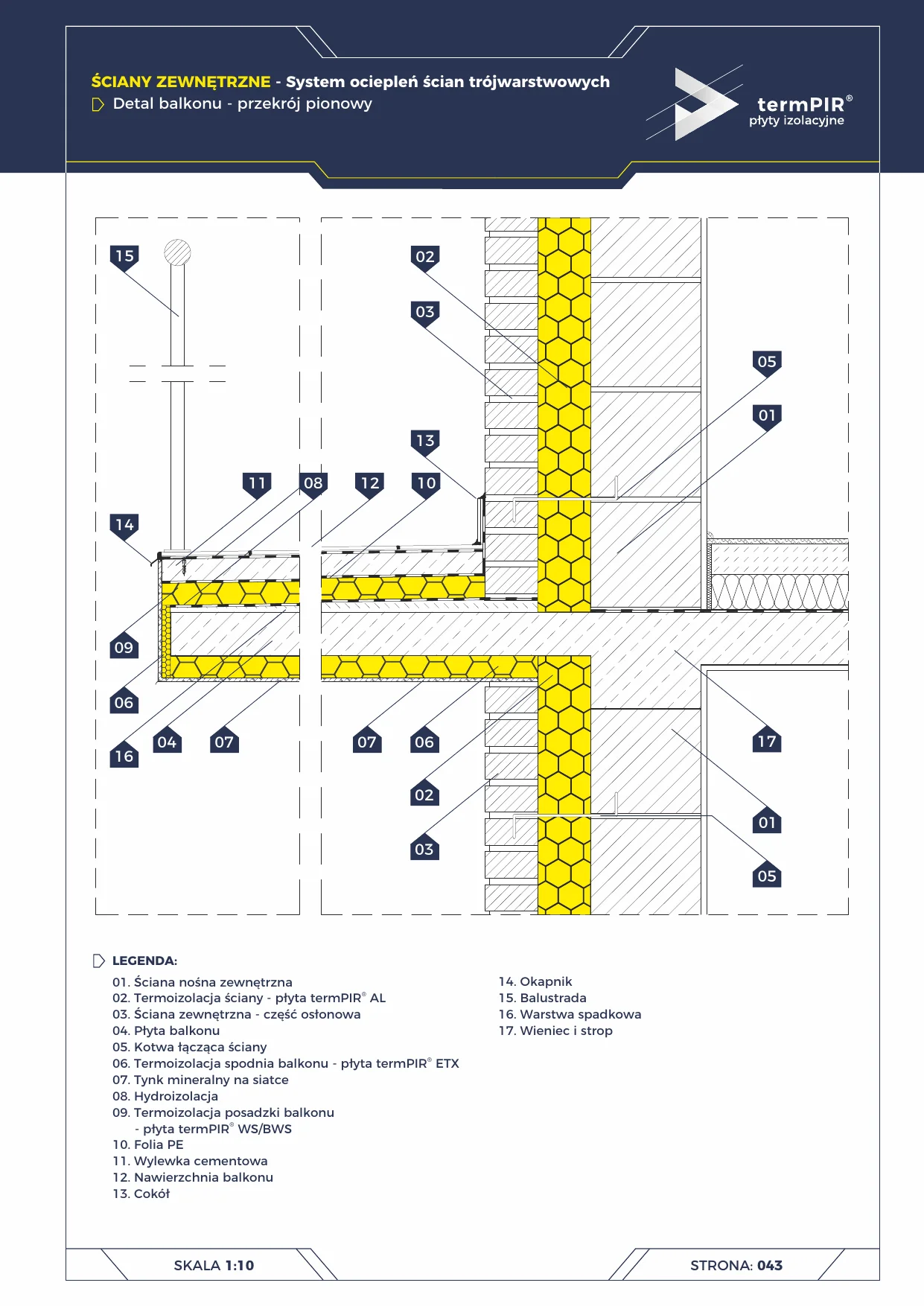
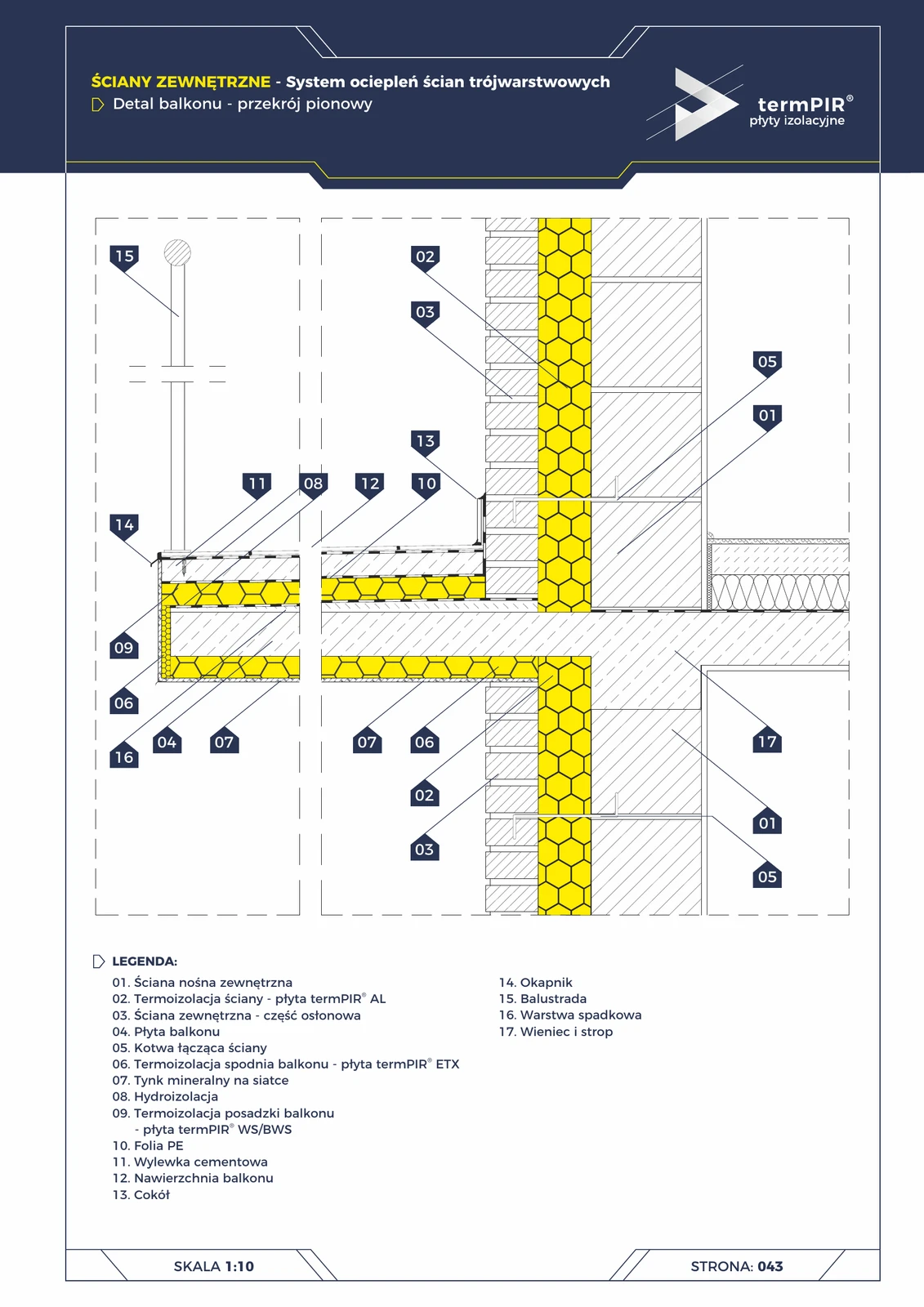
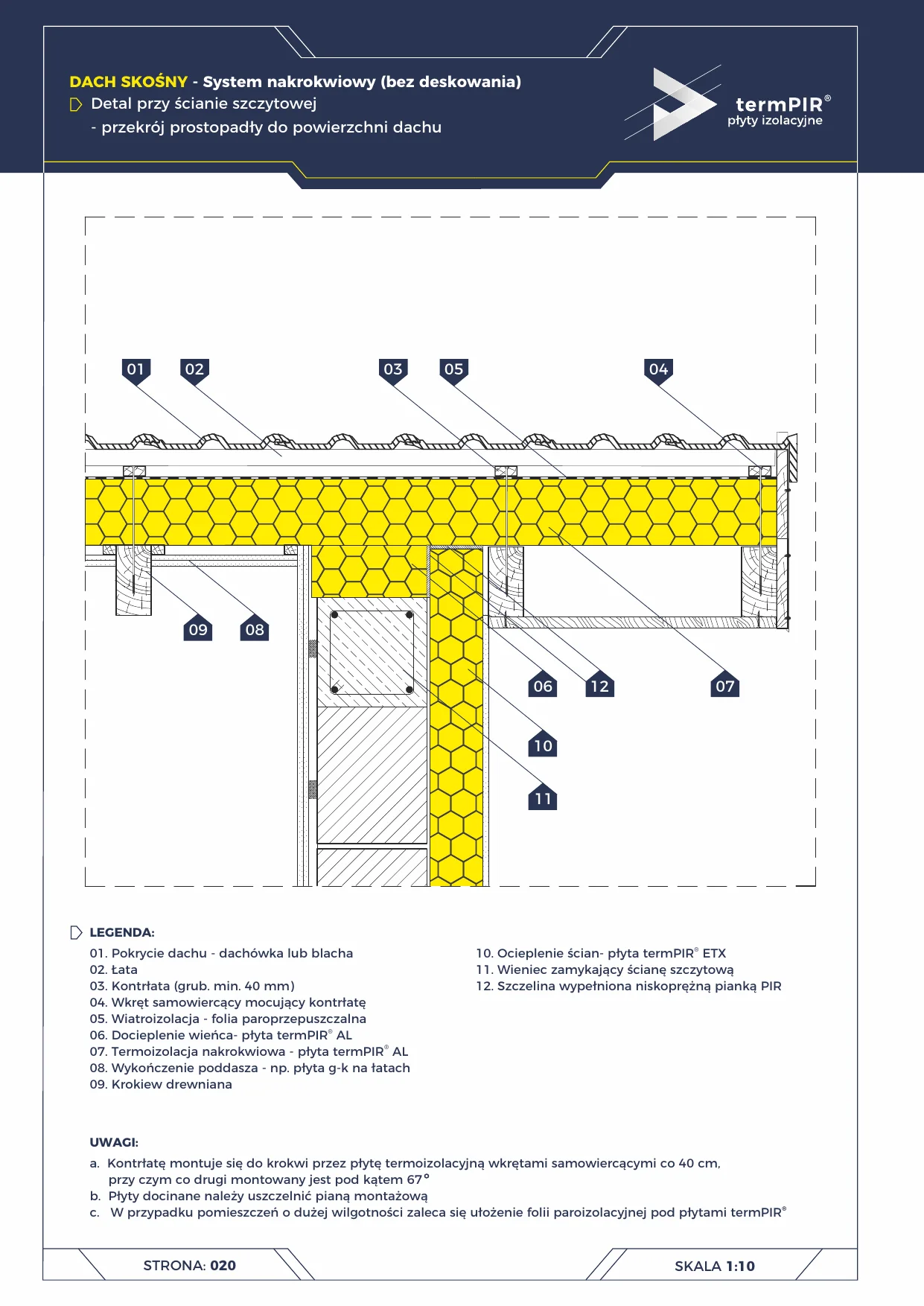
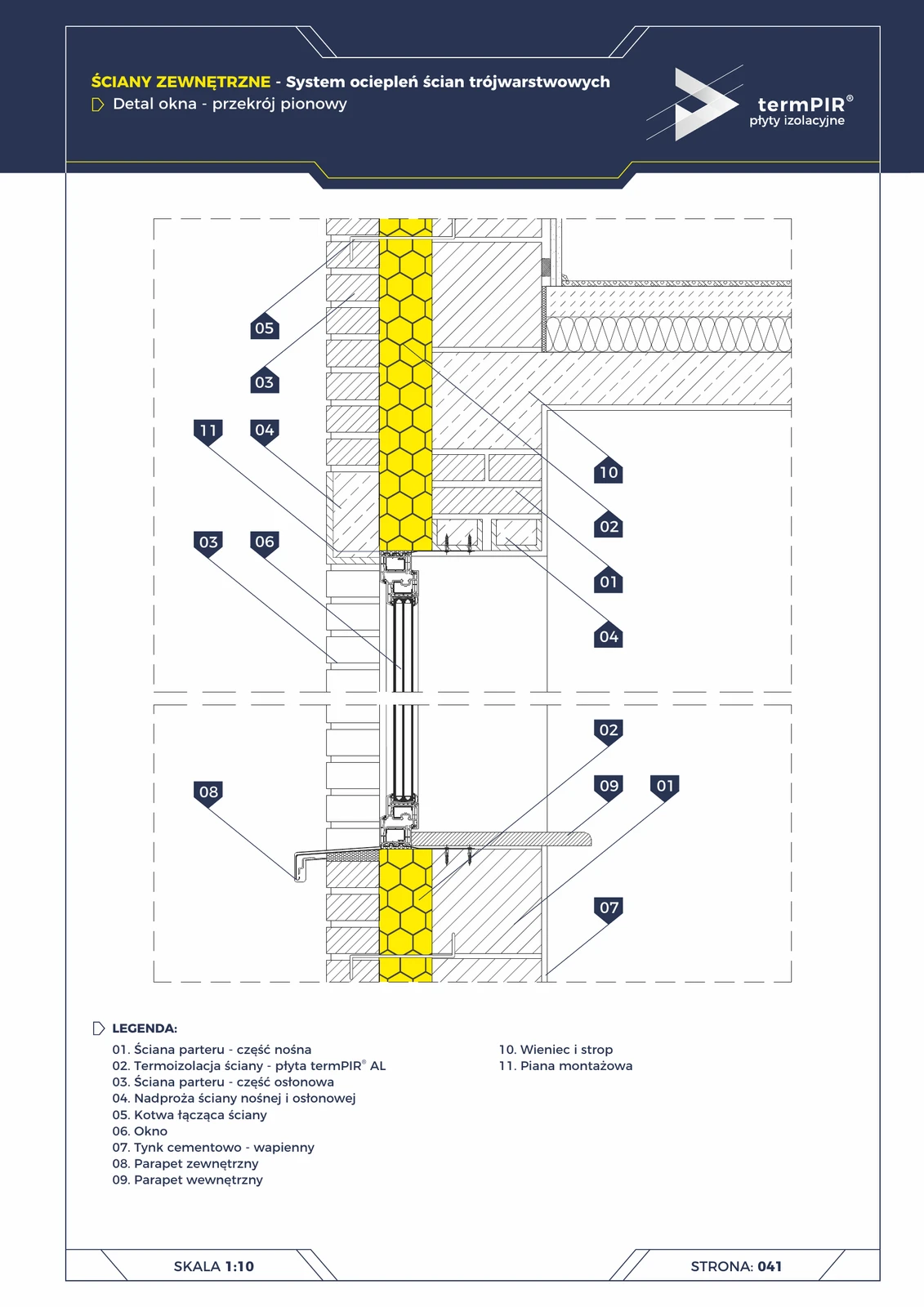
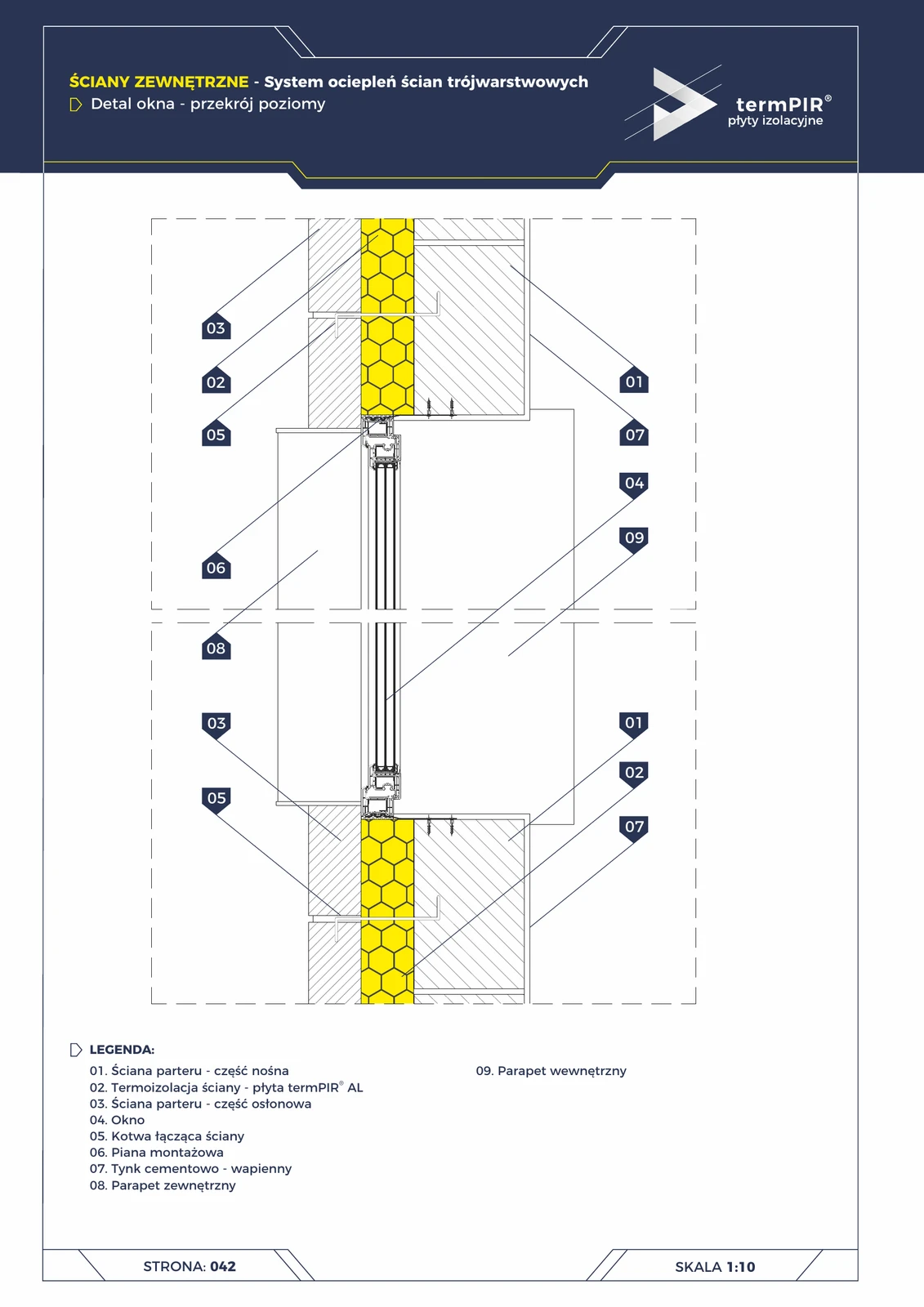
termPIR® Catalogue — Residential Buildings (Gór-Stal, 2022-04-26, pp. 35, 40–43). Describes system details: plinth, window sill, balcony junction, lintel, corner.
Layer composition
| # | Layer | Thickness | λ | Role |
|---|---|---|---|---|
| 1 | Facing wall (clinker brick, stone, architectural concrete) | — | — | facade layer |
| 2 | Ventilation cavity (optional) | — | — | ventilation of the facing layer (~20 mm) |
| 3 | termPIR® AL | 80–200 mm | 0,022 W/(m·K) | thermal insulation of the cavity |
| 4 | Steel anchors (three-layer wall ties) | — | — | connection between loadbearing and facing wall |
| 5 | Loadbearing wall (concrete, brick, aerated concrete) | — | — | loadbearing structure |
U-value by insulation thickness
| termPIR® thickness | U [W/m²·K] | Meets WT 2021 (roof U ≤ 0.15) |
|---|---|---|
| 80 mm | 0,27 | — no |
| 100 mm | 0,22 | — no |
| 110 mm | 0,20 | — no |
| 120 mm | 0,18 | — no |
| 150 mm | 0,15 | ✓ yes |
| 180 mm | 0,12 | ✓ yes |
| 200 mm | 0,11 | ✓ yes |
Related catalogue items
Recommended variants
Installation accessories