Thermal Conductivity λ — B2B Guide to PIR Insulation | BOKKA

Thermal conductivity λ — what it means and why it determines the quality of thermal insulation
The thermal conductivity coefficient λ is the cornerstone of every design decision concerning building thermal insulation. In the context of the Polish Technical Conditions (WT 2021), in force since 1 January 2021, which tightened envelope performance requirements (roof U ≤ 0.15 W/m²K, external wall U ≤ 0.20 W/m²K), this parameter determines the thickness of the insulation layer, the usable floor area and the operating costs of the facility. In design practice, PIR insulation boards are increasingly the material of choice — offering one of the lowest λD values currently available in commercial construction.
Technical definition — what is λD
Lambda (λ) expresses the heat flux passing through a unit surface area of a material 1 m thick at a temperature difference of 1 K between its surfaces. The unit is W/(m·K). The relationship is unambiguous:
- low λ value → material conducts heat poorly → insulates well,
- high λ value → material conducts heat well → insulates poorly.
For design and material selection, the declared value λD must be used — provided on the manufacturer’s technical data sheet and determined in accordance with harmonised standards. For polyurethane foams this is EN 13165 (PIR/PUR boards), and the fire reaction test methodology is EN 13501-1.
Note: λD applies to a sample tested under laboratory conditions. The actual performance of the building envelope depends on installation quality, joint tightness, dimensional stability and the absence of thermal bridges — only these factors combined translate into the real U-value of the entire envelope.
Thinner insulation, larger usable area, lower OPEX
A low thermal conductivity allows the use of a thinner insulation layer without loss of energy efficiency. For the B2B investor, this means measurable benefits:
- increased usable area (PUM, GLA) without structural intervention,
- reduced heating and cooling costs over the building’s life cycle,
- slimmer wall and roof assemblies, facilitating architectural detailing,
- lower structural loads — PIR foam has a self-weight of around 32–40 kg/m³.
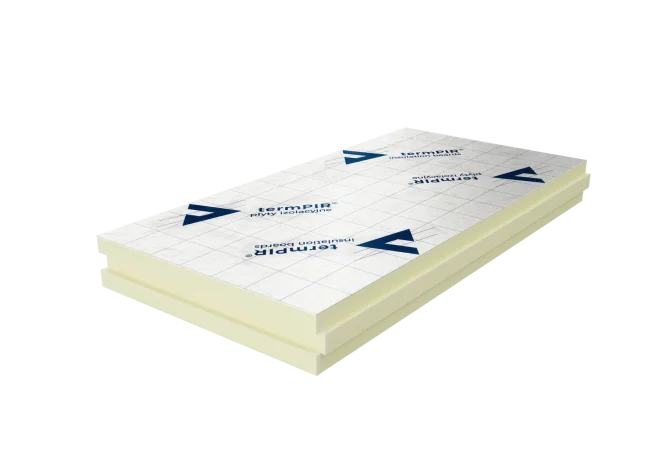
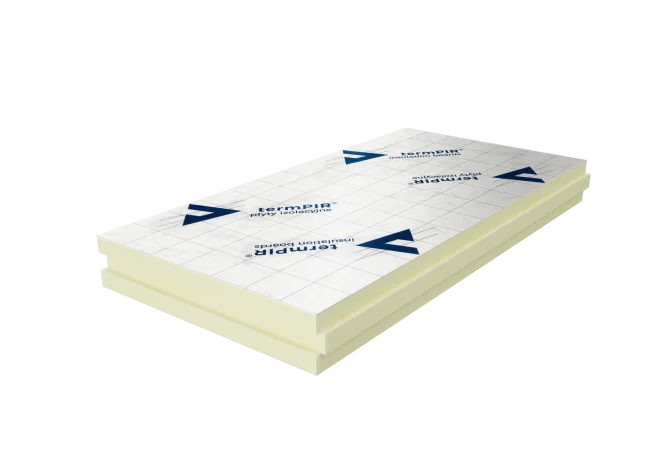
termPIR® AL boards achieve λD = 0.022 W/(m·K), and the premium variant termPIR® MAX 19 AL — λD = 0.019 W/(m·K). For comparison, here are the most common insulation materials:
| Insulation material | λD [W/(m·K)] |
|---|---|
| termPIR® MAX 19 AL (premium PIR) | 0.019 |
| termPIR® AL (PIR with Al foil) | 0.022 |
| termPIR® ETX (PIR for ETICS, glass fleece) | 0.025–0.027 |
| Graphite EPS | 0.031–0.033 |
| XPS | 0.029–0.036 |
| Mineral wool (rock/glass) | 0.031–0.045 |
A difference of just a few hundredths of a unit on the λ scale translates into a real difference of several centimetres in envelope thickness. For a flat roof meeting the WT 2021 requirement (U ≤ 0.15 W/m²K), approximately 15 cm of PIR is needed, compared to roughly 22–24 cm of mineral wool.
λD vs. thickness — indicative U-values for typical termPIR® AL thicknesses
The table below shows the theoretical thermal resistance R and U-value for the termPIR® AL insulation layer alone (λD = 0.022) — in a real envelope, U is calculated for the entire cross-section.
| Thickness [mm] | R [(m²·K)/W] | U [W/m²K] |
|---|---|---|
| 80 | 3.64 | 0.275 |
| 100 | 4.55 | 0.220 |
| 120 | 5.45 | 0.183 |
| 140 | 6.36 | 0.157 |
| 150 | 6.82 | 0.147 |
| 180 | 8.18 | 0.122 |
| 200 | 9.09 | 0.110 |
For comparison — achieving U = 0.15 W/m²K with mineral wool of λD = 0.037 requires a thickness of about 24 cm. That is 80–90 mm of difference for every square metre of envelope.
Low λ is not everything — what else determines insulation durability
The conductivity parameter alone does not exhaust the list of features of good thermal insulation. Rigid polyurethane foam additionally offers:
- low water absorption — the closed-cell structure does not absorb moisture, which stabilises λ over time,
- biological and chemical resistance — the material does not provide a food source for rodents, fungi or mould,
- system fire reaction class B-s2,d0 per EN 13501-1 (self-extinguishing properties),
- high compressive strength (≥ 120 kPa at 10% deformation) — allows pedestrian loads under the waterproofing membrane,
- dimensional stability and compact structure — minimising the risk of thermal bridges at board joints.
When selecting the material, matching the facing variant to the envelope function is equally critical — an error at this stage can negate the benefits of low lambda.
How to match the PIR variant to the envelope function
The λD coefficient is similar across the termPIR® line, but the facing determines the application:
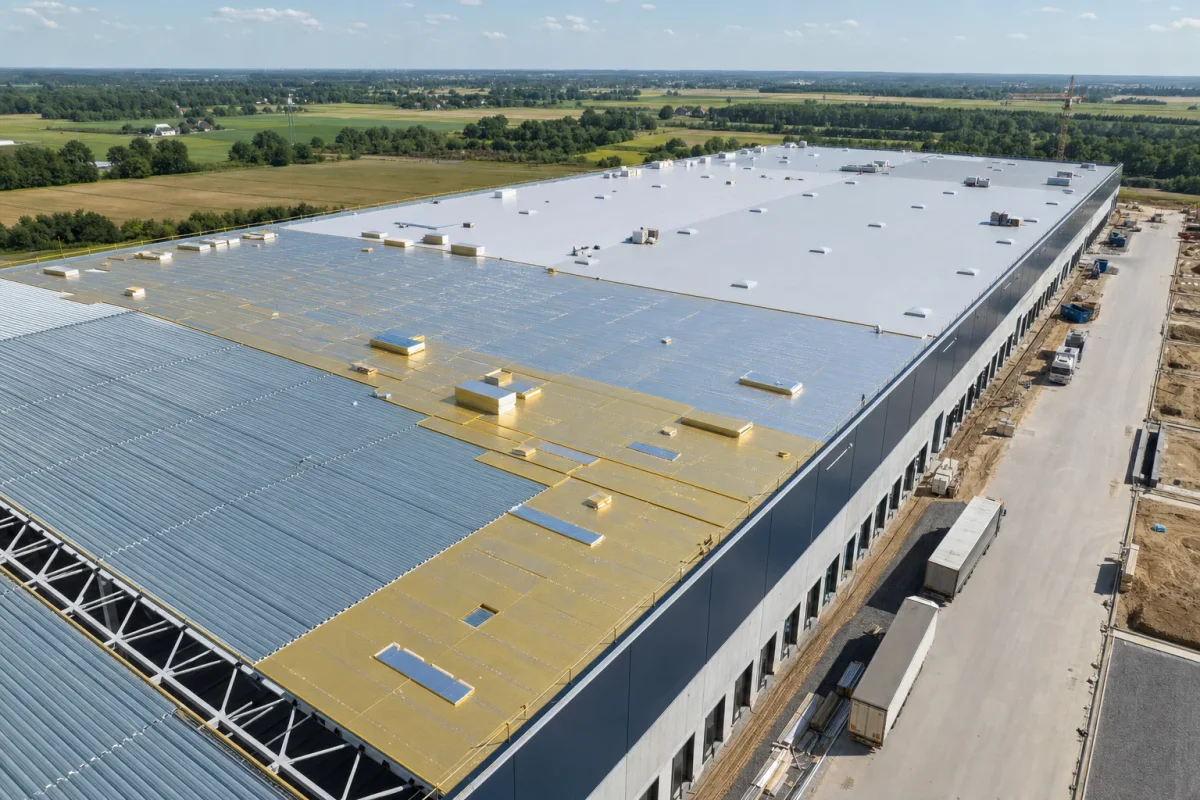
- Flat roof on trapezoidal sheet metal / reinforced concrete roof slab → termPIR® AL with aluminium foil (the flat roof on trapezoidal sheet metal system).
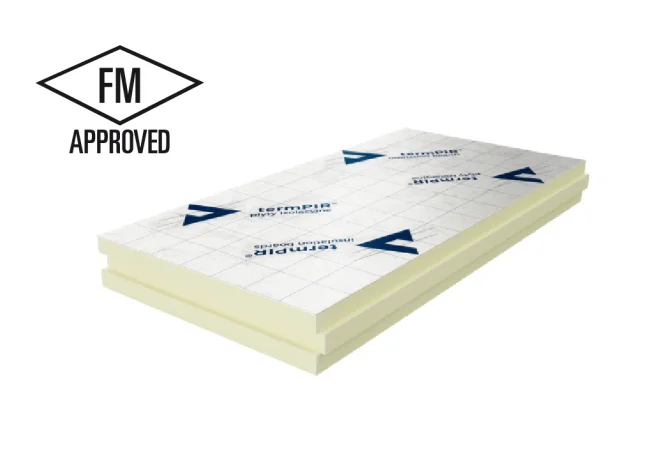
- FM Approved roof under membrane → termPIR® Pro-F with glass fleece, compatible with PVC/TPO/EPDM membranes.
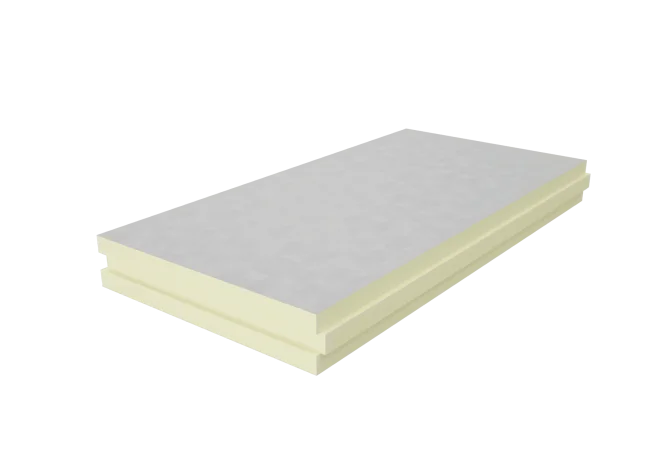
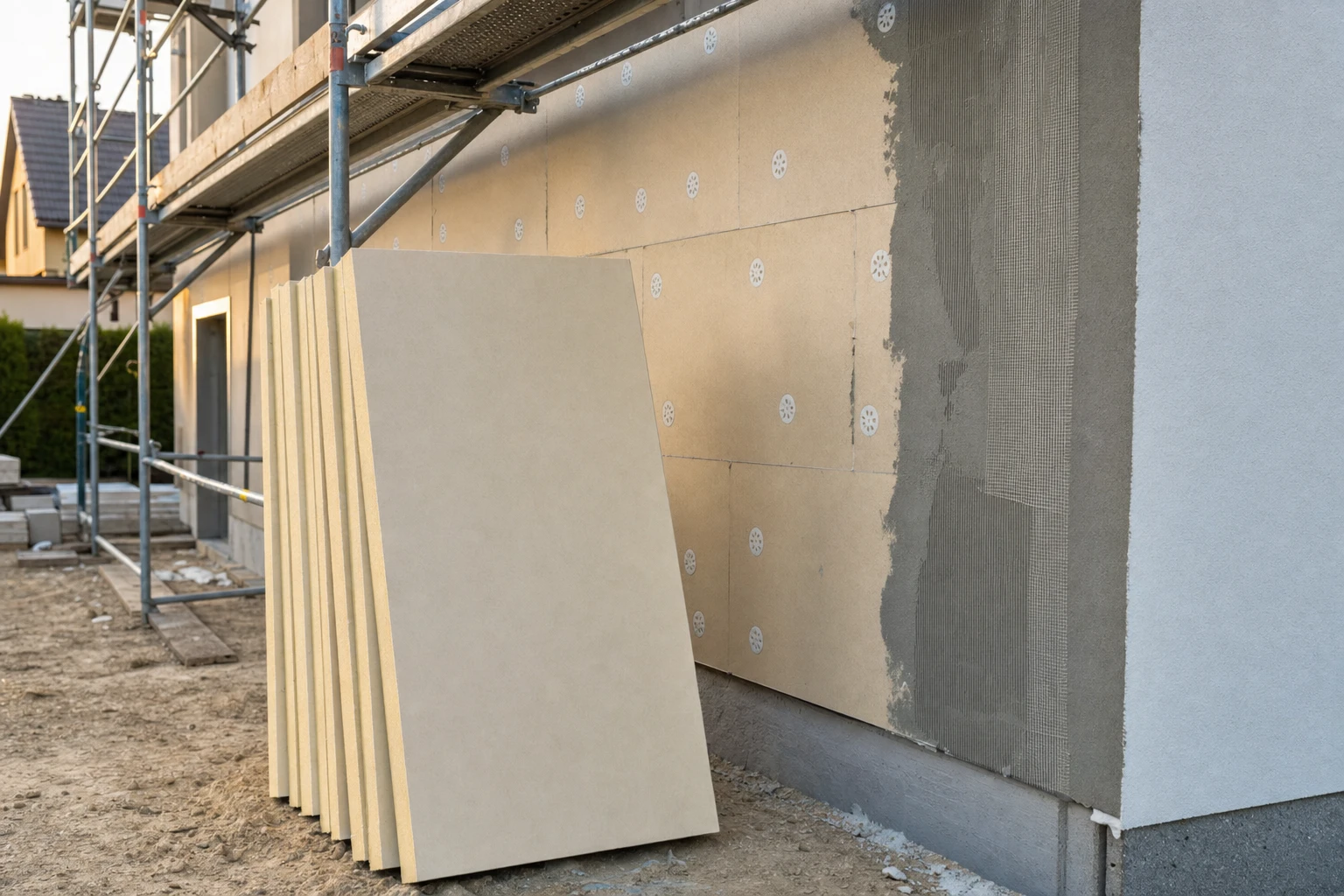
- External wall in an ETICS system → exclusively termPIR® ETX with vapour-permeable glass fleece and ETA 17/0066 approval. Al-faced boards are gas-tight and not suitable for ETICS.
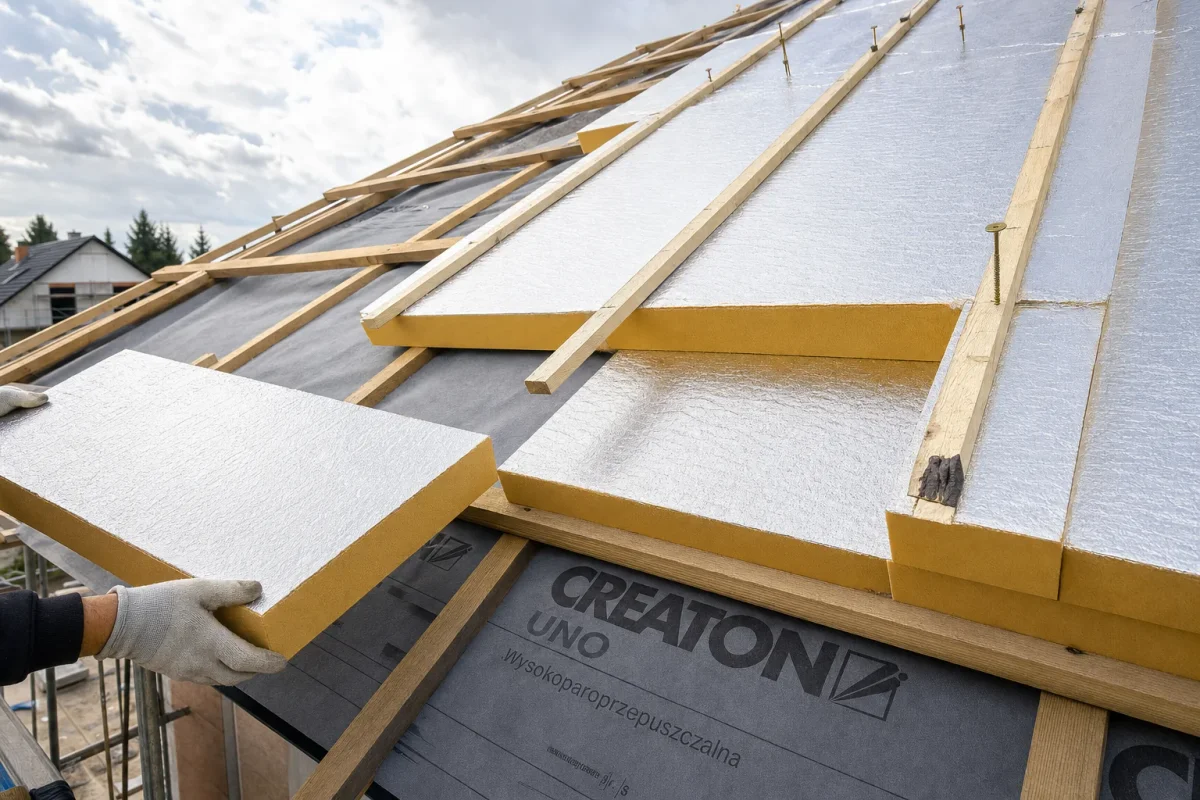
- Pitched roof, over-rafter — termPIR® AL eliminates rafter thermal bridges (the over-rafter pitched roof system).
- Foundations, plinths, ground-bearing floors — termPIR® WS with enhanced moisture resistance.
The full range is available in the PIR insulation boards section.
Frequently asked questions
What is the difference between λD and λobl?
What PIR thickness do I need to meet WT 2021 for a roof?
Can PIR boards with aluminium foil be used in ETICS?
Does λ deteriorate over time?
Does a lower λ always mean the better economic choice?
Related products and systems
Products
Read next

Building Insulation for Heatwaves — PIR Boards & Summer Comfort
Building Law Reform & PIR Insulation: Impact on B2B Investors

Energy Audit of a Building — Thermal Retrofit with PIR