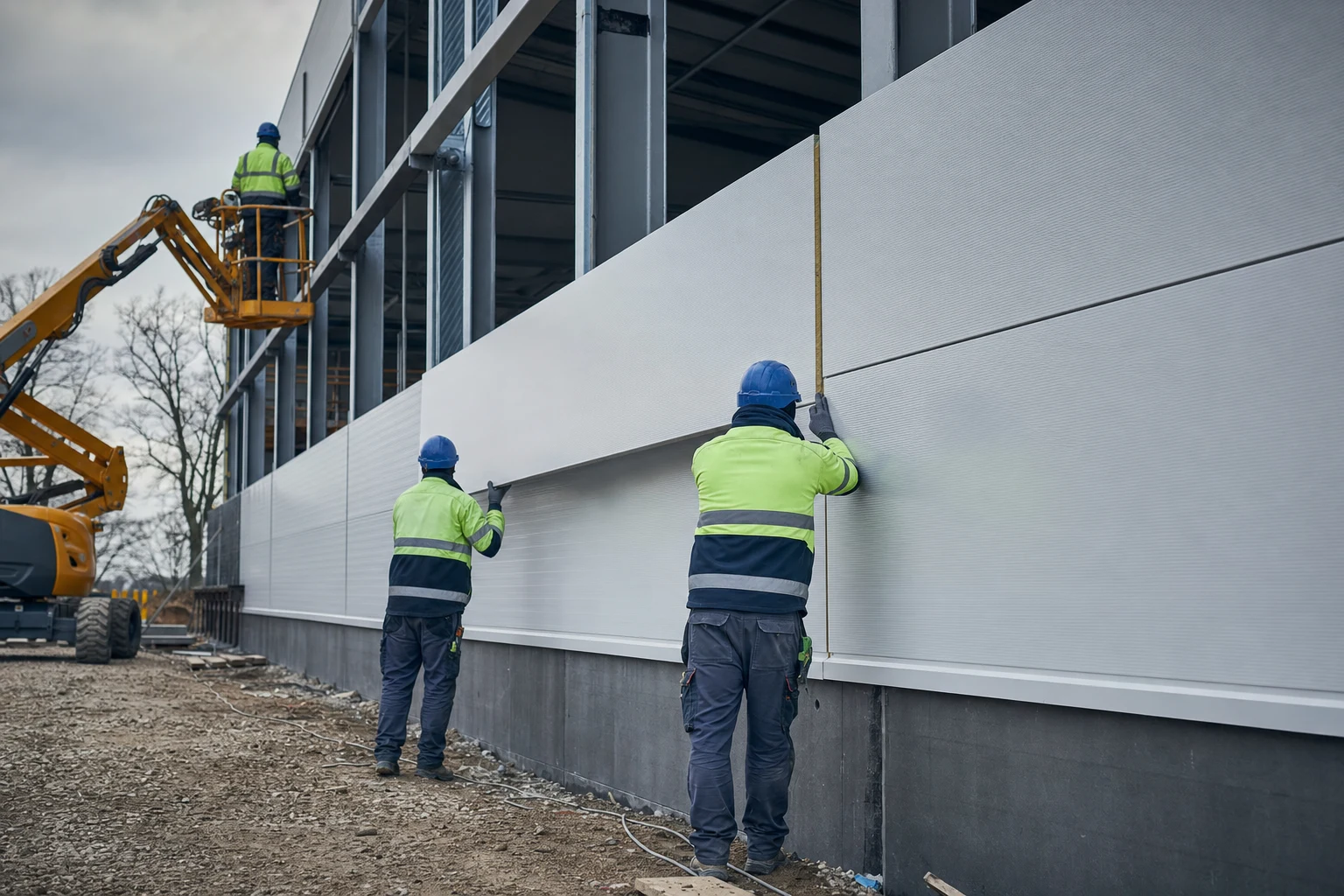
Accessories and fixings for sandwich panels — a complete guide
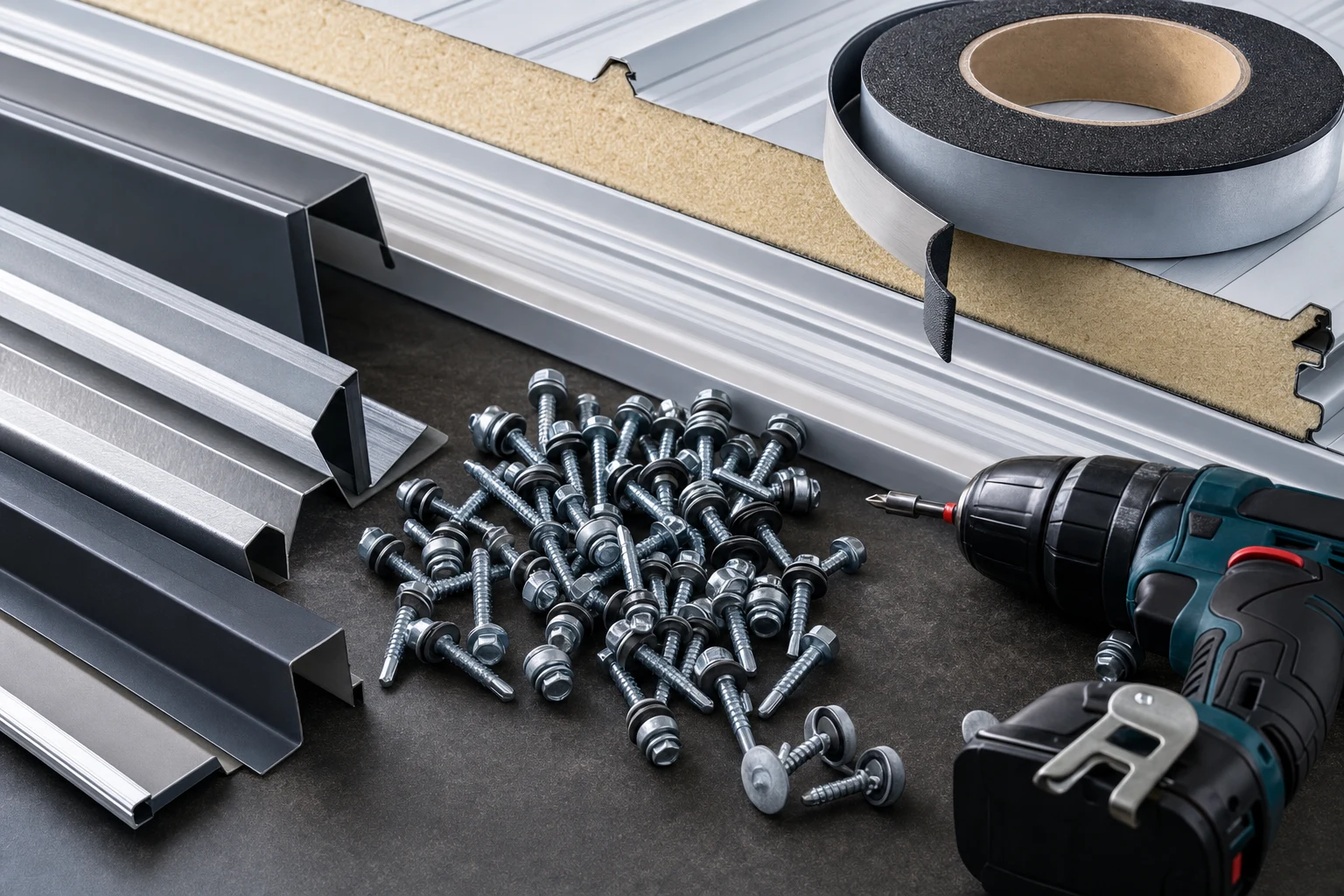
Ordering just the sandwich panels is only half of a complete delivery. The tightness, durability and aesthetics of the finished envelope are decided by the accessories and fixings — sealing tapes, fasteners, flashings, profiles and installation hardware. Omitting them or choosing them “by eye” can undo the advantages of a good panel: leaks, thermal bridges, edge corrosion and poor workmanship at corners appear. This guide organises the categories of accessories for sandwich panels and points out what to watch when putting together an order.
Why joint tightness is key
A sandwich panel is a large-format element, but the envelope consists of many panels joined on locks. Each joint is a potential path for water, air and water vapour. If the locks are not properly sealed:
- water penetrates under the facing and can cause corrosion and staining,
- uncontrolled air infiltration spoils the building’s energy balance,
- water vapour penetrating the joint condenses and dampens the core (dangerous especially in cold stores and humid buildings),
- thermal bridges form, lowering the effective U-value of the envelope.
That is why the first category of accessories — seals — is the most important, though the cheapest.
1. Sealing tapes and compounds (including butyl for the locks)
This is the basis of a tight installation:
- butyl tape for the locks — applied in the panel’s lock (especially on the roof and in controlled-temperature buildings) to close the micro-gaps in the joint; protects against leaks and condensation,
- expanding tapes and seals — for joints with the structure, plinths, reveals and connections with flashings,
- roofing/façade compounds and silicones — for spot seals, penetrations and details.
What to watch out for: compatibility of the material with the facing and coating, durability in the assumed working temperature, and proper preparation and cleanliness of the surface before application. This is an element on which it is not worth economising — the cost of tape is negligible compared with the cost of removing a leak.
Sealing the locks is of particular importance in controlled-temperature buildings — cold stores and freezer rooms — where a leaky joint means not only energy loss but also a risk of condensation and icing inside the envelope. In such buildings (e.g. based on insPIRe CH panels) butyl in the lock is treated as a mandatory element, not an optional one.
2. Self-drilling screws and fasteners
Panels are fixed to the structure with self-drilling fasteners with a sealing washer (EPDM). They are matched to:
- the type of substrate — different fasteners for steel, different for timber, different for concrete/substructure,
- the panel thickness — the fastener must have the right length to anchor securely in the support,
- the function — wall, roof (greater loads from snow/wind), in visible or concealed fixing.
Key installation principles: the correct washer compression (it seals but does not crush the facing), perpendicular driving, and spacing in accordance with the design. In variants with concealed fixing, such as insPIRe U, the fasteners are hidden under the lock of the neighbouring panel — this requires dedicated elements and care.
We do not give universal diameters and lengths here — these follow from the design and the envelope configuration. If you are putting together an order, it is best to verify the selection with us.
3. Lifting grips and installation hardware
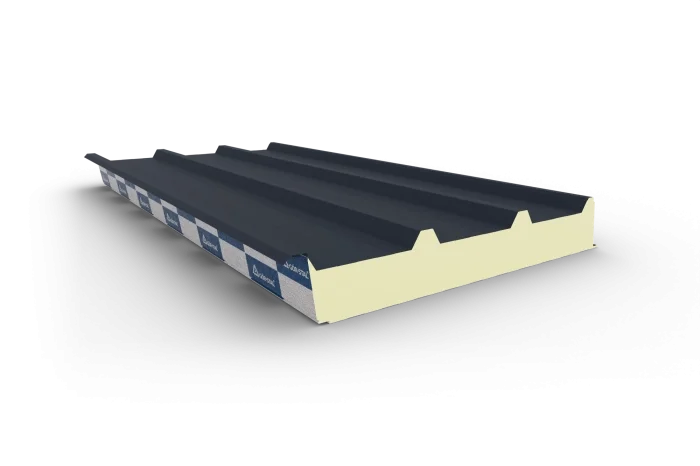
Panels, especially long insPIRe D roof panels, are unwieldy and prone to edge damage. Here the following help:
- lifting grips and handles — a secure grip when carrying and positioning,
- suction cups — safe lifting of panels with a smooth face, also mechanical,
- hardware protecting edges and corners during transport and installation.
Good installation hardware is not only convenience but also safety of work at height and protection of the facing from dents and scratches that later catch the eye on the façade.
4. Flashings and trims
Flashings finish and seal the details of the envelope: external and internal corners, plinths, window and gate reveals, ridges, eaves, joints with the parapet. Trims cover connections and give the façade a neat, finished look.
What to watch out for:
- choosing the colour and coating to match the panel facing — for visual consistency and uniform corrosion resistance,
- correct overlaps and fixing of flashings, so that they drain water rather than retain it in the detail,
- the quality of the sheet — in corrosive environments the flashings should match the class of the facing.
These are the accessories most visible on the finished building — mismatched or poorly executed flashings can spoil the effect of even the best façade.
5. Finishing and corner profiles
A complement are the profiles: corner, starting, finishing, masking strips and system elements that close off the planes of the walls and roof. They tidy the panel terminations, improve tightness and ease installation in geometrically difficult places.
The most common mistakes in choosing accessories
From installation experience, a few mistakes recur particularly often — and it is precisely these that most often end in a complaint or rework:
- omitting butyl in the roof locks — an apparent saving that returns as a leak after the first heavy rainfall,
- fasteners of the wrong length or type — too short do not anchor securely in the support, poorly matched to the substrate do not hold the loads,
- overdriving the screw — too much compression crushes the EPDM washer and the facing, destroying the seal instead of creating it,
- flashings in a random colour — they spoil the aesthetics and are sometimes of poorer sheet than the facing, which in a corrosive environment becomes the weakest link,
- no spare seals and small parts — a stoppage on site due to a lack of tape or a few fasteners costs more than the material itself.
The common denominator of these mistakes is treating accessories as an “add-on” instead of an integral part of the envelope system.
Accessories are matched to the building’s environment
Just as the facing coating is matched to the corrosivity category of the surroundings, so accessories should match the operating conditions. In an office or heated warehouse the requirements are moderate, but in an aggressive environment (coastal, chemical, livestock) the importance grows of:
- durability of the seals — tapes and compounds must retain elasticity and adhesion across the full temperature range and in the presence of aggressive vapours,
- fastener resistance — in corrosive conditions, fasteners with increased resistance are used, so that the fixing point does not become a focus of corrosion,
- flashing quality — the flashing sheet should have a coating at least matching the panel facing, otherwise it will corrode first.
In other words: the weakest link determines the durability of the whole. There is no sense in ordering panels with a premium facing for a C5 environment and then choosing flashings or fasteners in a standard version.
Why it is worth buying accessories together with the panels
Accessories for sandwich panels are system elements — designed to work with the specific lock geometry, thickness and profile of the panel. By assembling the hardware from the panel supplier, you gain compatibility (the tape fits the lock, the fastener the thickness, the flashing the colour), consistency of delivery and certainty that no element will be missing on site. Buying from different sources easily leads to a mismatch that only shows up during installation — at the worst moment and at the highest cost.
Putting together the order — a practical sequence
When planning the delivery, it is worth thinking of the envelope as a system, not just the panels:
- panels (variant, thickness, colour, environmental class),
- fasteners matched to the substrate and thickness,
- seals — butyl for the locks, tapes, compounds,
- flashings and trims in the facing colour,
- profiles and installation/safety hardware.
Because the choice of parameters (fastener lengths, quantity of flashings, type of tapes) depends on the specific project, the simplest thing is to put it together with an advisor on the basis of the drawings and the building’s purpose — so that no element is missing on site and the whole is compatible with the insPIRe panel system.
🤝 Contact a BOKKA technical advisor — we will help assemble the accessories and fixings matched to your sandwich panels, substrate and building environment.
Sources:
- PN-EN 14509 — Self-supporting double skin metal faced insulating sandwich panels with a rigid foam core — requirements and classification
- Installation guidelines and manufacturer’s recommendations for the GS insPIRe sandwich panel system (Gór-Stal)
- General good-practice rules for the tightness and fixing of a lightweight envelope
Frequently asked questions
Why is butyl tape used in sandwich panels?
What screws are used to install sandwich panels?
What are sandwich panel lifting grips?
Do flashings have to be the same colour as the panels?
Related products and systems
Read next
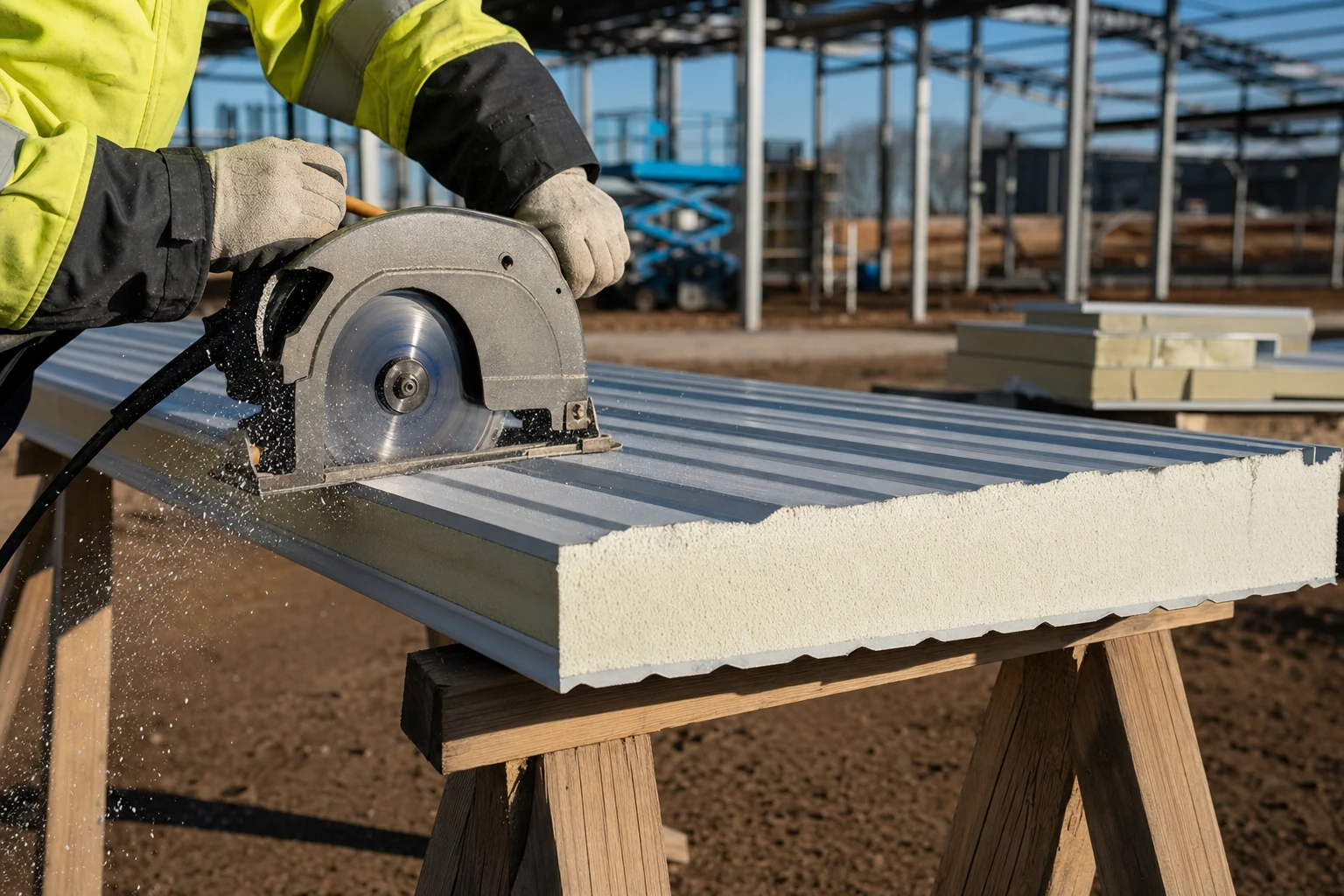
The most common sandwich panel installation mistakes — what to watch on site
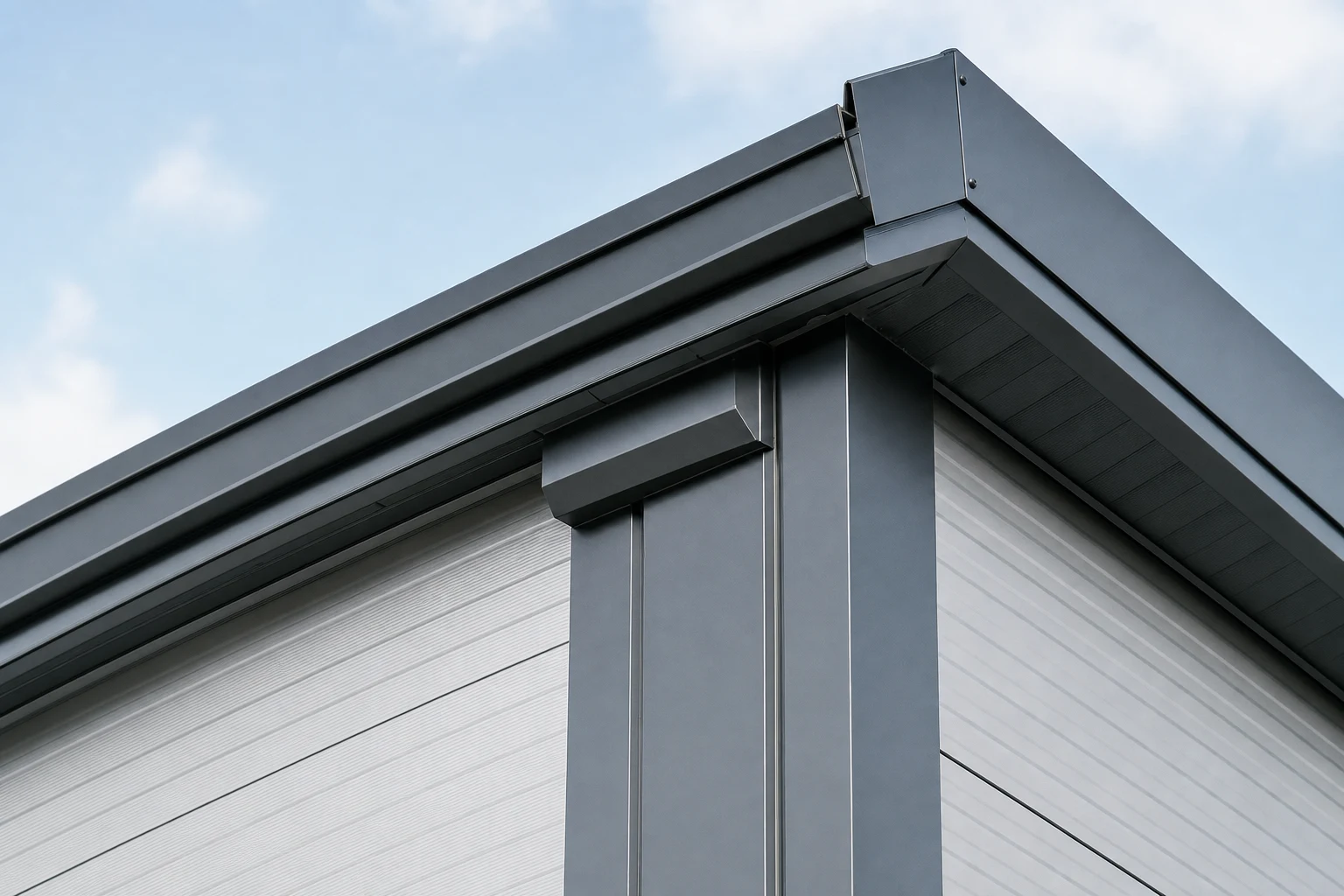
Sandwich panel flashings — a map of details from plinth to ridge
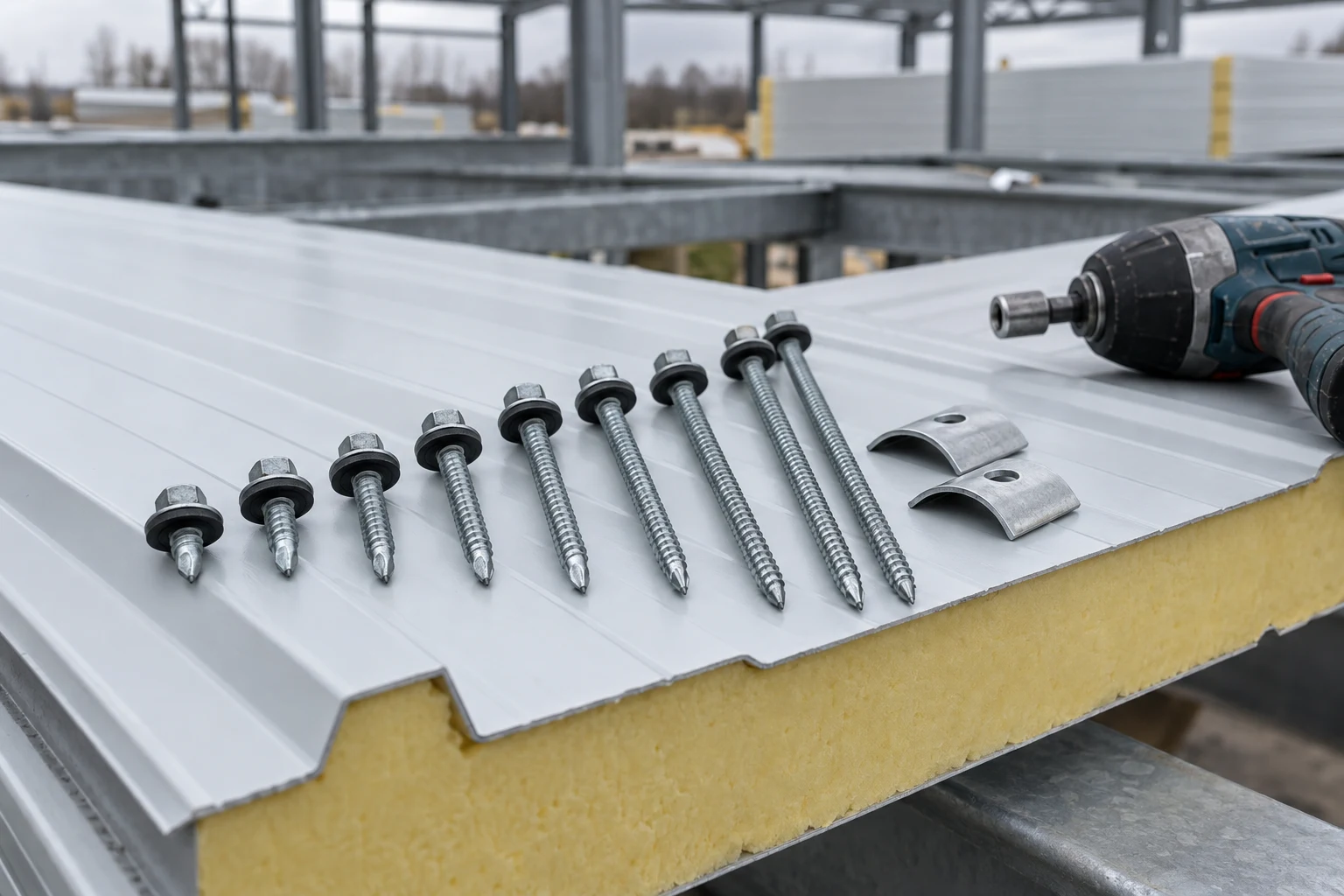
Sandwich panel screws — how to match the length to panel thickness and substrate