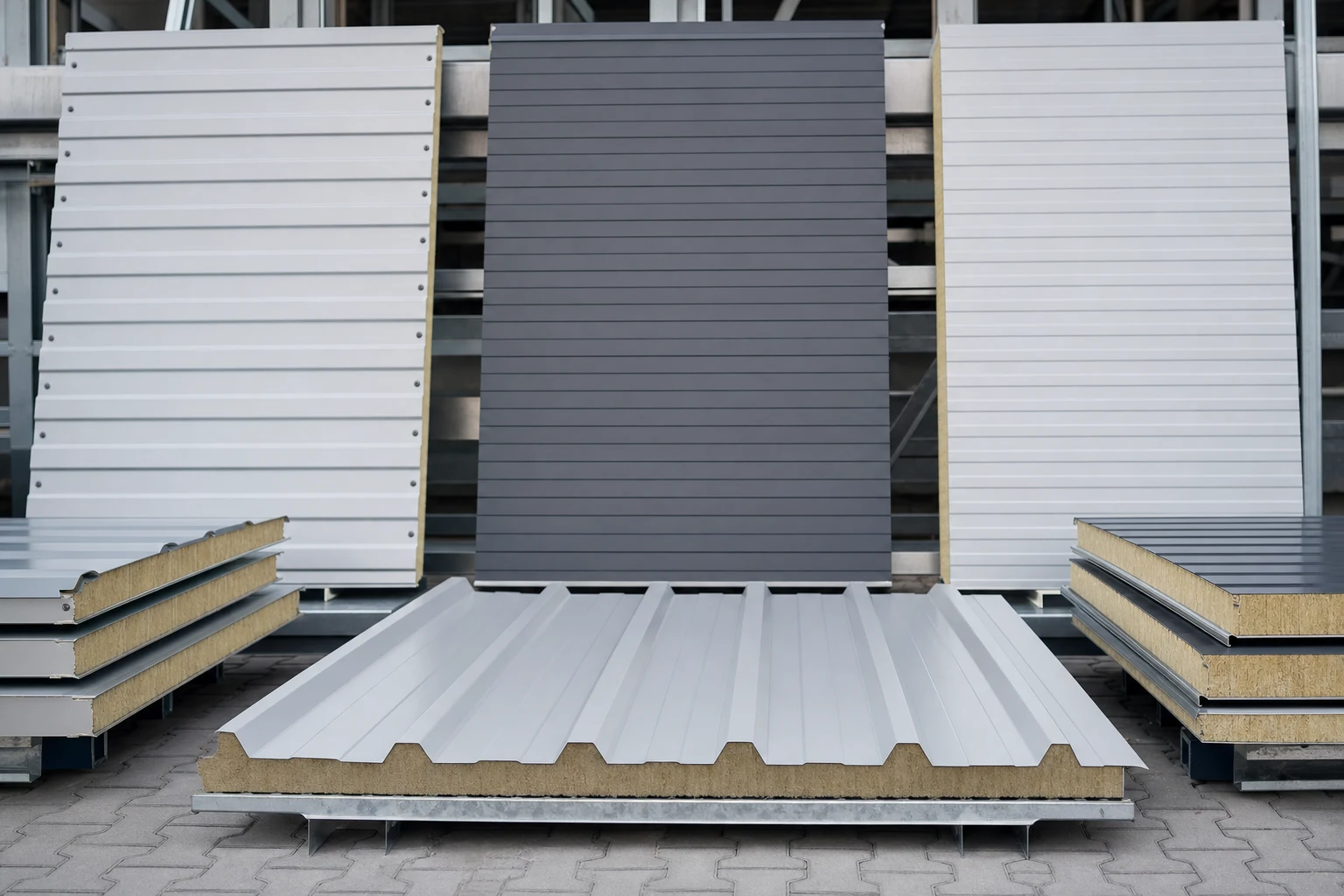
Installing sandwich panels in autumn and winter — what works and what to watch
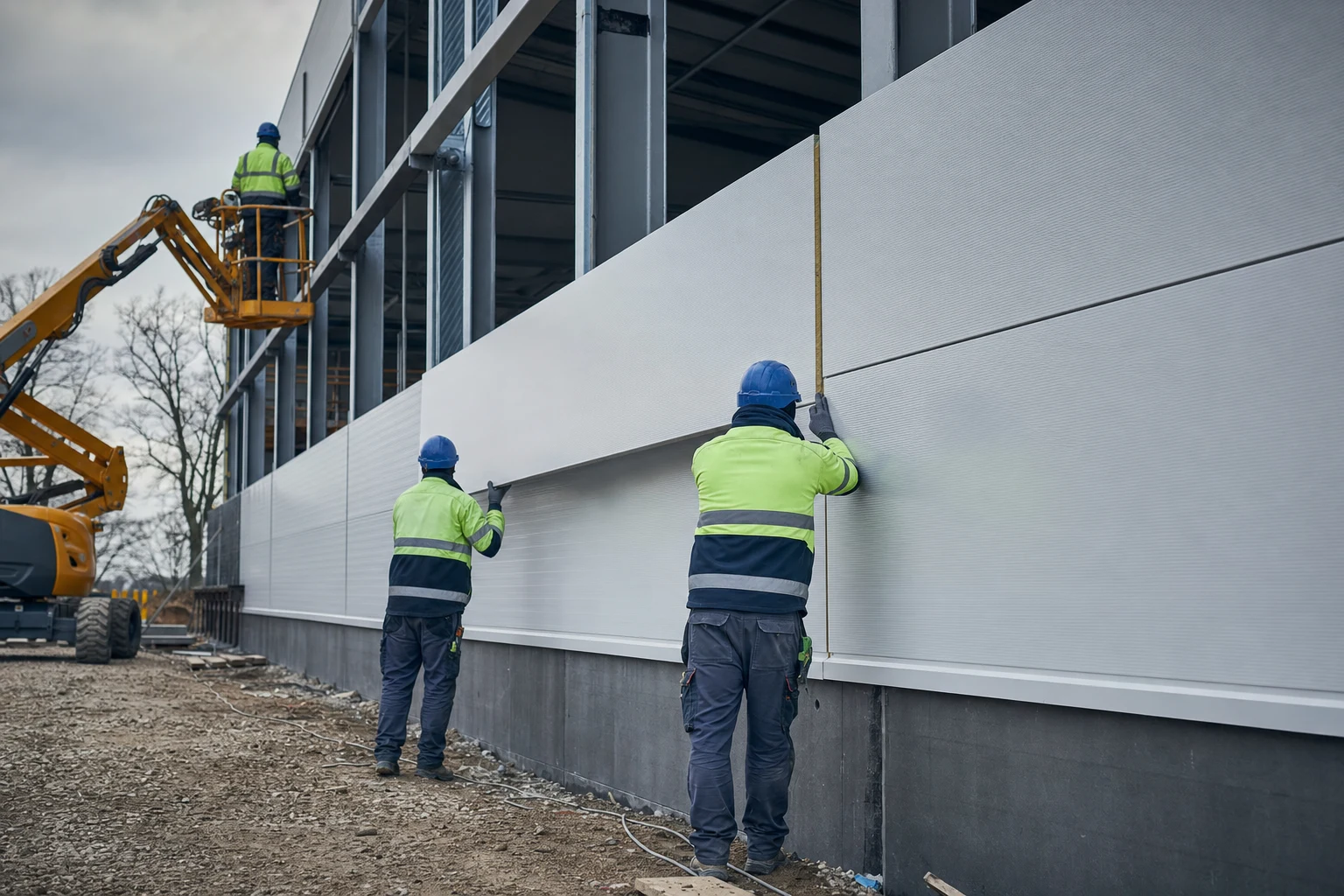
End of October, seven in the morning. A thin layer of frost sits on the panel pack, the crew is blowing on their hands, and the site manager calls asking whether there is any point starting today. There is. Just not with sealing the locks on frosted steel.
We have already written about installation in the heat — there the enemy was the scorching facing and the thermal movement of steel. This text is that article’s mirror image: what happens to a sandwich panel, the sealants and the crew when the temperature drops. The short version: installing sandwich panels in autumn and winter is entirely feasible. The longer version is below, because a few things need thinking through.
Why a sandwich panel is not afraid of the calendar
Masonry and plaster grind to a halt in winter because they are wet processes — the mixing water in the mortar has to set, and frost will not let it. A sandwich panel does not have this problem. It is dry assembly: a steel structure, fasteners, panel locks, flashings. No layer needs to dry or cure.
This is the quiet advantage of a lightweight envelope that rarely comes up when a technology is being chosen. A sandwich panel hall can be clad in November and in February — more slowly than in May, but with no compromise on the quality of the envelope. If you are still at the planning stage, our guide to a sandwich panel hall breaks the whole construction sequence down step by step.
Dry assembly does not mean “indifferent to the weather”, though. Limits exist — and, importantly, the manufacturer has written them down precisely.
Where the manufacturer draws the line — specific temperatures
The Gór-Stal installation manual lists several thresholds worth knowing by heart before a winter build:
- Panel installation — work is recommended at temperatures above −5°C. Below that it gets not only unpleasant but also risky for the material and the people.
- Sealing compounds — if the panel lock has no factory-applied gasket, work with compounds is carried out at an ambient temperature above +4°C.
- Protective film — removal only at temperatures above zero; below 0°C the acrylic adhesive stiffens and delaminates, and its residues can remain on the facing. The manufacturer explicitly states that such complaints are not accepted.
- Dark colours — install panels with facings in colour group III above +10°C. Steel installed “shrunk” in winter will push apart harder in summer; Gór-Stal gives no warranty on dark panels installed below this threshold without a written agreement.
There is one more detail that neatly illustrates the physics: the expansion gap between the facings of joined panels must not be smaller than 1 mm when installing at around 25°C — but already 1.5 mm at −5°C. Cold steel is shorter. You have to leave it room for its summer elongation, otherwise the stresses from that heatwave article will remind you of themselves at the worst possible moment.
The rest of the requirements — sequence, fixings, details — do not change with the season. What changes is the margin for error, so it is all the more worth refreshing the most common sandwich panel installation mistakes before the crew climbs onto the walls.
Sealants and butyl — chemistry does not like the cold
Seals are the most “temperature-sensitive” part of winter installation. Polyurethane sealant, silicone, roofing compound — each has a minimum application temperature in its product data sheet, typically somewhere above zero. This is no bureaucratic footnote: below the threshold the compound wets the surface less well, cures more slowly and bonds to the steel more weakly.
Butyl tape — the basic seal for roof locks and for buildings with controlled temperatures — simply sticks worse in the frost. Butyl is plastic and tacky when warm; cold, it turns stiff and adheres to the steel only half-heartedly. The practice is simple: keep cartridges and rolls in a heated room or in the cab, take them out in batches, and plan sealing for the warmer hours of the day. Which tapes and sealants go where in the envelope — we collected that in the overview of accessories and fixings for sandwich panels.
And the overriding rule, more important than any single product: seals go onto a dry surface. Which brings us to the morning frost.
Frost at dawn — water that was not in the forecast
In autumn, panels can be wet even though it did not rain overnight. Condensation is to blame: the steel surface cools overnight below the dew point — the temperature at which water vapour from the air turns into droplets, like on a cold bathroom mirror — and in the morning the pack is covered with dew or frost.
For the panel itself this is no drama. For the seals — it is. Butyl stuck onto damp or frosted steel will not bond with it properly, and sealant applied to a wet lock will hold on a gentleman’s promise. Before you start sealing, the contact surface must be dry — wiped down, or simply left until late morning. The same physics that dews the panels in the yard can, incidentally, condense water under the roof of a finished hall — we described the mechanism and the prevention in the article on condensation and the dew point under a hall roof.
While we are on storage: the manual requires panels stored outdoors to be protected from rain, snow and strong wind — with textile tarpaulins, which let air through and allow moisture to evaporate. Airtight film does the opposite: it traps condensate inside the pack.
Wind and the short day — two quiet opponents
A sandwich panel is light for its large surface. That is an advantage in transport and a drawback in the wind: a large-format panel on crane hooks behaves like a sail. The Gór-Stal manual sets the limit outright — wind speed during installation should not exceed 4° on the Beaufort scale, i.e. 9 m/s. Cranes and vacuum lifters (suction pads) have their own working limits; their documentation is often stricter than the panel manual, and then the lowest limit decides. Autumn weather fronts can shut installation down for half a day — build that into the schedule instead of racing against it.
The second opponent is banal: the day is short. The manufacturer requires installation to stop when visibility deteriorates at dusk and the site has no artificial lighting. In December the realistic installation window is a few hours — often the very hours in which the steel has had time to dry. That is why a winter build is a game of sequencing: moisture-insensitive work in the morning, sealing in the middle of the day, and crane operations when the wind allows. Installation is not carried out during precipitation either — neither rain nor snow.
Deliveries: close the topic before the site turns to mud
There is also the logistics — easiest to forget in September and most painful to remember in November. A heavy truck loaded with panels must get right up to the crane, and a sodden site can prevent that more effectively than frost.
So plan deliveries ahead: order and take delivery of the panels while the site roads are still passable, and store them as recommended — on level ground, under a breathable tarpaulin, away from where machinery will be driving. A few days’ buffer between delivery and installation costs little and saves the schedule when the weather cuts a week out of the calendar.
Why autumn can be a better date than May
Finally, an argument that has nothing to do with physics. The peak of the installation season is a fight for dates: good crews are booked up months ahead. Off-season, you are the one choosing the contractor — not the other way round — and you talk to people who do not have six sites behind them this week.
Add to that a strategy experienced investors use: close the building in before winter. Structure and sandwich panel envelope in autumn, and the freezing months — under a roof, for floors, services and finishing. In spring, while your competition is still looking for a crew for the walls, you are handing over a finished building. Dry assembly makes all the difference here: it is what lets you shift the envelope to the “worse” season without losing quality.
Summary
Autumn and winter do not shut down a sandwich panel build — they only shift the emphasis. Watch the manufacturer’s thresholds (installation above −5°C, sealing compounds above +4°C, protective film above zero, dark colours above +10°C), apply seals only to dry surfaces, respect the wind limit and the short day, and take deliveries before the mud. In return you get available crews and a building closed in before the frosts. The rest is choosing the panel and the details for the specific building — in the GS insPIRe range you will find wall and roof variants for every one of these situations.
🤝 Contact a BOKKA technical advisor — we will help plan an autumn–winter installation: we will select panels, accessories and seals with the right application temperatures for your schedule.
Sources:
- Gór-Stal sandwich panel installation manual (2026 edition) — weather conditions for installation, sealant application temperatures, storage, protective film, colour groups
- PN-EN 14509 — Self-supporting double skin metal faced insulating panels — Factory made products — Specifications
- Technical data sheets of sealants, sealing compounds and butyl tapes used in lightweight cladding (minimum application temperatures)
Frequently asked questions
Can sandwich panels be installed in winter?
At what temperature can sealants and sealing compounds be used?
Can dark sandwich panels be installed at low temperatures?
At what wind speed must sandwich panel installation be stopped?
Is it worth starting a hall build in autumn?
Related products and systems
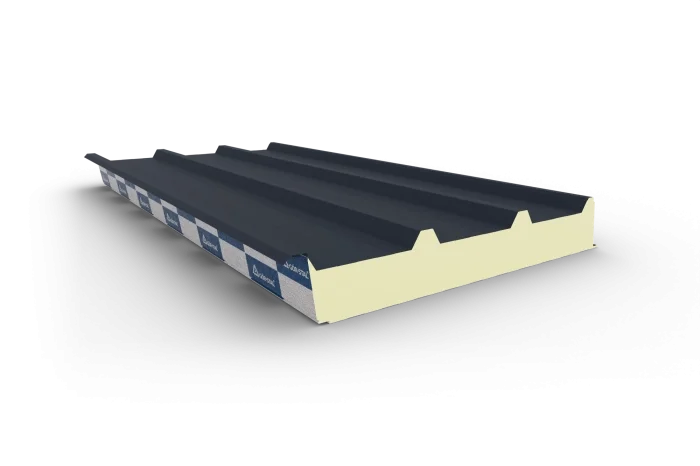
Read next
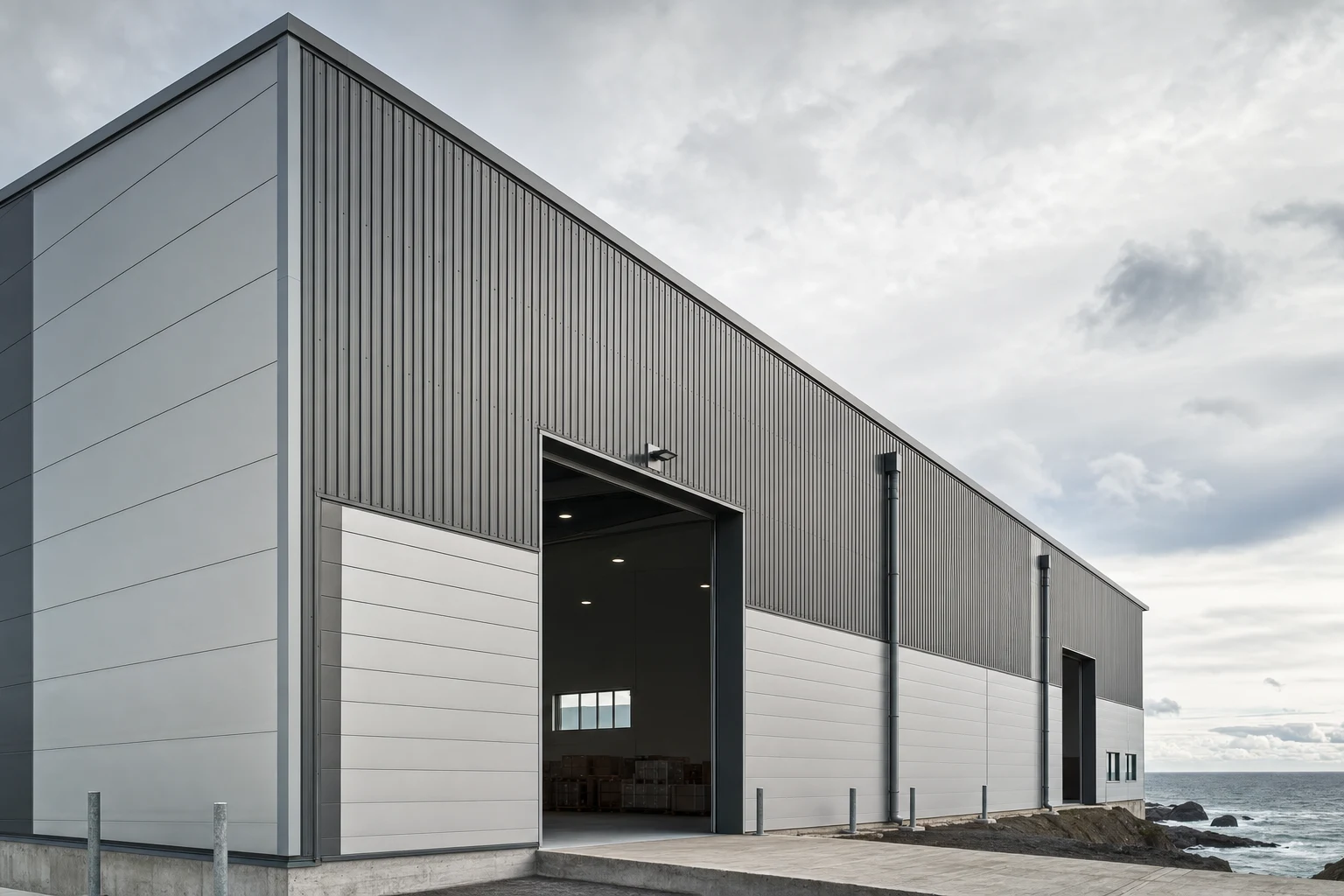
Gór-Stal sandwich panels and a facing for a C5 environment
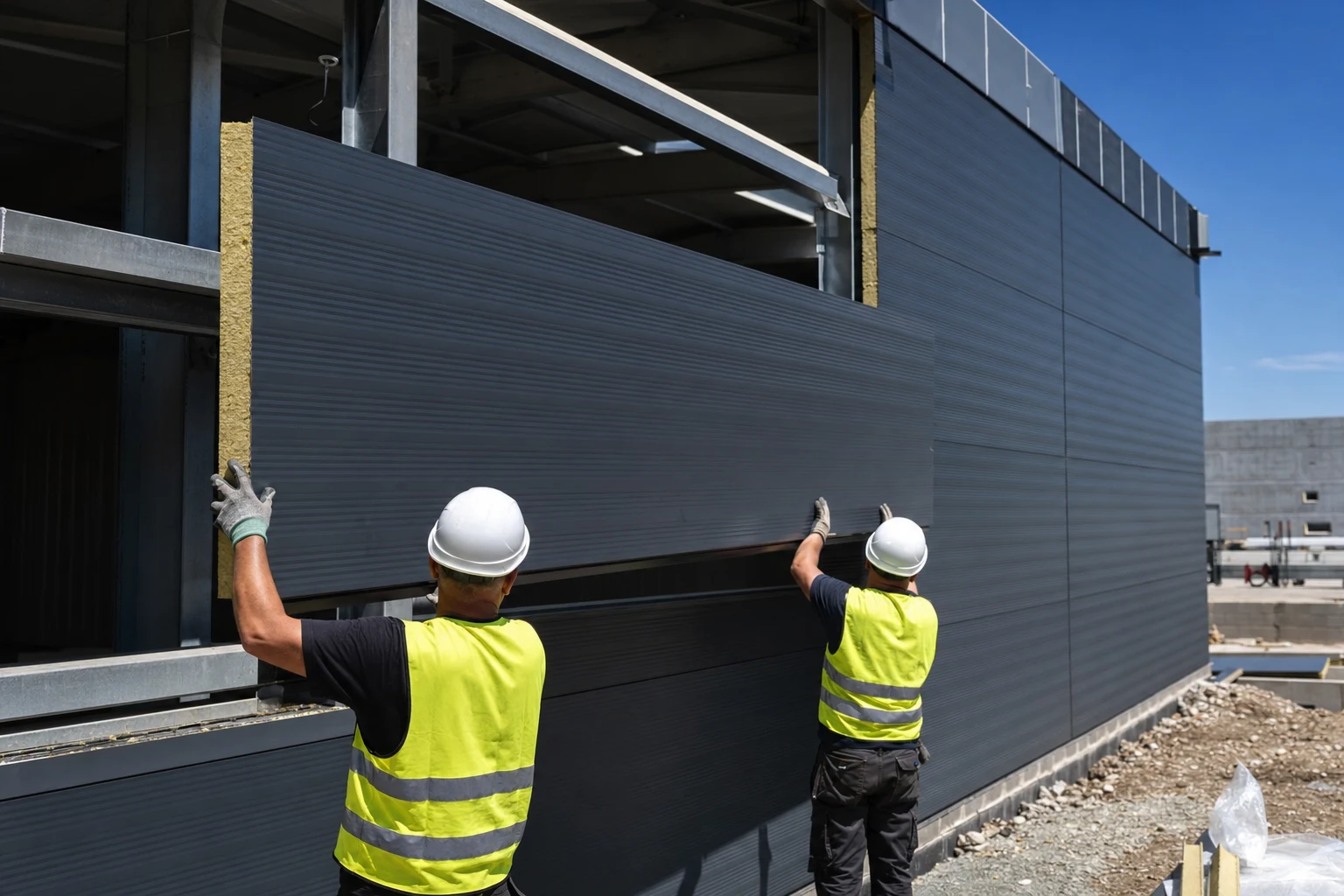
Installing sandwich panels in hot weather — expansion, joints, colour choice
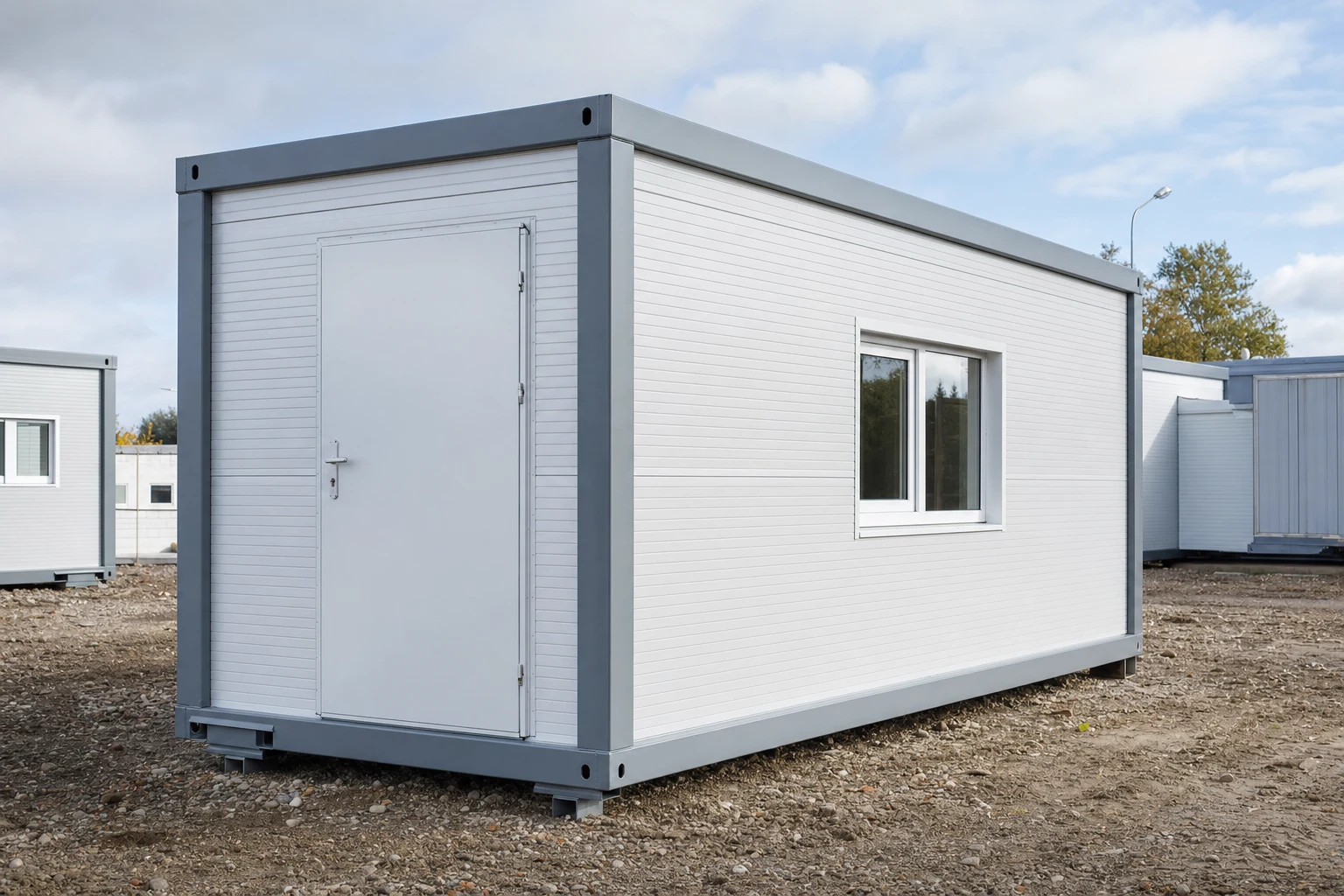
Containers and modular buildings from sandwich panels — construction and selection