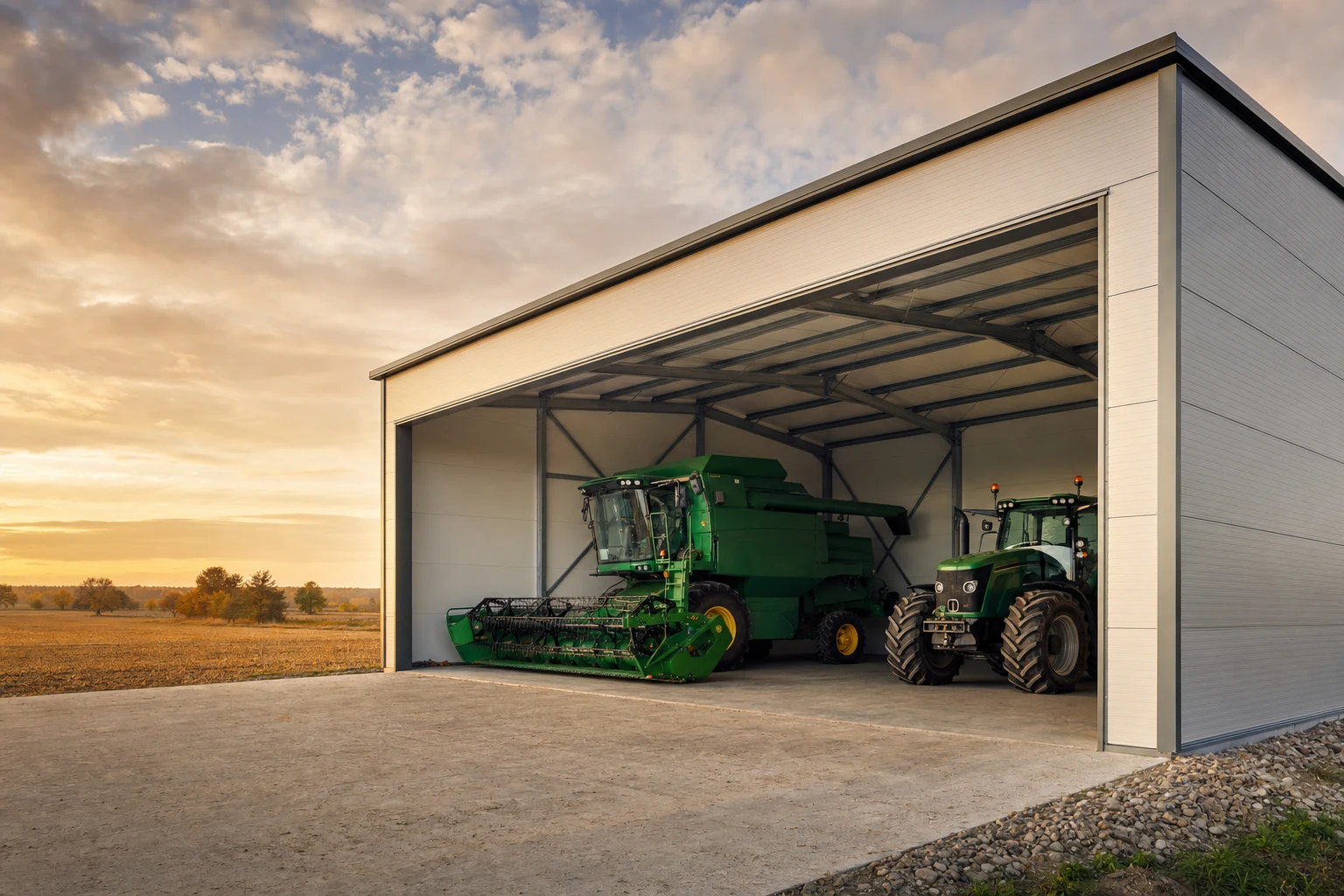
Condensation under a hall roof — why it drips when it hasn't rained, and how to stop it
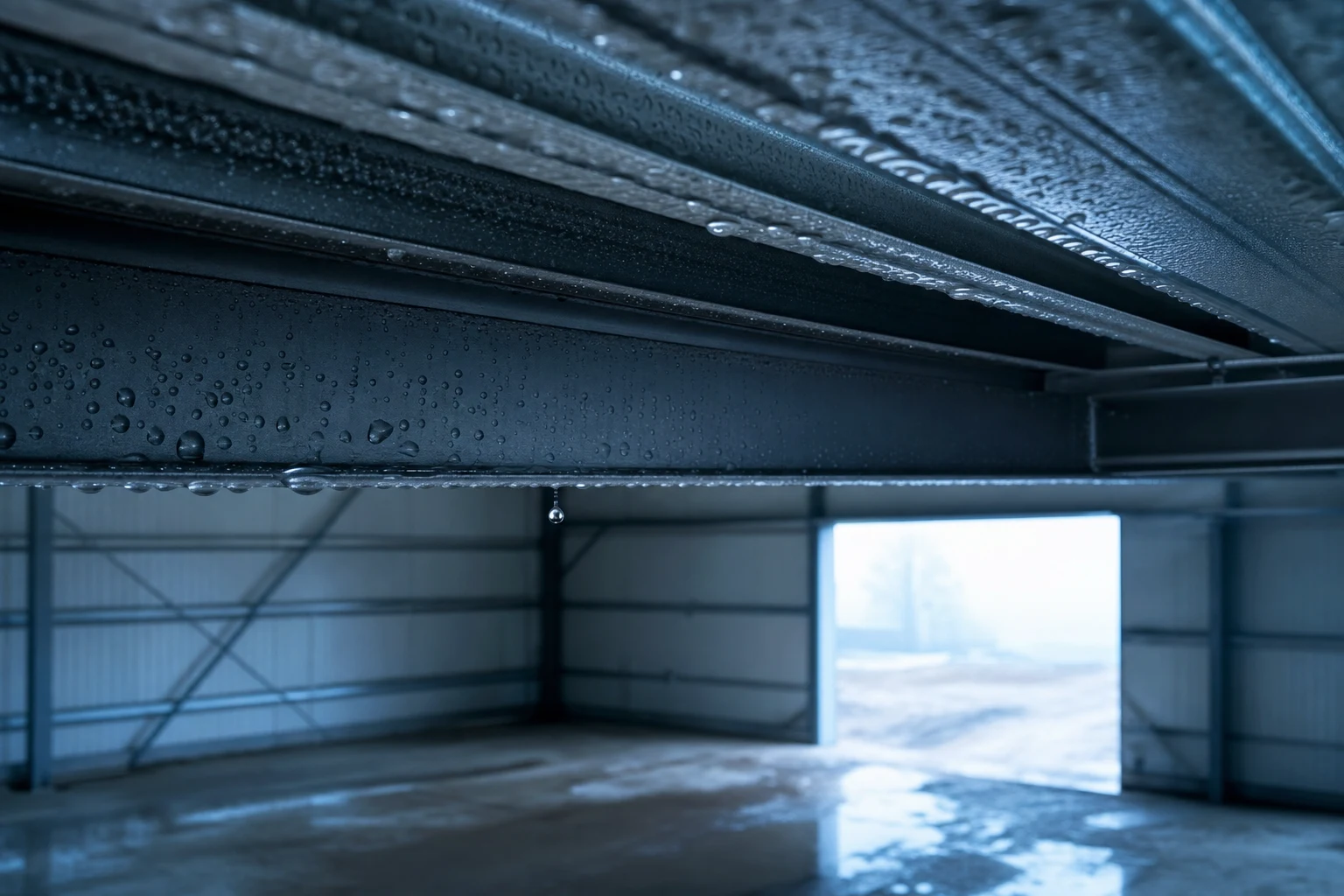
Six in the morning, you open the hall. The night was clear, starry even — it definitely didn’t rain. And yet dark wet patches are spreading on the pallets, the stretch film is covered in droplets, and every few moments something drips from under the roof straight onto the housing of the milling machine.
This is not a leaking roof. It’s condensation — a phenomenon that in uninsulated halls can “rain” from the inside more regularly than actual rain falls outside. The good news: the physics behind it is simple, and the solutions have been known for years. The bad news: it won’t go away on its own, and the first cool nights of late August are just opening the season.
Where does the water come from if it didn’t rain?
Air works like a sponge for water vapour — the warmer it is, the more vapour it can hold. Air at 20 °C holds roughly twice as much of it as air at 10 °C. As long as it stays warm, the vapour is invisible and bothers no one.
The trouble starts with cooling. Every batch of air has its dew point — the temperature at which vapour turns into droplets, exactly like on a cold bathroom mirror or a bottle taken out of the fridge. It’s enough for any surface in the hall to be colder than the dew point, and water will appear on it “out of nowhere”.
And here the steel sheet comes in. An uninsulated roof is a few tenths of a millimetre of steel — a material that conducts heat superbly. On a clear night the sheet radiates heat straight into the open sky and can cool down below the temperature of the surrounding air. It’s the same mechanism that covers car windows with frost even though the thermometer shows a few degrees above zero.
The underside of such a sheet falls below the dew point of the air accumulated in the hall — and the vapour settles on it drop by drop, all night long. In the morning the sun warms the roof, the droplets lose their grip and the “rain” begins. That’s why it drips precisely in the morning, though it didn’t rain.
Why your hall, of all places?
Unheated halls, or ones heated intermittently, have it worst. During the day the air warms up and takes on vapour; at night the heating is off and the sheet plays the part of a cold window pane the size of the roof. The cycle repeats every clear day and night.
The second ingredient is sources of vapour — and halls have no shortage of those. Animals in livestock buildings give off moisture through breathing and evaporation — a cowshed or piggery produces so much of it that condensation is often problem number one there, ahead even of ammonia corrosion. More vapour comes from wet industrial processes, washing the floor at the end of a shift, freshly poured concrete, and even gas heaters without flue gas extraction — gas combustion products are largely water vapour, so “heating up” the hall this way humidifies it at the same time.
The third factor: what stands under the roof. Machines under bare sheet get droplets straight into their electronics and guideways. High-stacked goods catch the moisture first. If the racking reaches almost to the ridge, the top layer of pallets works in the zone of greatest risk.
What it really destroys
Let’s start with the structure. Steel purlins and girders under a dripping roof go through daily wet–dry cycles — a worse scenario for anti-corrosion coatings than constant damp. Corrosion starts in the places hardest to inspect: on the upper flanges of profiles, in joints, around fasteners.
Then the goods. Cardboard boxes lose stiffness and stop being stackable, labels peel off, and hygroscopic products — from animal feed to furniture boards — absorb moisture from the air and from the droplets. Add the machines: electronics in control cabinets, sensors, oiled guideways where water leaves traces of corrosion. And the most prosaic thing of all: a wet floor under the dripping zone is a slipping hazard — and you are the one liable for it.
None of these costs arrives as a single invoice. It’s more of a scattered tax: discounted goods here, a machine service call there, repainting the structure several years earlier than the design assumed. Paid every year, most generously in autumn and spring.
Why bare sheet drips and a sandwich panel doesn’t
The whole difference comes down to one parameter: the temperature of the internal surface of the envelope.
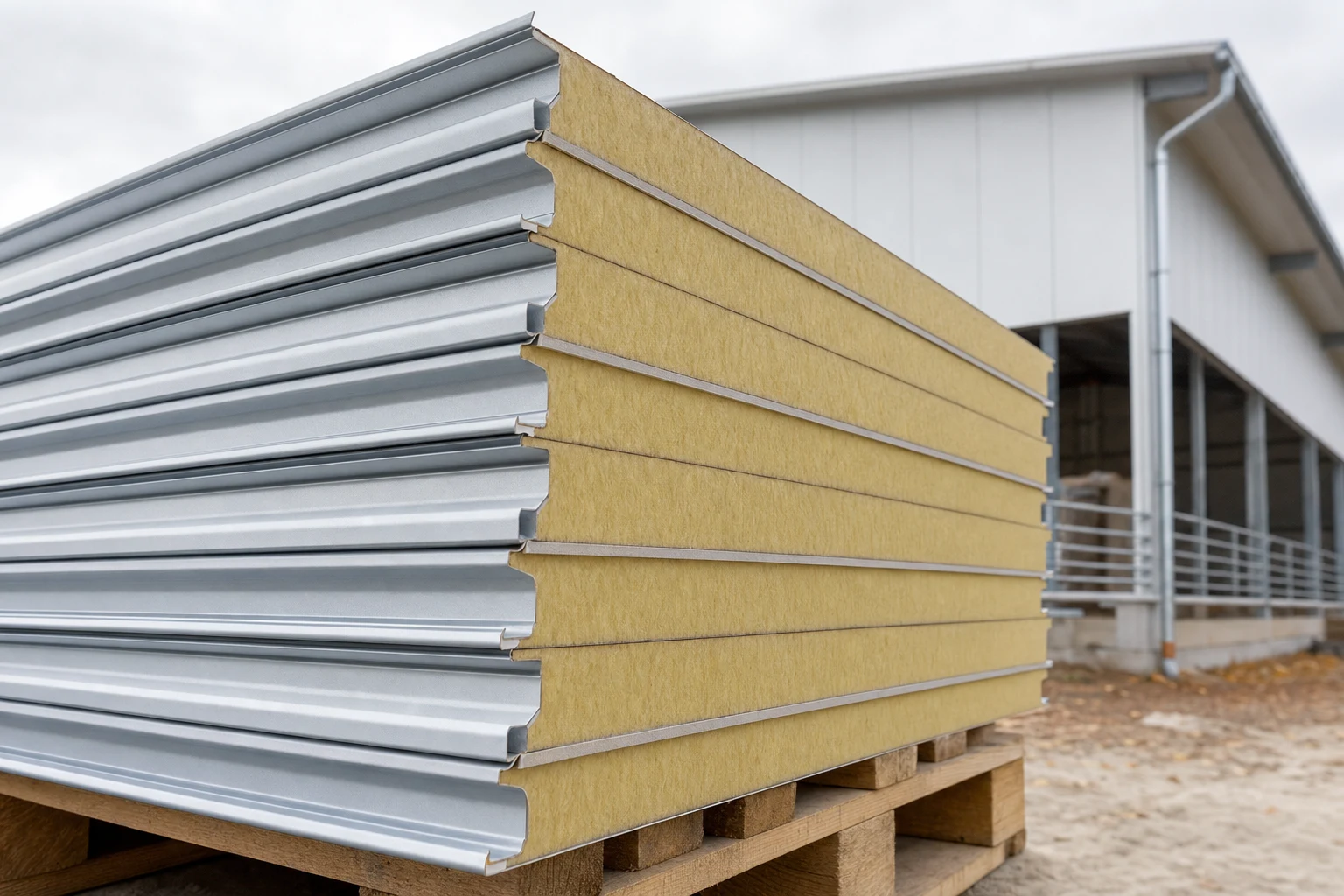
Bare sheet puts up practically no resistance to heat flow, so its underside is at almost exactly the temperature of the cold side — the night sky and the outside air. A sandwich panel works differently: between the facings sits an insulating core that separates the internal facing from the cold. The internal sheet “sees” almost nothing but the air of the hall and keeps a temperature close to it — that is, above the dew point. The vapour has nothing to condense on.
This is not a marketing promise but a mechanism the standards require to be calculated directly: PN-EN ISO 13788 assesses the risk of surface condensation precisely through the temperature of the internal surface of the envelope, and the technical regulations explicitly prohibit condensation on the internal surface that would allow mould growth. The better the envelope’s insulation — that is, the lower the U-value — the warmer the internal surface and the bigger the margin to the dew point.
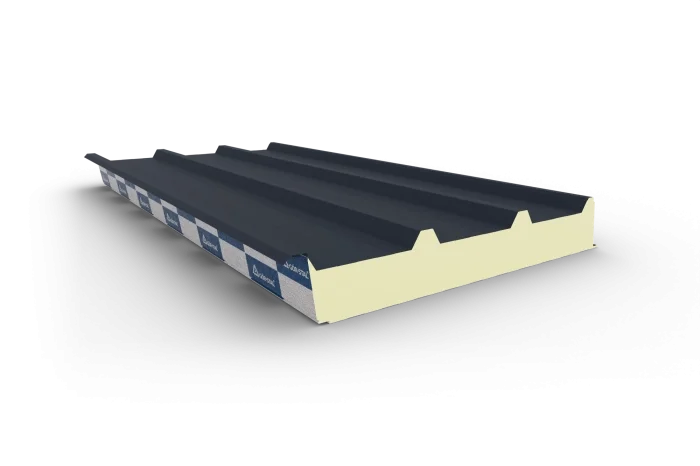
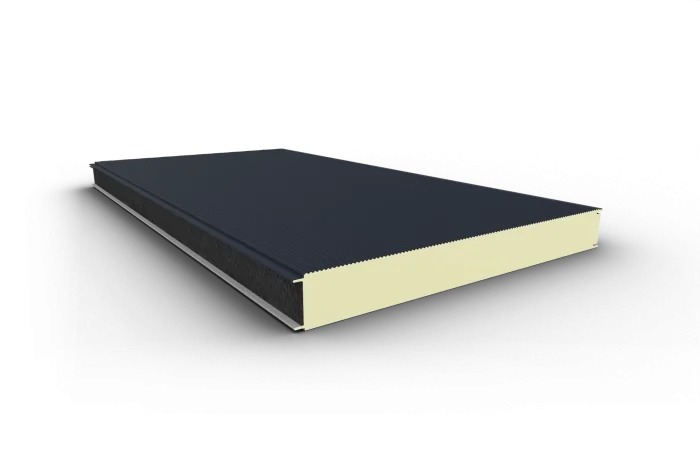
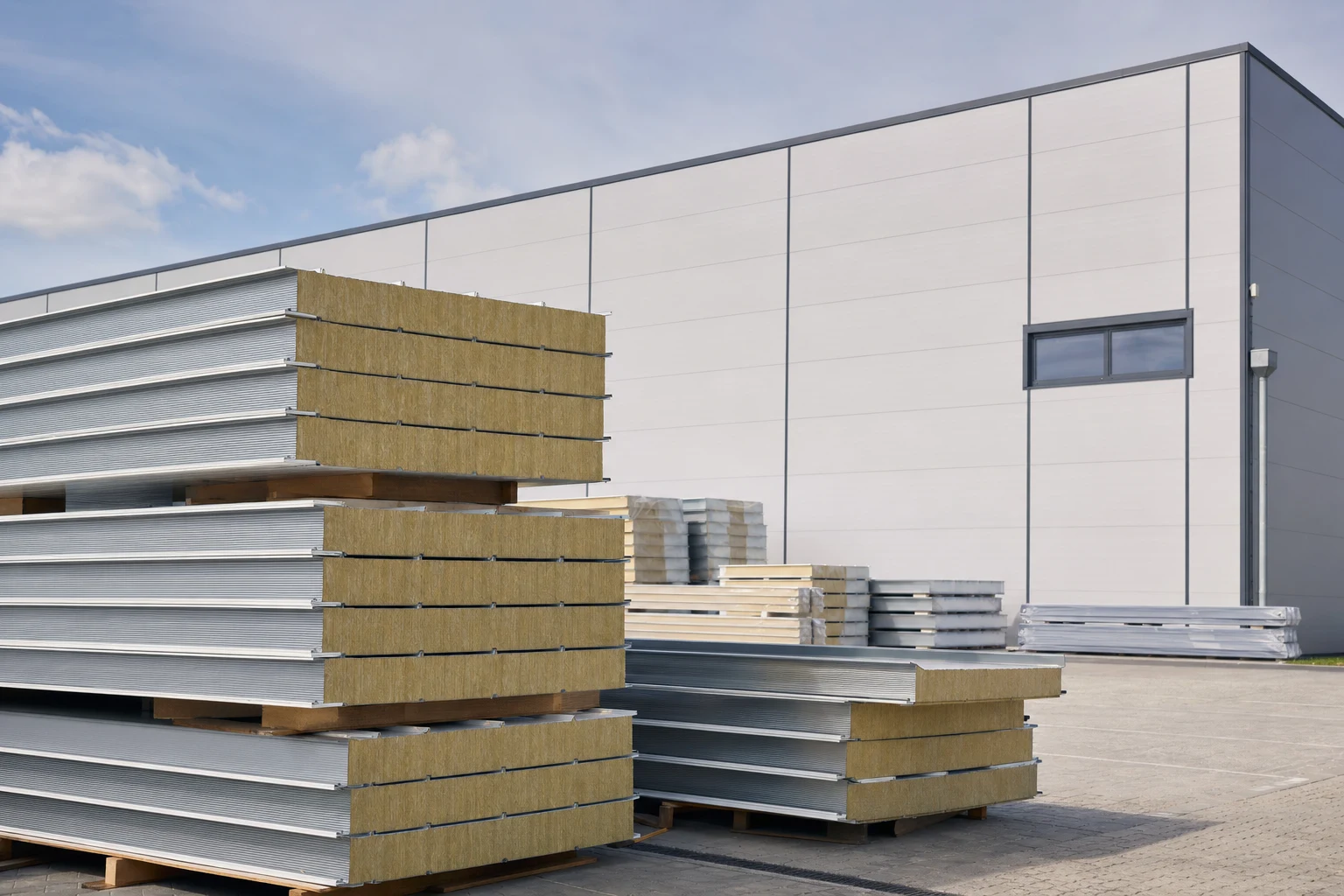
In hall practice this means a roof sandwich panel, e.g. GS insPIRe D with a PIR core, and on the walls the wall variant. Where fire requirements are higher, the same job is done by a mineral wool core panel — the anti-condensation mechanism is identical. A bonus few people think of while dealing with dew: in summer the same envelope works the other way round and protects the hall from overheating.
The hierarchy of solutions — most effective first
The order is not accidental. We start with what removes the cause and end with what eases the symptoms.
First: a warm envelope. Replacing bare sheet with sandwich panels (or building a new hall in this technology from the start) is the only solution that eliminates the very physics of the problem — the cold surface overhead. Along the way you get a roof with sensible thermal resistance, which shows in the heating bills. How to design such a roof correctly for slopes and drainage, we described in the article on a hall roof made of sandwich panels.
Second: ventilation. If you can’t raise the surface temperature, you can lower the dew point — by extracting the vapour outside before it condenses. In livestock buildings and with wet processes, ventilation is obligatory regardless of the envelope. But beware: with bare sheet, ventilation alone loses to a clear night — it will reduce the dripping, not stop it.
Third: limit the moisture sources. Take heater flue gases outside, wash the floor in the morning instead of at the end of the day, don’t leave wet goods or freshly washed machines in the hall overnight, close evaporating processes with lids or hoods. This is the cheapest item on the list — often doable starting tomorrow.
Fourth: the details. In an insulated roof the first droplets tend to appear on fastener heads — a steel screw piercing the envelope is a point thermal bridge, a cold island on a warm surface. That’s why system installation matters, along with correct flashings at joints and parapets that close the envelope without cold gaps.
And anti-condensation fleece under the sheet? An honest half-measure for shelters and canopies with nothing sensitive inside: it stores the dew at night and releases it during the day, so it doesn’t drip — but the moisture still cycles at the sheet and the structure. For a hall with goods, machines or livestock it’s not enough.
The calendar is playing against you
The paradox of condensation is that the season is opened not by frost but by the first clear, cool nights after warm days — the turn of August and September. The air in the hall is still summer-like, warm and humid, and a clear night sky can cool the sheet by a dozen or more degrees compared with the warm day — and further below the temperature of the night air. The gap between the dew point and the roof temperature then becomes the largest of the whole year.
So autumn is not the moment when the problem “somehow ends” — it’s the moment when it begins. If last winter you were wiping machines down and moving pallets away from the dripping zone, the decision to insulate the roof is worth taking now: panel selection, quotation and delivery need lead time, and every week of delay means more wet mornings.
🤝 Contact a BOKKA technical advisor — we will help select sandwich panels for the roof and walls of your hall, so that the coming cool nights end with dew on the outside of the roof, not above your goods.
Sources:
- PN-EN ISO 13788 — Hygrothermal performance of building components and building elements — Internal surface temperature to avoid critical surface humidity and interstitial condensation
- PN-EN 14509 — Self-supporting double skin metal faced insulating panels — Factory made products — Specifications
- Regulation on the technical conditions to be met by buildings and their location — requirements for protection against condensation on the internal surface of the envelope
- Technical catalogue and data sheets of GS insPIRe sandwich panels (Gór-Stal)
Frequently asked questions
Why does the hall roof drip although it isn't raining?
Is ventilation alone enough to stop the roof dripping?
Which sandwich panel protects a hall roof against condensation?
Does anti-condensation fleece under the sheet solve the problem?
When is the best time to insulate a hall roof?
Related products and systems
Read next
Sandwich panels — thickness, dimensions and price. A buyer's guide
Płyta obornicka — what it is, and why it is simply a sandwich panel
Hall rooflights — dome or continuous rooflight? The opening detail in a sandwich panel roof