Installing sandwich panels in hot weather — expansion, joints, colour choice
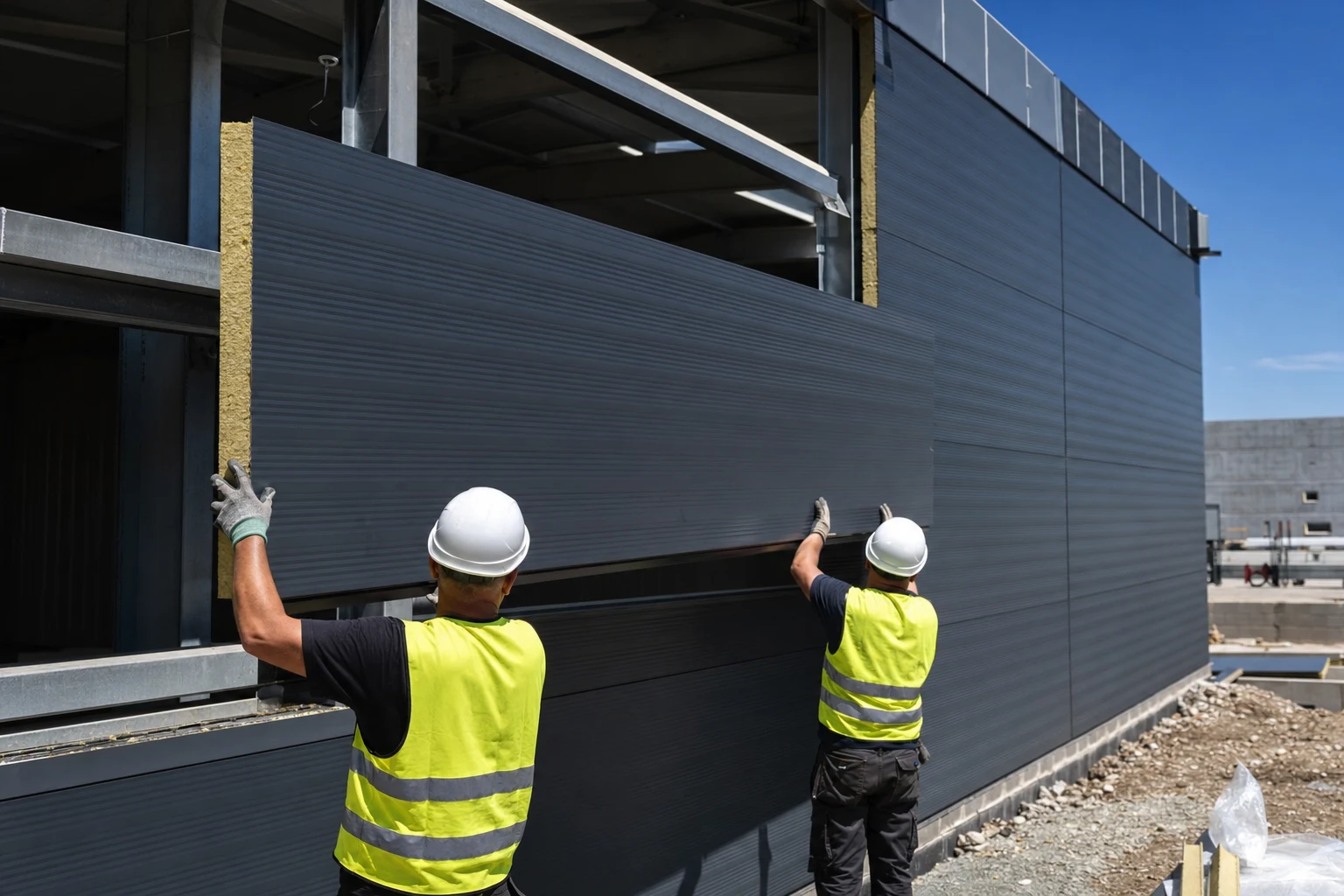
The roofing and installation season falls in the months when the facing temperature in full sun can be extremely high. For sandwich panels — where the carrier of aesthetics and durability is a thin steel facing — heat is not only a matter of the crew’s comfort, but a real technical factor. Steel moves thermally, dark colours heat up more, and mistakes in clearances and installation sequence can end in waviness of the sheet and stresses. In this article we organise what happens to a sandwich panel in the heat, and why, and how to organise the installation so that the envelope looks good and holds up well for years.
Why heat is a problem for a sandwich panel
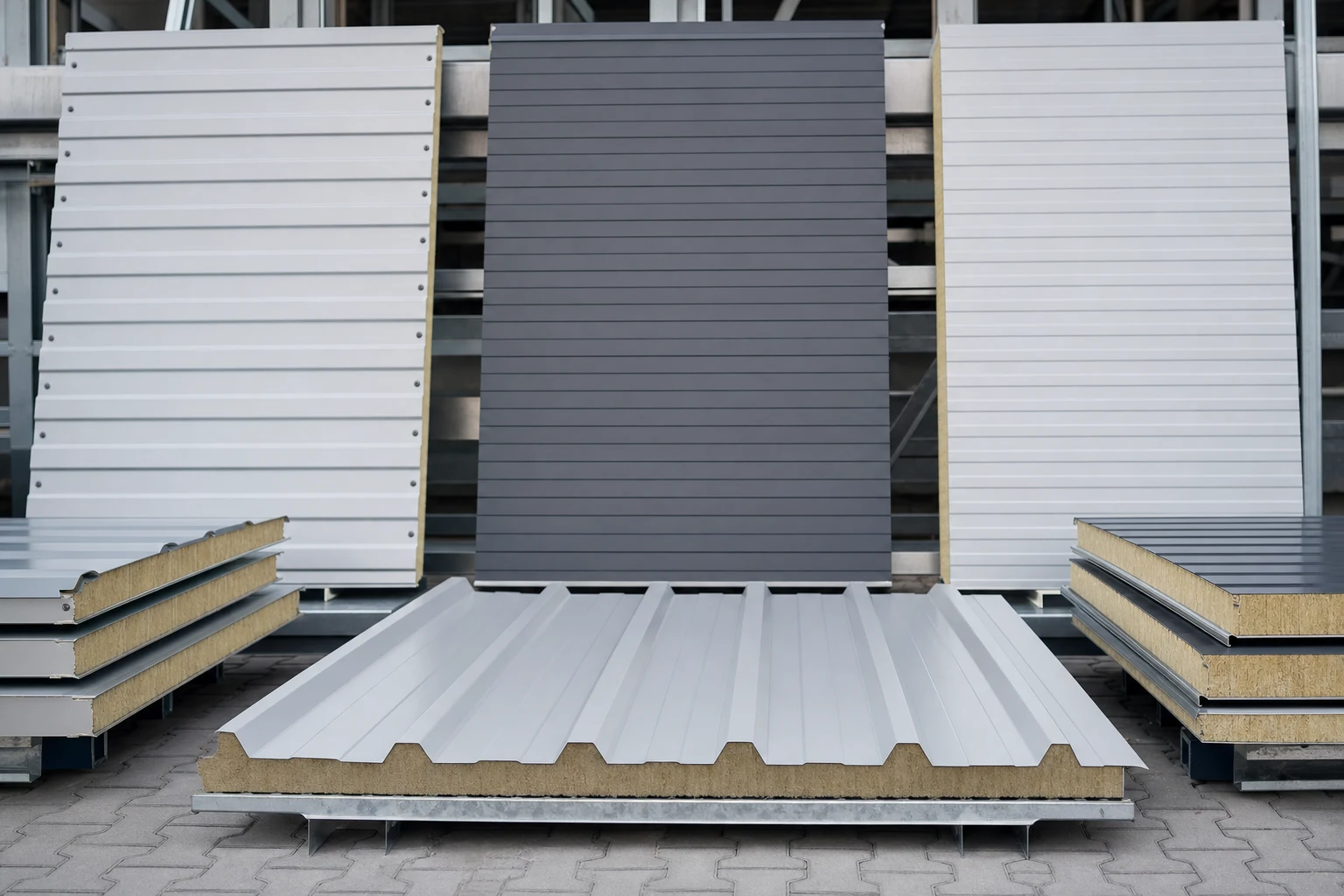
A sandwich panel is an insulating core (PIR or mineral wool) enclosed by two steel facings. The core is dimensionally stable, but the steel facing reacts to temperature — it expands when heated and contracts when cooled. In summer, the difference between the installation temperature at dawn and the surface temperature at noon on a dark slope can be very large, and with it — the change in the element’s dimensions.
The expansion value itself is a property of the material (steel has a defined coefficient of linear expansion), but on site it is the effect that counts: the longer the element and the greater the change in temperature, the greater the elongation, which has to “fit” somewhere. If the panel is mounted too rigidly, without clearance for movement, heating generates stresses. These stresses discharge either onto the fasteners and edges, or in the form of visible deformations of the plane.
Oil-canning — waviness of the facing
The most eye-catching effect is so-called oil-canning, that is, the wavy rippling of flat areas of sheet. It is an aesthetic phenomenon, not a structural one — the panel does not lose load capacity — but on a representative façade it can spoil the whole effect and can be a source of complaints.
Oil-canning is intensified by several factors that act simultaneously in the heat:
- thermal movement of the heated facing, when there is no freedom to elongate,
- an uneven substructure — crooked purlins or rails transfer stresses to the sheathing,
- forcing the panels when drawing the locks together or aligning the edges,
- large, smooth surfaces in dark colours, which heat up the most.
Waviness cannot be entirely eliminated, but it can be radically limited: by an even substructure, correct clearances, not forcing the geometry, and a sensible choice of colour and facing profile for large surfaces.
Dark facing colours in full sun
The facing colour is not only aesthetics. Dark, matt surfaces absorb more solar radiation and heat up well above the air temperature, while light shades reflect more of it. For summer installation this means that the same slope in graphite will reach a markedly higher surface temperature than in cream or white.
The consequences are twofold. First, greater expansion — more thermal movement, so a greater risk of stresses and oil-canning on extensive surfaces. Second, a higher load on the coating over long-term service, especially on southern, fully exposed façades and roofs. Manufacturers of premium coatings design them with sunlight in mind (including colour stability and UV resistance), but that does not change the physics of absorption.
The practical conclusion: for large, exposed surfaces in full sun, it is worth considering lighter shades or coatings with reduced heat absorption, and reserving dark colours rather for smaller surfaces and details. The choice of colour, profile and coating is best consulted for the specific project — we will gladly help with the selection.
Expansion joints and installation clearances
Since the facing moves, the installation must allow this movement. The key principles — always in accordance with the manufacturer’s installation instructions for the given panel variant:
- Through fasteners are tightened with feel — the seal is to compress the washer, not crush the facing; an overdriven screw stiffens the point and encourages deformation.
- Holes and fixings must allow the sheet slight movement instead of locking it rigidly.
- Long slopes and crossings of building expansion joints require planned expansion gaps and details that take up the thermal movement.
- Flashings, parapets, ridges and corners are designed so as not to constrain the panels’ elongation while maintaining tightness.
The longer the element and the higher the expected operating temperature, the more carefully the clearances must be planned. It is a design detail that is cheapest to solve at the specification stage, and most expensive — as a complaint after the season.
Organising work in the heat
Part of the risk is eliminated by the organisation of the installation itself:
- Times of day — the heaviest operations (laying large panels, aligning edges, tightening) should be planned for the cooler morning hours, when the facing is not yet heated; this allows installation at more stable dimensions.
- Do not install “on hot sheet” at noon if it requires forcing the geometry — the element will cool and contract after installation, transferring stresses onto the fasteners.
- Protective film — remove it in line with the manufacturer’s recommendations; left too long in the sun it can bake on and leave marks on the coating.
- Crew health and safety — work on a hot roof is a risk of overheating and slips; breaks, hydration and shade are not a luxury but a condition of installation quality.
Details where the heat makes itself felt
The thermal movement of the facing most often shows up in a few recurring places — worth keeping in mind already at the detail-design stage:
- Long façades without breaks — the longest runs of panels accumulate the greatest elongation; this is where waviness and stresses on the fasteners are most likely.
- Corners and slope junctions — where two planes meet, thermal movement goes in two directions; a rigid tie at the corner constrains the movement.
- Penetrations through rooflights, chimneys and hatches — cut-outs weaken the plane and concentrate stresses around the opening.
- The junction of the envelope with reinforced-concrete or masonry structure — different materials move at different rates, so the detail must separate their movements.
In each of these places the solution is a detail that guides the movement instead of blocking it, together with consistency in maintaining the clearances. This is design, not improvisation on site — and that is exactly why it is worth finalising before installation, rather than reacting after the fact.
Transport and storage in summer
Before a panel reaches the slope, it must survive transport and storage — in summer that is a separate risk. Packs are transported and stored on an even base, with a slight slope for water drainage, protected from rainfall but ventilated: a tightly wrapped pack in full sun accumulates moisture from condensation and overheats, which risks discolouration of the coating and corrosion at the contact points.
Packs are not left in the sun longer than necessary, and the transport film is not treated as long-term protection. Panels with a coating or edge damaged in transport are worth setting aside and reporting before they reach the façade — repair after installation is always harder.
Panel selection and technical support
The envelope’s response to heat depends on the panel variant, facing profile, colour and coating and on a correct installation detail. In the GS insPIRe system we select a solution for the specific application:
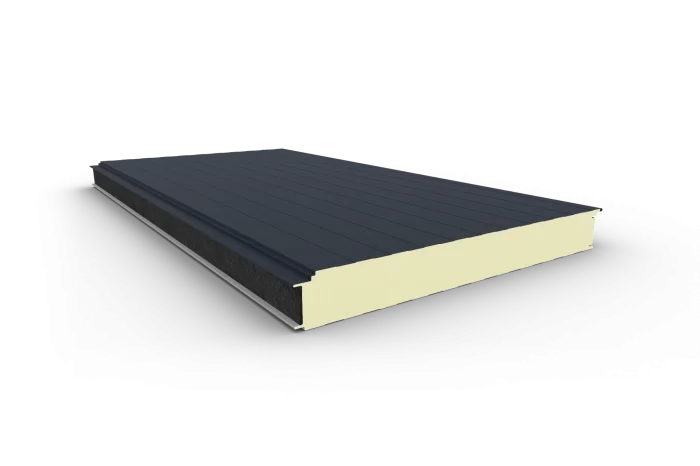
- insPIRe S — a standard wall panel,
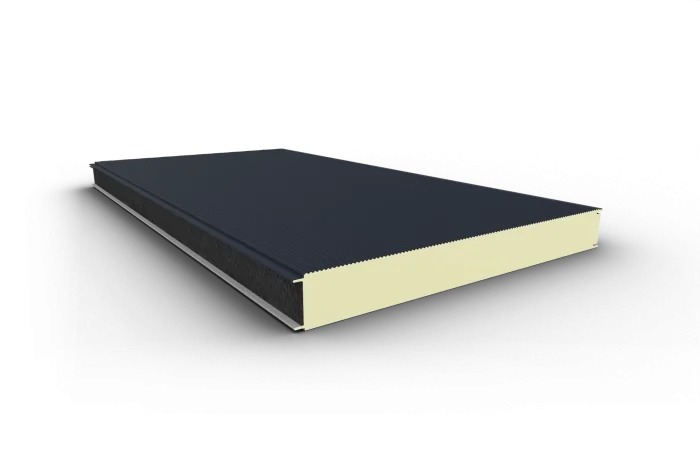
- insPIRe U — a wall with concealed fixing,
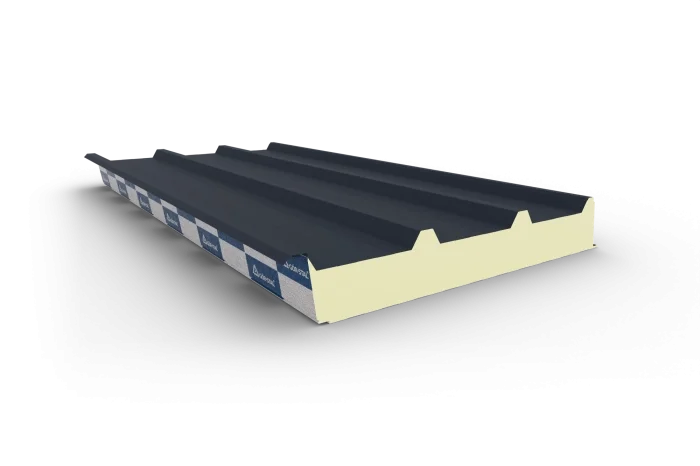
- insPIRe D — a roof panel.
For buildings in aggressive environments, where besides the heat corrosion also matters, the choice of a premium facing is key — we write about this in the article on facings for a C5 environment. If you are planning a hall or a larger building, it is also worth looking at the comparison of termPIR vs sandwich panels.
Summary
Installing sandwich panels in hot weather is entirely feasible, provided we respect the physics: steel expands, dark colours heat up more, and the facing must have freedom to move. An even substructure, correct clearances and joints, a sensible choice of colour, installation in the cooler parts of the day and proper storage of the packs are the set that protects against oil-canning, stresses and complaints. The rest is decided by the choice of panel and detail for the specific project.
🤝 Contact a BOKKA technical advisor — we will help select the insPIRe variant, the facing colour and coating and the installation details for your building and the conditions on site.
Sources:
- PN-EN 14509 — Self-supporting double skin metal faced insulating sandwich panels (requirements, properties)
- Installation and transport/storage instructions of the GS insPIRe sandwich panel manufacturer (Gór-Stal)
- Guidance from organic-coating manufacturers on colour choice, heat absorption and UV resistance
Frequently asked questions
Can sandwich panels be installed in hot weather?
What is oil-canning on a sandwich panel?
Does a dark facing colour matter when installing in summer?
How to store sandwich panels on site in summer?
Related products and systems
Read next
Installing sandwich panels in autumn and winter — what works and what to watch
Gór-Stal sandwich panels and a facing for a C5 environment
Containers and modular buildings from sandwich panels — construction and selection