Reaction-to-Fire Euroclasses A1/A2/B/C/D/E/F — What They Mean in Design Practice
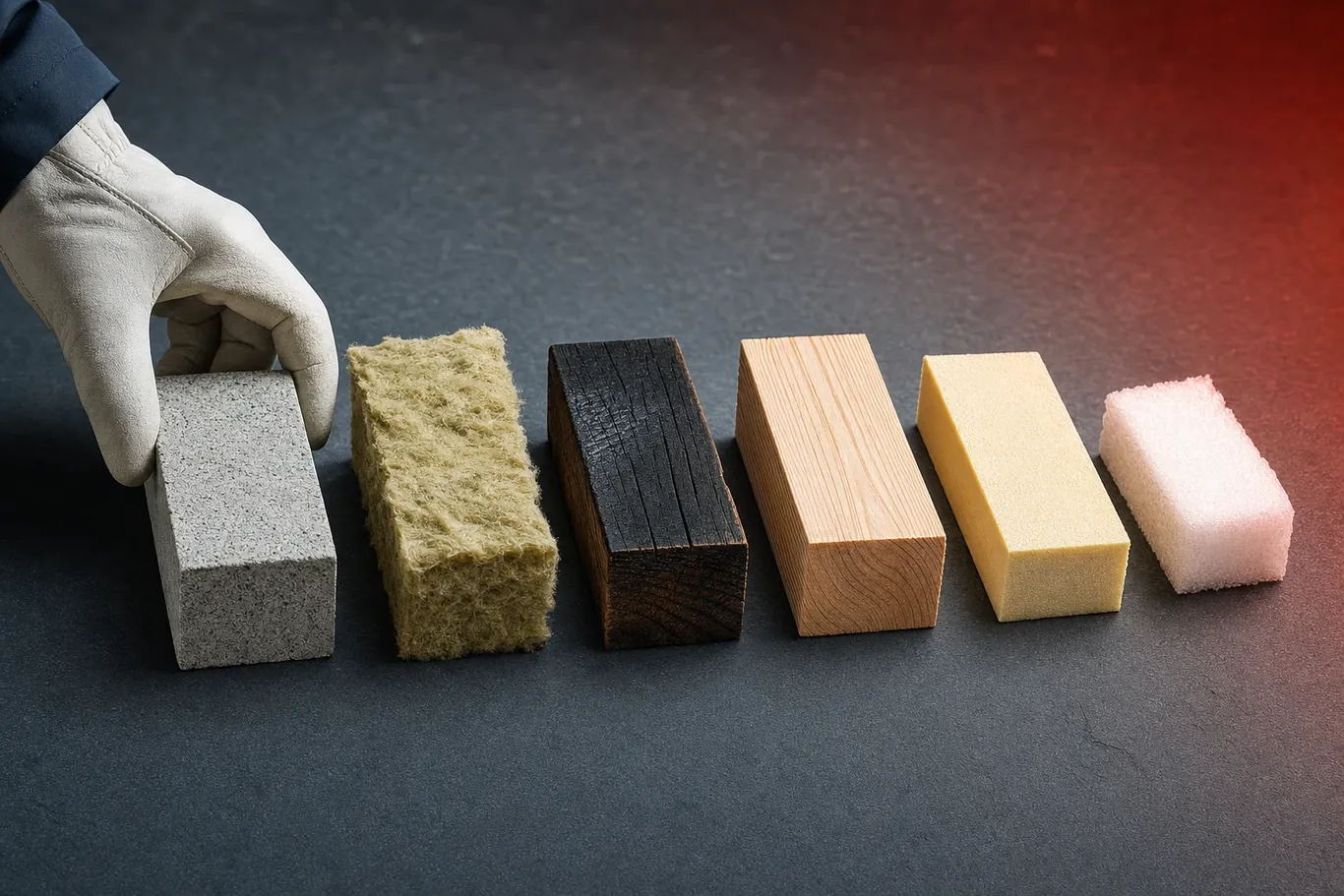
“What does B-s1 d0 mean?”
A reaction-to-fire class consists of two or three elements:
B - s1 - d0
↑    ↑    ↑
│    │    └─ flaming droplets (d)
│    └────── smoke (s = smoke)
└─────────── main combustibility class (A1...F)
The full EN 13501-1 classification has 42 combinations for construction products other than floorings. For most materials you encounter a few standard ones:
- A1 (non-combustible, no indices)
- A2-s1 d0 (practically non-combustible, low smoke emission, no flaming droplets)
- B-s1 d0 (hard to ignite, low smoke emission, no droplets)
- B-s2 d0 (hard to ignite, medium smoke emission, no droplets)
- C, D (rare for modern materials)
- E (typical for insulation materials such as PIR, EPS)
- F (worst — no declaration, meets no criterion)
In this article we show what each of these classes means in practice and when a designer must choose which one.
The main class (A1, A2, B, C, D, E, F)
The main class tells you how the material behaves as fuel in the first phase of a fire. It is tested in a cone calorimeter plus additional tests (SBI — Single Burning Item, for larger samples).
A1 — non-combustible
What it means: the material does not burn at all. No energy contribution to a fire. Usually inorganic: stone, concrete, ceramics, steel, glass, mineral wool (basalt).
BOKKA examples:
- None — all our PIR insulation materials are at least class E
Typical representatives: stone mineral wool (Rockwool, Paroc), brick, concrete, glass, steel sheet.
When required: buildings with the highest fire resistance class (class “A” — highest requirements), structural elements in critical facilities (hospitals, airports, tunnels).
A2-s1 d0 — practically non-combustible
What it means: a small amount of organic admixture (e.g. binder in glass wool). The material does not sustain a fire, does not significantly increase it.
BOKKA examples:
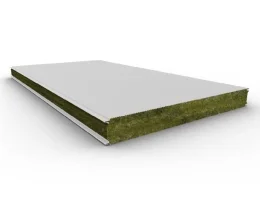
- GS MW QA S/U/CH (sandwich panel with a mineral wool core + steel facing) — A2-s1 d0
Typical representatives: glass wool with binder (Isover, Knauf Insulation), some gypsum plasterboards (GKF), aerated concrete.
When required: partition walls in class “B” buildings, some tall façades >25 m.
B-s1 d0 — hard to ignite
What it means: the material has significant ignition delay and low heat release during a fire. Ignition only in very intense fire.
BOKKA examples:
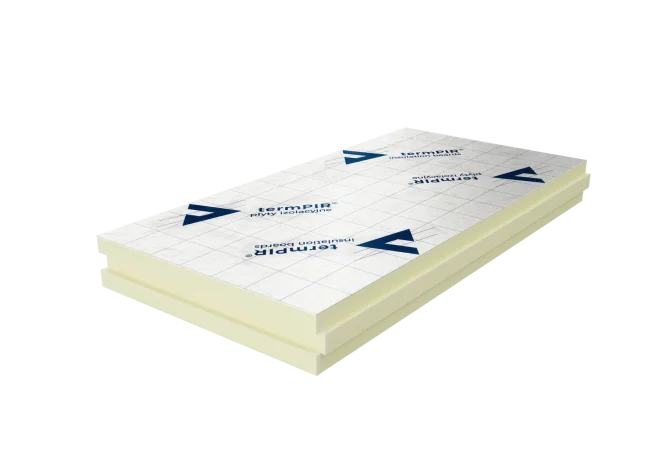
- termPIR® ETX in an ETICS system (PIR + cement render) — system classification B-s1 d0 per ETA 17/0066
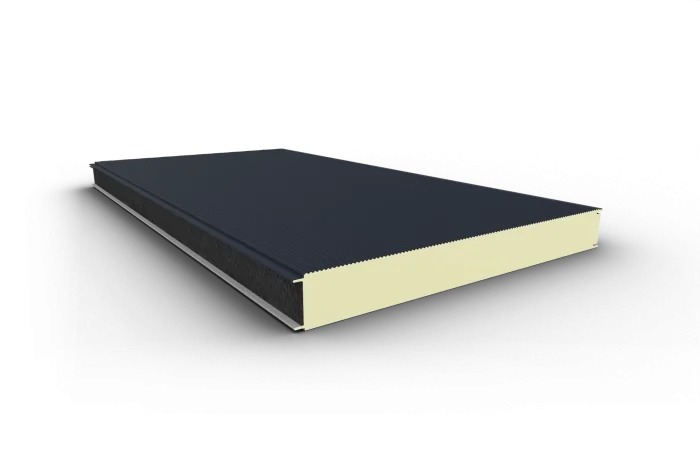
- GS insPIRe S/U/CH/D in a system (PIR sandwich panel + steel facing) — classification usually B-s2 d0 or B-s1 d0 (depending on thickness and configuration)
Typical representatives: wood modified with fire-retardant impregnants, special gypsum boards (GKFI), some mineral renders.
When required: very common in modern commercial facilities. Most façades require min. B-s2 d0 for buildings above 12 m.
C, D — intermediate classes
What it means: materials help spread a fire, but to a limited extent.
Examples: some untreated hardwoods, some thermoplastics.
Practical application: rarely encountered as a design specification. Most projects either require B+ or accept E.
E — combustible
What it means: the material ignites easily, but does not cause full flashover. Once the flame source is removed, it self-extinguishes.
BOKKA examples:
- Practically all our PIR boards (termPIR® AL, ETX, WS, AGRO AL, MAX 19, PRIME, Pro-F) — class E for thicknesses 50–250 mm
- izoGRASS® (pure PIR without facing) — class E for 30–250 mm
Typical representatives: EPS and XPS polystyrene, most polyurethane foams (PUR, PIR), some softwoods.
When acceptable: most insulation applications where the insulation material is enclosed (e.g. PIR in an ETICS layer covered with render). The render plus the system structure provides a higher class.
F — no performance
What it means: the material does not meet the criteria of class E. That is: it ignites instantly, sustains a fire, causes flashover. No declared class = in practice the category “must not be used in construction”.
BOKKA examples:
- termPIR® AL in 20–49 mm thicknesses (thin variants) — formally class F
- Reason: thin PIR foams have lower thermal stability → they ignite faster in tests
Practical implications: for thin thicknesses (auxiliary thermal insulation, strips for reveals) class F is acceptable when enclosed (covered with render, sheet, wood). They are not suitable as exposed insulation.
Smoke index (s — smoke)
s1, s2, s3
↑   ↑   ↑
│   │   └─ high smoke emission (worst)
│   └────── medium
└────────── low (best)
Measured by the SBI test — how much smoke the material produces while burning.
| Class s | Meaning | What it means for the project |
|---|---|---|
| s1 | Low smoke emission | Most escape routes remain visible even in a fire |
| s2 | Medium | Acceptable for most facilities |
| s3 | High | Not advisable for ZL facilities with a large number of people |
In practice: for buildings with people (residential, office, public use) s1 or s2 is required. For warehouses / production without people (PM class “D”/“E”) s3 is acceptable.
Flaming droplets index (d — droplets)
d0, d1, d2
↑   ↑   ↑
│   │   └─ flaming droplets over a long time (worst)
│   └────── flaming droplets over a short time (max 10 s)
└────────── no flaming droplets (best)
This measures whether the material falls off in flaming fragments during a fire — which can set lower floors alight, ignite adjacent elements, or injure people below the element.
| Class d | Meaning | In practice |
|---|---|---|
| d0 | No flaming droplets | Ceilings above escape routes, tall façades |
| d1 | Short-lived (max 10 s) | Acceptable for most facilities |
| d2 | Long-lasting or persistent | Only for rooms without people |
In practice: for façades of tall buildings (above 12 m) d0 is required — no material on the façade may fall off in flaming pieces (it could burn cars below, injure people on the pavement).
Classification per building element (WT 2021 summary)
| Building element | Required class (typically) |
|---|---|
| Load-bearing structure (columns, beams) | A1 (steel, concrete) |
| Internal partition walls | A2-s1 d0 or B-s1 d0 (depending on building class) |
| Suspended ceilings (escape routes) | A2-s1 d0 |
| Suspended ceilings (rooms) | B-s2 d0 |
| Façades of buildings >12 m | B-s3 d0 (with d0 mandatory) |
| Façades of buildings <12 m | C-s3 d0 or D |
| Roof coverings | BROOF(t1) — separate classification |
| Floorings on escape routes | CFL-s1 (special class for floors) |
Check the specific requirements of your project in the fire safety design (part of the building design).
Classification tricks — system vs material
Important: the class of a single material is NOT the class of a system. Example:
- termPIR® AL on its own: class E
- termPIR® AL in an ETICS system: class B-s1 d0 (5 mm cement render protects the PIR against ignition)
- termPIR® AL with 2× gypsum plasterboard: class A2-s1 d0 in the system (the GK board shields the PIR)
This is why manufacturers often declare a “class in the system” and a “class of the material alone” separately. For a project the system class matters (how the material behaves in the application configuration).
Quote from the termPIR® AL DoP:
Reaction-to-fire class: F (20–49 mm) / E (50–250 mm) — for the unenclosed material. System class: B-s1 d0 in gypsum plasterboard facings, B-s2 d0 in a system with trapezoidal sheet.
The most common designer mistakes
Mistake 1 — Material class = element class
A designer writes: “partition wall made of PIR — class E unacceptable, the project requires B”. Incorrect: PIR on its own is class E, but a wall with 2× GK + PIR is class B-s1 d0 or better. What counts is the system, not a single layer.
Mistake 2 — Omitting the s and d indices
The design states only “class B” → the contractor may use B-s3 d2 (the worst B variants). The PSP inspector may challenge it. Always state the full format: B-s1 d0, B-s2 d0, etc.
Mistake 3 — Confusing EN 13501-1 classes with REI/EI
Reaction-to-fire class (A1-F) ≠ fire resistance (REI/EI). These are two different classifications:
- Reaction = how the material ignites
- Resistance = how long a structural system withstands a fire
More in: EI 120 from a sandwich panel — under what condition?
Mistake 4 — Skipping tests for thin thicknesses
PIR 30 mm has class F (lower than 100 mm). A designer writes “PIR class E” → on the site someone uses 30 mm → class is formally F → acceptance halted.
Cure: always state thickness + class (e.g. “termPIR® AL ≥50 mm, class E”).
Mistake 5 — Confusing BROOF with the reaction class
BROOF (B at the start) is not a reaction class! BROOF is a classification of the roof against external fire (separate standard EN 13501-5). Some people think BROOF(t1) = reaction-to-fire class B. No.
Classes of typical materials (cheat sheet)
| Material | Reaction to fire (typical class) |
|---|---|
| Stone mineral wool (Rockwool) | A1 |
| Glass mineral wool (Isover) | A1 |
| Aerated concrete | A1 |
| Standard GK board (Knauf, Rigips) | A2-s1 d0 |
| Fire-resistant GK board (GKF, DFH1IR) | A1 or A2-s1 d0 |
| Structurally glued timber | D-s2 d0 |
| Wood modified with fire-retardant impregnant | B-s1 d0 |
| termPIR® AL / ETX / WS / Pro-F (50+ mm) | E (material) / B-s1 d0 or B-s2 d0 (system) |
| termPIR® AL thin (20-49 mm) | F (material) — only when enclosed |
| EPS (polystyrene) | E (with fire-retardant modifiers) or F (standard) |
| XPS (extruded polystyrene) | E |
| GS MW QA (MW sandwich panel) | A2-s1 d0 |
| GS insPIRe (PIR sandwich panel) | B-s2 d0 or B-s1 d0 in a system |
| izoGRASS® (pure PIR without facing) | E for 30+ mm |
What BOKKA provides
Full reaction-to-fire class documentation in the package with every delivery:
- DoP with the material class (e.g. termPIR AL: E 50+ mm / F 20-49 mm)
- System classification (e.g. ETA 17/0066 for termPIR ETX in ETICS: B-s1 d0)
- Classification sheet from a notified body for the specific configuration (REI, BROOF, end-use class)
If a project requires a specific class that our product can achieve in a given system — we will send the full document package and advise on selecting the configuration.
🤝 Free BOKKA technical consultation — we’ll help select the product and complete documentation for your project.
FAQ
Is class A1 “better” than B-s1 d0? In terms of non-combustibility — yes. But for most construction applications B-s1 d0 is sufficient and the regulations accept it. Class A1 is required only for the most stringent elements (load-bearing structure, escape routes in class “A” buildings).
Can a class E material be used at all? Yes, in the appropriate enclosure. Most PIR/EPS insulation in PL is class E. Covered with cement render or protective facings — the system reaches class B+ and can be used widely.
Do classes change over time? Not significantly. The class is a chemical property of the material. Minor ageing (e.g. surface oxidation of wood) may have a minimal effect, but will not change a class from B to D under typical conditions.
Is class BROOF(t1) the reaction-to-fire class B? NO. These are separate classifications. BROOF concerns the roof against external fire (standard EN 13501-5). The reaction-to-fire class (A1-F) concerns the material against internal fire (standard EN 13501-1).
What does “end-use class” mean in the classification? It is the class of the system in its real application. E.g. termPIR® AL with 2× GK 12.5 mm in a partition wall → end-use class A2-s1 d0. Without GK it would be E. The end-use class = the system of the enclosed material in its target arrangement.
Does one need to check reaction classes for a single-family house? Yes, but the requirements are more lenient than for commercial facilities. Most materials available in DIY stores (PIR, EPS, wool) meet the requirements for single-family houses. Check specifically in the fire safety design (usually class E or better is required for most elements).
Summary
| Class | Meaning | Typical use |
|---|---|---|
| A1 | Non-combustible | Load-bearing structure, most critical elements |
| A2-s1 d0 | Practically non-combustible | Tall partition walls, ceilings above escape routes |
| B-s1 d0 | Hard to ignite, low smoke | Most façades, suspended ceilings |
| B-s2 d0 | Hard to ignite, medium smoke | Standard ETICS systems |
| C, D | Intermediate | Rarely encountered as a specification |
| E | Combustible but does not cause flashover | Insulation when enclosed (PIR, EPS) |
| F | No declaration | Only in full protected enclosure |
Designer’s rule: look at the system class in the target configuration, not at a single material. Check the full format of the classification (class + s + d). When in doubt — demand the classification sheet from a notified body.
🤝 Free BOKKA technical consultation — we’ll help select the product and complete documentation for your project.
Sources:
- PN-EN 13501-1:2018 — Fire classification of construction products — Reaction to fire
- Regulation of the Minister of Infrastructure on technical conditions — Section VI
- Manufacturers’ DoP sheets (Gór-Stal, Rockwool, Isover)
Related products and systems
Read next
1000 m² Warehouse — termPIR® or Sandwich Panels? Cost, Time, Operation Comparison
How to read DoP, ETA and AVCP certificate — a guide for designers and buyers
Choosing a PIR board supplier — manufacturer, DoP, ETA, lead times