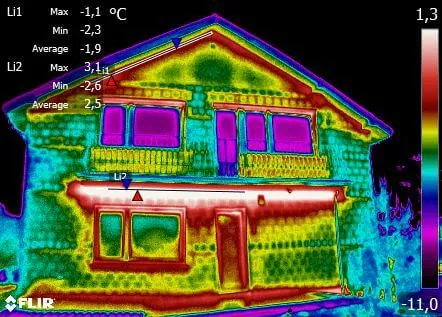
Clean Air Programme 2024 — Energy Retrofit with PIR Boards
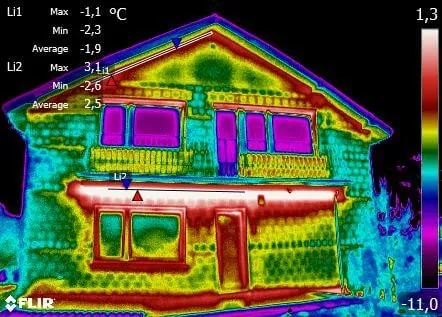
Energy retrofit under the Czyste Powietrze (Clean Air) programme — a strategy for the single-family home
Czyste Powietrze (Clean Air) is Poland’s largest government initiative supporting the energy retrofit of single-family homes. Since 19 September 2018, owners and co-owners of buildings have been able to obtain funding for replacing inefficient heat sources and for a comprehensive improvement of building envelope insulation. The key to maximum return on investment, however, is not the boiler itself — it is a well-thought-out sequence of works in which effective insulation is the foundation. In this context, modern termPIR® PIR insulation boards with λD of 0.022 W/(m·K) make it possible to achieve the U-values required by WT 2021 (Polish Technical Conditions 2021) with a minimum layer thickness.
Energy audit — the starting point for funding
Before any purchasing decision is made, it is worth carrying out an energy audit. This document is mandatory in the elevated and highest funding tiers of Czyste Powietrze — and at the same time the best tool for prioritising spending. The audit covers:
- a technical inventory of building elements (walls, roof, slabs, floor, joinery),
- calculation of the current useful (EU) and final (EK) energy demand,
- a simulation of the effect of individual upgrades,
- a cost estimate and simple payback time (SPBT).
Only on this basis can a reliable assessment be made of whether the roof should be insulated first, the joinery replaced, or the heat source modernised. The order of operations is invariable: first you seal the building, then you choose a smaller, cheaper and more efficient heat source. Replacing a boiler in an uninsulated home is an investment in oversized equipment.
WT 2021 requirements — what a retrofitted building must meet
To benefit from the programme, the modernised building elements must achieve thermal transmittance coefficients compliant with the current Technical Conditions in force since 1 January 2021:
| Building element | Umax per WT 2021 [W/m²K] |
|---|---|
| Roof, flat roof | 0.15 |
| External wall | 0.20 |
| Slab above basement/garage | 0.25 |
| Ground-bearing floor | 0.30 |
| Window (vertical) | 0.9 |
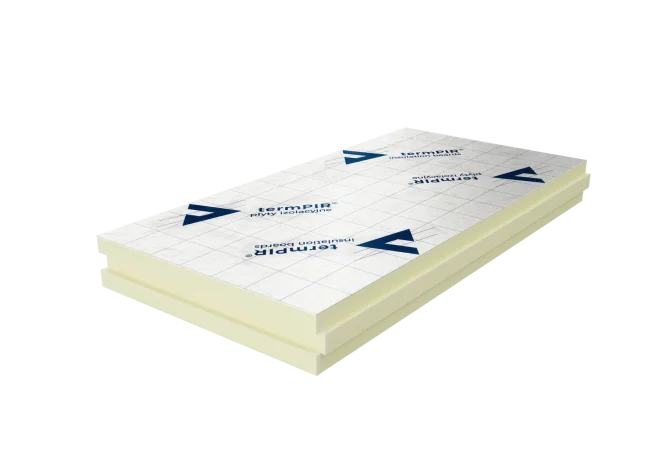
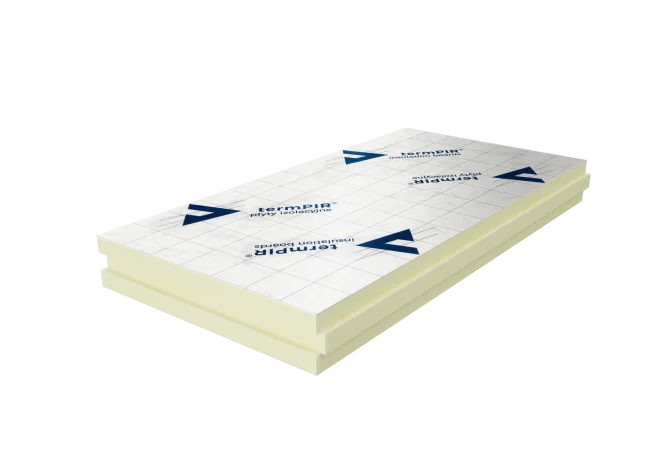
For materials with λD = 0.038–0.040 W/(m·K) (mineral wool, standard EPS), achieving U = 0.15 W/m²K in the roof requires a layer of 25–28 cm. The same result with termPIR® AL at λD = 0.022 W/(m·K) is reached with just 15 cm — a critical difference in the retrofit of existing pitched roofs, where rafter depth is limited.
Sequence of retrofit works — what comes first
1. Window and door joinery
Replacing the windows in a 25-year-old home reduces heat losses through joinery by up to 50%. Modern triple-glazed units achieve Uw = 0.8–0.9 W/m²K. Warm installation within the insulation layer is critical — otherwise the linear thermal bridge ψ at the interface between frame and wall cancels out the benefit of good glazing.
2. Roof and flat roof — the greatest savings potential
An uninsulated roof loses 25–30% of the heat. This is usually the fastest-paying-back investment. Recommended solutions:
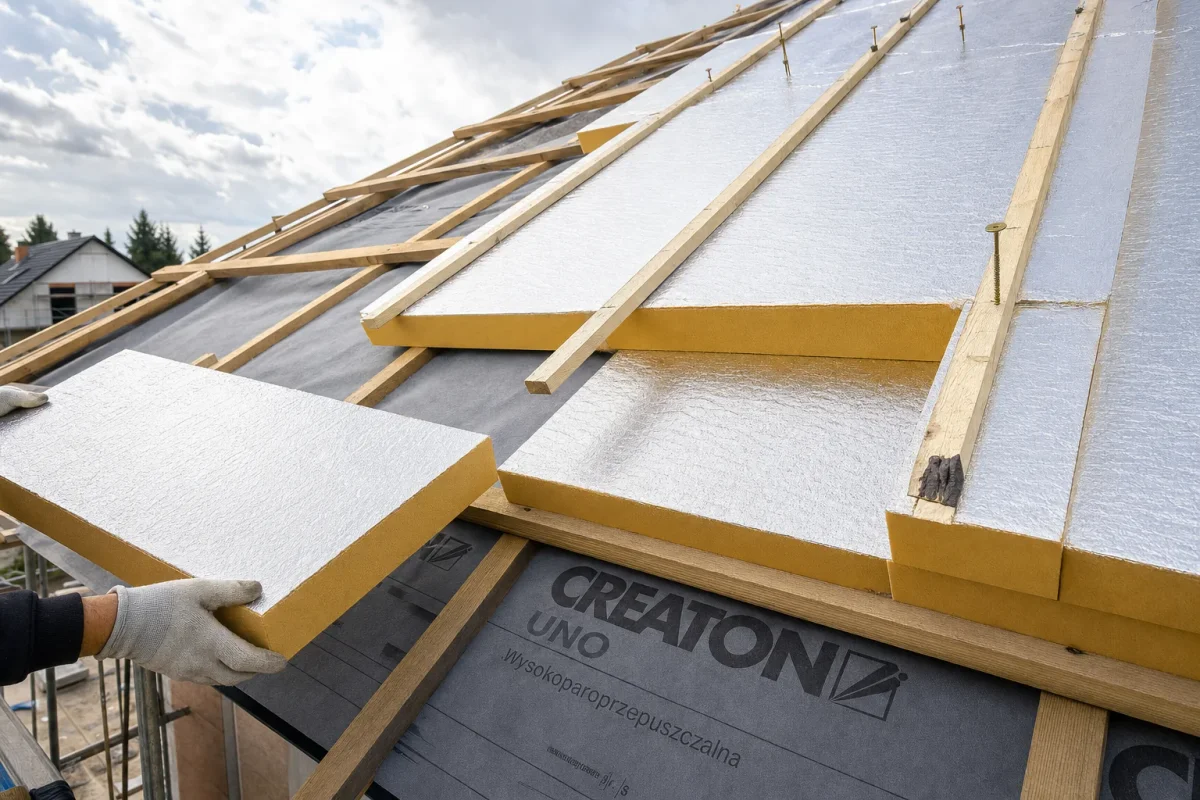
- Pitched roof — above-rafter layout: a continuous layer of termPIR® AL or termPIR® MAX 19 AL eliminates thermal bridges at the rafters. Installation details are described in the pitched roof — termPIR® above-rafter system.
- Pitched roof — under-/between-rafter layout: when the roof build-up cannot be raised, TAG tongue-and-groove boards are used between rafters plus an additional layer from underneath.
- Reinforced-concrete flat roof: a flat layout with termPIR® AL beneath the waterproofing.
| termPIR® AL thickness [mm] | R [m²K/W] | Roof U-value (incl. structure) [W/m²K] |
|---|---|---|
| 120 | 5.45 | ~0.17 |
| 150 | 6.82 | ~0.14 |
| 180 | 8.18 | ~0.12 |
| 200 | 9.09 | ~0.11 |
3. External walls — ETICS on glass fleece
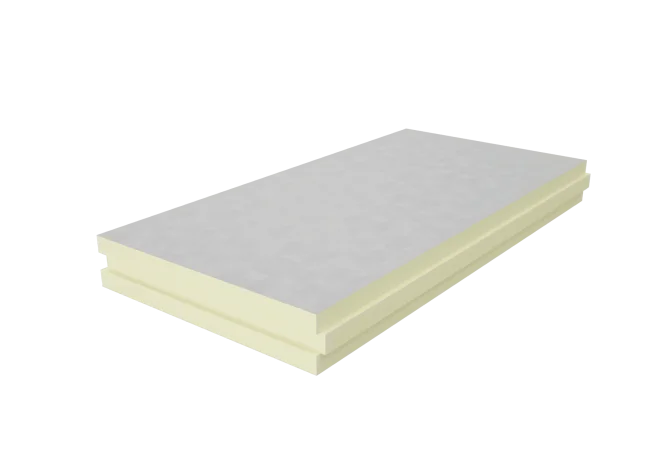
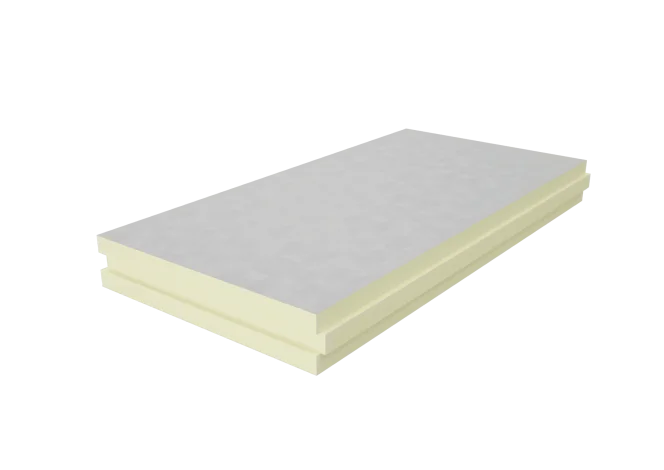
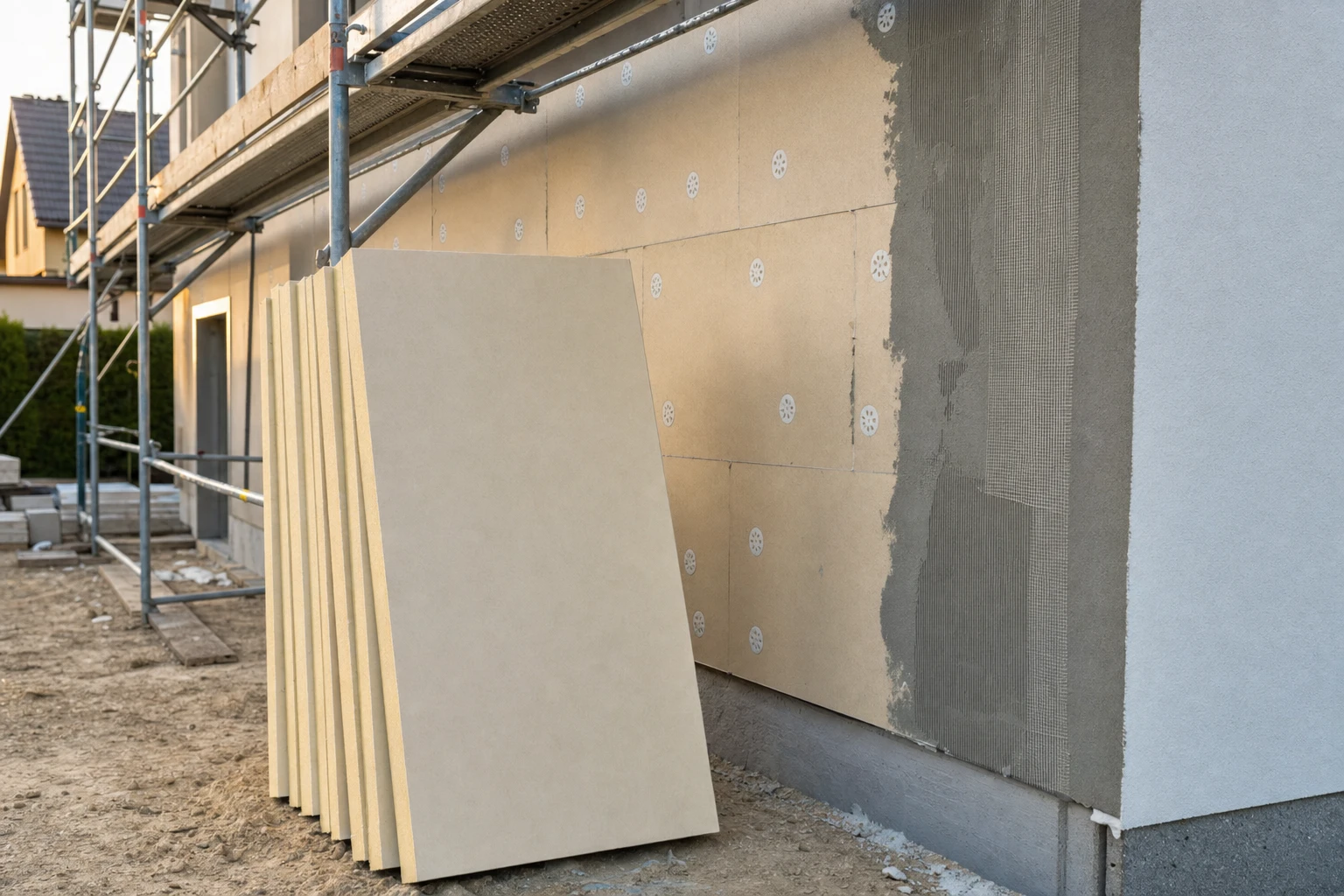
Insulating the walls can reduce energy consumption by 20–25%. For the ETICS system (thin-coat render), PIR boards with aluminium facing must not be used — the Al foil is gas-tight and blocks water vapour exchange, leading to moisture build-up in the wall. The correct solution is termPIR® ETX with glass fleece, which holds the European Technical Assessment ETA 17/0066 dedicated to ETICS applications. The system version is described in external wall ETICS — termPIR® ETX system.
4. Ground-bearing floor and foundation
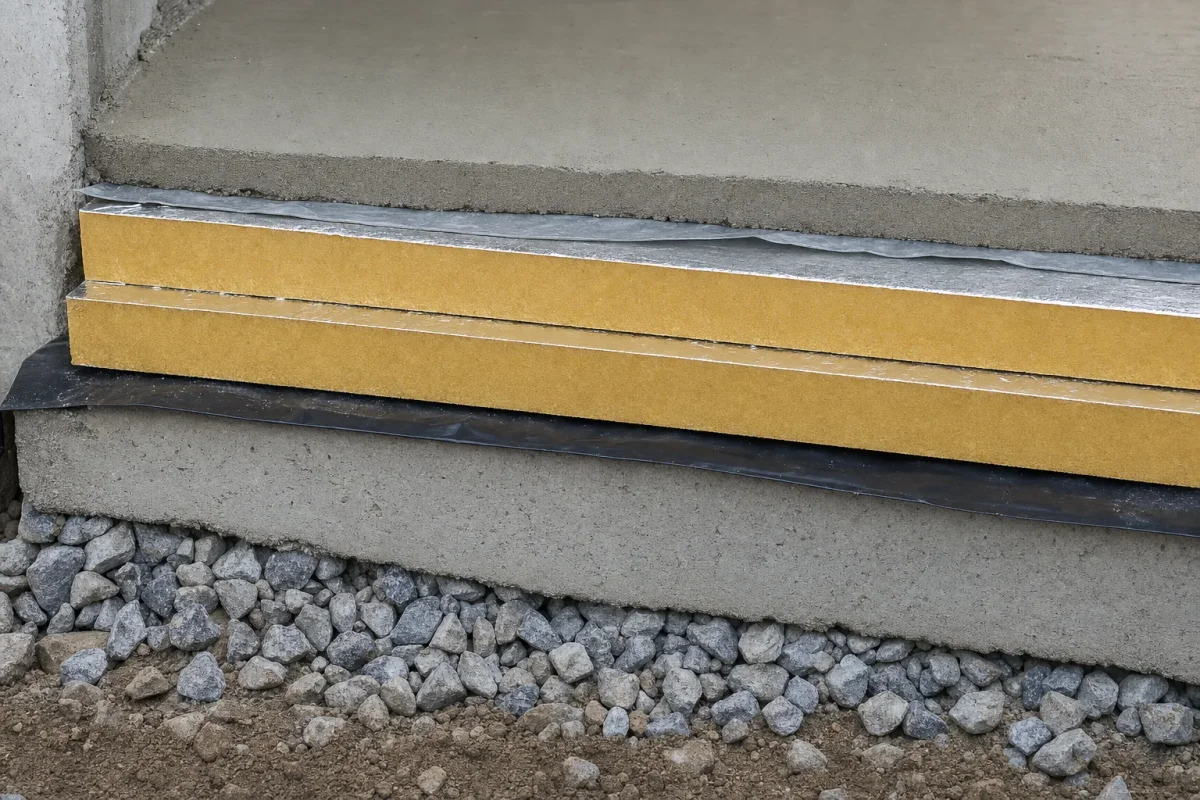
In homes without floor insulation, losses reach 10–15%. The optimum choice is termPIR® WS — a variant with enhanced moisture resistance, dedicated to ground-bearing floors and plinths. For retrofits it is worth considering the ground-bearing floor system with two-layer termPIR® AL with staggered joints.
5. Mechanical ventilation with heat recovery
Once the building is sealed, gravity ventilation stops working. A heat recovery unit with ≥ 85% efficiency cuts heating costs by 30–50% and is eligible for funding under Czyste Powietrze.
6. Heat source replacement
Only after the insulation work is completed do we size the new heat source — a heat pump, a condensing gas boiler, or a 5th-class biomass boiler with an ecodesign certificate. A smaller building = lower power demand = lower equipment cost.
Czyste Powietrze rules — deadlines and income thresholds
The programme runs from 2018 to 2029. Applications can be submitted until 31 December 2027, and contract settlements must take place by 30 June 2029. Beneficiaries include owners and co-owners of single-family residential buildings, as well as persons holding a building permit.
There are three funding tiers depending on income per household member:
- basic tier — annual beneficiary income up to PLN 135,000, grant up to PLN 66,000,
- elevated tier — monthly income up to PLN 1,894 per person (multi-person household) or PLN 2,651 (single-person), grant up to PLN 99,000,
- highest tier — income up to PLN 1,090 / PLN 1,526, grant up to PLN 135,000 plus pre-financing.
Applications are filed electronically via the gov.pl portal or on paper at the relevant Voivodeship Fund for Environmental Protection and Water Management (WFOŚiGW). Refunds apply to insulation materials, including PIR boards, provided that invoices and acceptance protocols are retained.
Contact BOKKA — we will select the insulation for your project
Are you planning an energy retrofit under Czyste Powietrze and need to specify PIR boards for the roof, wall or floor? Take advantage of a free technical consultation — contact the BOKKA team or browse the full range of termPIR® insulation boards. We deliver insulation materials throughout Poland together with the technical documentation required to settle the grant.
Frequently asked questions
Are PIR boards refunded under the Czyste Powietrze programme?
Which PIR board should I choose to insulate a pitched roof from the outside?
Can I use termPIR® AL to insulate a wall in the ETICS system?
What PIR thickness should be used in a flat roof to meet U = 0.15 W/m²K?
Under Czyste Powietrze, can I settle only the insulation work without replacing the boiler?
Related products and systems
Products
Read next
Energy Retrofit with PIR Boards and WT 2021 in Practice | BOKKA
Smog and Allergies — How PIR Thermal Upgrades Cut Emissions | BOKKA
Retrofitting Old Houses with PIR Boards — Energy Upgrade Guide