izoGRASS® PIR Boards Without Facing — Insulation Core | BOKKA
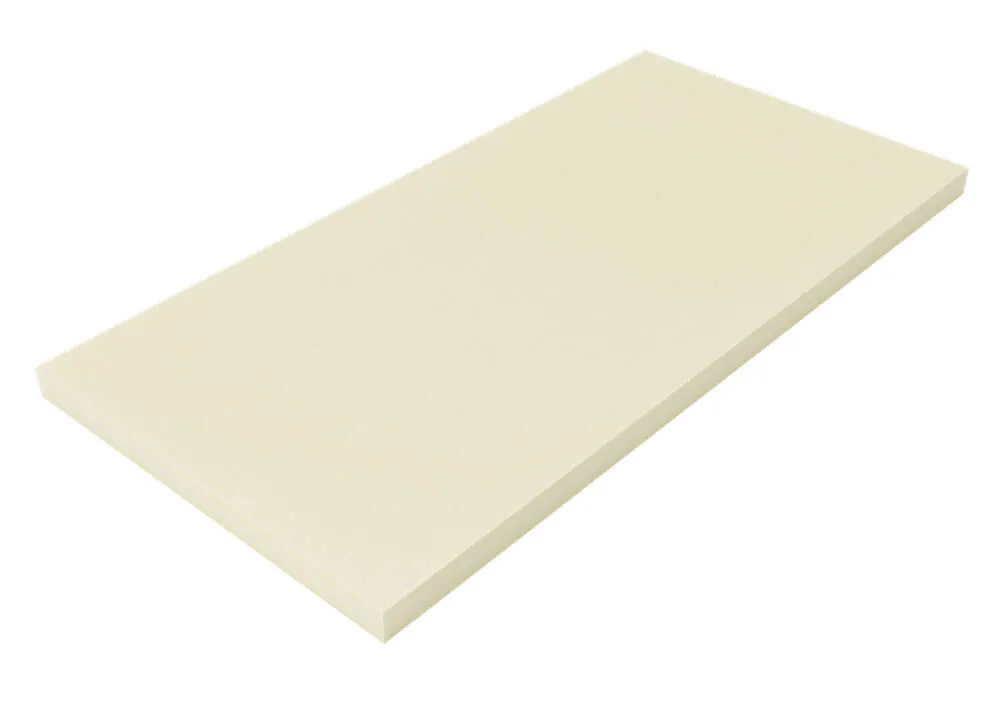
izoGRASS® PIR Boards Without Facing — Characteristics, Applications, Limitations
Modern commercial and logistics construction calls for insulation solutions that combine low lambda, dimensional stability and a rational price point. izoGRASS® PIR insulation boards are a polyisocyanurate core without a factory facing, manufactured in Wola Batorska near Kraków and intended for incorporation into building envelope systems. In this article we show where izoGRASS® boards perform best, what limitations they have (fire reaction class E) and how they fit into WT 2021 (Polish Technical Conditions 2021) requirements.
Technical parameters — what the documentation says
izoGRASS® boards without facing are produced in accordance with EN 13165 (thermal insulation products for buildings — factory-made polyisocyanurate (PIR) foam products). Key declared parameters:
| Parameter | Value | Standard |
|---|---|---|
| Thermal conductivity λD | 0.027 W/(m·K) | EN 12667 |
| Fire reaction class | E | EN 13501-1 |
| Compressive strength (at 10% deformation) | ≥ 150 kPa | EN 826 |
| Dimensional stability (70 °C / 90% RH) | ≤ 2% | EN 1604 |
| Long-term water absorption | ≤ 3% | EN 12087 |
| Service temperature range | -50 to +110 °C | — |
For comparison, faced PIR boards in a system reach significantly higher fire reaction classes — termPIR® AL with aluminium foil achieves class B-s2,d0 in the system, and termPIR® ETX with glass fleece holds ETA 17/0066 for ETICS.
Fire class E — what it means in design practice
This is an absolutely critical point when specifying izoGRASS® boards without facing. Fire reaction class E (EN 13501-1) denotes an easily ignitable material that does not meet the requirements for most fire-rated partitions. Design consequences:
- Not suitable for ETICS — external wall insulation composite systems require PIR boards of class at least E, but in practice ETICS uses PIR boards with a glass fleece facing carrying a European Technical Assessment. termPIR® ETX (λD 0.025–0.027) with ETA 17/0066 is dedicated to such applications. izoGRASS® boards without facing are not suitable for ETICS.
- Not for fire-rated partitions — any fire-separation walls, intermediate floor slabs and escape routes require materials of at least B-s1/s2,d0 (faced).
- OK as a core within a system — when the board is built into the assembly beneath the flat-roof waterproofing (the fire class of the roof covering is determined by a BROOF (t1) test of the entire system) or in the core of a sandwich panel with steel facings.
- OK as tapered insulation — izoGRASS® tapered insulation on flat roofs is always covered with a PVC/TPO/EPDM membrane or bitumen felt, which eliminates exposure of the core.
Suitable applications — where izoGRASS® without facing makes sense
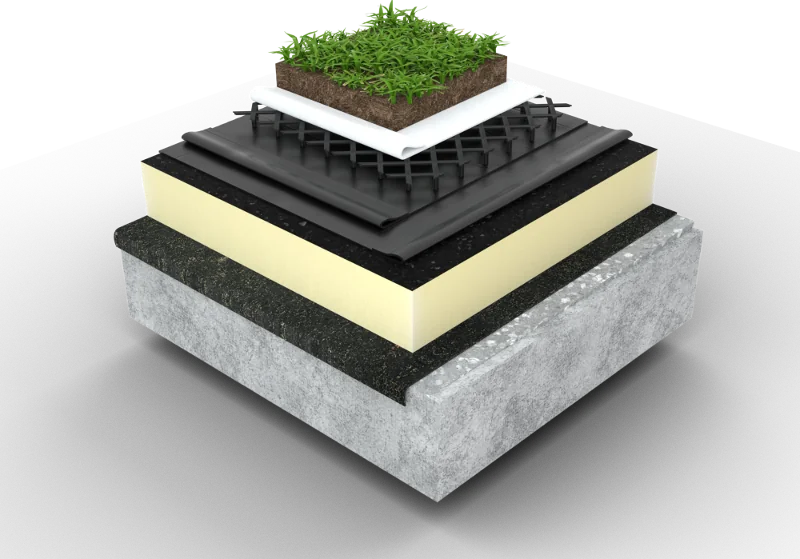
Core of roof systems beneath waterproofing
On flat roofs where low lambda and optimised thickness are required, izoGRASS® can serve as the primary layer beneath the waterproofing. For system solutions with FM Approved certification (FM 4470/4471 guidelines), however, the standard is termPIR® Pro-F with a glass fleece facing — compatible with membranes and holding the appropriate system approvals (see FM Approved roof system).
Thermal insulation beneath screed / within the floor build-up
PIR boards with compressive strength ≥ 150 kPa are suitable as a thermal insulation layer beneath a cement screed. A separating foil and an appropriate thickness of the load-bearing layer are required in accordance with PN-EN 13813.
Thermal insulation of floor slabs over unheated cellars from below (with a finishing facing)
When the slab is subsequently finished with a GK board or a fire-resistant spray, izoGRASS® can serve as the core thermal insulation layer.
For most other envelope elements — choose the faced variant
For typical applications (ETICS, external wall insulation, over-rafter pitched roofs, foundations) we recommend boards with factory facings:
- ETICS external walls → termPIR® ETX
- Pitched roofs, floor slabs, three-layer walls → termPIR® AL
- Foundations, plinths, ground-bearing floors → termPIR® WS
WT 2021 — izoGRASS® thicknesses for the required U-values
The Technical Conditions in force since 1 January 2021 introduced tightened thermal transmittance requirements for building envelopes. The table below shows the minimum izoGRASS® thicknesses (λD = 0.027) needed to reach the limit values (excluding thermal bridges and facings):
| Element | Umax WT 2021 | Min. izoGRASS® thickness |
|---|---|---|
| Roof / flat roof | 0.15 W/m²K | ~180 mm |
| External wall | 0.20 W/m²K | ~135 mm |
| Floor slab over cellar / garage | 0.25 W/m²K | ~110 mm |
| Ground-bearing floor | 0.30 W/m²K | ~90 mm |
The values are indicative — the final thickness results from a full calculation of the envelope’s thermal resistance, including all layers and thermal bridges (PN-EN ISO 6946).
Dimensions, thicknesses, availability
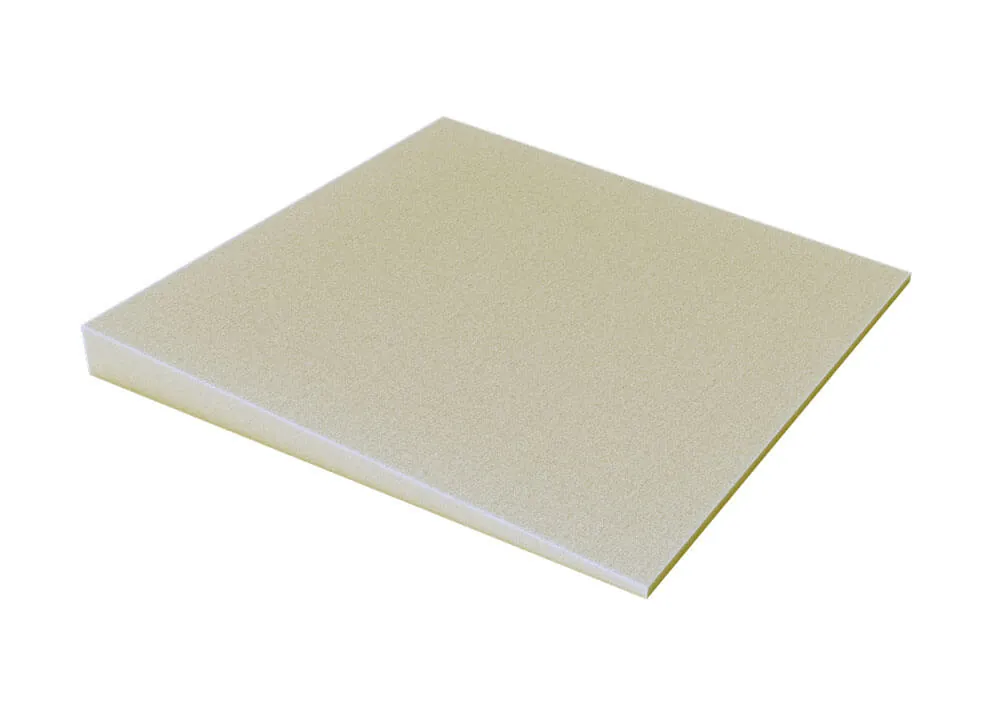
izoGRASS® PIR insulation boards are produced at the Wola Batorska plant in standard formats of 1200×600 mm and 1200×2400 mm, in thicknesses ranging from 30 to 200 mm. Edge profiling (flat FIT, stepped LAP, tongue-and-groove TAG) is available to project order. For flat roofs a separate product range is offered — izoGRASS® tapered insulation — designed individually for a given roof layout (recommended slopes of 1.5–3%).
Installation accessories
For PIR boards without a factory steel facing, system metal flashings are not used. Instead we use:
- Reinforced aluminium tape to seal joints (with AL boards).
- Polyester (PES) gaskets at butt joints.
- Low-expansion PUR foam to fill gaps.
- Telescopic fasteners with plates for mechanical fixing to a concrete or trapezoidal steel sheet substrate (DIN 18234).
Frequently asked questions
Can izoGRASS® boards without facing be used in ETICS?
What is the difference between izoGRASS® and termPIR® AL?
Is izoGRASS® suitable for flat roofs?
What izoGRASS® thickness should be selected for a flat roof per WT 2021?
Can izoGRASS® PIR boards be cut on site?
Related products and systems
Products
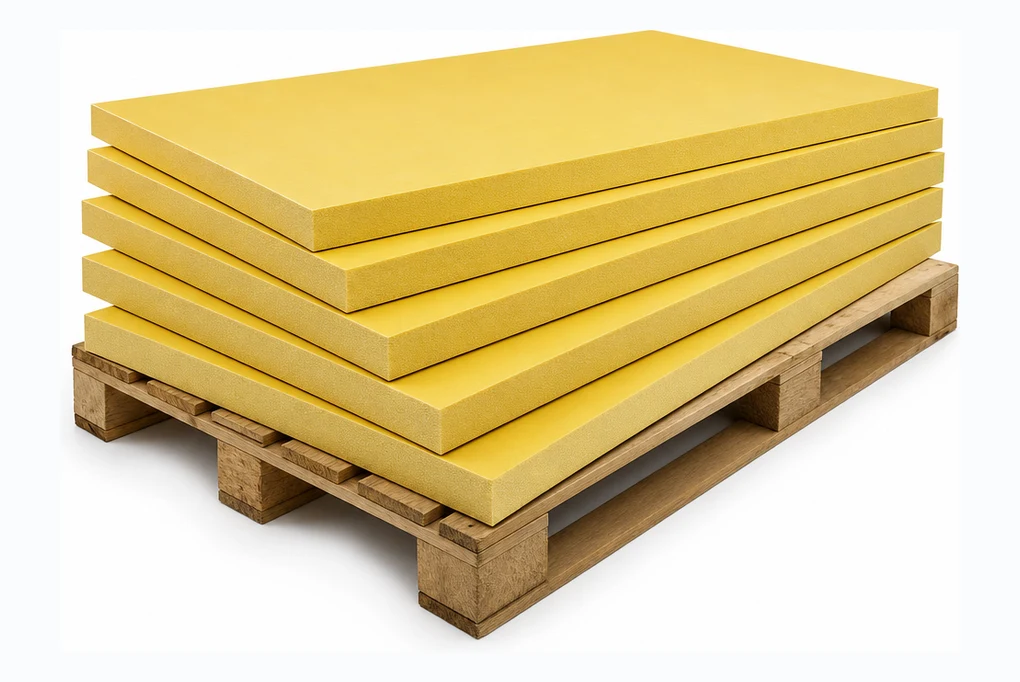
izoGRASS® Insulation Panels
Bare PIR core for non-standard applications
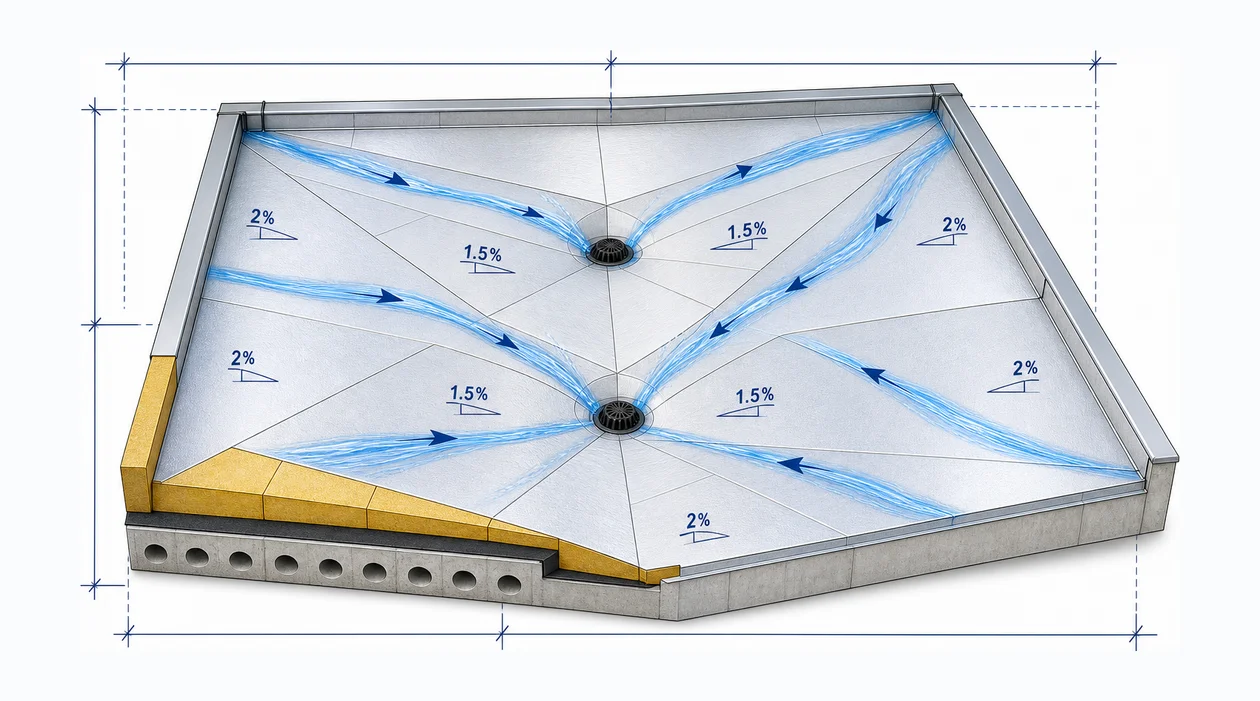
izoGRASS® Tapered Wedges
PIR tapered wedges for flat roof drainage falls
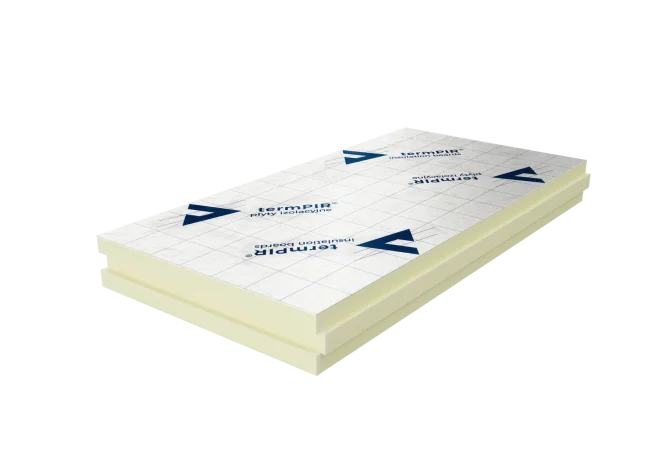
termPIR® AL
Versatile PIR board with gas-tight aluminium facing
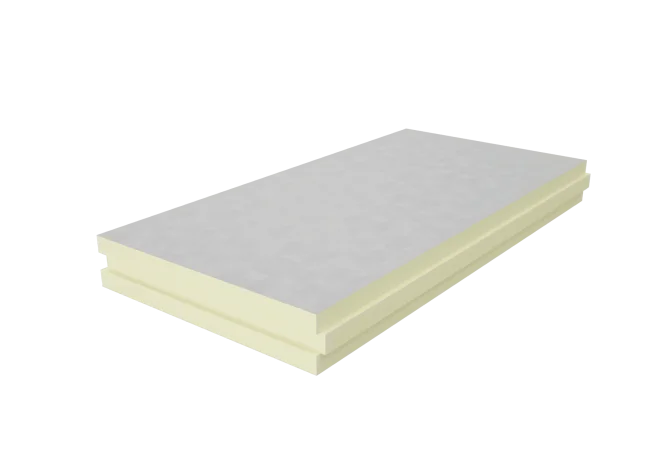
termPIR® ETX
PIR board with glass-fibre tissue for ETICS system
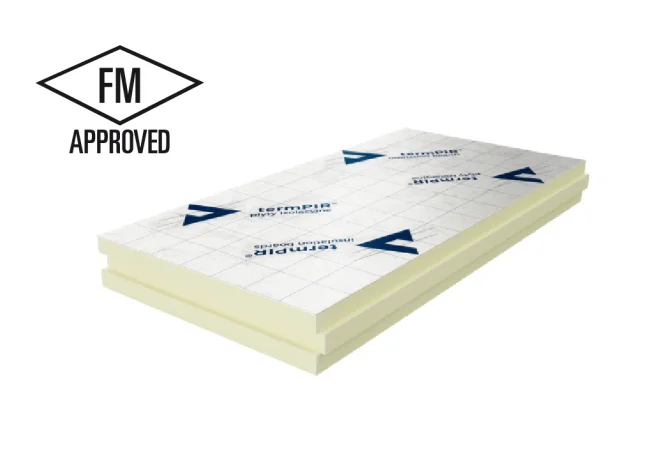
termPIR® Pro-F
PIR flat roof board with FM Approval
Read next
PIR Boards for Flat Roofs — Insulation, U-value, Systems | BOKKA
Roof Thermal Insulation — Why PIR Boards Set the WT 2021 Standard
PIR Tapered Insulation izoGRASS® — Flat Roof Drainage & Insulation