PIR Tapered Insulation izoGRASS® — Flat Roof Drainage & Insulation
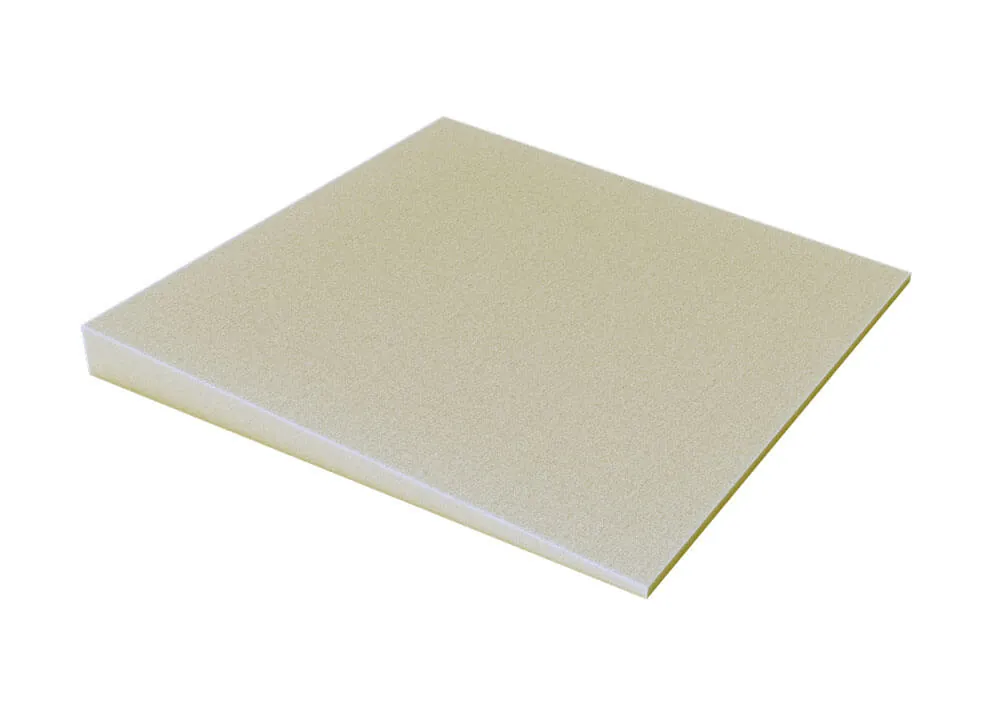
izoGRASS® PIR tapered insulation — flat roof drainage and thermal insulation in a single layer
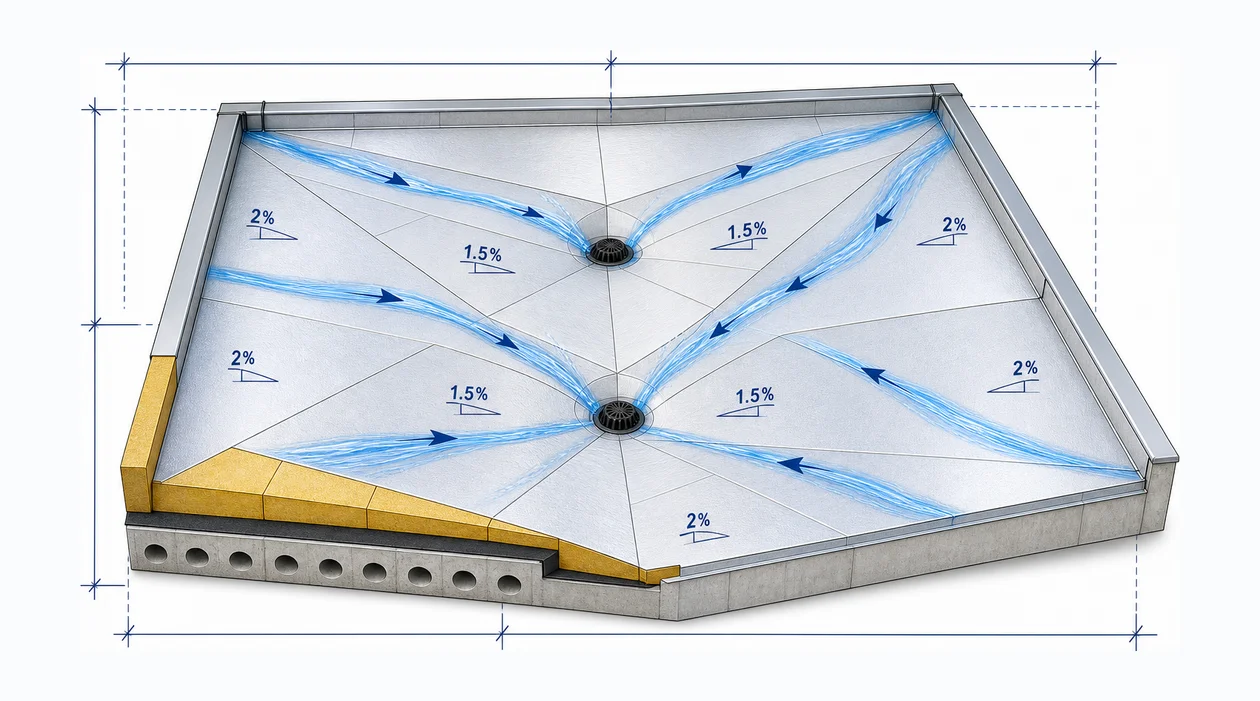
Standing water on a flat roof is one of the most common causes of waterproofing failure and premature roof covering degradation. Polish execution guidelines recommend a minimum slope of 1.5–2% towards roof drains and 1% in the drainage valleys themselves. Forming these slopes in concrete is labour-intensive, loads the structure and provides no thermal layer. izoGRASS® PIR tapered insulation solves both tasks in a single installation operation — it shapes the drainage geometry and simultaneously adds a full-value thermal insulation layer with low λD.
What izoGRASS® tapered insulation is and how it works
izoGRASS® tapered insulation consists of insulation elements made from rigid polyisocyanurate (PIR) foam, produced in Wola Batorska by Gór-Stal. The boards are CNC-milled to a defined slope (typically 1.5%, 2% or 3%) and supplied as a complete layout — with an installation plan describing the sequence and position of each element. Three geometric types are standard:
- Base tapers (type A) — parallel slopes towards the drain or edge
- Counter-slope tapers (type B) — reverse slopes in the valleys between drains
- Corner and valley tapers — shaping drain sumps and parapet edges
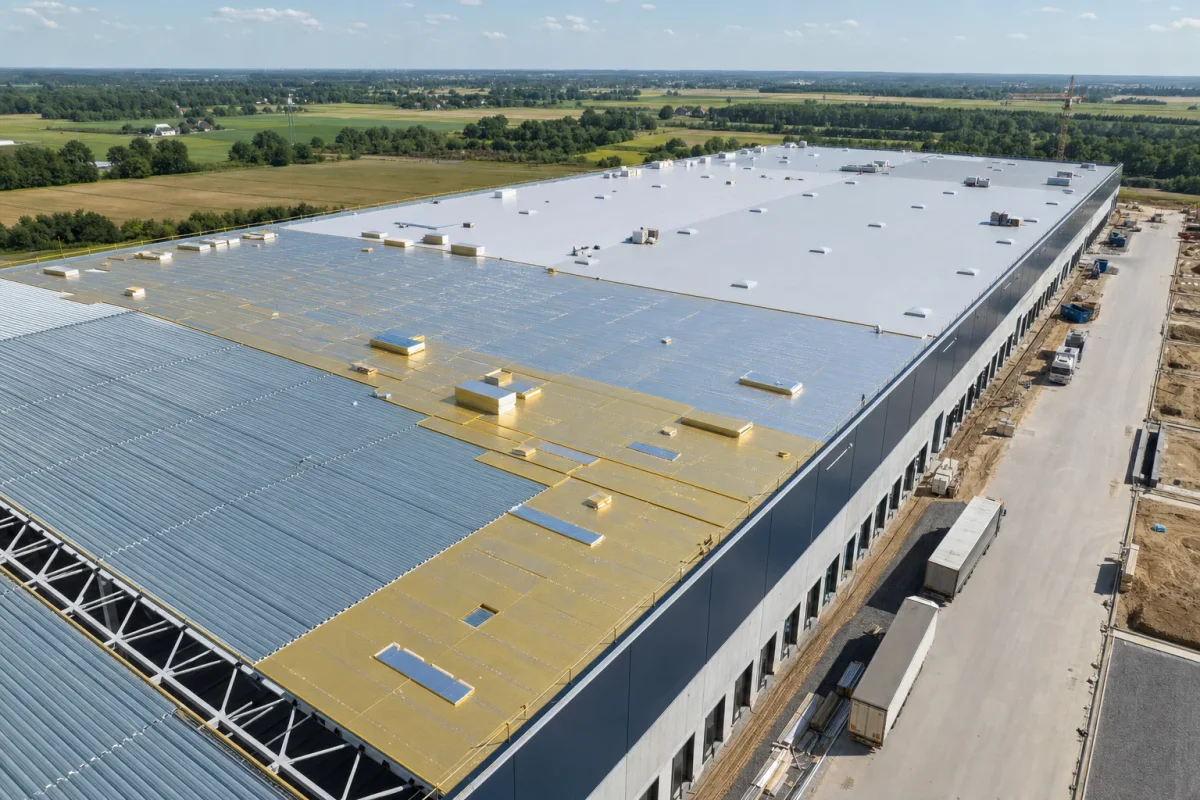
Thanks to CNC milling, the taper layout is repeatable and fits any roof geometry — from a rectangular warehouse to complex retail-building roofs with numerous skylights and drains.
Technical parameters — what determines quality
The key thermal parameter of the PIR core is λD = 0.027 W/(m·K). At an average taper thickness of 100 mm, the thermal resistance is R ≈ 3.70 m²K/W in the slope layer alone — a significant contribution to achieving the U ≤ 0.15 W/m²K required by WT 2021 (Polish Technical Conditions 2021) for roofs.
| Average taper thickness | R [m²K/W] | Contribution to roof U |
|---|---|---|
| 40 mm | 1.48 | levelling layer |
| 60 mm | 2.22 | top-up |
| 80 mm | 2.96 | partial insulation |
| 100 mm | 3.70 | significant share |
| 120 mm | 4.44 | main thermal layer |
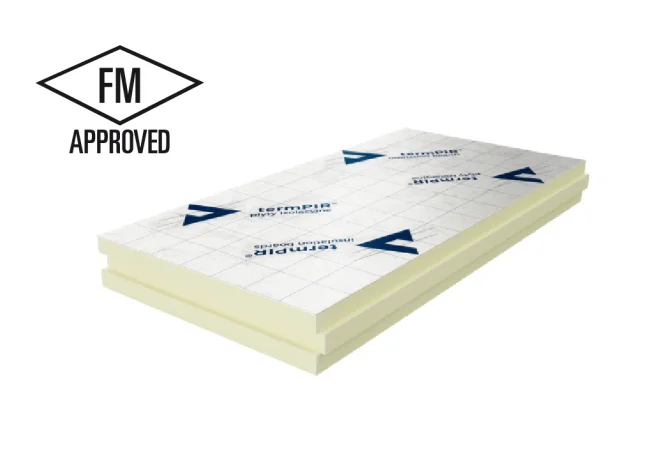
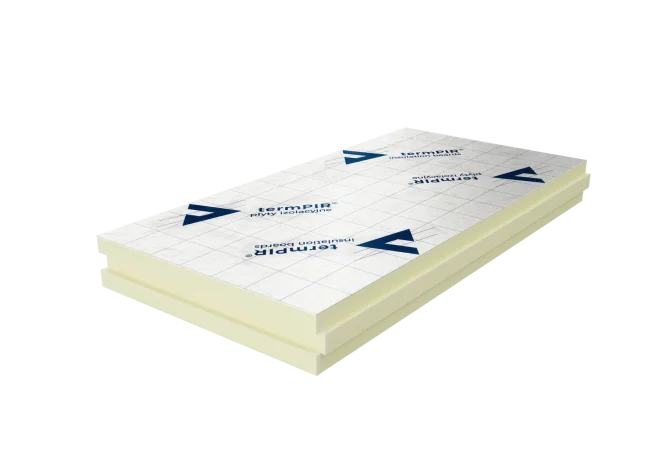
izoGRASS® tapers are most often installed on a base insulation layer — e.g. on termPIR® Pro-F (glass fleece, FM Approved, dedicated for membranes) or termPIR® AL (gas-tight aluminium facing). The two-layer arrangement provides:
- Full compliance with WT 2021 for roofs (U ≤ 0.15 W/m²K)
- Elimination of thermal bridges at joints
- A stable substrate for waterproofing (heat-welded bitumen membrane or PVC/TPO/EPDM membrane)
Important fire-performance limitation
izoGRASS® boards without facing have fire reaction class E per EN 13501-1. For this reason they must always be built in beneath waterproofing and cannot appear as an exposed layer. In practice this is no real limitation — tapered insulation by definition sits below the roof’s finishing layer. For buildings requiring BROOF (t1) classification, the assembly is designed as a complete system (tapers + main board + a membrane with appropriate certification).
Slope layout design — what not to overlook
A professional tapered-insulation design involves far more than selecting a thickness. A complete project package includes:
- Layout plan with element numbering — every board labelled, ready to install “in order”
- Water balance — verification of drain capacity for rainfall intensity per PN-EN 12056-3
- Counter-slope geometry — elimination of water ponding in valleys between drains
- Details at parapets, expansion joints and service penetrations
- Specification of mechanical fastening or bonding — depending on substrate (trapezoidal sheet, reinforced concrete, existing bitumen)
A well-designed taper layout eliminates the risk of “dead water” — puddles persisting after rainfall, which are a primary cause of membrane ageing and roof algae growth.
Design applications in practice
PIR tapered insulation performs well in four main scenarios:
- New flat roofs — when the structure (e.g. trapezoidal sheet) is horizontal, the tapers form the entire slope. See: flat roof system on trapezoidal sheet.
- Reinforced concrete roof slabs — when avoiding costly concrete screeds. See: reinforced concrete roof slab with termPIR®.
- Renovations and insulation overlays — when an existing roof has insufficient slope or local ponding. Tapers are laid over the cleaned existing waterproofing.
- FM Approved roofs — for buildings insured to FM Global standards. See: roof with termPIR® Pro-F FM Approved.
Logistics and availability
Taper production takes place in the Polish plant in Wola Batorska, shortening lead time compared with imported orders. Standard lead time for a designed layout is 2–4 weeks depending on project scale. Boards are packed in installation order, which speeds up rooftop work and reduces sequencing errors.
For smaller projects, standard taper packages (1200×1200 mm, slope 1.5% or 2%) are also available — without bespoke design, for on-site fitting.
Frequently asked questions
What minimum slope should a flat roof insulated with PIR tapers have?
Can izoGRASS® PIR tapers be installed directly on trapezoidal sheeting?
Are izoGRASS® tapers suitable for ETICS or wall insulation?
How thick should the roof insulation layer be to meet WT 2021?
Can tapered insulation be used on an existing bitumen roof?
Related products and systems
Products

Read next
PIR Boards for Flat Roofs — Insulation, U-value, Systems | BOKKA
Roof Thermal Insulation — Why PIR Boards Set the WT 2021 Standard
izoGRASS® PIR Boards Without Facing — Insulation Core | BOKKA