Terrace Insulation with PIR Boards — Layers, U-value, λD | BOKKA
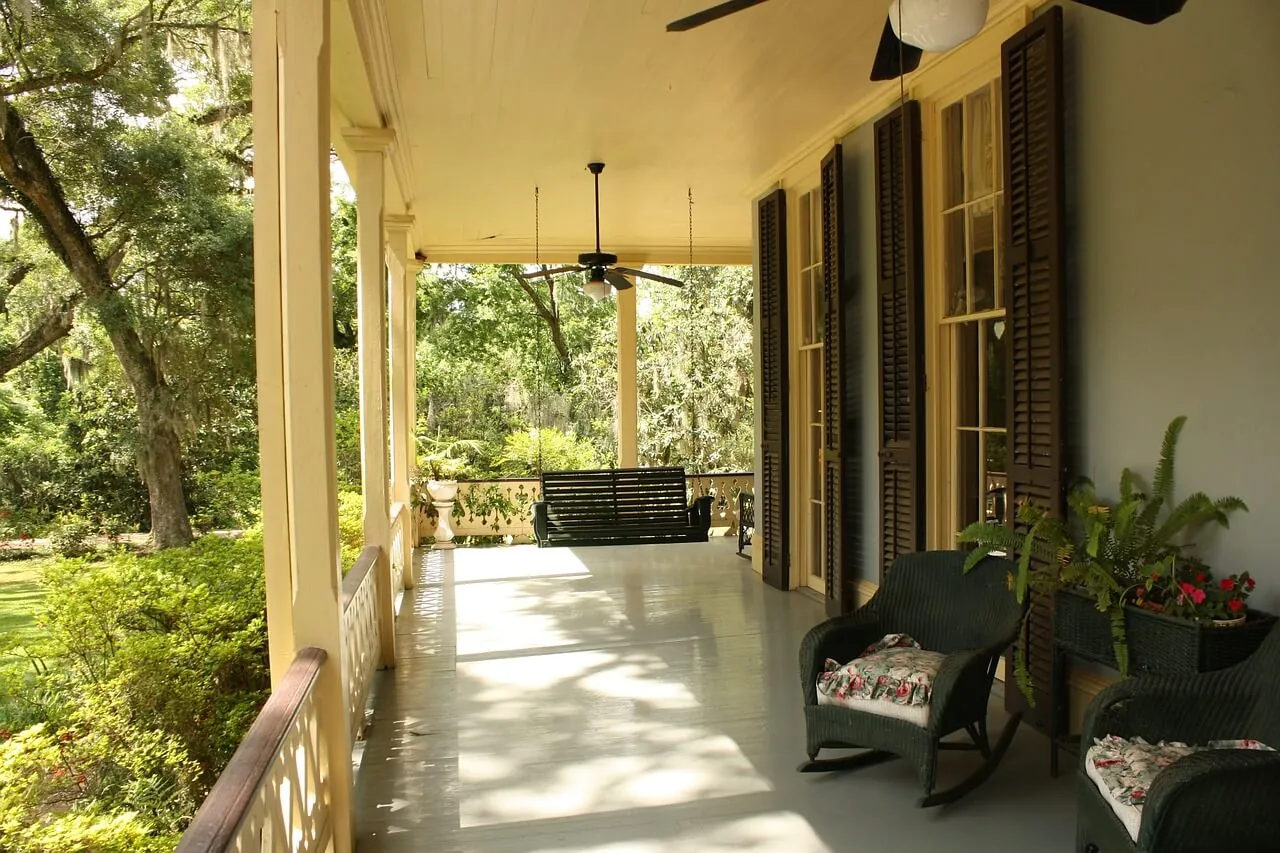
Insulating a terrace above a heated room — cross-section, parameters, materials
A terrace built above a heated room is one of the most demanding building envelopes in the entire structure. It combines the functions of a roof (waterproofing, falls, BROOF fire performance) with those of a usable floor (point loads, abrasion resistance, frost resistance of the finish). On top of that, it must meet the stringent requirement of U ≤ 0.15 W/m²K under WT 2021 (Polish Technical Conditions 2021) — within a limited build-up height dictated by the balcony door threshold level. The key is choosing a rigid, non-absorbent thermal insulation with low λD and precise design of all functional layers.
Regulatory requirements — WT 2021 for a terrace above a heated room
Under the Polish Technical Conditions in force since 1 January 2021, a terrace above a heated room is treated like a slab beneath an unheated attic or a roof — and is subject to the strictest criterion Umax = 0.15 W/m²K. This requirement forces the use of insulation with the lowest available lambda, because the available depth between the structural slab and the finished surface rarely exceeds 20–25 cm — and that space must also accommodate the fall, the screed, the waterproofing and the finish layer.
Traditional materials (EPS 100 polystyrene, laminated mineral wool) require a 22–28 cm layer in this scenario. PIR insulation boards with λD 0.019–0.022 W/(m·K) deliver the same thermal performance at a thickness of just 12–14 cm, which resolves the geometry problem at the threshold detail.
Terrace cross-section layers — from structural slab to finish
The designed cross-section of a terrace above a heated room should include (from the bottom up):
- Structural slab (reinforced concrete) profiled with a fall of min. 1.5–2% towards the drainage outlets.
- Vapour barrier — bituminous or PE foil with sd ≥ 100 m, bonded/torched to the substrate.
- PIR thermal insulation — the load-bearing layer of the system, installed in two layers with staggered joints.
- Primary waterproofing — two-layer torch-on bitumen membrane or EPDM/PVC/TPO membrane.
- Separation/slip layer — geotextile or PE foil.
- Screed — mesh-reinforced cementitious screed, with movement joints dividing fields of ~4×4 m.
- Flexible adhesive C2TE-S1 and sub-tile waterproofing (sealing mat with tapes at outlets, corners and threshold).
- Frost-resistant finish — rectified porcelain stoneware, natural stone, or decking boards on adjustable pedestals.
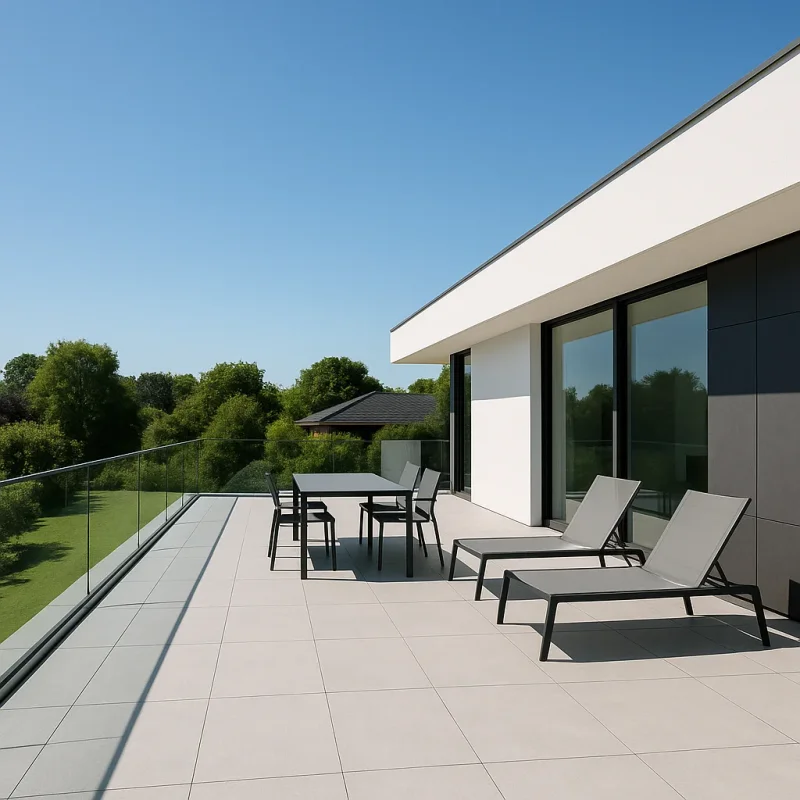
An alternative to the bonded build-up is a ventilated terrace on adjustable pedestals — in this case the waterproofing also serves as the usable layer, and porcelain slabs rest loosely on the supports. This solution eliminates the risk of screed saturation and simplifies any future servicing.
PIR board selection for terraces — λD, thickness, facings
For terraces we recommend two products from the BOKKA portfolio:
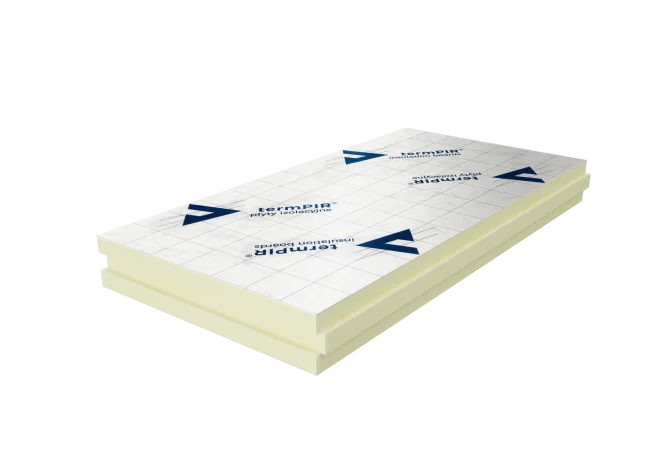
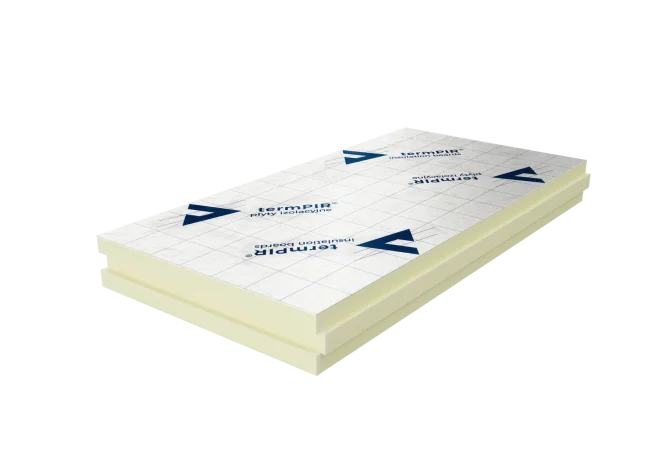
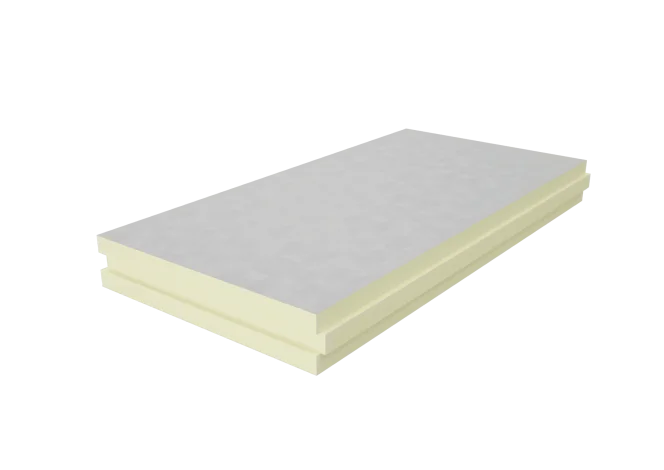
- termPIR® MAX 19 AL — premium λD 0.019 W/(m·K), gas-tight aluminium facing, for projects with the most restrictive depth constraints.
- termPIR® AL — standard λD 0.022 W/(m·K), a universal Al-faced board offering the best economic value.
For the plinth and threshold zone, exposed to intense moisture and a thermal bridge at the edge of the structural slab, it is worth using termPIR® WS — a moisture-resistant variant dedicated to foundations, plinths and ground-bearing floors.
Table — PIR thickness vs terrace U-value (with a 20 cm RC slab)
| PIR thickness | termPIR® AL (λD 0.022) | termPIR® MAX 19 (λD 0.019) |
|---|---|---|
| 100 mm | U ≈ 0.21 W/m²K | U ≈ 0.18 W/m²K |
| 120 mm | U ≈ 0.18 W/m²K | U ≈ 0.15 W/m²K ✓ |
| 140 mm | U ≈ 0.15 W/m²K ✓ | U ≈ 0.13 W/m²K ✓ |
| 160 mm | U ≈ 0.13 W/m²K | U ≈ 0.11 W/m²K |
| 180 mm | U ≈ 0.12 W/m²K | U ≈ 0.10 W/m²K |
✓ = meets WT 2021 (U ≤ 0.15 W/m²K). Indicative values — design according to EN ISO 6946 taking into account all cross-section layers.
PIR boards are manufactured in accordance with EN 13165 in thicknesses of 20–250 mm, in modular dimensions of 1200×600 mm and 1200×2400 mm. Standard edge profiles are FIT (flat, for multi-layer build-ups with staggered joints) and LAP (stepped, for single-layer applications).
Construction details — where errors most often occur
Balcony door threshold — the height difference between the internal floor and the terrace finish should, per EN 12057, be min. 15 cm; however, for usability reasons (accessibility) it is often reduced to 2–5 cm. This then requires additional safeguards: a drainage channel at the threshold, an expanding seal tape, and double waterproofing wrapped onto the frame.
Terrace outlets — use two-level outlets (at the level of the primary waterproofing and at the sub-tile level), with collars bonded/torched to the membrane. Direct the falls of min. 1.5% towards the outlets.
Perimeter flashings — parapets and walls adjacent to the terrace require the waterproofing to be carried up at least 15 cm above the finished surface, terminated with a clamping profile or a flashing strip.
Movement joints — the screed must be separated from the walls (PE edge strip min. 8 mm) and divided into fields of ~4×4 m (smaller still if underfloor heating is used). No movement joints = cracks in the screed and finish within 1–2 seasons.
A detailed layer build-up with CAD drawing is available in the system Terrace above a heated room — termPIR® MAX 19.
Fire reaction class and mechanical resistance
termPIR® boards with an aluminium facing achieve, in-system, a fire reaction class of B-s2,d0 to EN 13501-1. Compressive strength at 10% deformation is ≥ 120 kPa (CS(10\Y)120 per EN 826) — many times higher than the imposed loads on a terrace (qk = 2.5–4.0 kN/m² per EN 1991-1-1). Creep under long-term loading is negligible, which eliminates the risk of finish cracking after years of service.
Short-term water absorption WL(T) ≤ 1.5% and freeze/thaw cycle resistance mean that PIR retains its thermal performance even when the finishing waterproofing leaks — which, in real-world terraces in service for 15+ years, is highly significant.
Frequently asked questions
Can PIR boards be used to insulate a terrace above an unheated room?
Is a vapour barrier required beneath the PIR layer?
How thick a PIR layer is needed to meet WT 2021?
Are PIR boards suitable for a ventilated terrace on pedestals?
What is the difference between termPIR® AL and termPIR® WS for terraces?
Related products and systems
Products
Building systems
Read next

Energy Retrofit with PIR Boards and WT 2021 in Practice | BOKKA
Smog and Allergies — How PIR Thermal Upgrades Cut Emissions | BOKKA
Retrofitting Old Houses with PIR Boards — Energy Upgrade Guide