Smog in Poland & Thermal Upgrades — the Role of PIR Boards | BOKKA
Smog in Poland — why thermal upgrades have become a public-health instrument
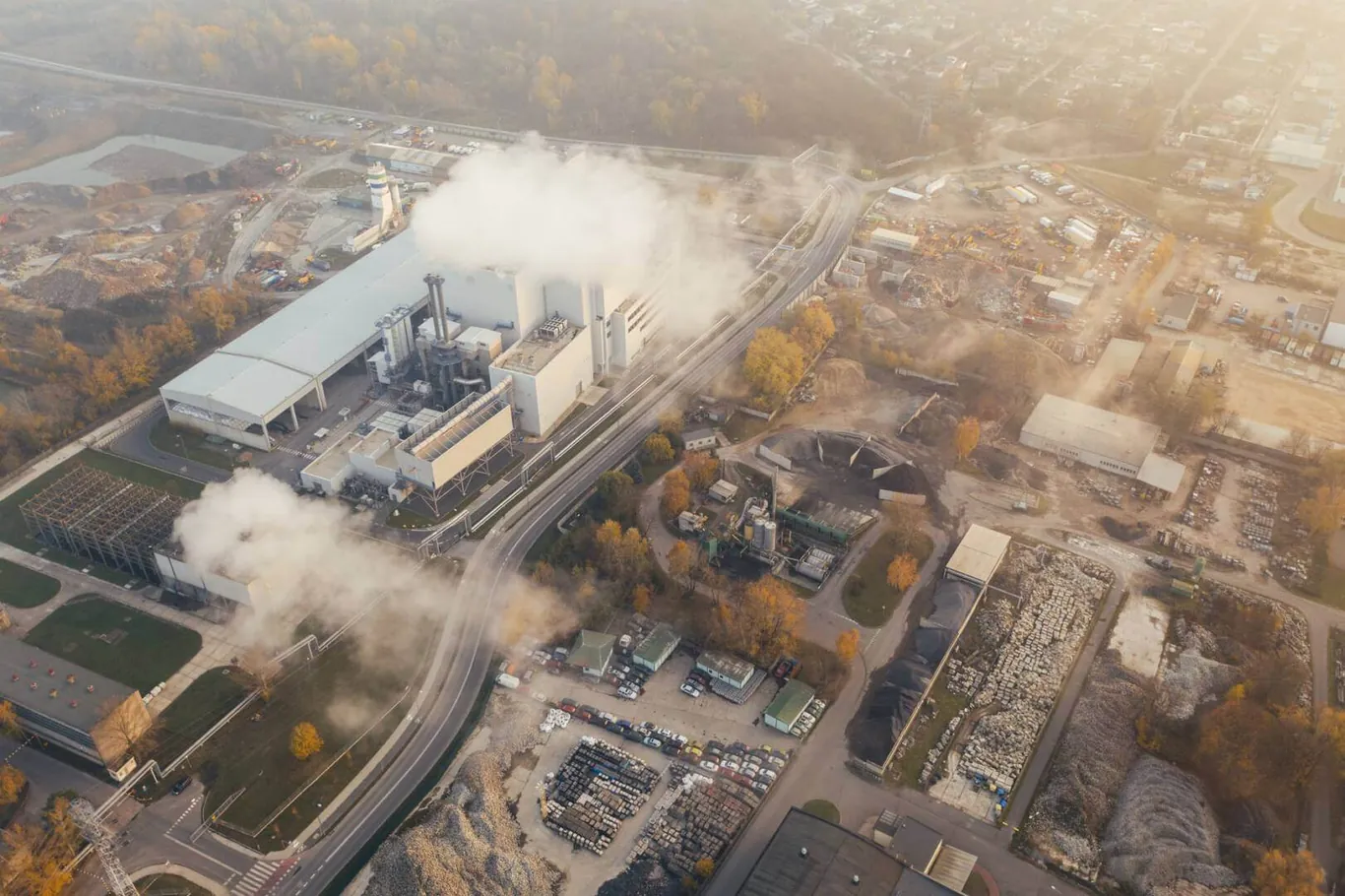
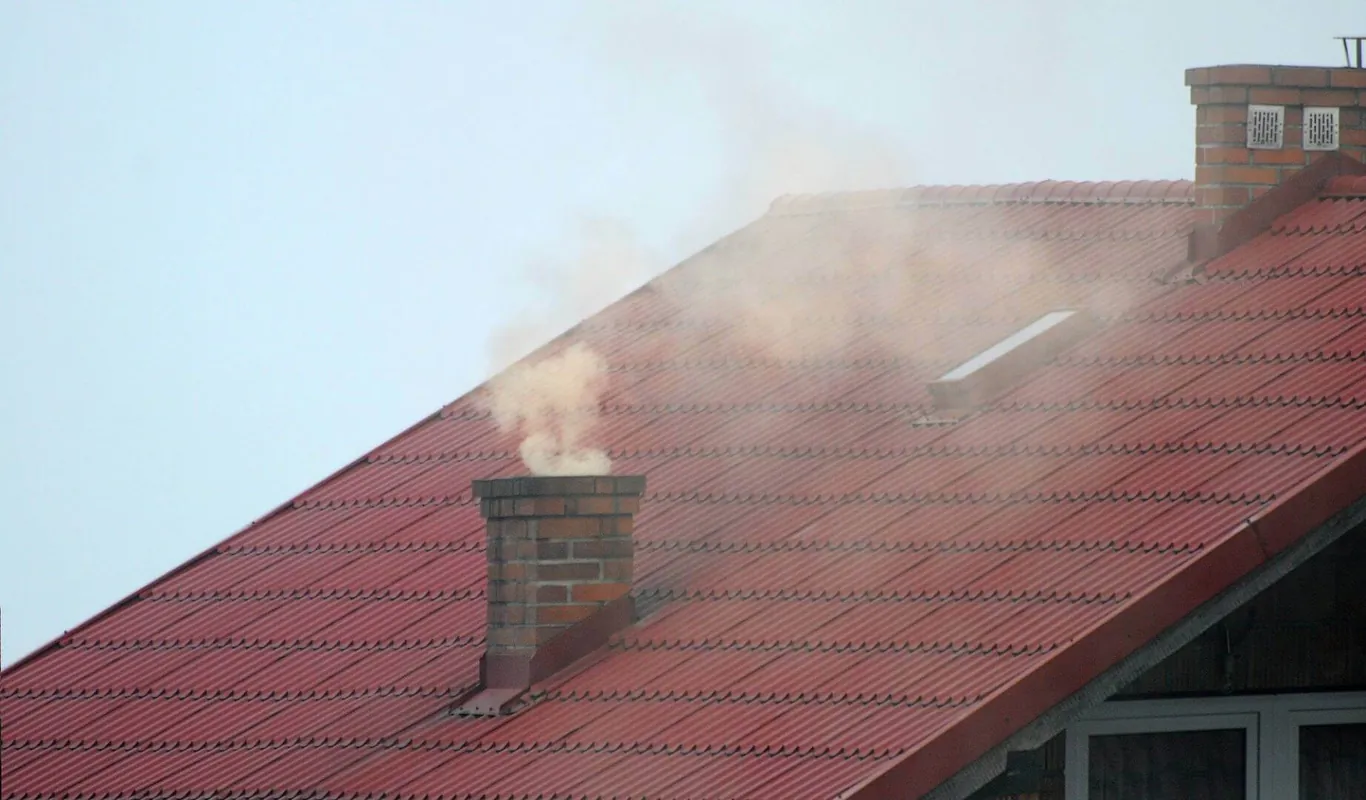
Every heating season brings the same headlines in Poland: exceeded particulate-matter limits, smog alerts, record concentrations of benzo(a)pyrene. The Polski Alarm Smogowy (Polish Smog Alert) vividly compares breathing the air in some cities to smoking a dozen or so cigarettes a day. Most of that emission comes from so-called low-stack emissions — the burning of low-quality fuels in inefficient heat sources, in buildings with poor thermal insulation. An effective energy retrofit using modern materials such as PIR insulation boards with λD = 0.022 W/(m·K) is no longer just a question of heating bills — it is a real tool for cutting pollution.
The scale of the problem in figures — PM2.5, PM10 and benzo(a)pyrene
The key air-quality indicators tracked by the Polish Smog Alert, the WHO and the European Environment Agency are particulate matter PM10 and PM2.5 as well as benzo(a)pyrene (B(a)P) — a strongly carcinogenic compound formed during incomplete combustion of solid fuels. The annual limit for B(a)P is 1 ng/m³, while the average across Poland reaches about 22.7 ng/m³ — more than a twenty-fold exceedance.
| Pollutant | EU/WHO annual limit | Typical levels in Poland | Main source |
|---|---|---|---|
| Benzo(a)pyrene | 1 ng/m³ | 5–22 ng/m³ | Coal and wood combustion in stoves |
| PM2.5 | 5 µg/m³ (WHO) | 20–35 µg/m³ | Low-stack emissions, transport |
| PM10 | 15 µg/m³ (WHO) | 30–55 µg/m³ | Low-stack emissions, secondary dust |
The dubious leaders of the ranking remain southern Polish towns — Nowy Targ, Sucha Beskidzka, Rybnik, Nowy Sącz — where B(a)P concentrations reach 1,500–1,800% of the limit. The WHO estimates that roughly 47,000 people in Poland die prematurely each year from the effects of air pollution, and close to 400,000 across Europe.
Why thermal upgrades cut emissions at source
The logic is straightforward: the lower the heat losses through a building’s envelope, the lower the demand for heating energy — so less fuel is burned and less is emitted. In a typical uninsulated single-family house from the 1970s and 1980s, heat losses break down as follows:
- external walls: 25–35%
- roof / top-floor ceiling slab: 15–25%
- windows and doors: 15–20%
- ventilation: 15–25%
- ground-bearing floor / foundation: 5–15%
Swapping the heat source without simultaneously insulating the envelope is a half-measure — a heat pump or condensing boiler in an uninsulated building consumes many times more energy than in a property meeting WT 2021 (Polish Technical Conditions 2021).
WT 2021 requirements and the role of PIR boards
The Technical Conditions in force since 1 January 2021 tightened the U-value requirements for building envelopes:
| Element | U max per WT 2021 |
|---|---|
| Roof / flat roof | 0.15 W/m²K |
| External wall | 0.20 W/m²K |
| Floor over basement / garage | 0.25 W/m²K |
| Ground-bearing floor | 0.30 W/m²K |
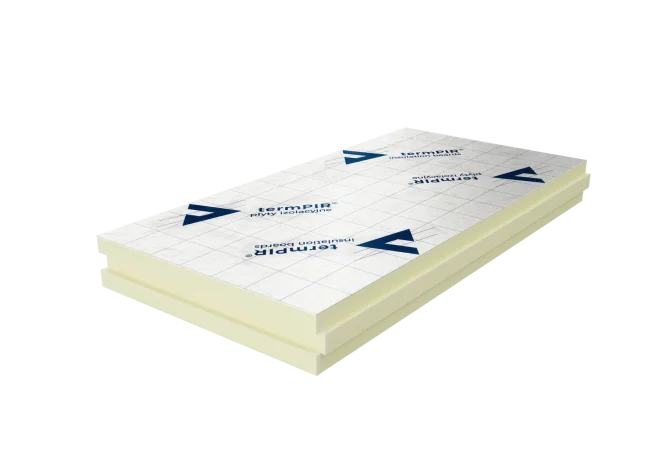
PIR boards (polyisocyanurate) per EN 13165 are today one of the most efficient thermal-insulation materials on the market. A low thermal conductivity makes it possible to meet the required U-values at a much smaller insulation thickness than with EPS or mineral wool.
Thicknesses required for U = 0.20 W/m²K (wall)
| Material | λD [W/(m·K)] | Required thickness |
|---|---|---|
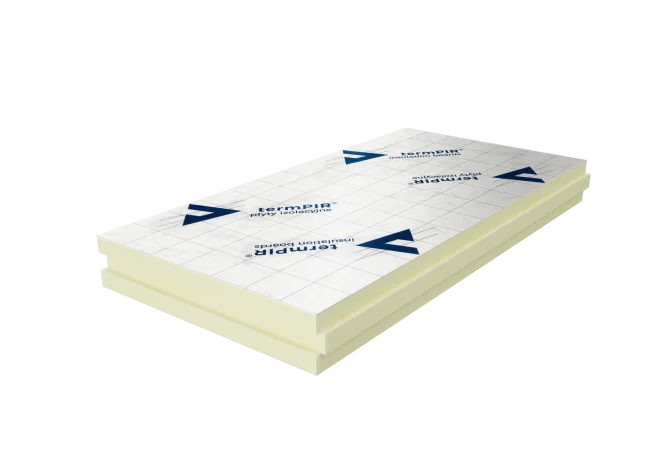
| termPIR® MAX 19 AL | 0.019 | ~95 mm |
| termPIR® AL | 0.022 | ~110 mm |
| termPIR® ETX (ETICS) | 0.025 | ~125 mm |
| EPS 031 | 0.031 | ~155 mm |
| Mineral wool | 0.036 | ~180 mm |
In practice this means less impact on the building’s massing, narrower window reveals and a lower structural load — which matters particularly in retrofits of existing buildings.
Matching the product to the envelope element — a critical question
A common mistake repeated in older guides is to suggest the same board for every element. In reality each technology has its dedicated variant:
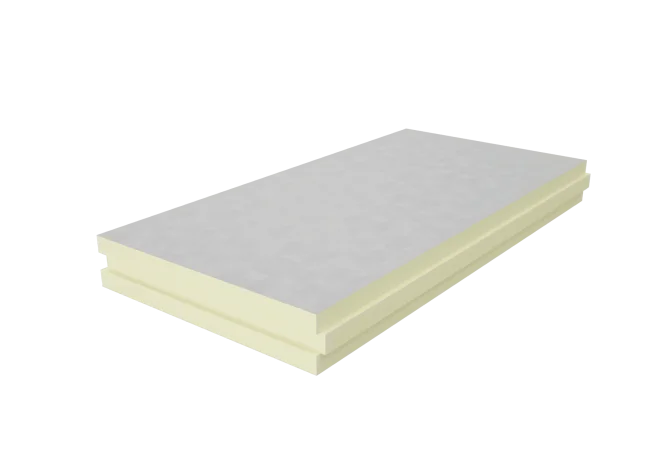
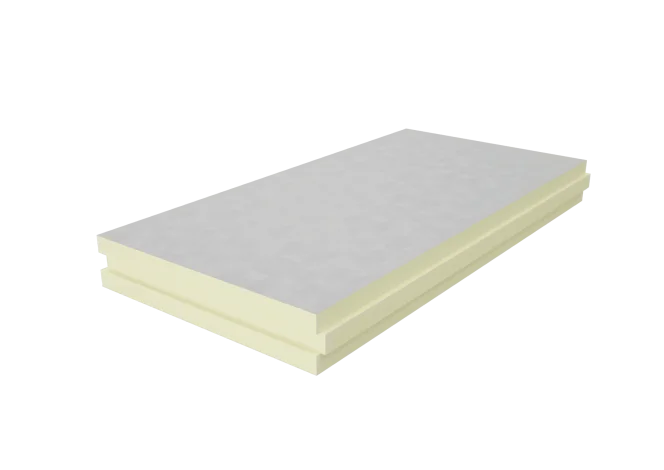
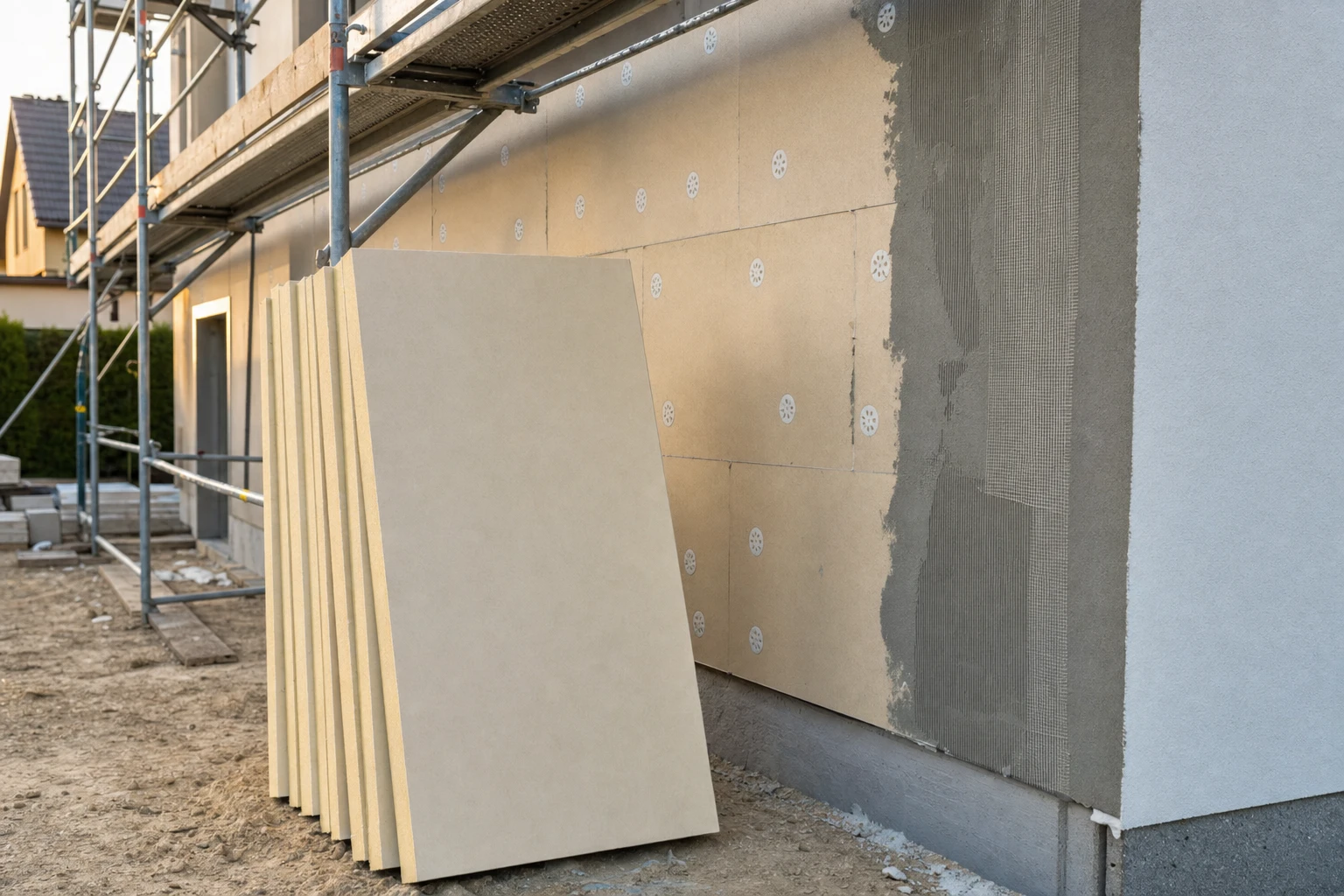
- External walls in an ETICS system (thin-coat render) — require a vapour-permeable board. The dedicated solution is termPIR® ETX with a glass fleece facing, covered by European Technical Assessment ETA 17/0066. Boards with a gas-tight aluminium facing are not suitable for ETICS.
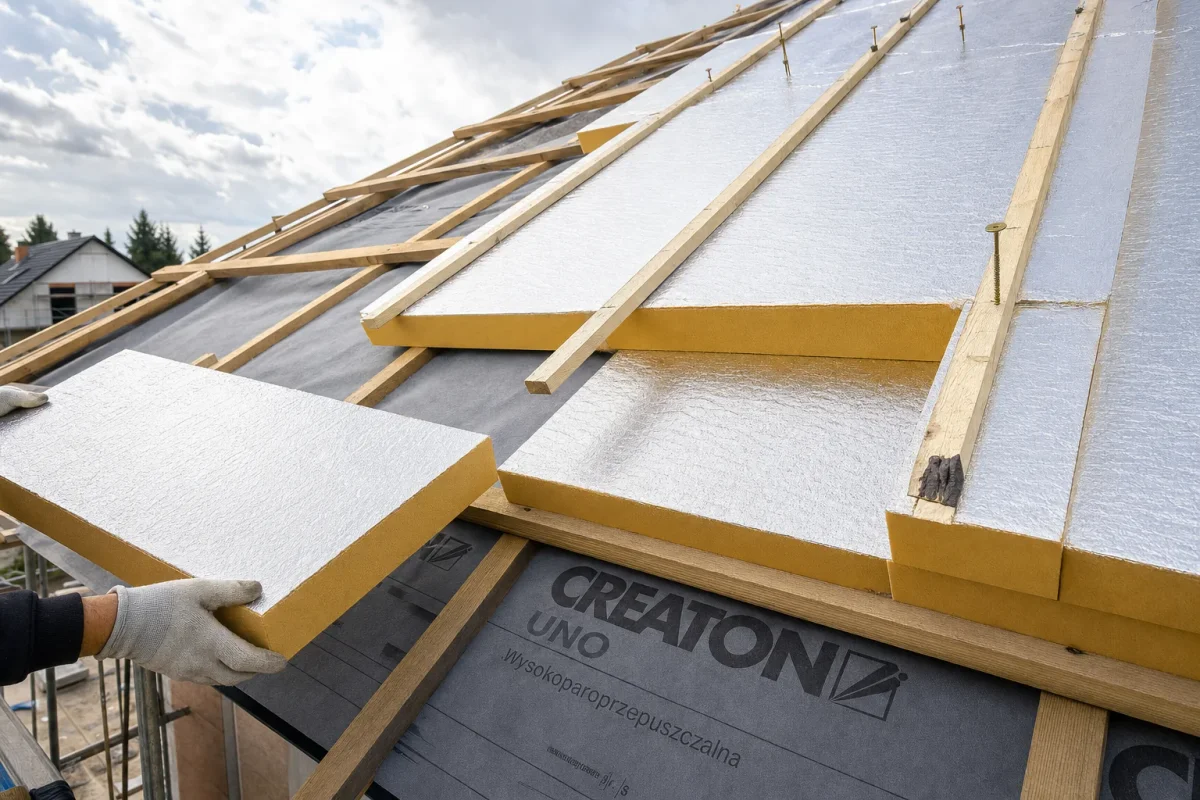
- Pitched roofs, over-rafter installation — termPIR® AL with a TAG tongue-and-groove edge eliminates thermal bridges. Details in the over-rafter pitched-roof system.
- Flat roofs and flat roof slabs — termPIR® AL or termPIR® Pro-F under roofing membranes (FM Approved).
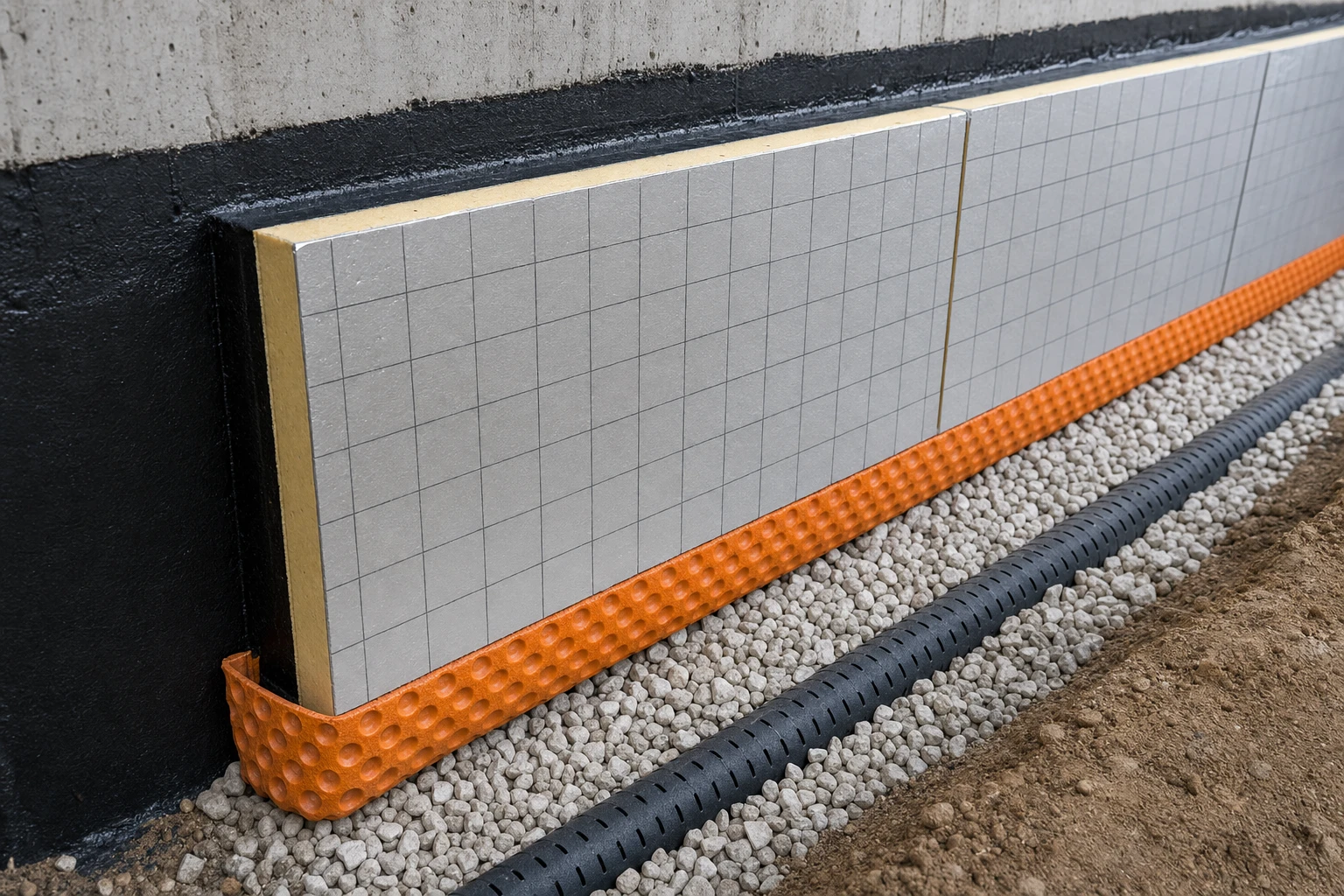
- Foundations, plinths and ground-bearing floors — termPIR® WS with improved moisture resistance, described in the foundation system.
- Premium low-lambda — termPIR® MAX 19 AL (λD 0.019) wherever every millimetre of thickness matters.
The systemic fire reaction class is B-s2,d0 per EN 13501-1 for faced boards. Standard commercial dimensions are 1200×600 mm and 1200×2400 mm, in thicknesses from 20 to 250 mm.
Environmental effect — estimated emission reductions
For a typical 150 m² single-family house heated with coal, a comprehensive thermal upgrade (roof, walls, foundations, window replacement) can cut final-energy demand from 250–300 kWh/m²·year to 60–80 kWh/m²·year — that is, three to four times less. This translates directly into the tonnage of coal burned and the particulates and B(a)P emitted into the air over the heating season. At the scale of an entire neighbourhood or town the effect is stepwise — confirmed by data from municipalities that have rolled out “anti-smog” programmes covering both heat-source replacement and envelope insulation.
Frequently asked questions
Is insulating the walls alone enough to meet WT 2021?
Are PIR boards with aluminium foil suitable for ETICS?
What PIR thickness is needed for a pitched roof under WT 2021?
Is PIR insulation safe in fire terms?
Does thermal upgrading really cut smog?
Related products and systems
Products
Read next

Energy Retrofit with PIR Boards and WT 2021 in Practice | BOKKA
Retrofitting Old Houses with PIR Boards — Energy Upgrade Guide
Thermal Bridges — How to Eliminate Them with PIR Boards (WT 2021)