termPIR® AL — PIR Insulation Boards with λD 0.022 | BOKKA
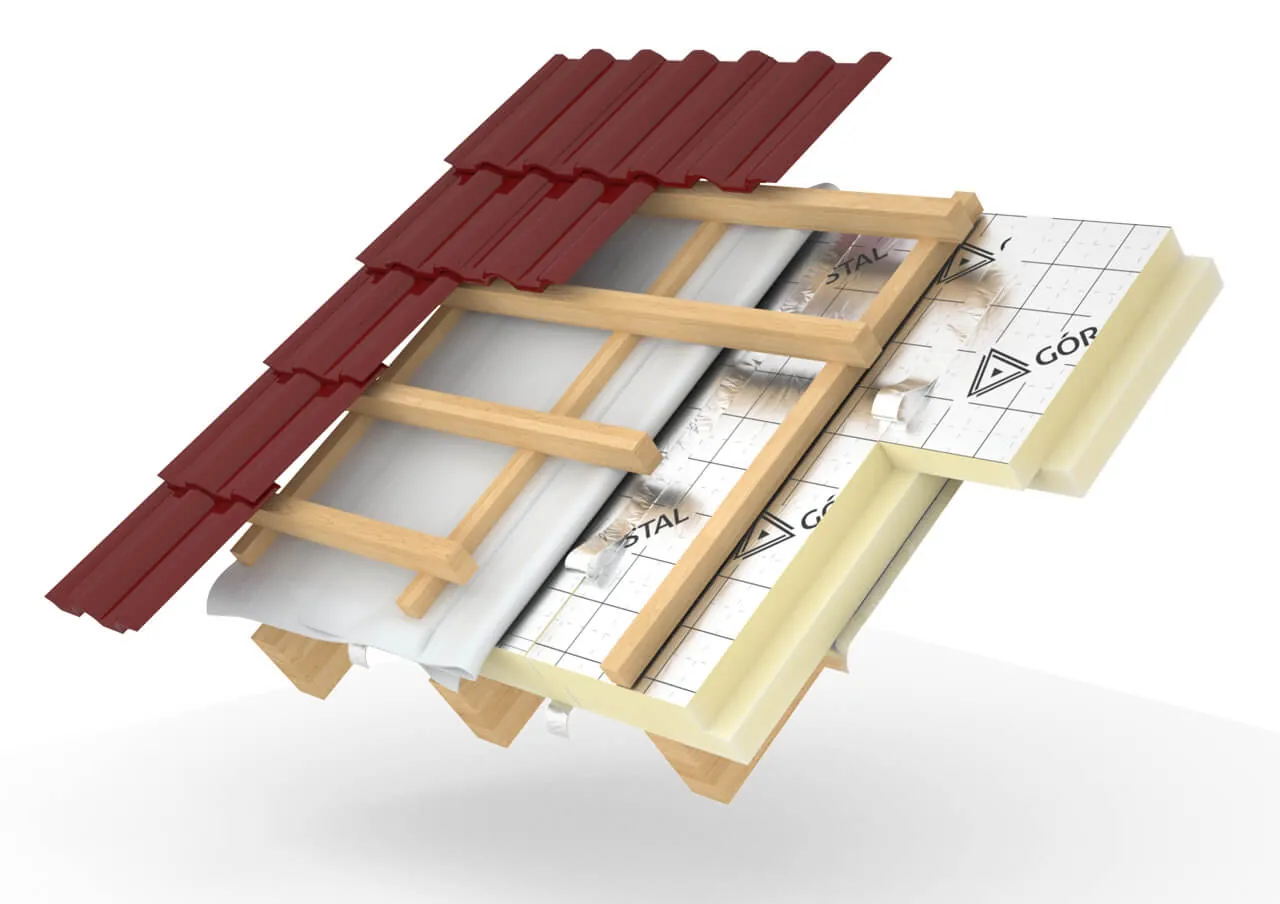
termPIR® AL — the bestselling PIR board for building insulation
The construction season is in full swing: the design is ready, the crew is booked, the permits are in your pocket. What remains is a decision that cannot be reversed without costly consequences — selecting the thermal insulation material. Under the current WT 2021 (Polish Technical Conditions 2021) regime (U for roofs ≤ 0.15 W/m²K, U for external walls ≤ 0.20 W/m²K), it is increasingly difficult to achieve the required values with traditional materials without substantially thickening the building envelope. That is why it pays to take a closer look at termPIR® AL — a versatile PIR insulation board with a gas-tight aluminium facing that has remained a bestseller in the BOKKA portfolio for years.
Construction and technical parameters of termPIR® AL
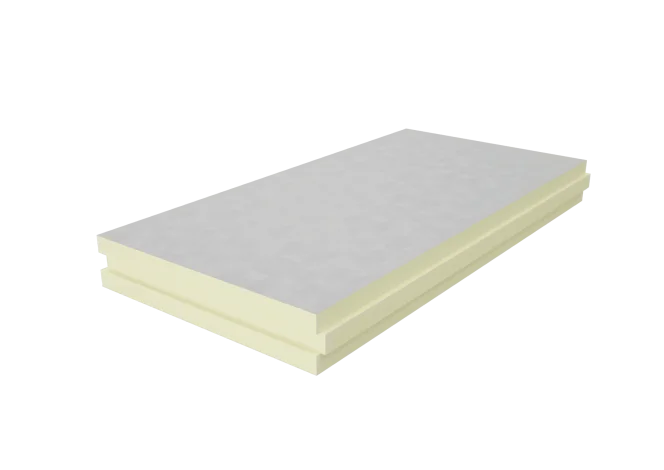
The core of the board is rigid polyisocyanurate (PIR) foam with a closed-cell structure. It is covered on both sides with a multilayer, gas-tight Al/paper/PE facing, which fulfils two key functions: it provides a barrier against the diffusion of blowing gases from the core (maintaining the declared lambda over time) and it protects the foam against construction moisture during installation.
The key technical parameters of termPIR® AL in accordance with EN 13165:
| Parameter | Value |
|---|---|
| Thermal conductivity λD | 0.022 W/(m·K) |
| Water absorption (WL(T)) | < 2% |
| Compressive strength (CS(10\Y)) | ≥ 120 kPa |
| Dimensional stability (DS) | ≤ 2% |
| Fire reaction class (system) | B-s2,d0 per EN 13501-1 |
| Operating temperature range | -50 °C to +110 °C |
For comparison: EPS achieves λD = 0.031–0.040 W/(m·K), XPS 0.029–0.036 W/(m·K), and mineral wool 0.031–0.045 W/(m·K). The practical consequence: to achieve U = 0.15 W/m²K in a roof, approximately 14 cm of termPIR® AL is sufficient, whereas mineral wool 0.035 requires ~22 cm and EPS 0.038 — ~25 cm.
Dimensions, thicknesses and edge profiles — full configuration
The boards are produced in two formats: 1200×600 mm (area 0.72 m²) and 1200×2400 mm (area 2.88 m²). The full thickness range covers: 20, 30, 40, 50, 60, 80, 100, 120, 140, 150, 180, 200, 220 and 250 mm, allowing the insulation to be tailored precisely to the required U-value without redundant layers.
Three edge-profile types are available:
- FIT — flat edge; standard for double-layer arrangements with staggered joints,
- LAP — stepped (rebated) edge; limits linear thermal bridges, recommended for flat roofs and industrial buildings,
- TAG — tongue-and-groove edge; self-centring jointing, facilitates the installation of pitched over-rafter roofs and cavity walls.
Insulation thickness is best selected on the basis of thermal calculations — as a rough guide for a single layer of termPIR® AL:
| Thickness [mm] | R [m²K/W] | U of single layer [W/m²K] |
|---|---|---|
| 100 | 4.55 | ~0.22 |
| 140 | 6.36 | ~0.16 |
| 160 (80+80) | 7.27 | ~0.14 |
| 200 (100+100) | 9.09 | ~0.11 |
For flat roofs in the WT 2021 class, 160–180 mm is typically used in a double-layer arrangement with staggered joints.
Applications of termPIR® AL in building envelopes
The gas-tight aluminium facing determines the field of application. termPIR® AL performs excellently in envelopes where a vapour barrier or moisture barrier is required, but is not suitable for ETICS systems (thin-coat render does not adhere to Al foil — in such cases, vapour-permeable termPIR® ETX with a glass fleece and ETA 17/0066 certification should be used).
The main application areas for termPIR® AL:
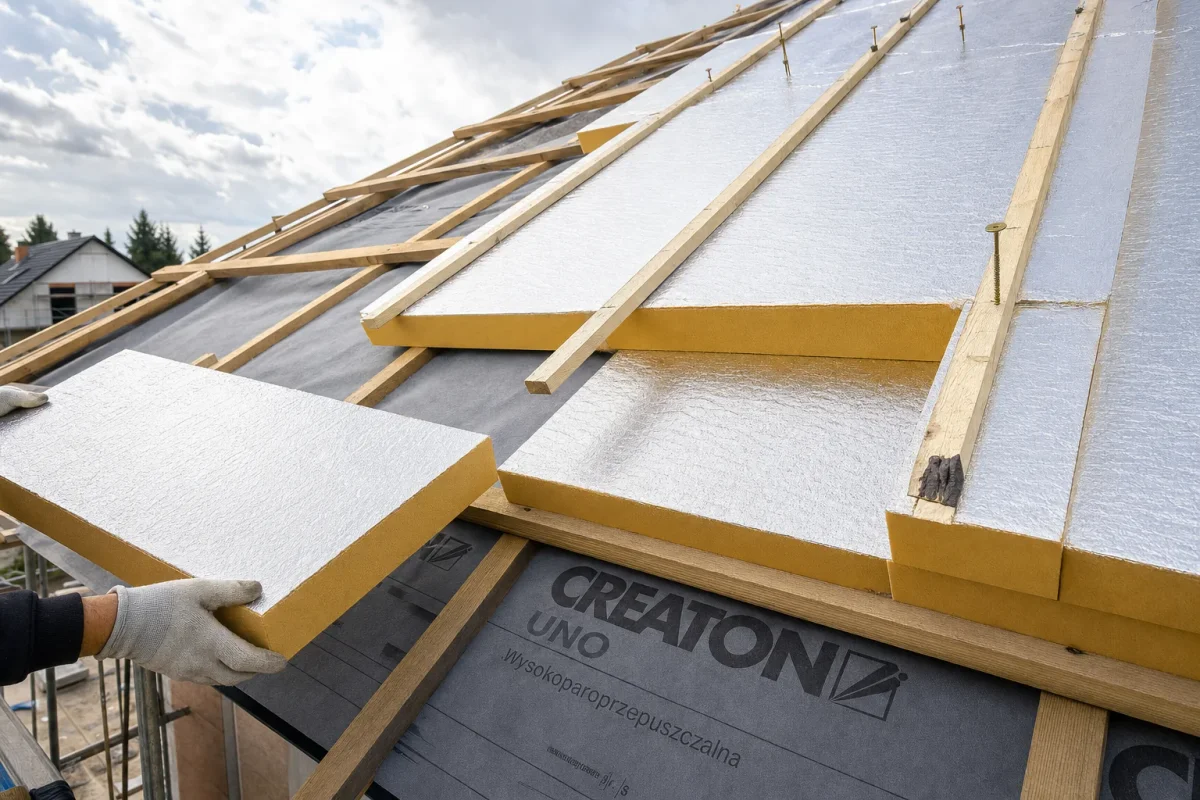
- Pitched roofs (over-rafter) — the over-rafter pitched-roof system with termPIR® eliminates thermal bridges across the rafters,
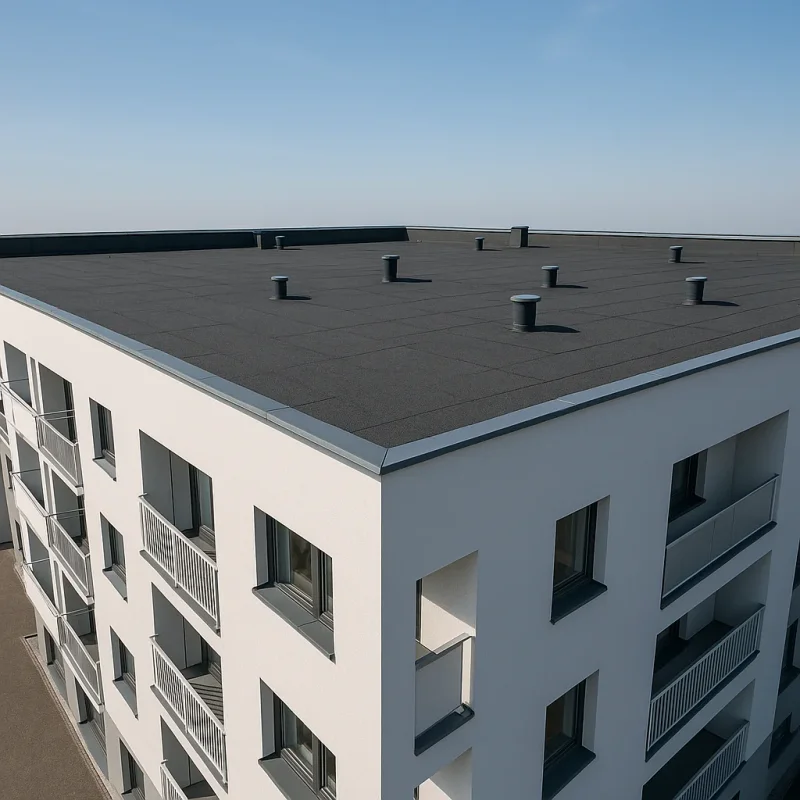
- Flat roofs mechanically fixed to trapezoidal sheet or to a reinforced-concrete slab — see the termPIR® AL flat-roof system,
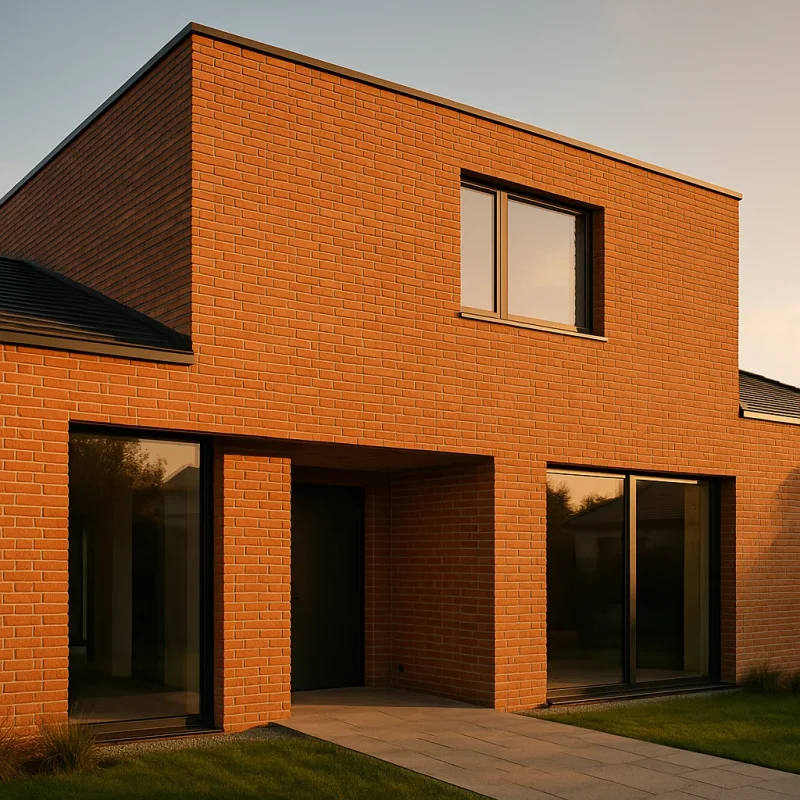
- Triple-leaf (cavity) walls — full-surface insulation between the structural and façade leaves (system detail),
- Foundations and plinths above the waterproofing, intermediate floor slabs, slabs above basements and unheated garages (U ≤ 0.25 W/m²K per WT 2021).
For envelopes in contact with the ground or exposed to long-term moisture, we recommend the termPIR® WS variant with enhanced moisture resistance. If the project requires top-tier thermal performance with a limited envelope thickness (e.g. terraces above heated spaces, refurbishments), it is worth considering the premium termPIR® MAX 19 AL with λD = 0.019 W/(m·K). For investors prioritising the carbon footprint, the ecological termPIR® AL R-eco is available.
Installation — rules for correct workmanship
The basis for durable insulation is a stable, level and load-bearing substrate — deviations greater than 5 mm/2 m must be levelled before installation. The boards are fixed mechanically (telescopic fasteners for timber, concrete or trapezoidal-sheet substrates) or in a bonded system using polyurethane adhesives intended for PIR.
Key workmanship rules:
- Staggered layout — in multilayer applications, the joints of successive layers must be offset by at least 200 mm to eliminate linear thermal bridges.
- Sealing of joints — all gaps should be filled with low-expansion PUR foam, and joints of boards with Al foil should be sealed with aluminium tape (available from BOKKA as a system accessory).
- No load-bearing function — termPIR® AL is insulation, not structure. It cannot carry service loads or act as a protective layer.
- Fixing to the substrate — the number and type of fasteners according to structural calculations and the wind zone (PN-EN 1991-1-4).
Year-round installation is possible — the low water absorption (< 2%) and the thermal resistance of PIR foam allow work even in the autumn-winter period, provided the boards are protected from precipitation until the covering is completed.
Frequently asked questions
Is termPIR® AL suitable for the ETICS system?
What thickness of termPIR® AL should I select to meet WT 2021?
What is the difference between FIT, LAP and TAG edges?
Can termPIR® AL be used on flat roofs under PVC/TPO membranes?
How long does termPIR® AL maintain the declared lambda?
Related products and systems
Products
Read next
Smog and Allergies — How PIR Thermal Upgrades Cut Emissions | BOKKA
Thermal Imaging Survey: Detecting Thermal Bridges | BOKKA
WHO 2021 Air Quality Guidelines and Thermal Retrofit in Poland