termPIR® AL vs termPIR® MAX 19 — when is it worth paying extra for λD 0.019?
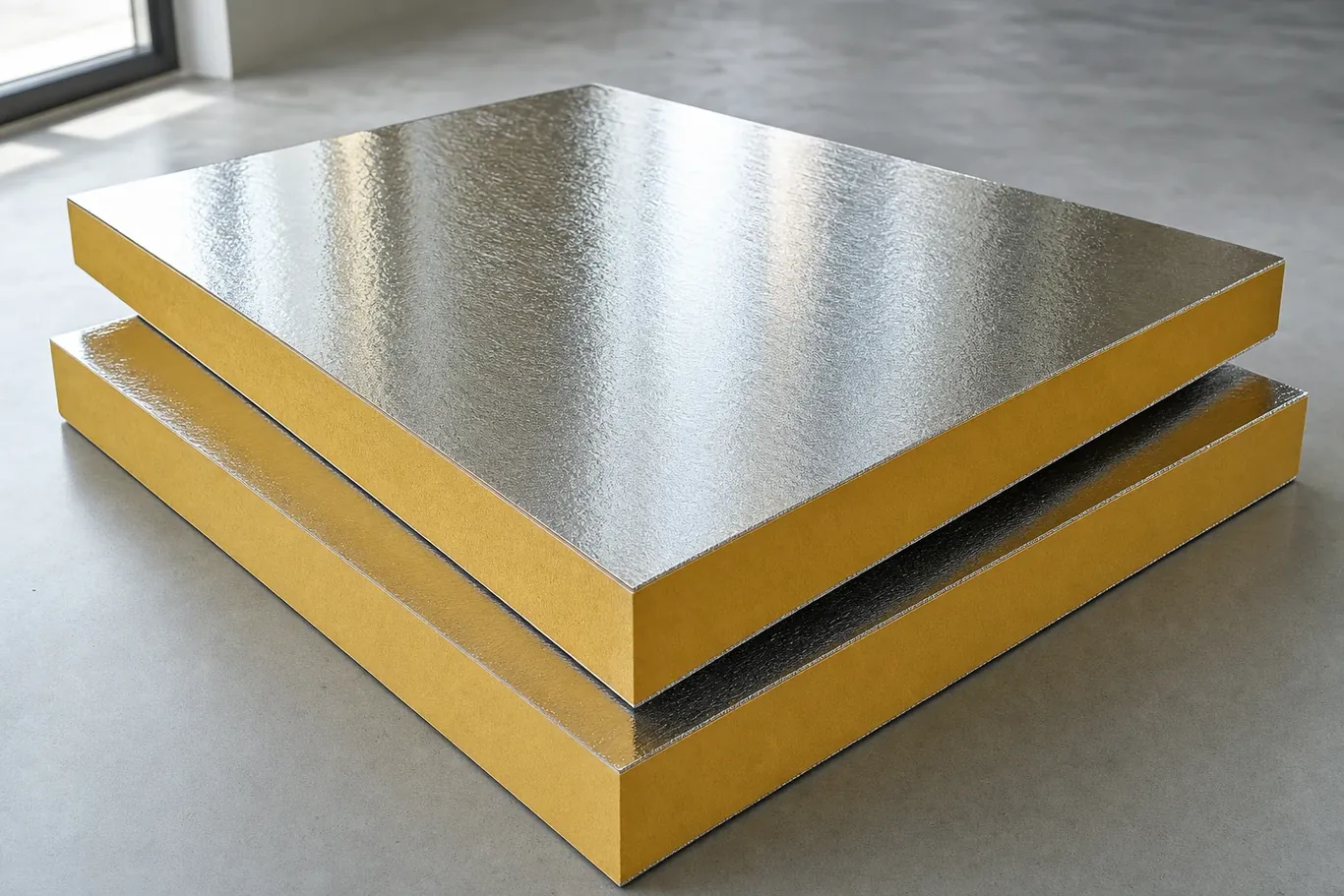
Two boards, one brand, a 14% difference in lambda
You look at the BOKKA catalogue and see two similar boards from the termPIR® line:
- termPIR® AL — λD 0.022 W/(m·K)
- termPIR® MAX 19 AL — λD 0.019 W/(m·K)
Both with aluminium foil, both for roofs, walls, floors. The difference in the precious λD figure is 0.003 — seemingly trivial. MAX 19 costs 25–35% more than the classic AL, however. The essential question: will that premium pay off for you?
The answer depends on one thing — whether you have a partition thickness constraint. If YES (renovation, balcony, terrace, dormer, low ceiling) → MAX 19 is unbeatable. If NO (new building with room for thicker insulation) → AL will suffice.
In this text, we show specific calculations for both scenarios.
What exactly differs between the two products
Both have a PIR core of ~32 kg/m³ density, gas-tight aluminium facing on both sides, the same range of applications (roofs, walls, floors, foundations). The difference is in the core itself — MAX 19 has an optimised cell structure with a blowing agent of lower thermal conductivity.
| Parameter | termPIR® AL | termPIR® MAX 19 AL |
|---|---|---|
| λD | 0.022 W/(m·K) | 0.019 W/(m·K) — 14% lower |
| Thicknesses | 20–250 mm (28 thicknesses) | 80–220 mm (15 thicknesses) |
| Fire reaction class | F (20–49 mm) / E (50–250 mm) | E |
| Compressive strength CS(10/Y) | 120 kPa | 100 kPa |
| Standard format | 1200×2400 / 1200×600 mm | 1200×2400 mm |
| Price (approx., %) | 100% | ~130% |
In practice: MAX 19 is thinner for the same R.
What “thinner for the same R” means
R = thickness ÷ λD. The lower the λD, the smaller the thickness needed for the same thermal resistance.
| R required | AL thickness (λD 0.022) | MAX 19 thickness (λD 0.019) | Thickness savings |
|---|---|---|---|
| R 3.0 | 70 mm | 60 mm | -10 mm |
| R 5.0 | 110 mm | 100 mm | -10 mm |
| R 6.0 (U=0.15 — WT 2021 roof) | 140 mm | 120 mm | -20 mm |
| R 7.0 (NF40 roof) | 160 mm | 140 mm | -20 mm |
| R 10.0 (NF15/passive roof) | 220 mm | 190 mm | -30 mm |
Thickness savings = savings on the load-bearing structure (shorter screws, smaller counter-battens, less space in the partition). In practice, for most roofs, this is a 1–3 cm difference in partition thickness.
Scenario 1 — passive house with room for thick rafters
The investor is building a new 150 m² house with a pitched roof, the designer planned 220 mm rafters + over-rafter PIR insulation.
Choice AL: 220 mm rafters, 0 mm PIR between them (empty), 140 mm AL over-rafter = R 6.36. Meets WT 2021. Insulation price (approx.): ~85 PLN/m² × 150 m² = 12,750 PLN.
Choice MAX 19: same 220 mm rafters, 120 mm MAX 19 over-rafter = R 6.32. Also meets WT 2021. Price: ~110 PLN/m² × 150 m² = 16,500 PLN.
Difference: 3,750 PLN on the minus side for MAX 19. Is a 2 cm saving on partition thickness worth that? In a new building with rafters already designed, no — money wasted.
Verdict: AL wins.
Scenario 2 — attic renovation with limited height
Old house, 160 mm rafters. The designer wants to reach WT 2021 (U ≤ 0.15 → R ≥ 6.5) without touching the structure.
Choice AL: 160 mm AL between rafters = R 7.27 (excellent), but then 30 mm protruding below the rafters for R 5.5 under-rafter — total 190 mm in the partition. We lose 3 cm of room height.
Choice MAX 19: 160 mm MAX 19 between rafters = R 8.42. Without under-rafter layer, we meet R 6.5. Full room height preserved.
Difference: 3 cm of height × entire floor area = significant, especially for low attics.
Verdict: MAX 19 wins. The premium of a few thousand zloty pays off in living comfort (higher rooms, better acoustics between floors) + no additional under-rafter layer and its cost.
Scenario 3 — balcony over a heated room
Concrete 200 mm + insulation + screed 50 mm + tiles = total thickness limited by the balcony door height (typically max. 200 mm total).
Available insulation thickness: about 100 mm.
AL 100 mm: R 4.54 MAX 19 100 mm: R 5.26 (+16%)
For a balcony, R ≥ 5.0 is usually required (thermal bridge at the connection with the structure). MAX 19 meets it, AL does not. Here there is no choice: MAX 19 is the only sensible solution.
Verdict: MAX 19 wins. AL physically won’t fit within the required R.
Other situations where MAX 19 makes sense
- Washable ceilings above a hall — the usable hall height is precious, every centimetre of insulation is taken from the light
- Terraces over heated rooms — door threshold height limitation
- Dormers / mansard ceilings — the designer wants to preserve interior space as much as possible
- Renovations with existing roof covering — without dismantling, limited available thickness
- Harsh climate (WT 2030, NF15 house) — when you need R 10+ at thickness <220 mm
When AL is sufficient (and why it’s not worth paying extra)
- New construction with partition thickness designed for insulation
- WT 2021 standard (R 6.0 roof is enough)
- Flat roof with room for thicker layers (one or two cm more doesn’t matter)
- Industrial buildings like warehouse halls (low insulation standard, R 4–5 is enough)
- Impact on overall investment price — when insulation is >5% of budget (worth checking whether the 30% premium pays off)
In short: if you can add thickness without design consequences — AL is unbeatable on cost.
Practical decision in 3 questions
- Do I have a partition thickness constraint? (YES → MAX 19; NO → AL)
- Is every centimetre of usable area precious? (YES → MAX 19)
- Am I designing to NF40 or higher (passive) standard? (YES → consider MAX 19)
If the answer to all 3 questions is NO → AL is the right choice.
How BOKKA will help
We stock both lines + national pallet delivery from 1 pallet. If you are hesitating which variant pays off in your project:
🤝 Free BOKKA calculation — we will calculate R for your partition, compare the cost of both variants + thickness, and recommend a decisive choice.
Summary in one sentence
You choose MAX 19 for thickness, AL for price. If you have space in the partition and budget is a priority → AL. If every centimetre is a constraint → MAX 19 is an investment that pays off in comfort and usable space.
If in doubt — we’ll calculate together, with no obligations.
🤝 Free BOKKA technical consultation — we will help select the product and complete documentation for your project.
👉 Full range and technical specs: termPIR® PIR insulation boards.
Frequently asked questions
Does MAX 19 have a worse fire reaction class than AL?
Does MAX 19 have lower strength?
Is MAX 19 suitable for ETICS?
Can I combine AL + MAX 19 in one roof?
Is MAX 19 available in thicknesses smaller than 80 mm?
Does saving 2–3 cm of thickness really matter?
Related products and systems
Read next
Passive house — termPIR over-rafter system for EUco 15 kWh/m²/year
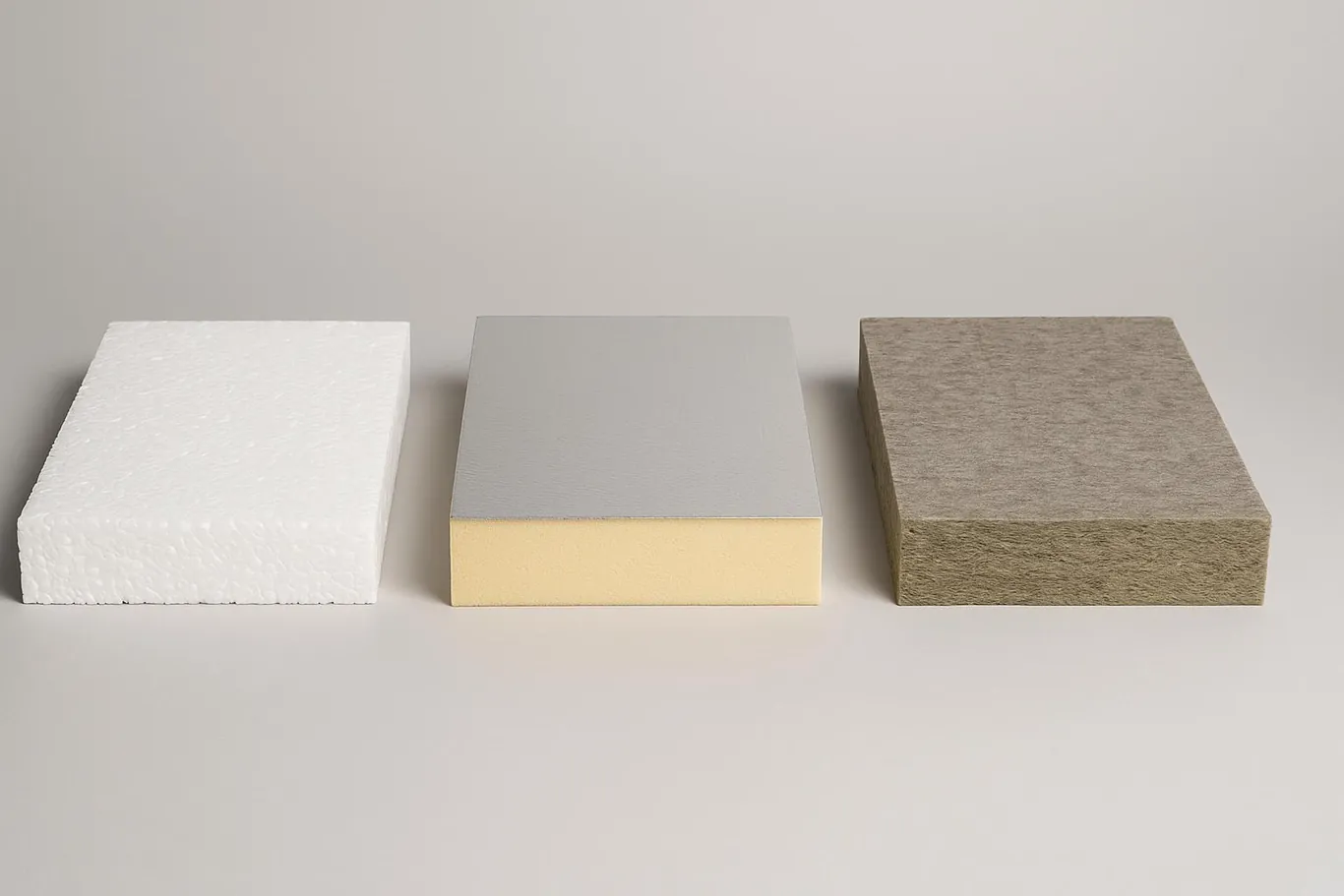
PIR vs EPS/XPS vs Mineral Wool: ROI Analysis for Designers | BOKKA
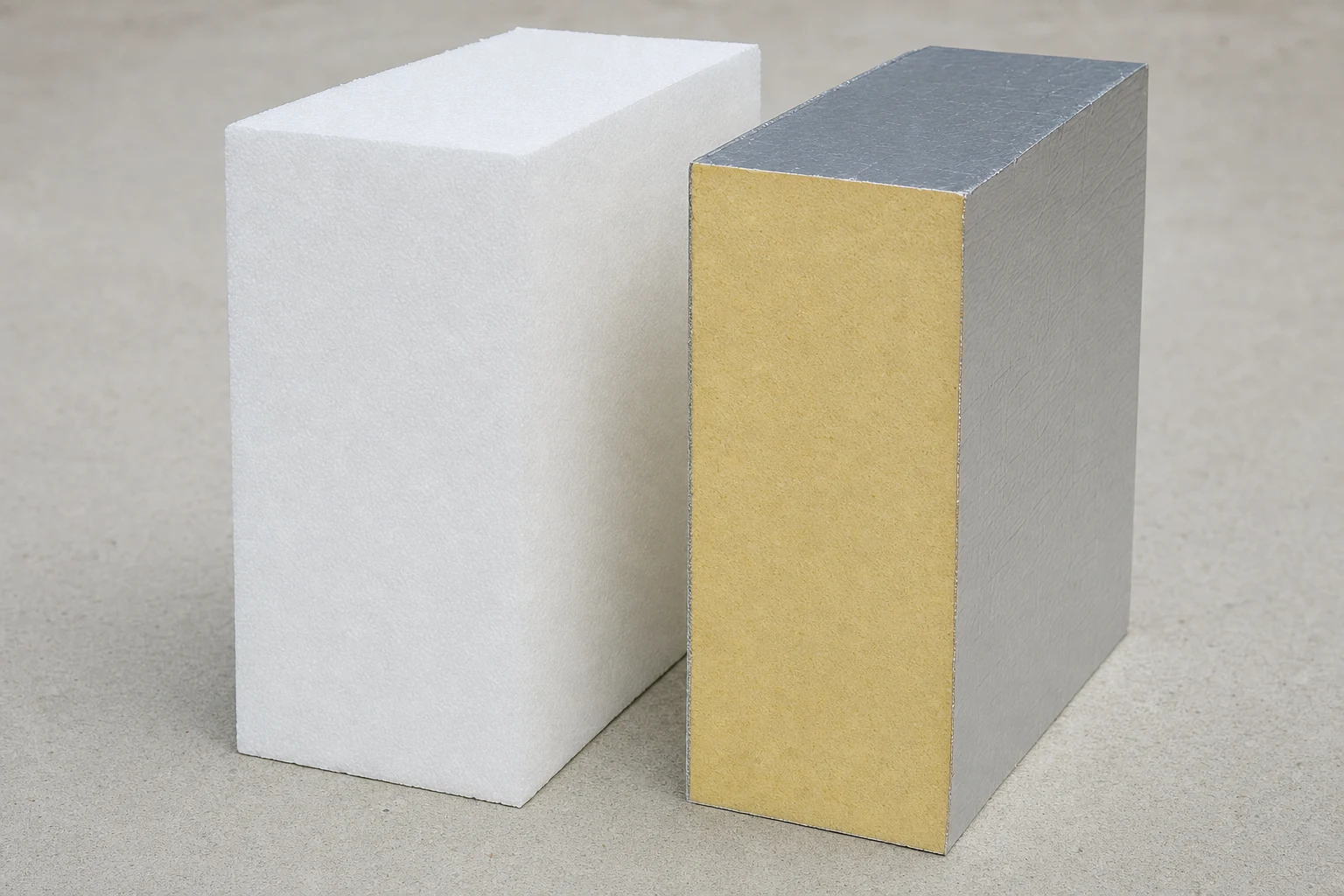
PIR vs XPS — foundations, inverted roofs and ground floors