Thermomodernization tax relief 2026 — limits, VAT invoices, how to claim in PIT
“53 thousand to deduct? Sounds too good to be true”
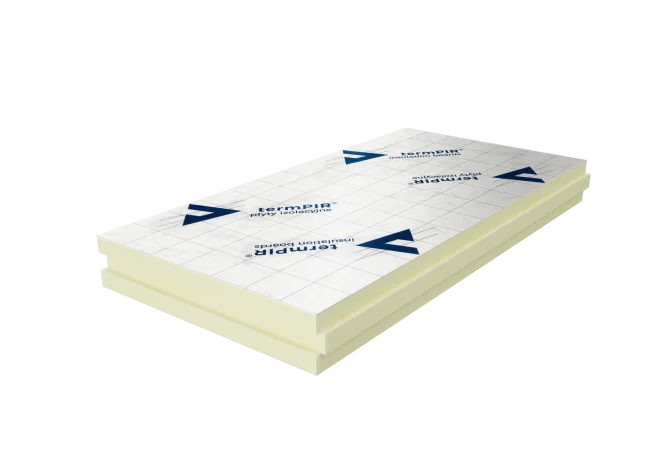
It sounds great, but it’s true. The thermomodernization tax relief in PIT 2026 allows up to 53,000 zł deduction from income per person — meaning a married couple can deduct a total of 106,000 zł. PIR boards (termPIR®, izoGRASS®), tapered wedges, heat pumps, photovoltaics, gas boilers, energy storage — all qualify.
But like any tax relief, it has its rules. Some are obvious (VAT invoice). Others less so (global limit, not annual). Still others are costly if you don’t know them (an incorrectly issued invoice = no deduction).
In this guide, specifically:
- Who can deduct (and who can’t)
- What qualifies (with specifics for insulation materials)
- What invoices are required (and what to avoid)
- How to file in PIT (step by step with the PIT/O form)
Who can benefit
Yes:
- Owner of a single-family residential building (i.e. an ordinary house, not a tenement)
- Co-owner (each proportionally to their share)
- Spouses owning a house in joint ownership (each has their own limit of 53,000)
- PIT taxpayer — regardless of form: PIT-37 (employment), PIT-36 (business on general terms), PIT-36L (flat-rate 19%), PIT-28 (lump-sum)
No:
- Tenant or person with a loan-for-use agreement — you must be the owner (or co-owner)
- Owner of a multi-family house — the relief applies to SINGLE-family (up to 2 dwellings in one structure)
- Owner of an apartment in a block — unfortunately not covered
- Investor building a NEW house — the relief is for existing buildings (completed constructions)
- A person who has already used up their 53,000 zł limit (the limit is global — once for the taxpayer’s entire life)
What qualifies for the relief
A closed list from the regulation, most important items:
Insulation materials (BOKKA = yes)
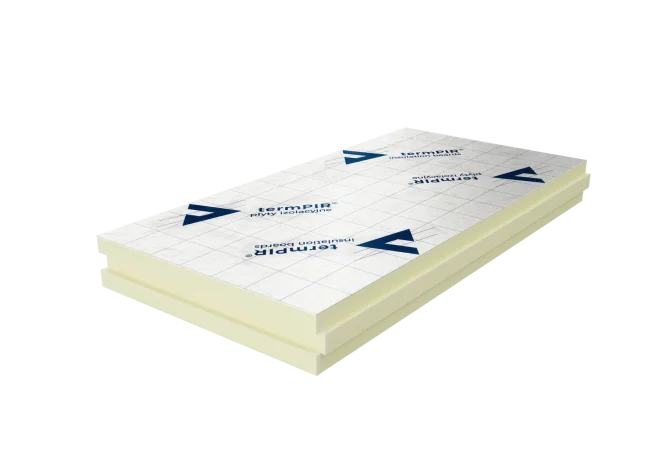
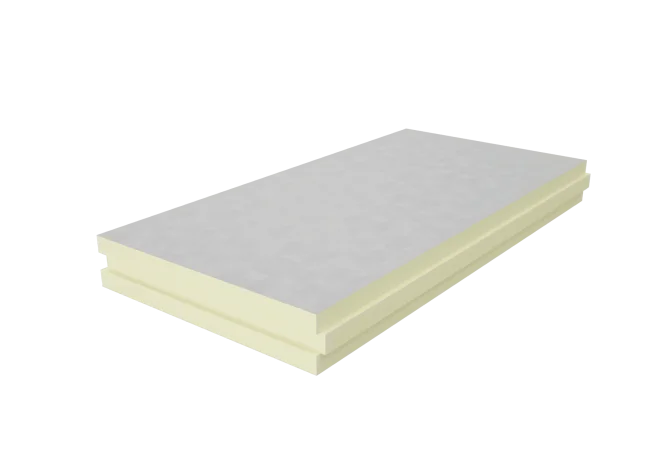
- Polyurethane PIR boards (termPIR® AL, ETX, WS, MAX 19, PRIME) — roof, wall, floor insulation
- Mineral wool (boards + mats)
- EPS, XPS polystyrene
- Vapor barrier / moisture-proof insulation materials (foils, tapes)
- izoGRASS® tapered wedges for flat roofs
- Installation accessories (telescopic screws, dowels, aluminum tapes — when purchased together with insulation)
Finishing construction materials (after insulation)
- Thin-layer plasters (on ETICS)
- Starter strips
- Reinforcing meshes
- Gypsum plasterboard only as a fire-resistant protective layer (e.g. REI 60 systems with PIR)
Devices and installations
- Heat pumps
- Photovoltaics (panels, inverter, installation)
- Condensing gas boilers (class A++)
- Energy storage
- Mechanical ventilation with heat recovery (recuperators)
- Programmable thermostats, automation
Services (besides materials)
- Energy audit (before starting)
- Insulation installation (labor by the contractor)
- Replacement of windows, external doors (material + installation)
- Heat source replacement
What does NOT qualify
- Materials for newly built houses (only for existing ones, put into use)
- Furniture, decorations, household appliances
- Directly: thermal solar panels for recreation (pool) — yes, but only for the heating duties of the house
- Gardens, fences, driveways
- Auxiliary works without connection to insulation
What the VAT invoice must look like
This is the most common reason for relief rejection by the urząd skarbowy. Requirements:
1. Invoice issued by a VAT taxpayer
The seller must be an active VAT payer (NOT exempt from VAT). Check on the VAT list (biała lista podatników) — enter the company’s NIP at podatki.gov.pl/wykaz-podatnikow-vat. The status must be “Active” (Czynny).
2. Invoice issued in your name (the deducting taxpayer)
NOT to a company, not to a spouse if you are the one deducting. First name + last name + address + PESEL (or NIP if you run a business).
3. Invoice with VAT (regular invoice, not a receipt)
A simplified invoice (receipt up to 450 zł gross) also qualifies, but only if it includes:
- Your first and last name
- Seller’s NIP
- All required invoice fields
A receipt without a name = NO.
4. Invoice with an accurate description of the purchase
Items must clearly indicate:
- Material — e.g. “termPIR® AL 140 mm, 120 m²” (NOT “insulation material” without specifics)
- Quantity
- Net/gross price, VAT
If the invoice describes only “delivery of construction materials” — the US may question it.
5. Deadline: 3 years to complete the investment
First expense (e.g. purchase of PIR) → 3 years to complete the thermomodernization. If you drag it out longer, the office may demand proof of investment completion.
How to file in PIT
Step 1 — Collect all invoices
All invoices related to thermomodernization (materials + services + devices) for the tax year you are filing.
Step 2 — Choose the PIT form
- PIT-37 — employment, employment contracts, mandate contracts (most common)
- PIT-36 — business activity on general terms
- PIT-36L — flat-rate 19% business activity
- PIT-28 — lump-sum
-
- always the PIT/O attachment (where you enter reliefs)
Step 3 — Enter in PIT/O
Section “Deductions from income”:
- Row “Thermomodernization relief” → enter the total invoice amount from the year (up to the 53,000 zł global limit)
Step 4 — Keep invoices for 5 years
In case of a US inspection — you are obliged to show originals or copies (usually digital copies + originals in a binder are sufficient).
Step 5 — If income is too low
Relief exceeding income = carry over to subsequent years (up to 6 years counting from the end of the year of the first expense). Enter the continuation in each subsequent PIT until the limit is exhausted.
Example: family of 4, house 150 m²
Thermomodernization plan 2026–2027:
| Item | Gross cost |
|---|---|
| termPIR® AL 140 mm (sloped roof, 200 m²) | 17,000 zł |
| Air heat pump 12 kW | 35,000 zł |
| Window replacement (8 pcs) | 22,000 zł |
| Ventilation with heat recovery | 18,000 zł |
| Energy audit | 2,500 zł |
| Labor (contractors) | 28,000 zł |
| Total | 122,500 zł |
Husband deducts 53,000 zł, wife deducts 53,000 zł = together 106,000 zł deduction from income.
At PIT rate of 12% = ~12,700 zł of real tax savings. At a rate of 32% (second threshold) = ~33,900 zł.
The remaining 16,500 zł of the family does not qualify as a deduction, but it increases the value of the house and reduces heating bills. The investment pays back in 7–10 years (for a typical building).
5 pitfalls worth avoiding
Pitfall 1 — Invoice issued to a company instead of a private person
If you run a company, do NOT issue invoices to the company for thermomodernization purchases. Issue them to yourself privately (first name + last name + PESEL). A company invoice = the company deducts VAT, but you lose the PIT relief.
Pitfall 2 — Receipts instead of invoices
The construction store asks “do you want a receipt or an invoice?”. Always an invoice (with your first and last name) for thermomodernization purchases. Receipt ≠ basis for relief.
Pitfall 3 — Seller exempt from VAT
A small construction store without VAT (exempt up to 200,000 zł in annual turnover). Its invoice does NOT qualify for the relief (must be an active VAT payer). Check on the VAT list before purchase.
Pitfall 4 — Material purchased but not installed
If you buy PIR and stash it in the attic (without completing insulation in 3 years), the office may question the deduction. The investment must be completed within the 3-year window.
Pitfall 5 — Omitting subsidies when calculating own contribution
If you received a subsidy from Czyste Powietrze (or another program) for part of the cost — you deduct ONLY your part (after subtracting the subsidy). If the subsidy covered 50% of the heat pump cost, you deduct only 50% of its value.
What BOKKA provides
We issue VAT invoices to a private person as standard. The description on the invoice clearly indicates:
- Product type (e.g. “termPIR® AL 140 mm — sloped roof insulation”)
- Quantity in m² + thickness + DoP number (for later proof)
- Net/gross price, VAT rate 23%
This is a ready basis for deduction in PIT. If you have any doubt at settlement — we will send a duplicate invoice or purchase confirmation.
🤝 Free BOKKA technical consultation — we will help you select the product and complete documentation for your project.
Summary
53,000 zł is real money to deduct if you are planning thermomodernization of your house. A married couple = 106,000 zł.
Key rules:
- VAT invoice issued to the taxpayer (NOT a company)
- Seller is an active VAT payer (check on the list)
- Complete the investment within 3 years from the first expense
- File in PIT/O (attachment to PIT-37/36/36L/28)
- Keep invoices for 5 years in case of an inspection
We have PIR boards + tapered wedges + accessories + all necessary documents (DoP, PZH attestation, VAT invoices to a private person).
🤝 Free BOKKA technical consultation — we will help you select the product and complete documentation for your project.
Sources:
- podatki.gov.pl/ulgi-i-odliczenia/ulga-termomodernizacyjna-pit
- czystepowietrze.gov.pl/inne-programy/ulga-termomodernizacyjna
- Personal Income Tax Act — art. 26h
- Regulation of the MIiR of 21 December 2018 (Dz. U. 2018 item 2489, as amended)
Frequently asked questions
Does the thermomodernization relief still apply in 2026 in the full amount of 53,000 zł?
Can I deduct only materials without labor?
Does the relief apply to a BOKKA purchase for a house already insulated once?
Does an invoice from an EU seller also qualify?
What if my investment exceeds 3 years?
Can I deduct expenses from 2024 in 2026?
Related products and systems
Read next
Energy Audit of a Building — Thermal Retrofit with PIR
Energy Retrofit with PIR Boards and WT 2021 in Practice | BOKKA
Smog and Allergies — How PIR Thermal Upgrades Cut Emissions | BOKKA