Energy Retrofit Before the 2026/2027 Season — Planning Guide

Energy retrofit 2026/2027 — why spring is the best time to start
Most investors only start thinking about insulation in September, when night-time temperatures drop below 10 °C. Yet May and June are the optimal window for an energy retrofit — both from the perspective of contractor availability and the application parameters of modern insulation systems. Below we show how to plan the investment, which U-values must be achieved under WT 2021 (Polish Technical Conditions 2021) and why PIR insulation boards are today’s reference material for thermal upgrades of residential buildings and commercial facilities.
Spring vs. autumn — technical and organisational arguments
The Polish insulation season peaks in September–November, generating 2–3 month queues at contractors and price pressure on materials. A spring start eliminates these constraints:
- Stable application weather — adhesives, levelling compounds and thin-coat renders in ETICS systems require substrate and air temperatures in the range of +5 °C to +25 °C for at least 48 h, with no precipitation and no direct sunlight. May–June delivers a stable application window.
- Contractor availability — insulation crews’ calendars are typically open in Q2, allowing you to choose a contractor rather than take “whoever is available”.
- Material lead times — PIR board delivery times in spring are typically 7–14 working days; in autumn they can reach 4–6 weeks.
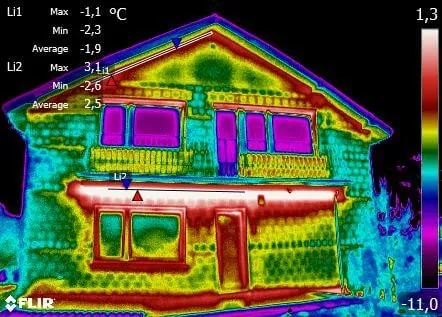
- Margin for corrections — a spring start provides time reserve for uncovering structural issues (moisture, thermal bridges detected by thermography) and remedying them before the heating season.
WT 2021 — reference U-values
Every retrofit project should target the parameters set out in the Technical Conditions in force since 1 January 2021:
| Building element | Umax per WT 2021 [W/m²K] |
|---|---|
| Roof, flat roof | 0.15 |
| External wall | 0.20 |
| Floor above unheated basement / garage | 0.25 |
| Ground-bearing floor | 0.30 |
Meeting these values is also a condition for accessing funding under the “Czyste Powietrze” (Clean Air) programme and for fully claiming the thermal-upgrade tax relief in PIT.
Audit and hierarchy of heat losses
Before purchasing material it is worth carrying out an energy audit or at least a thermographic survey. In a typical non-insulated single-family building from the 1980s–1990s the proportions of heat loss are roughly:
- pitched roof / flat roof — 25–30%,
- external walls — 20–25%,
- floor above basement / ground-bearing floor — 10–15%,
- windows and doors — 15–20%,
- uncontrolled ventilation — 10–15%.
The order of investment should correspond to the share of losses — most often the roof is the priority.
Why PIR boards — λD comparison
The thermal conductivity coefficient λD determines the insulation thickness needed to achieve a given U-value. The lower the lambda, the thinner the layer — which matters for pitched roofs (preserving usable attic height), terraces (limiting build-up height) and wall retrofits (lower load on the façade).
| Material | λD [W/(m·K)] | Thickness for U = 0.15 |
|---|---|---|
| Mineral wool | 0.035–0.040 | ~24–26 cm |
| EPS polystyrene | 0.031–0.038 | ~21–24 cm |
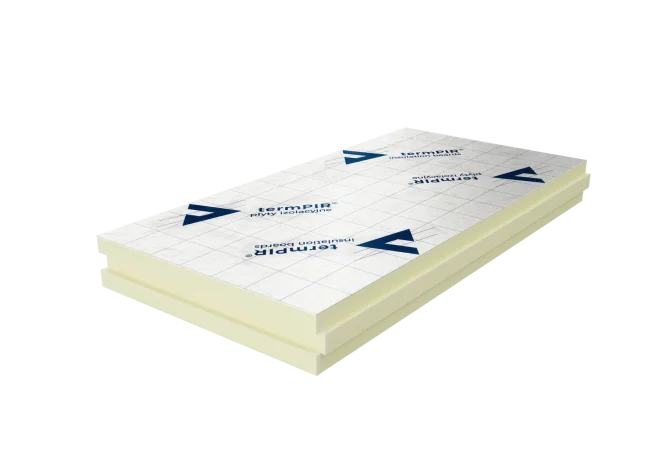
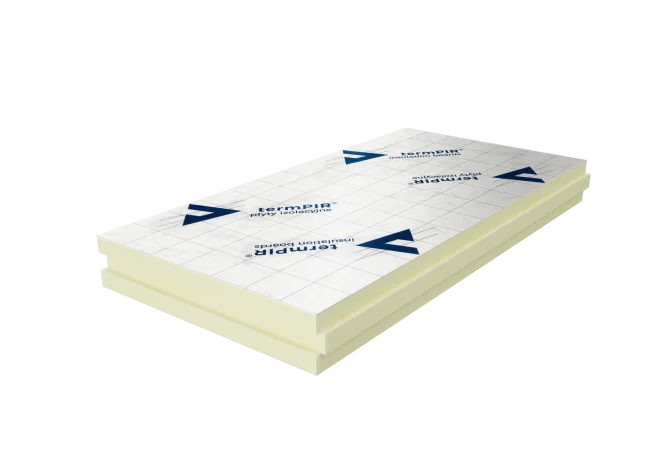
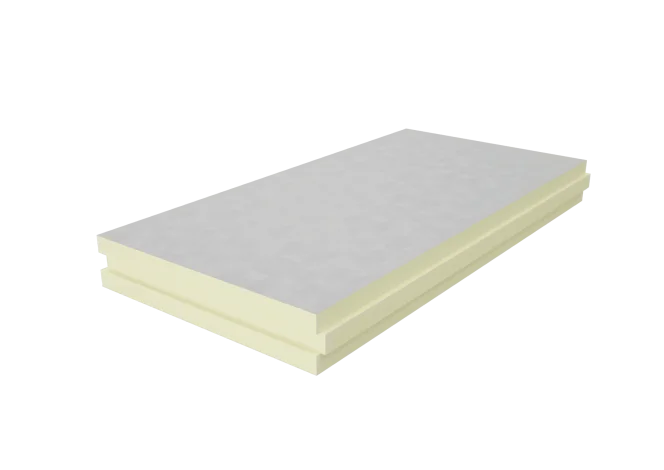
| termPIR® AL | 0.022 | ~15 cm |
| termPIR® MAX 19 AL | 0.019 | ~13 cm |
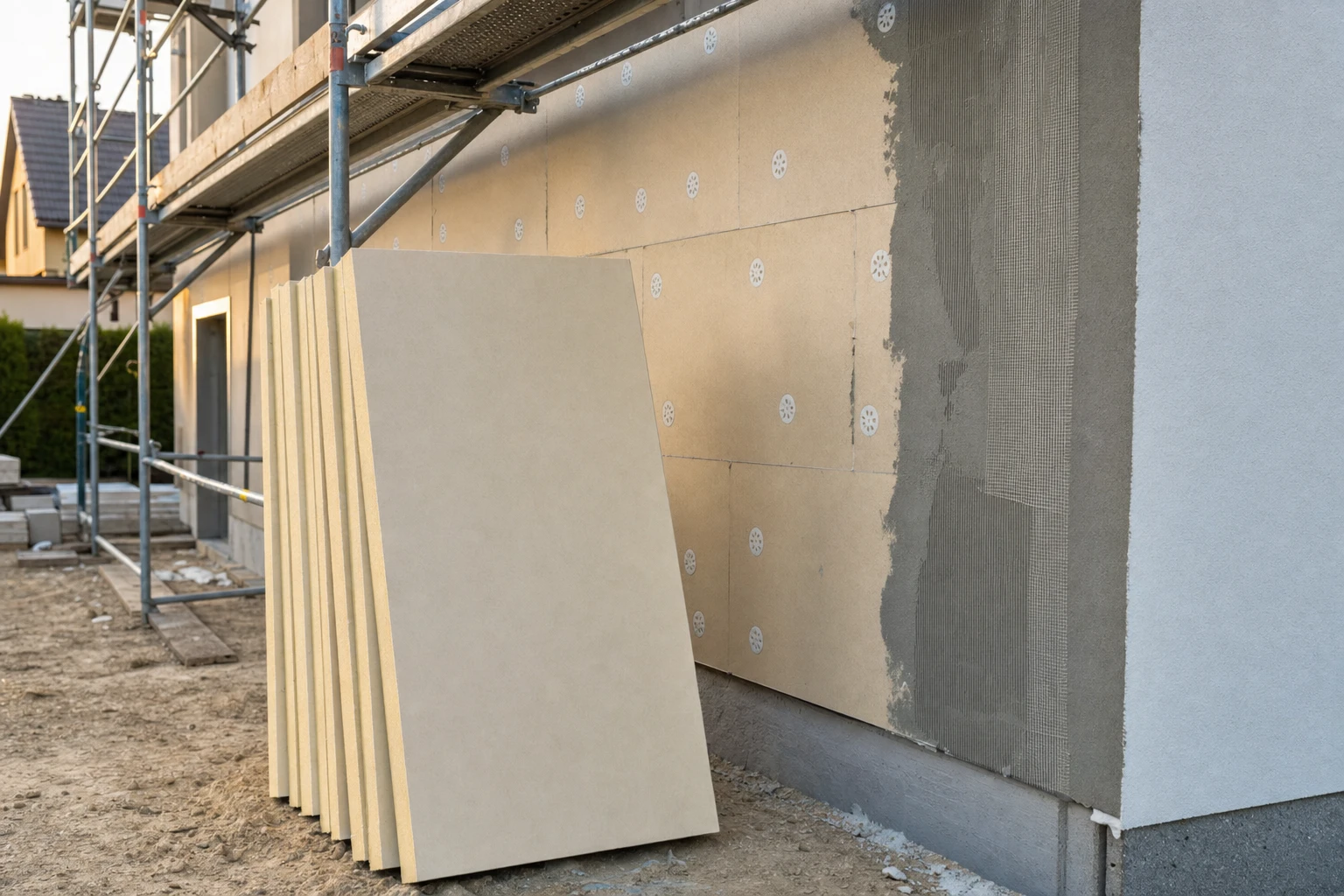
For a typical external wall (U = 0.20), 12 cm of termPIR® ETX is sufficient — a vapour-permeable board with glass fleece dedicated to ETICS systems (ETA 17/0066), instead of 18–20 cm of mineral wool.
Selecting the board for the element — what goes where
PIR boards are not a universal material — the facing determines the application:
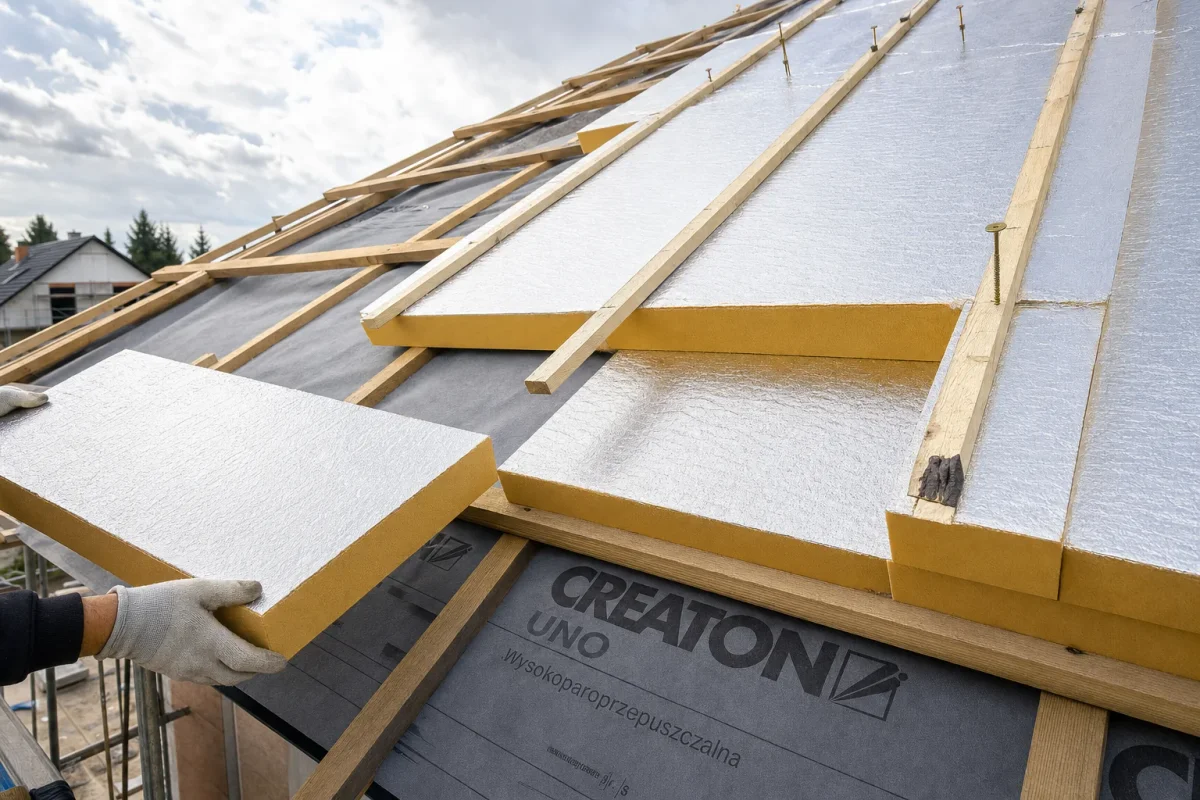
- Pitched roof, over-rafter — termPIR® AL with gas-tight aluminium foil, system pitched roof over-rafter. Eliminates thermal bridges across rafters.
- External wall in ETICS — exclusively termPIR® ETX (glass fleece, vapour permeability). Boards with Al foil are gas-tight and are not suitable for thin-coat renders — a frequent design error.
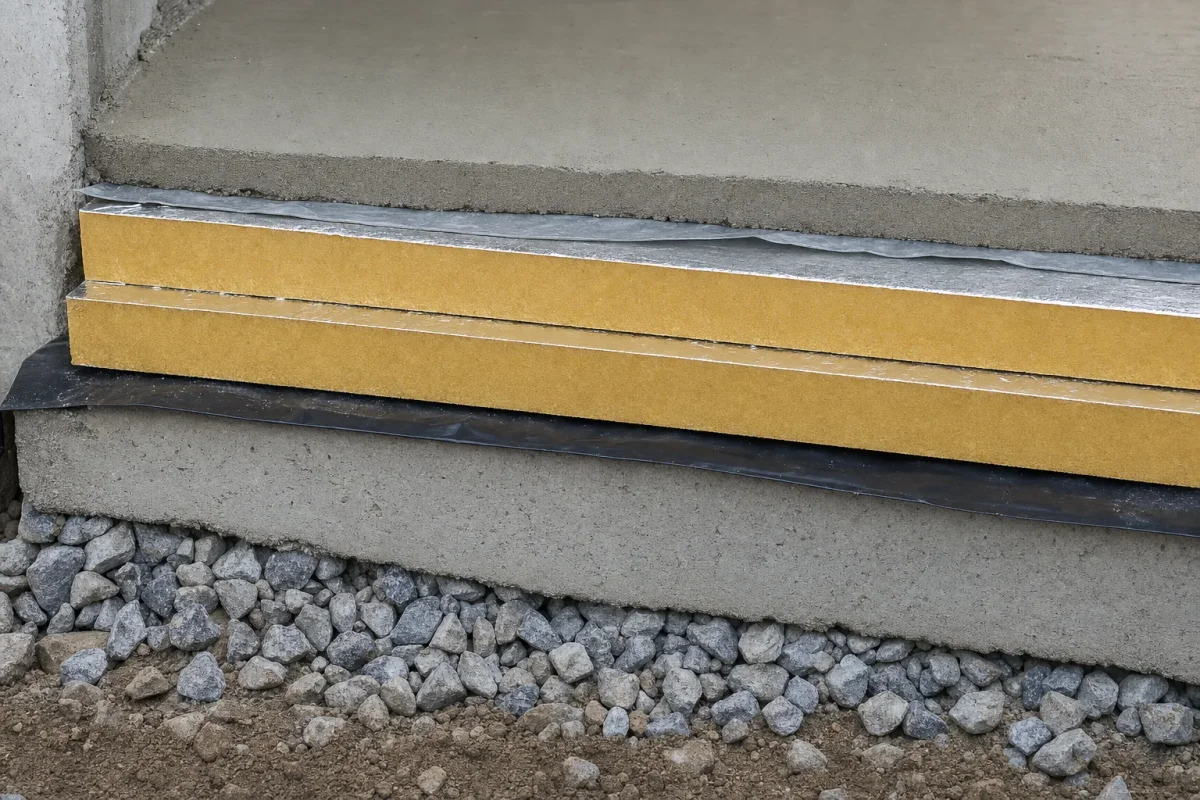
- Ground-bearing floor / foundation — termPIR® WS (enhanced moisture resistance) or termPIR® AL in two layers.
- Terrace above a heated space — termPIR® MAX 19 AL — premium, λD 0.019.
- Warehouses and commercial facilities — insPIRe® sandwich panels (S/U/D/CH lines) instead of an ETICS system.
Schedule: April–August
- April — energy audit, technical design, material selection, application for funding.
- May — order PIR boards and accessories (aluminium tapes, low-expansion foams, fasteners), sign contractor agreement.
- May–July — execution of works (roof, then walls, finally plinths and floors).
- August — handovers, as-built documentation, grant settlement.
- September–October — heating system commissioning (if replaced), first energy consumption measurements.
Technical parameters worth verifying at purchase
- λD — declared design value per EN 13165,
- fire reaction class — for termPIR® systems with facings typically B-s2,d0 (EN 13501-1),
- dimensional stability and compressive strength (min. 120 kPa for floors),
- complete documentation: Declaration of Performance (DoP), technical data sheet, partial certificates.
Frequently asked questions
Are PIR boards with aluminium foil suitable for ETICS systems?
What PIR thickness for a pitched roof at U = 0.15 W/m²K?
Can I insulate a building from the inside?
How long does PIR board delivery take in spring?
Does PIR insulation qualify for "Czyste Powietrze" funding?
Related products and systems
Products
Read next
Clean Air Programme 2024 — Energy Retrofit with PIR Boards

Energy Retrofit with PIR Boards and WT 2021 in Practice | BOKKA
Smog and Allergies — How PIR Thermal Upgrades Cut Emissions | BOKKA