Replacing an eternit (asbestos) roof — by when, how it works and what to put up instead
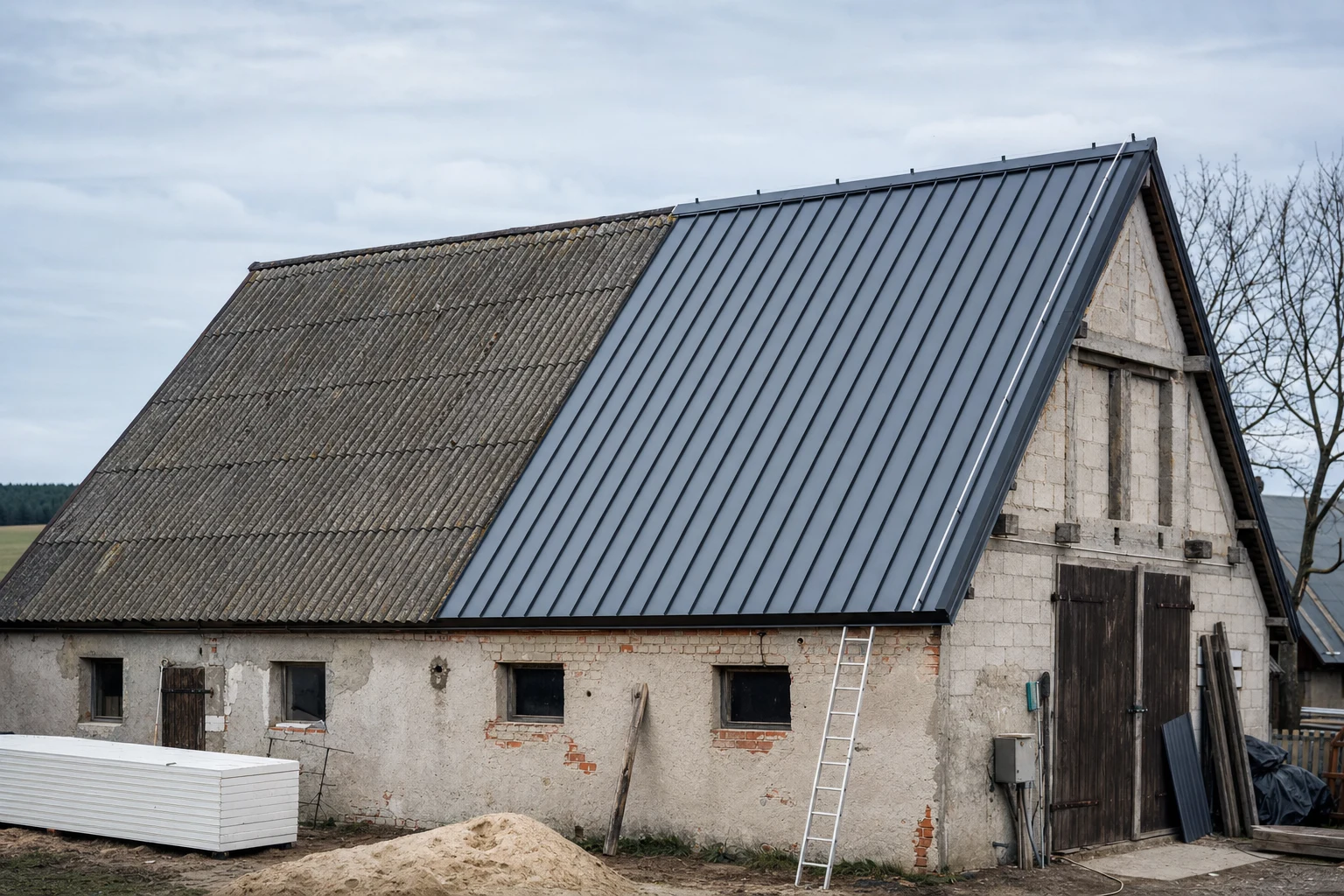
August, thirty degrees. You walk into the barn for a ladder and a wall of heat hits you — under the grey corrugated roof the air stands still, like in a car parked in the sun. That roof has been up there for decades. You know perfectly well what it is made of. And for years you have been putting the subject off until “after the harvest”.
This article exists so you can stop putting it off. We answer directly: by when the eternit has to be replaced, what the whole procedure looks like — from the municipal office to the landfill — and what to lay on the roof instead, especially on a farm building, where weight, speed and budget matter.
By when does an eternit roof have to be replaced?
By the end of 2032. That is the deadline set by the Polish government’s Programme for Cleansing the Country of Asbestos — the document under which asbestos-containing products are to disappear from Polish roofs and façades by that time. And eternit is precisely the colloquial name for the corrugated and flat asbestos-cement sheets that for decades were the most popular roofing in the countryside.
The second date worth knowing is 1997. The Act of 19 June 1997 banned the use of asbestos-containing products in Poland. Simple arithmetic leads to one conclusion: any eternit lying on a roof today is at least close to thirty years old — and most of it much older.
And one reassurance: 2032 is not a date after which someone will come and strip your roof as a punishment. It is the programme’s horizon. But the closer it gets, the tighter the queues for licensed firms and municipal subsidy calls will become. Whoever leaves the subject for the last seasons will wait longer and pay more.
Why asbestos is harmful — without scare tactics
Asbestos is a mineral with a fibrous structure. Its fibres are so thin that they float in the air like dust — and inhaled over years, they damage the lungs. The key word: inhaled. A sheet that lies whole and untouched does not shed dust. The problem starts with breaking, cutting, drilling and scrubbing, because that is when the fibres are released from the cement binder.
Hence two practical rules. First: an old roof must not be cut with an angle grinder, drilled or cleaned with a pressure washer — each of these operations tears fibres out of the surface. Second: “it lies quietly” does not mean “it can lie there forever”. Eternit ages. Frost, rain and encroaching moss wash the cement out of the top layer, the sheet turns brittle and in time starts releasing fibres all by itself. The older the roof, the less “quiet” it is.
That is why the sensible plan is not “we wait until it crumbles”, but “we take it down in a controlled way while the sheets are still whole”.
What a legal replacement looks like — step by step
The procedure is simpler than it seems, because a specialised firm takes on most of the obligations. In practice, four steps remain on your side.
Step 1: the municipality. Asbestos-containing products are subject to an inventory — the municipality should know you have eternit on your roof. Check at the office whether your building is on the register, and report it if it is not. That entry is usually also a condition for applying for a subsidy.
Step 2: a licensed firm. Only contractors with the required licences may dismantle asbestos products. Not you, not your brother-in-law, not a handyman from a classified ad. A professional crew wets the sheets, takes them down whole without breaking them, packs them tightly in foil and labels them. This is not a bureaucratic whim — it is the only way to avoid dusting the entire yard with asbestos during dismantling.
Step 3: transport and the landfill. The removed sheets may not go into a rubble container or “behind the barn”. They travel to a licensed asbestos waste landfill — organised by the same firm that took the roof down.
Step 4: documents. When it is all done, you receive confirmation that the waste went where it should. File it away — it comes in handy when settling the subsidy and at any later inspection.
The temptation to do it yourself on a Saturday afternoon can be strong, especially with a small building. Let it go. Beyond your health, you risk being left with waste you cannot legally hand in anywhere, and closing the road to municipal money.
What to replace eternit with on a barn, cowshed or workshop?
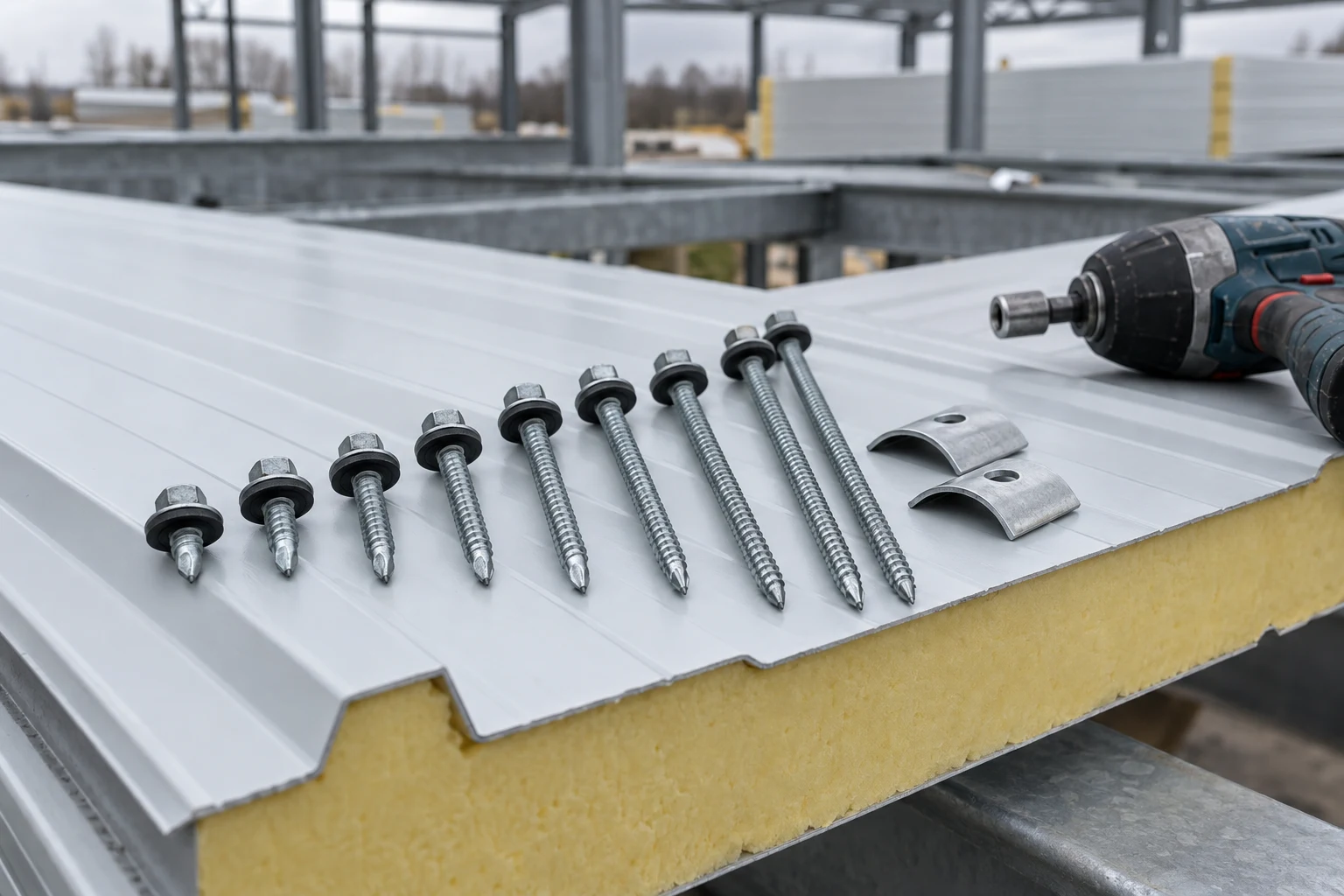
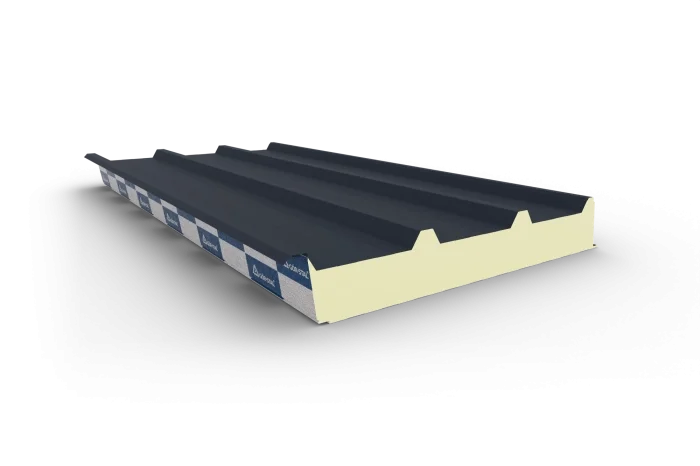
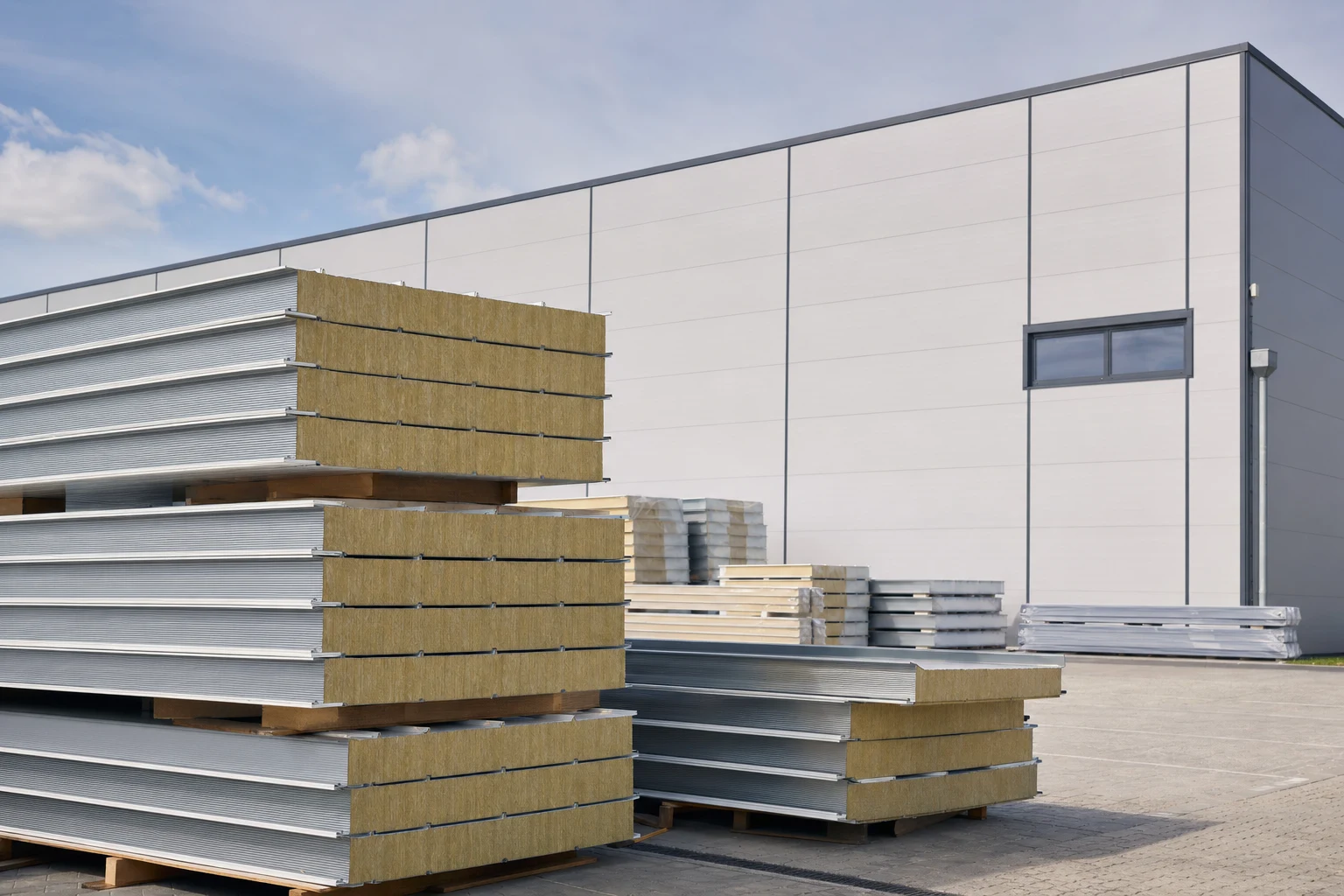
Here the more pleasant part begins. Since the roof is coming off anyway, it is worth laying something that solves more than one problem. On farm and agricultural buildings, a roof sandwich panel performs very well in this role — an element made of two steel facings and an insulating core, such as GS insPIRe D with a PIR core. If you have come across the Polish colloquial name “płyta obornicka” — it is exactly the same product.
There are three arguments, all practical.
Covering and insulation in one step. Eternit was only a covering — underneath there is usually no insulation at all, which is why in summer the barn turns into an oven and in winter into a cold store. A dark, uninsulated roof slope heats up in the sun and warms the interior like a radiator hung under the ceiling. A sandwich panel closes the roof and insulates it at the same time — with a single installation you end the problem of an overheated interior and of moisture condensing on a cold covering.
Low weight. Old roof trusses are not fond of extra load, and the sandwich panel is one of the lightest ways to close a roof. This thread is important enough to get its own chapter below.
Speed. Large-format panels joined on interlocks close a roof slope in days, not weeks. With a building housing machines or animals, every day under the open sky is trouble — the shorter the gap between taking off the old roof and closing the new one, the better.
One technical reminder: a roof sandwich panel needs an adequate slope so that water and snow run off without ponding. How to select the slope and drainage is described in our article on a hall roof made of sandwich panels. The good news: roofs covered with eternit usually have a clearly pitched slope, so this condition is most often met from the start.
An old truss is no place for a heavy roof
Eternit was laid on trusses that today are several decades old. Some are holding up superbly, some remember better days: the beams have done their share of work, the battens have rotted at the eaves, somewhere it leaked for years. Before you lay anything new, the contractor or a structural engineer should assess what this structure can still carry.
And that is exactly why the low weight of the sandwich panel is such a valuable argument here. For an envelope that is covering and insulation at once, a sandwich panel weighs little — the old rafters get a new job without adding weight that nobody anticipated when the building went up. A heavy covering on a weak truss often means costly reinforcement or replacing the whole structure; a lightweight envelope usually lets you avoid that. Always confirm the support spacing and panel thickness with an advisor, though — that is a matter of the specific building, not a general rule.
More on how sandwich panels perform on farms — from barns to storage buildings — in our overview of applications in agricultural construction, and the specifics of buildings with animals are dissected in the piece on cowsheds and piggeries. If, while replacing the roof, you are planning something more, have a look at the guide to a garage made of sandwich panels too.
Who pays for it — and for what exactly
The good news: most municipalities run asbestos removal programmes and use them to fund the dismantling, transport and disposal of the old covering. The bad news: the new roof you generally buy yourself — municipal programmes usually do not cover the new covering. The rules, call dates and scope of support differ between municipalities, so make your first phone call to your local office before you sign anything with a contractor. The order of steps can be a condition of payment.
And the cost of the new roof? As usual: it depends on the core thickness, the facing coating, the colour and the quantity. On a farm building, where aesthetics do not play first fiddle, grade II sandwich panels can be a real saving — technically full-value, cheaper due to minor cosmetic facing flaws. Specific figures are always a matter of an individual quotation for the building’s dimensions and function.
Where to start in practice
The order is simple. Check the entry in the municipal inventory and ask about the subsidy call. Ask a licensed firm for a dismantling quote. In parallel, select the new covering — so that as little time as possible passes between removing the eternit and installing the panels. An eternit roof will not get any younger, and the queues before 2032 will only grow.
🤝 Contact a BOKKA technical advisor — tell us which building is losing its eternit, and we will help select a roof sandwich panel to suit the old truss and prepare a quotation, including grade II.
Sources:
- Polish Act of 19 June 1997 on the prohibition of the use of asbestos-containing products
- Programme for Cleansing the Country of Asbestos — the Polish government programme assuming removal of asbestos products by the end of 2032
- PN-EN 14509 — Self-supporting double skin metal faced insulating panels — Factory made products — Specifications
- Technical catalogue and data sheets of GS insPIRe sandwich panels (Gór-Stal)
Frequently asked questions
By when does an eternit roof have to be replaced?
Can I take the eternit off the roof myself?
Is undamaged eternit dangerous?
Will the municipality subsidise the replacement of an eternit roof?
What can replace eternit on a barn or farm building?
Related products and systems
Read next
Płyta obornicka — what it is, and why it is simply a sandwich panel
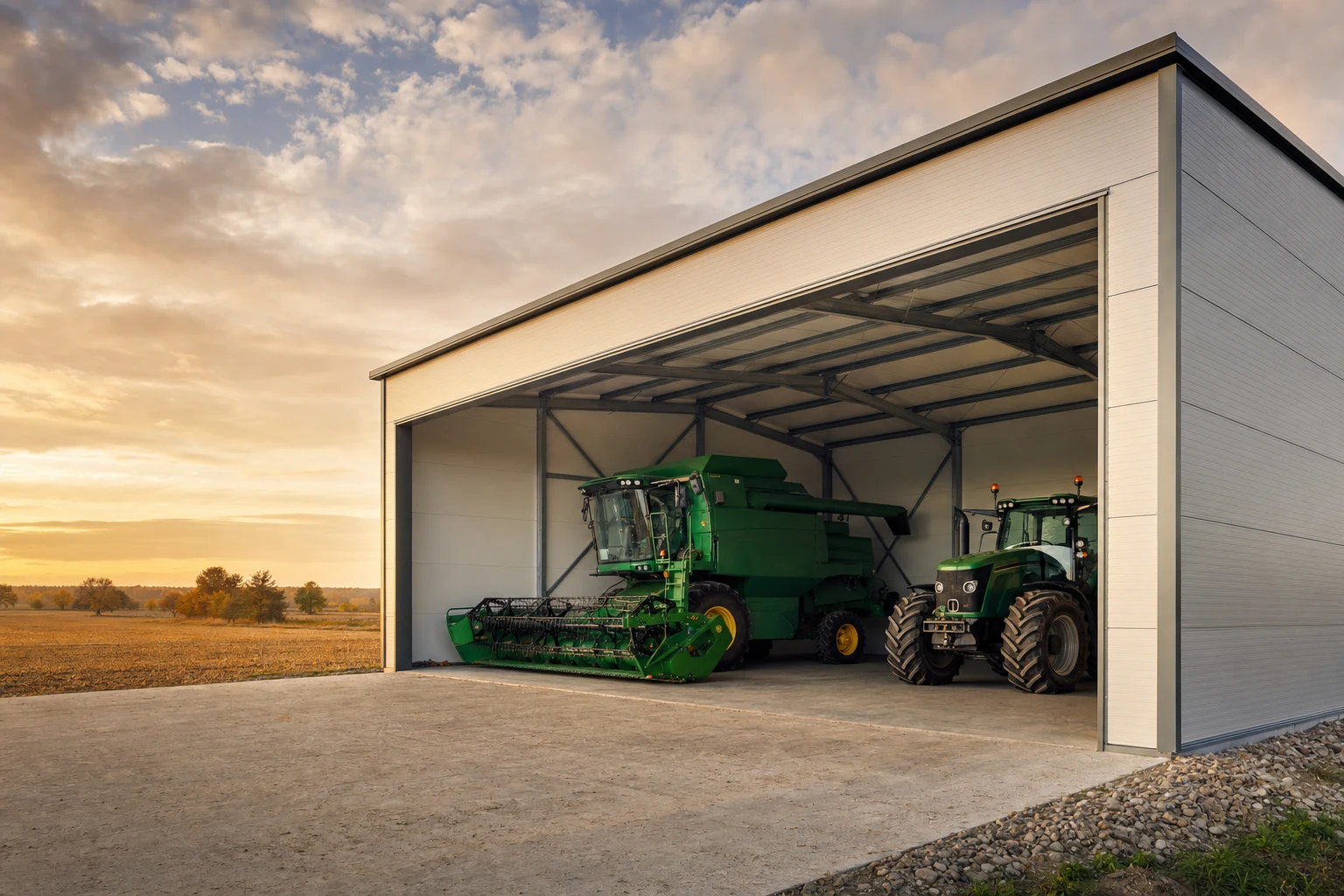
Open shelter or enclosed hall for farm machinery? After harvest, the combine deserves real walls
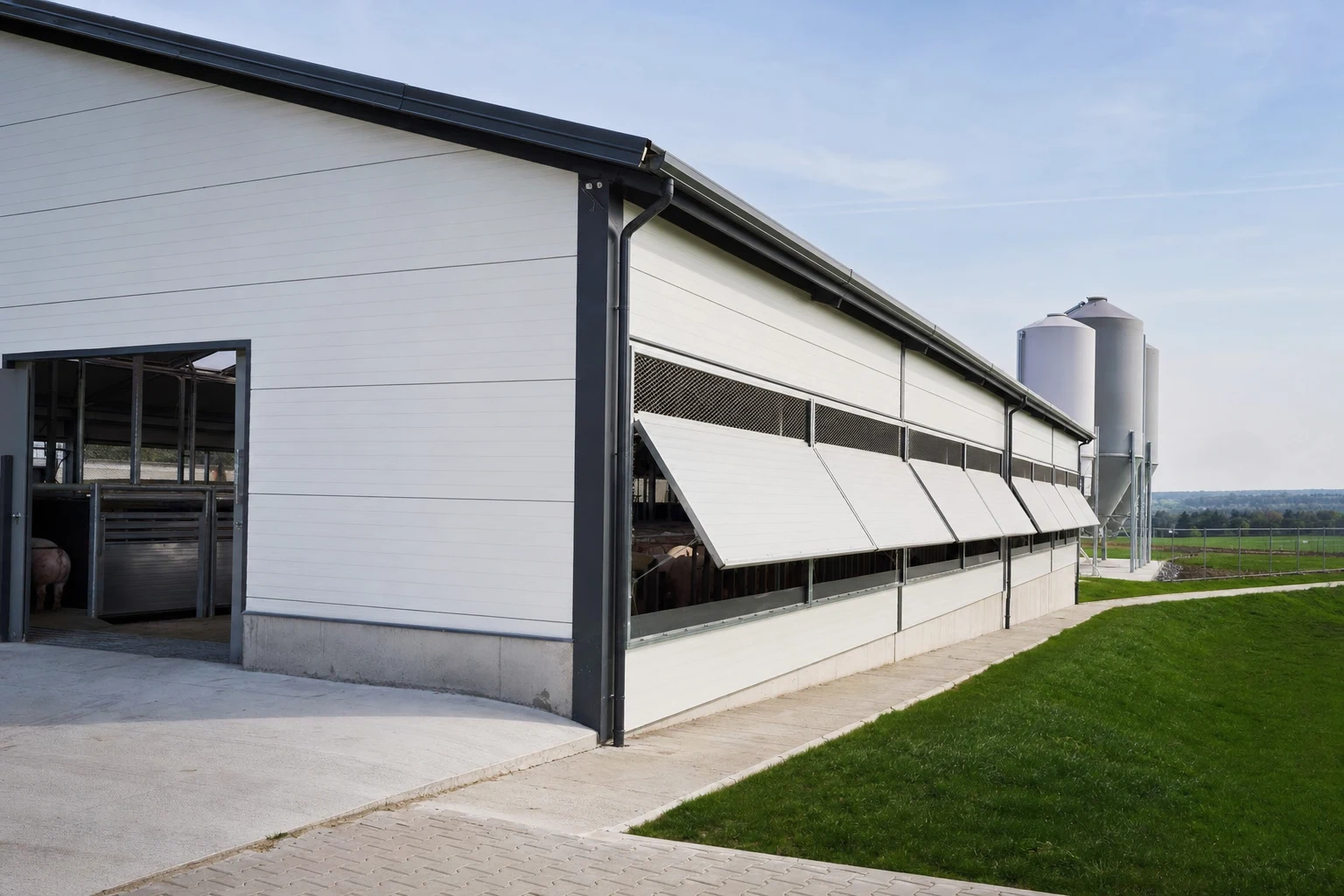
Livestock buildings from sandwich panels — piggery, cowshed, poultry house