PIR Sandwich Panels in Agricultural Construction | BOKKA
PIR sandwich panels in agricultural construction — a complete technical guide
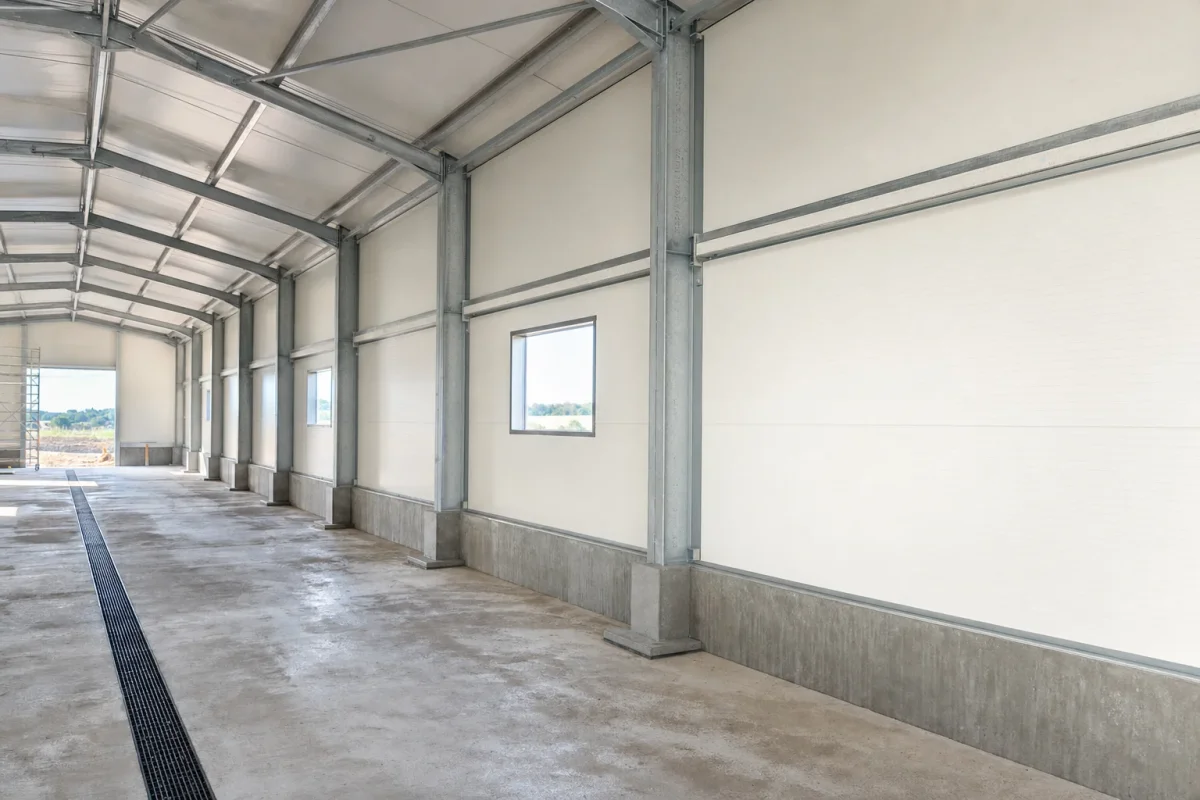
The intensification of agricultural production, the automation of farm processes and increasingly stringent animal welfare and environmental requirements force investors to build livestock and storage facilities with high durability, airtight thermal envelopes and short construction times. Sandwich panels with a PIR core have become the standard for cowsheds, piggeries, poultry houses, milking parlours, vegetable storage facilities and feed warehouses. This article presents the technical parameters, standards and selection criteria for solutions in agricultural construction — in line with WT 2021 and EN 14509.
Legal framework and classification of agricultural facilities
Agricultural construction in Poland is governed by the Regulation of the Minister of Agriculture and Food Economy of 7 October 1997 on the technical conditions to be met by agricultural buildings and their location, together with subsequent amendments. The classification of facilities is set out in PKOB (Council of Ministers Regulation of 30 December 1999), dividing them into residential and non-residential — including cowsheds, stables, barns, feed stores, dryers, storage facilities and agritourism buildings.
Key requirements for agricultural facilities include:
- structural durability — design compliant with the Eurocodes,
- fire safety — in accordance with the resistance classes defined in WT 2021 and fire-safety expert reports,
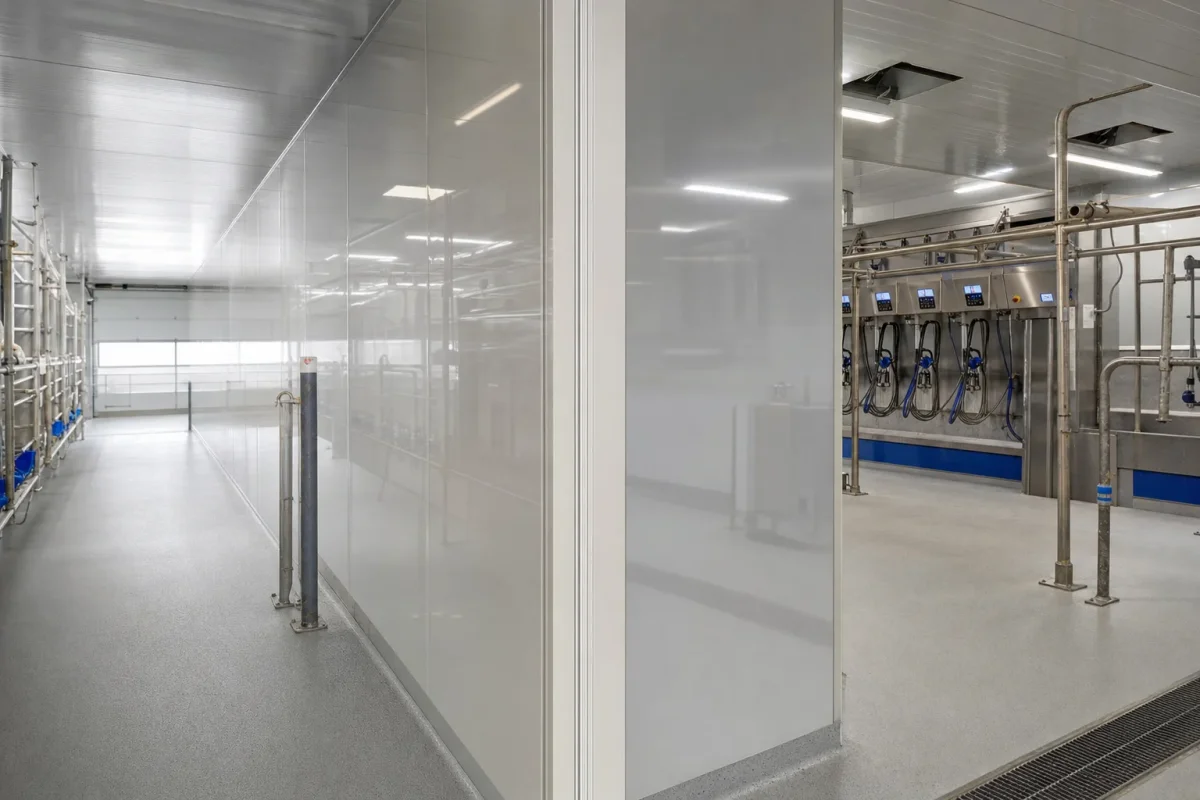
- hygiene and microclimate — thermal tightness, condensation control, resistance to washing,
- environmental protection — coating resistance to aggressive ammonia environments (NH₃, H₂S).
Although WT 2021 (Polish Technical Conditions 2021) does not impose U-values on agricultural production buildings as strict as those for residential buildings (roof U ≤ 0.15 W/m²K, wall U ≤ 0.20 W/m²K), for heated facilities (piggeries, broiler houses) it is economically justified to aim for those values — feed and heating costs represent the largest share of production costs.
PIR sandwich panel — construction and parameters
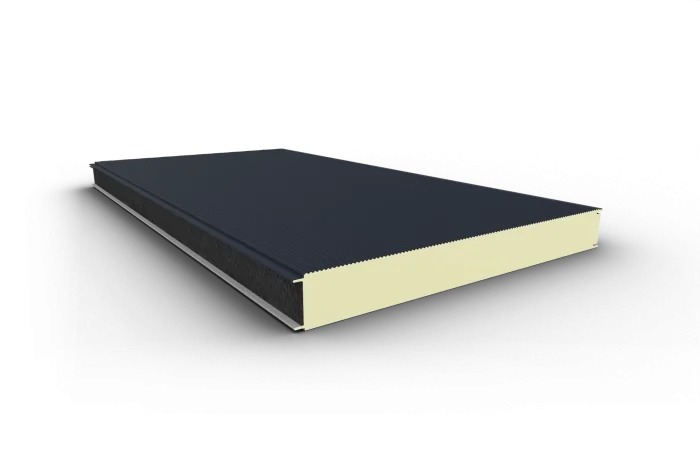
A sandwich panel compliant with EN 14509 is a composite consisting of two steel facings — galvanised and coated with polyester (standard 25 µm) or special coatings (PVDF, Plastisol for aggressive environments) — and a rigid polyisocyanurate (PIR) foam core. Factory bonding ensures repeatable parameters unattainable with on-site applied insulation.
Key technological parameters for the PIR core (in accordance with EN 13165):
| Parameter | insPIRe® standard | insPIRe® MAX |
|---|---|---|
| λD of the core | 0.022 W/(m·K) | 0.019 W/(m·K) |
| Fire reaction class (system) | B-s1,d0 | B-s1,d0 |
| Core density | ~40 kg/m³ | ~40 kg/m³ |
| Service temperature range | −40 to +80 °C | −40 to +80 °C |
Typical thicknesses are 40–200 mm for wall panels and 40–240 mm for roof panels, with production lengths reaching 12 m (up to ~16.5 m on request), which eliminates transverse joints and increases the airtightness of the envelope.
Selecting panels for the type of agricultural facility
Incorrect panel selection leads to complaints — most often due to coating corrosion in ammonia environments or a joint profile mismatched to the specifics of the loads. Below are the key selection rules:
Cowsheds, piggeries, poultry houses — walls and roofs
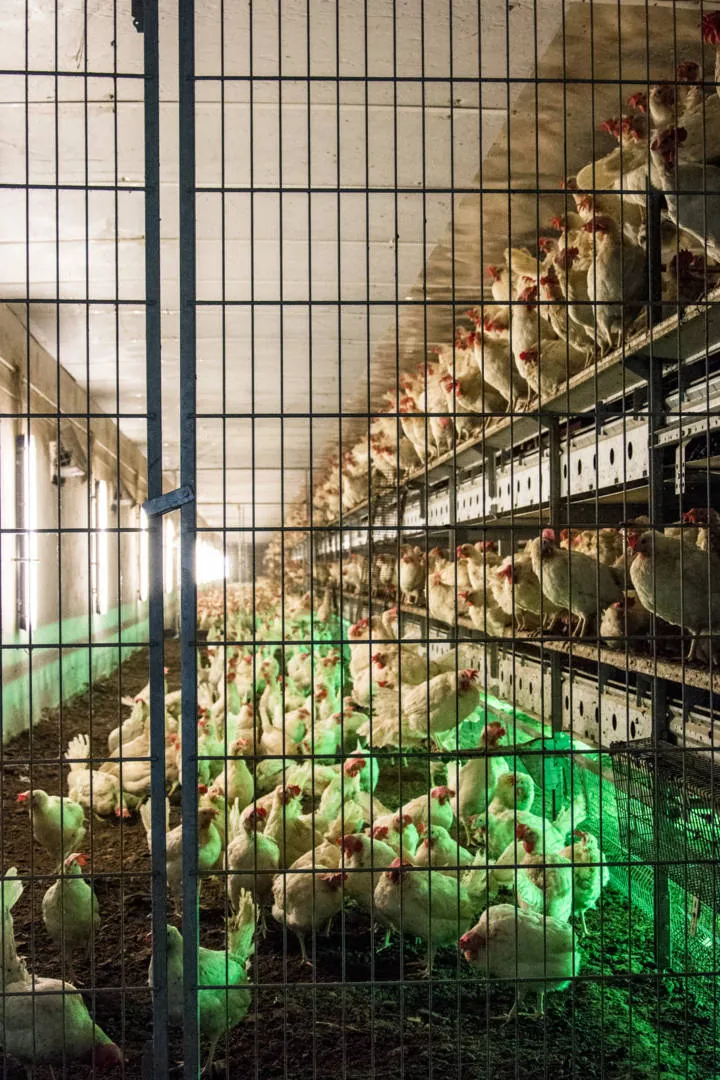
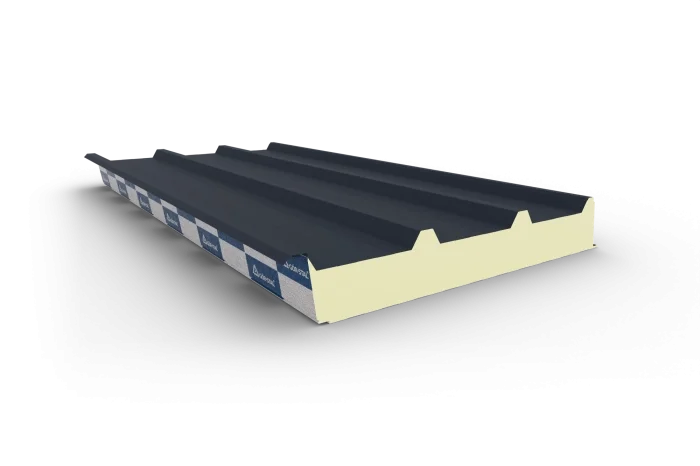
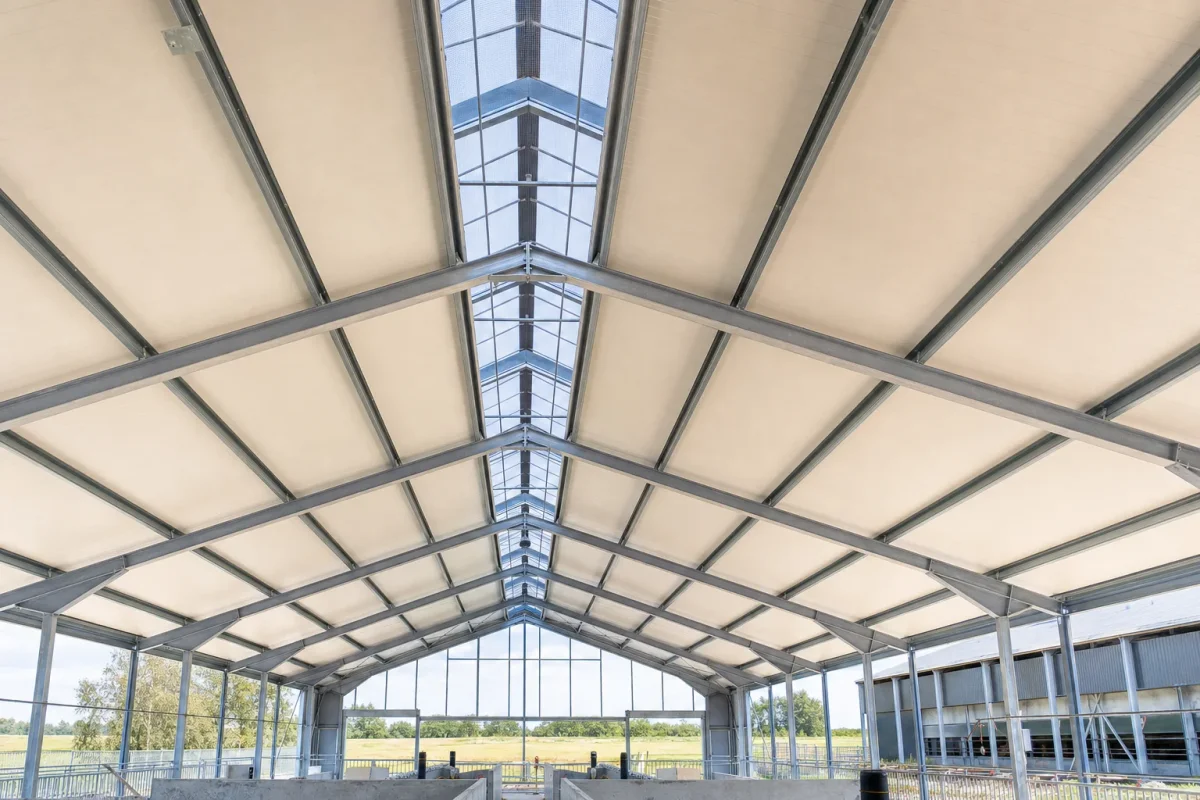
The livestock environment contains aggressive nitrogen compounds (NH₃, H₂S, organic acids). For walls and roofs we use the insPIRe® S sandwich panel (visible fastening, economical) or insPIRe® D for roof slopes — in both cases with a dedicated special coating on the internal side, resistant to the livestock environment. Technical details: livestock wall — sandwich panel and livestock roof.
For the highest corrosion requirements (high-stocking farms, environments of class C4–C5 according to EN ISO 12944) we recommend PVDF or Plastisol coatings — available on request.
Suspended ceilings in livestock facilities
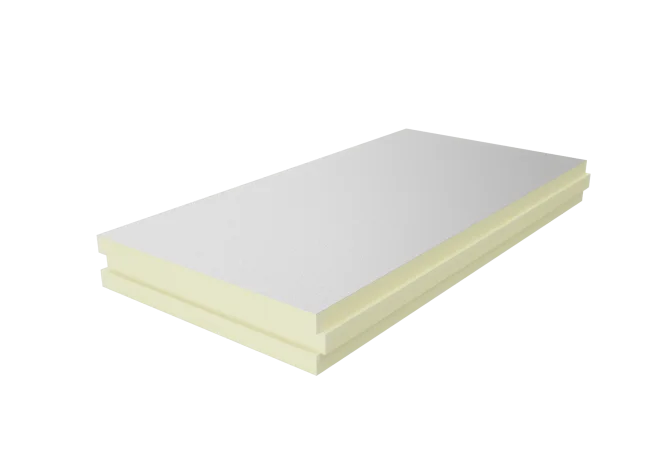
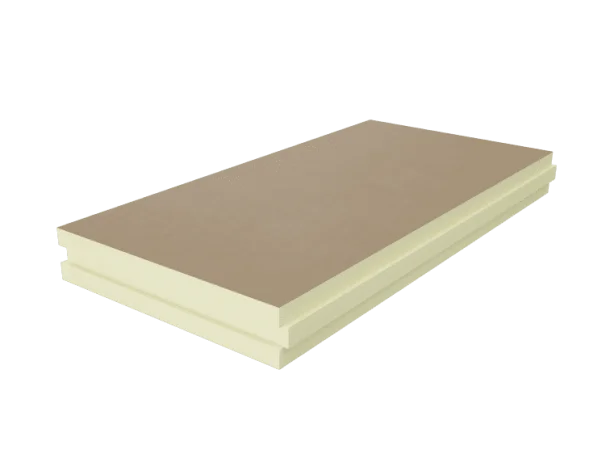
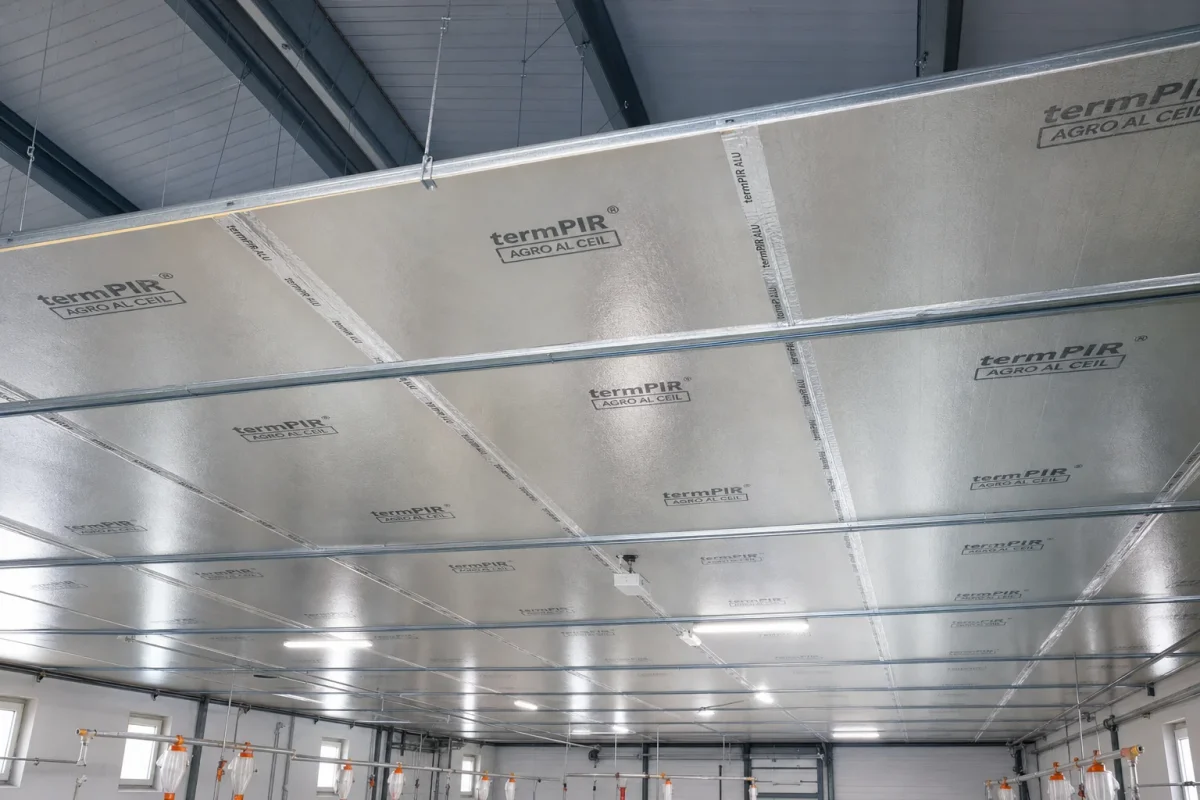
Inside livestock buildings, suspended ceilings that reduce the heated volume are used more and more frequently. Instead of sandwich panels, a lighter and more economical termPIR® AGRO AL CEIL can be used here — a PIR board with a dedicated facing resistant to washing and disinfection (NOT standard Al — the facing must be a special one). System: livestock suspended ceiling.
Partition walls and reinforced concrete prefabricates
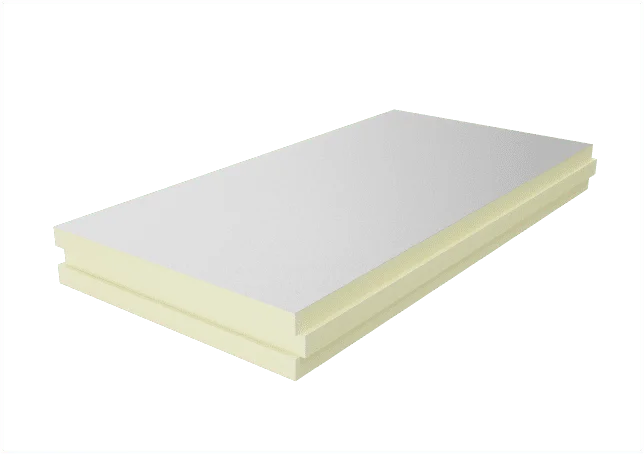
For partition walls in livestock facilities, PIR sandwich panels are used. When insulating walls made of reinforced concrete prefabricates (e.g. silos, tanks, slurry pit walls), standard boards with aluminium foil must not be used — the alkaline environment of fresh concrete causes corrosion of the Al facing. The correct choice is termPIR® AGRO P-REV with a PE facing resistant to the aggressive concrete environment.
Chillers and storage facilities
For fruit and vegetable storage, cheese ripening rooms and chillers for agricultural produce, the dedicated cold-store range is insPIRe® CH — with a labyrinth joint, sealing compound and PZH certificate. insPIRe® U panels (hidden fastening) should NOT be used here — the lack of a labyrinth joint leads to condensation and complaints.
Economics and construction speed
Agricultural facilities are often built on ground with low load-bearing capacity. The low self-weight of sandwich-panel envelopes (typically 10–14 kg/m² for wall and roof) makes it possible to significantly reduce foundation costs compared with masonry constructions (300–500 kg/m² for a two-layer wall).
Indicative U-value comparison for a livestock wall:
| PIR core thickness | U-value insPIRe® (λD 0.022) | U-value insPIRe® MAX (λD 0.019) |
|---|---|---|
| 60 mm | 0.36 W/m²K | 0.31 W/m²K |
| 80 mm | 0.27 W/m²K | 0.24 W/m²K |
| 100 mm | 0.22 W/m²K | 0.19 W/m²K |
| 120 mm | 0.18 W/m²K | 0.16 W/m²K |
| 150 mm | 0.15 W/m²K | 0.13 W/m²K |
For heated buildings (piggeries, broiler houses) the standard is 100–120 mm in the wall and 120–160 mm in the roof. Installation rates by a specialised crew are typically 200–400 m²/day, which allows the envelope of a 1,500 m² hall to be closed in 1–2 weeks.
Fire safety
The fire reaction classification according to EN 13501-1 for a PIR sandwich panel system with steel facings is B-s1,d0 (insPIRe®) or B-s2,d0 (termPIR® with facing). Under fire exposure, the PIR core forms a charred insulating layer that limits flame propagation. For facilities with increased fire requirements (e.g. fire-separation walls, warehouses with a high density of animals), the solution is GS MW — a sandwich panel with a mineral wool core, class A2-s1,d0 (non-combustible).
Frequently asked questions
Are PIR sandwich panels safe in livestock facilities with ammonia?
What sandwich panel thickness should be chosen for a dairy cowshed?
Can sandwich panels be combined with a masonry plinth?
What is the service life of PIR sandwich panels in an agricultural facility?
Do sandwich panels meet the requirements for agritourism buildings?
Related products and systems
Products
Read next
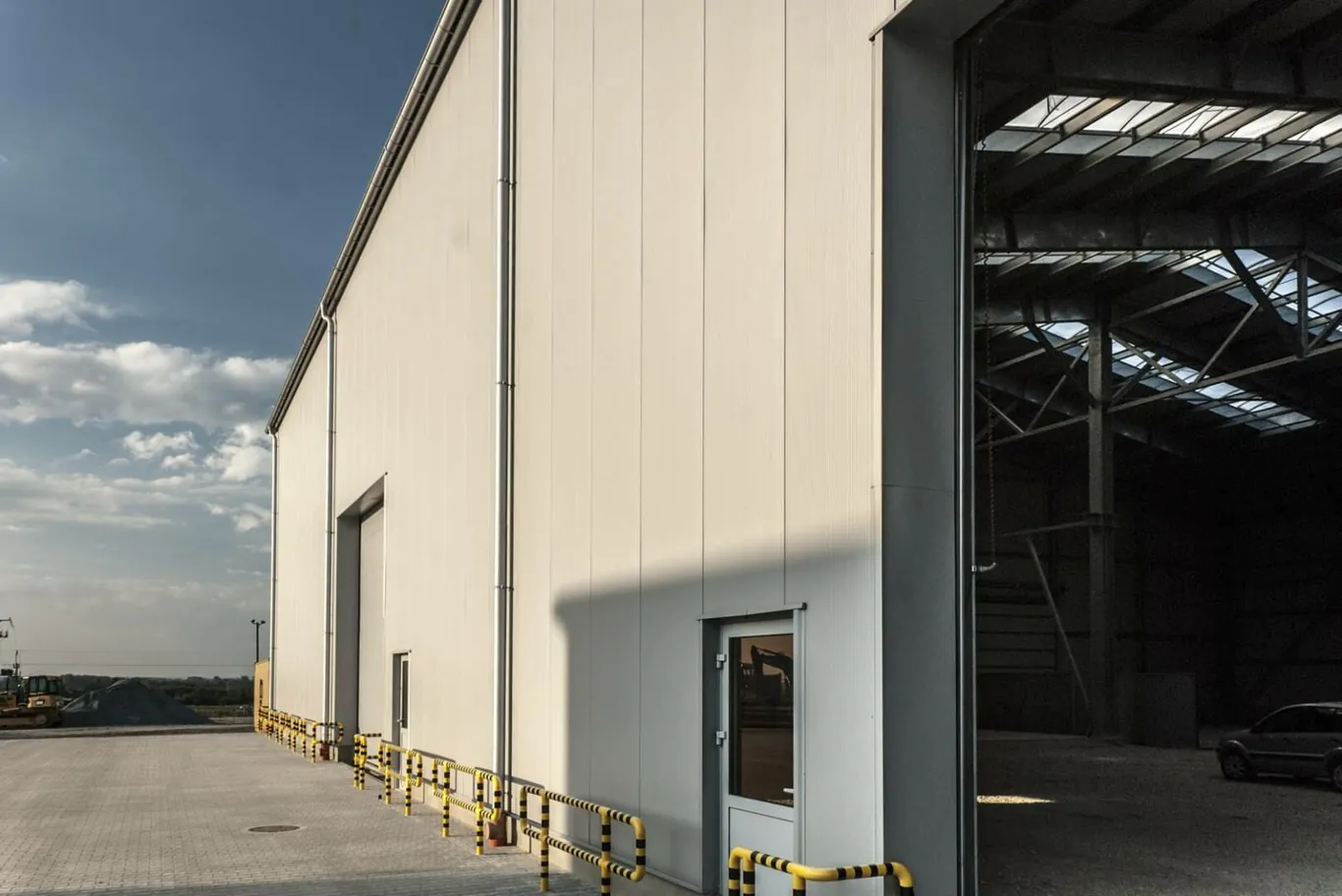
Sandwich Panel Building Envelope — Selection Guide | BOKKA
Insulating a Steel Garage with PIR Boards — B2B Guide | BOKKA
PIR Board Applications — Where Polyurethane Insulation Excels | BOKKA