Insulating before winter — what you can still finish in October and November
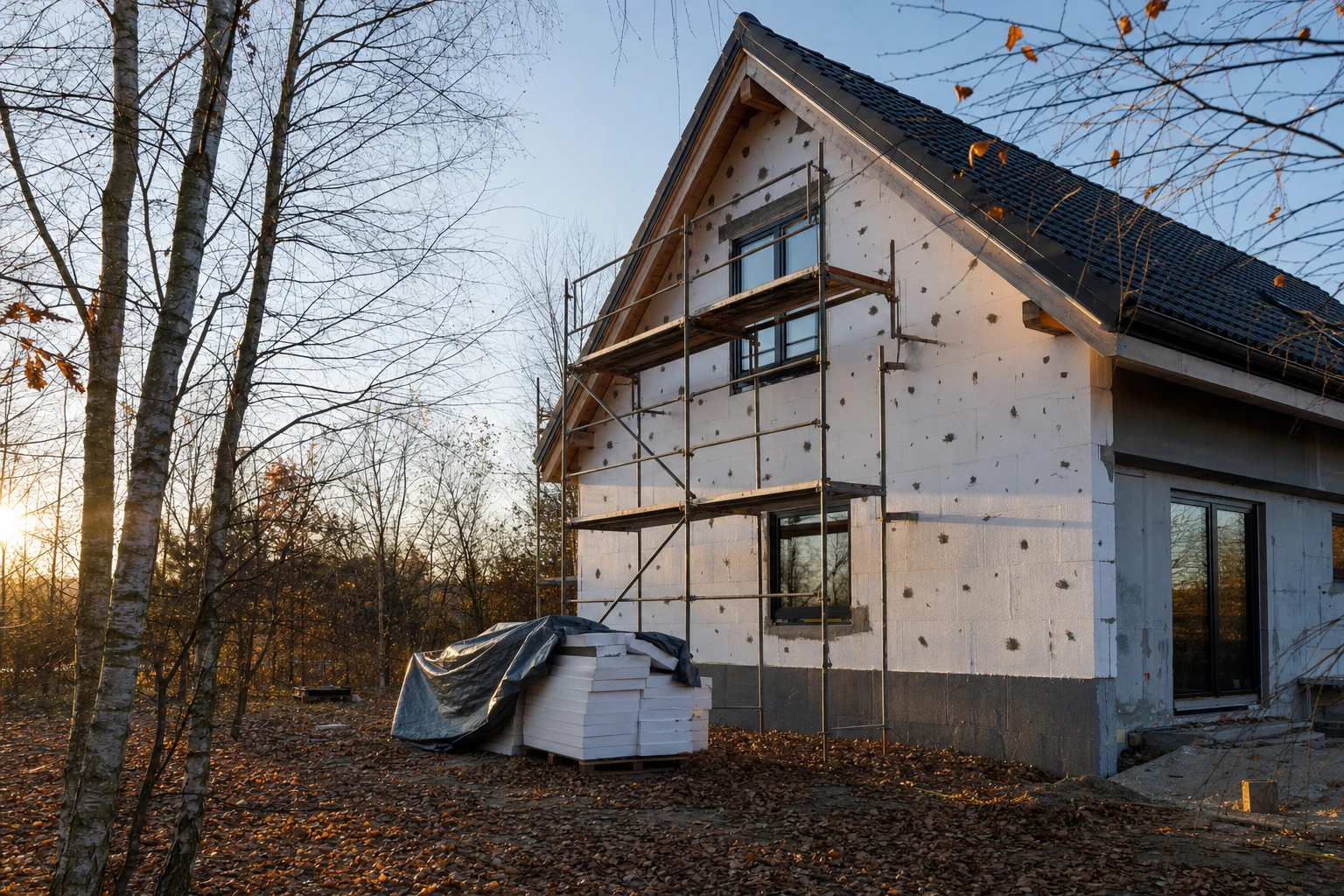
The last week of September, a call to the service desk. The question that comes back every few days at this time of year: “will I still make it before winter?”
The answer is always the same: it depends what you want to do. And, increasingly, on when you ring.
Because the weather window does not close like a door, on one particular day. It narrows. Week by week the number of days on which anything can be done outdoors falls — and the number on which you can work calmly under a roof rises.
The window does not close. It narrows
October still throws up weeks that could pass for May: dry, warm, windless. November has such weeks too, only less often and for less time — the day is several hours shorter, the nights colder, and the morning dew does not leave the façade until around midday.
And here comes the misunderstanding that costs the most. People look at the thermometer on the day of the work. What decides the outcome is the few days after it: that is when the adhesive gains strength, the render sets, the sealant cures. A fine mid-November morning guarantees nothing if the next three nights are going to be around zero.
So an autumn plan is best built not around the question “is it still possible” but around “which jobs do not ask about the weather at all”.
What goes best in autumn? Everything done from above and from inside
There is a whole group of jobs that autumn does not disturb in the slightest, because they do not take place outdoors at all.
First off the rank, and the most profitable: the ceiling of the top storey, or the floor of an unused loft. You go up through the hatch, lay the boards on the ceiling, cut them in, press them together, seal the joints with tape. Rain drums on the tiles while you work in the dry. Nothing sets, nothing dries, nothing depends on the temperature of the adhesive — because there is no adhesive here.
Second: the floor over a cellar, over a garage, over a drive-through. Installed from underneath, in a space that holds a dozen or so degrees regardless of what is happening outside. How to do it properly and which board to use we set out in the guide to insulating a cellar ceiling — the technique is the same in July and in December.
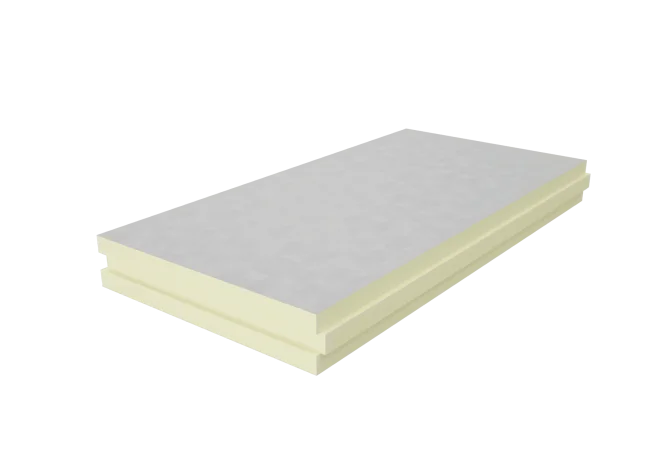
Third, with an asterisk: internal insulation. Also dry, also independent of the weather, but not a solution you simply “add on” without a design. An element insulated from inside needs a vapour barrier on the warm side and a check on where condensation will fall — in our range the product for that is the termPIR® AL/GK composite, a PIR board factory-bonded to a plasterboard sheet. It makes sense where the façade cannot, or may not, be touched.
The common denominator of all three: dry installation, carried out under a roof. The calendar stops being an argument.
What is better not started in mid-November
Now the other side. A few technologies have hard limits, and good intentions will not get round them.
ETICS, the classic external wall insulation, is a sequence of wet processes: adhesive, reinforcing layer with mesh, primer, thin-coat render. Every system manufacturer states in its technical data sheet the minimum air and substrate temperature and the permissible humidity — and those values differ between systems. Some manufacturers have grades intended for lower temperatures, but that too is an entry in the data sheet of a specific product, not a general rule. The system itself and the commonest contractor slip-ups we described in the piece on ETICS on termPIR® ETX.
Installation foams, adhesives and sealants have their own application thresholds, usually quite different from those of a board adhesive. A cartridge taken out of a cold van applies worse, cures more slowly and sticks less well.
Roof work on a wet or iced-up slope is a category of its own — here the safety of people comes before the technology, and immediately behind it the adhesion of everything being bonded to that slope.
One sentence worth remembering instead of the whole list: whether you may apply something today is decided by the technical data sheet of the material used and by the forecast for the days after application — not by the temperature on the day of the work and not by the crew’s hunch. There is no universal number of degrees.
Halls built from sandwich panels are a league of their own. There the installation is dry by nature, so cold follows different rules — we gathered the manufacturer’s specific thresholds in the article on installing sandwich panels in autumn and winter.
If there is only enough for one job — where to start
The commonest situation at the end of September: the budget and the time will stretch to one building element. The order is not a matter of taste.
Start at the top. The roof, or the ceiling of the top storey, accounts for the single largest share of the heat losses of a typical uninsulated house — we set out how those losses break down in the piece on planning a retrofit before the season. On top of that comes a purely autumnal argument: it is at once the simplest job to install and the least dependent on the weather. The biggest effect and the lowest risk in one.
Then whatever is done from below: the floor over a cellar, over a garage, over a drive-through, a ground floor if there is a refurbishment going on anyway. A smaller share of the losses than the roof, but an enormous effect on perceived comfort — a cold floor spoils the impression of the whole house, even when the walls are fine.
Walls last. Not because they matter less, but because they are the most sensitive to timing. Walls will wait until spring at no cost; an uninsulated ceiling will spend the whole winter letting heat out into the sky.
| Scope of work | Sensitivity to weather | Realistic window this season |
|---|---|---|
| Ceiling of the top storey, unused loft | minimal — dry installation, under a roof | practically the whole season |
| Floor over a cellar, garage, drive-through | minimal — work from below, indoors | practically the whole season |
| Internal insulation | low, but needs a design for the element | the whole season |
| Over-rafter layer during a re-roof | high — the slope is open, wind and rain | while the forecast gives several dry days in a row |
| ETICS: adhesive, mesh, render | the highest — thresholds from the system data sheet | as per the data sheet; usually ends in autumn |
PIR boards in autumn — dry work, but not careless work
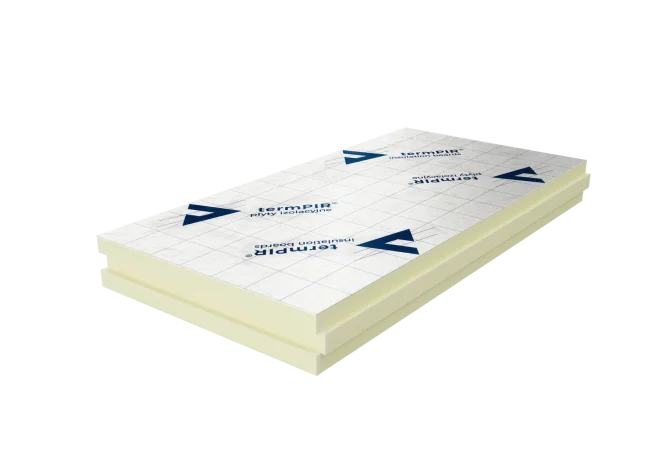
PIR board has an advantage in this season that only shows up on site. It is a rigid, formatted material, installed dry: you cut it, lay it, fix it, tape the joints. It does not soak up water the way fibrous materials do — termPIR® AL has water absorption class WL(T)2, i.e. ≤2% by volume, at λD 0.022 W/(m·K). A pack that has got wet does not automatically mean material for the skip.
Nor does it mean you can leave it on site and hope for the best. Three things to watch more closely in autumn than in summer:
- Store it under cover, on level, dry ground, well away from places where water stands. A pack that is frozen and wet is a problem at the taping stage, not at the insulation-value stage.
- Install dry boards. Dew and frost can settle on the top facing overnight without a single drop of rain, and aluminium tape stuck to a damp facing holds on its word of honour.
- Remove the protective film in line with the manufacturer’s recommendation for the product concerned — not “while we are at it”, whenever it happens to be convenient.
The rest of the selection rules do not change with the season. In an over-rafter build-up we still aim at 150 mm, because the thermal bridges at the screws eat part of the theoretical result of a thinner layer.
31 December is a construction deadline too
This is the one people forget most often, and it is one of the few dates in this puzzle that cannot be negotiated with the weather.
The Polish thermal retrofit tax relief settles expenditure incurred within a given tax year. An invoice for boards and labour issued in December goes into this year’s return — the same invoice issued three weeks later will only reach next year’s. For somebody planning an investment across the turn of the year, that can mean several thousand złoty shifted by twelve months.
So it is worth separating two decisions: when the crew comes on site, and when you buy the material. You can buy and collect the material in December and install it in March — provided you keep in mind the deadline for completing the whole investment, which the relief also defines. The caps, the requirements the invoice has to meet and how to enter the amount on the PIT/O annexe to the Polish tax return we set out in the guide to the thermal retrofit tax relief — here it is enough to remember the cut-off date itself.
The queue grows and the thicknesses shrink
Two things happen in parallel in autumn, and both work against the person who rings at the last moment.
The first: contractors’ diaries fill up. September and October are the peak of the insulation season in Poland. A good contractor who had a free week in September has, by November, a free slot in March.
The second: the availability of particular thicknesses can be narrower than in spring. Standard formats leave the warehouse fastest in precisely these weeks, and a single thickness can disappear for several weeks at a time.
Hence a practical order of operations, the reverse of the intuitive one: secure the material first, then fix a date with the crew. A crew with the material already on site will come more willingly than a crew told to wait for a delivery in November. What is available off the shelf, and in which thicknesses, is shown on the product pages in the BOKKA shop — together with the stock level and the price. The shop runs in Polish.
Do one thing, but finish it
The worst autumn scenario is not “I did not make it”. It is “I started everything and finished nothing” — scaffolding standing against an unrendered wall all winter costs more than calmly moving the façade to April.
Choose one building element, ideally the one at the top. Do it properly, with the joints closed and a complete set of documents for the invoice. In spring you will come back to the rest with a full season ahead of you, instead of chasing your own programme.
🤝 Contact a BOKKA technical advisor — we will check what you can realistically finish this season and select rigid PIR insulation boards for the element worth starting with.
Sources:
- Polish Personal Income Tax Act of 26 July 1991 — Art. 26h (the thermal retrofit tax relief; deduction of expenditure incurred within the tax year)
- Regulation of the Polish Minister of Investment and Development of 21 December 2018 listing the types of building materials, devices and services connected with the performance of thermal retrofit projects (Journal of Laws 2018, item 2489, as amended)
- Regulation of the Polish Minister of Infrastructure on the technical conditions to be met by buildings and their siting — thermal insulation requirements for building elements (WT 2021)
- PN-EN 13165 — Thermal insulation products for buildings. Factory made rigid polyurethane foam (PUR/PIR) products. Specification
- Technical data sheets for termPIR® (λD, water absorption class WL(T)2) and technical data sheets for ETICS systems, foams, adhesives and sealants — minimum temperatures and application conditions
Frequently asked questions
Can a house be insulated in November?
Can a loft be insulated in winter?
By when do I have to pay to claim the relief for this year?
Can PIR boards be installed in frost?
Related products and systems
Read next
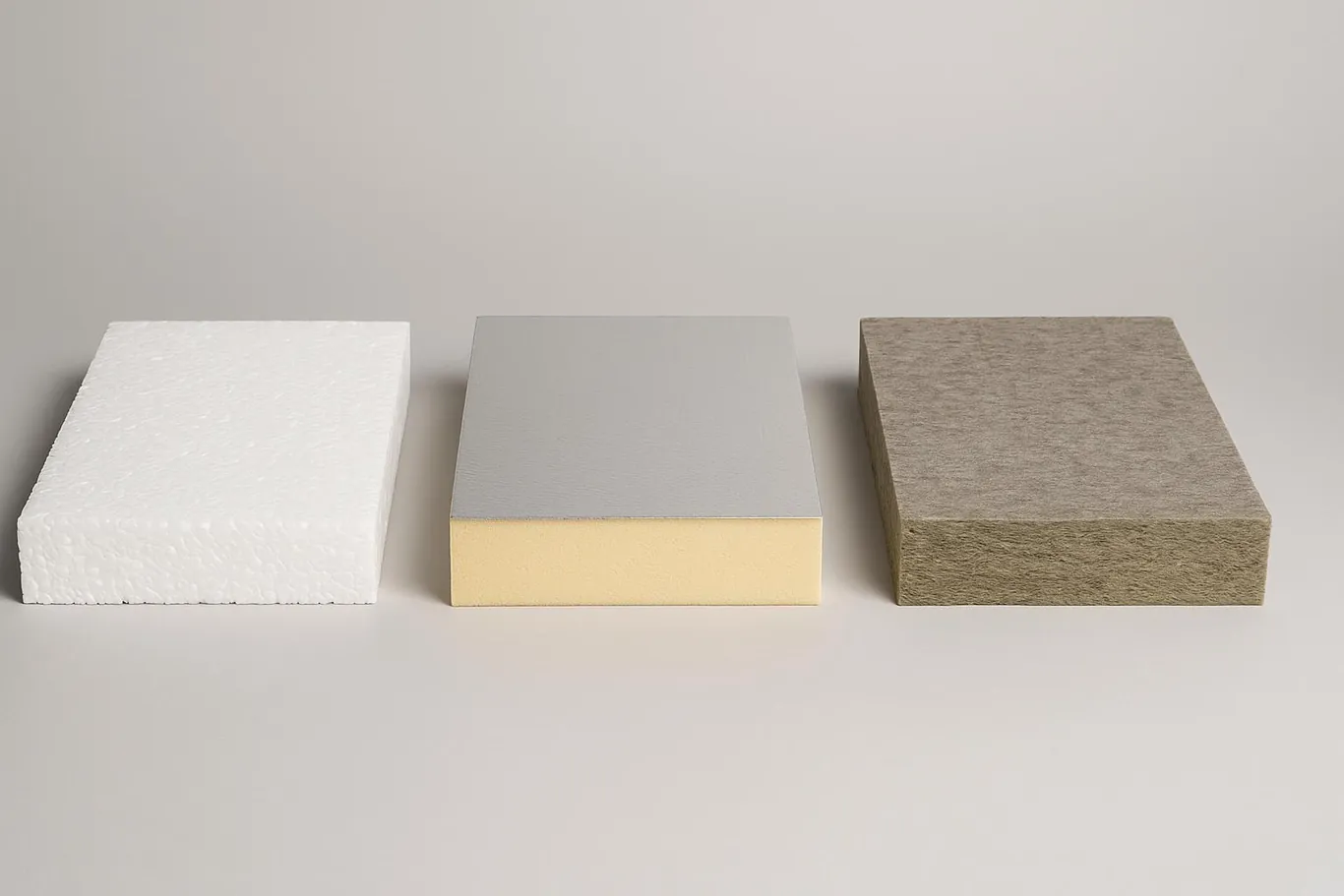
PIR vs EPS/XPS vs Mineral Wool: ROI Analysis for Designers | BOKKA
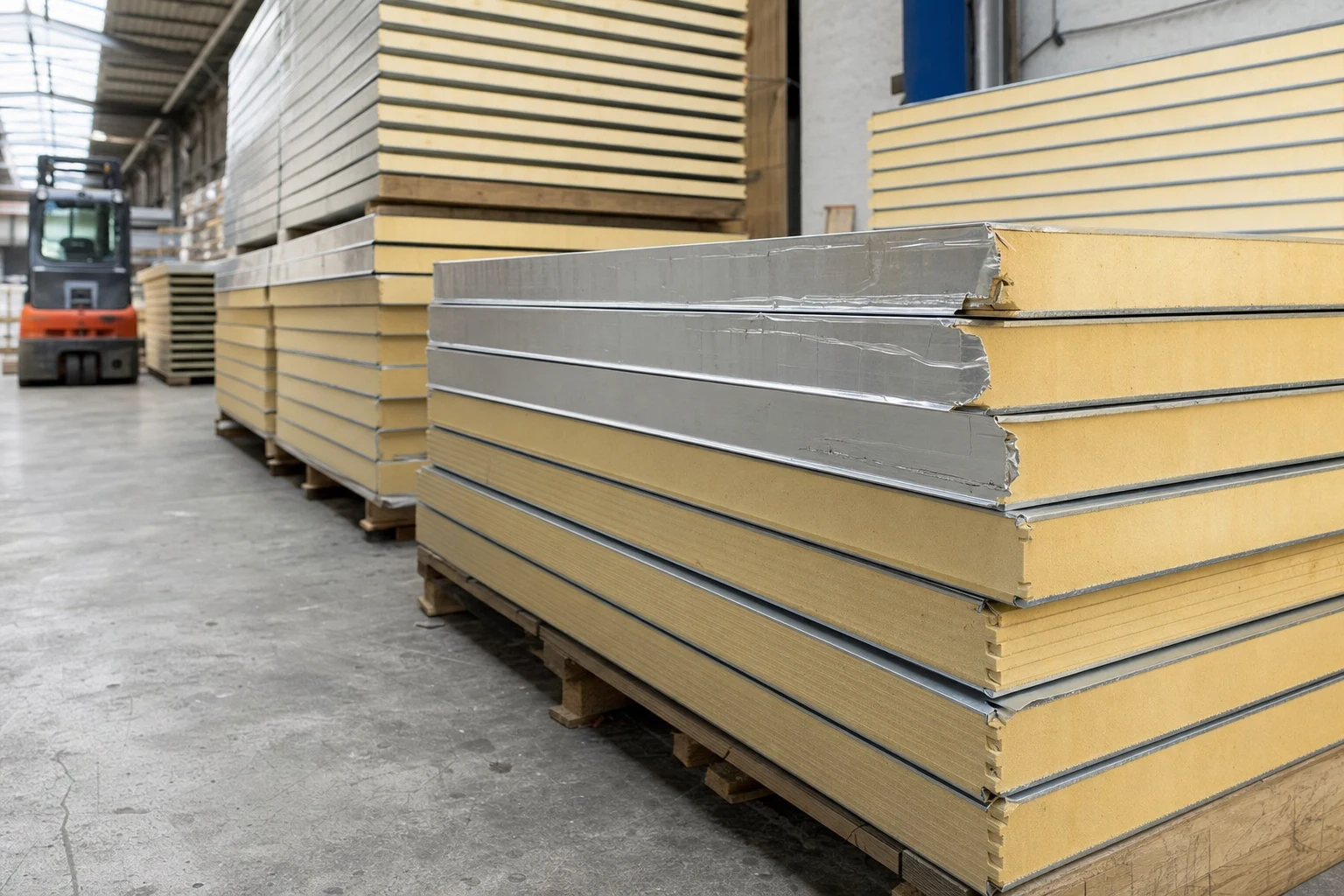
Second-grade PIR boards — when they pay off and when they are a trap

Energy Audit of a Building — Thermal Retrofit with PIR