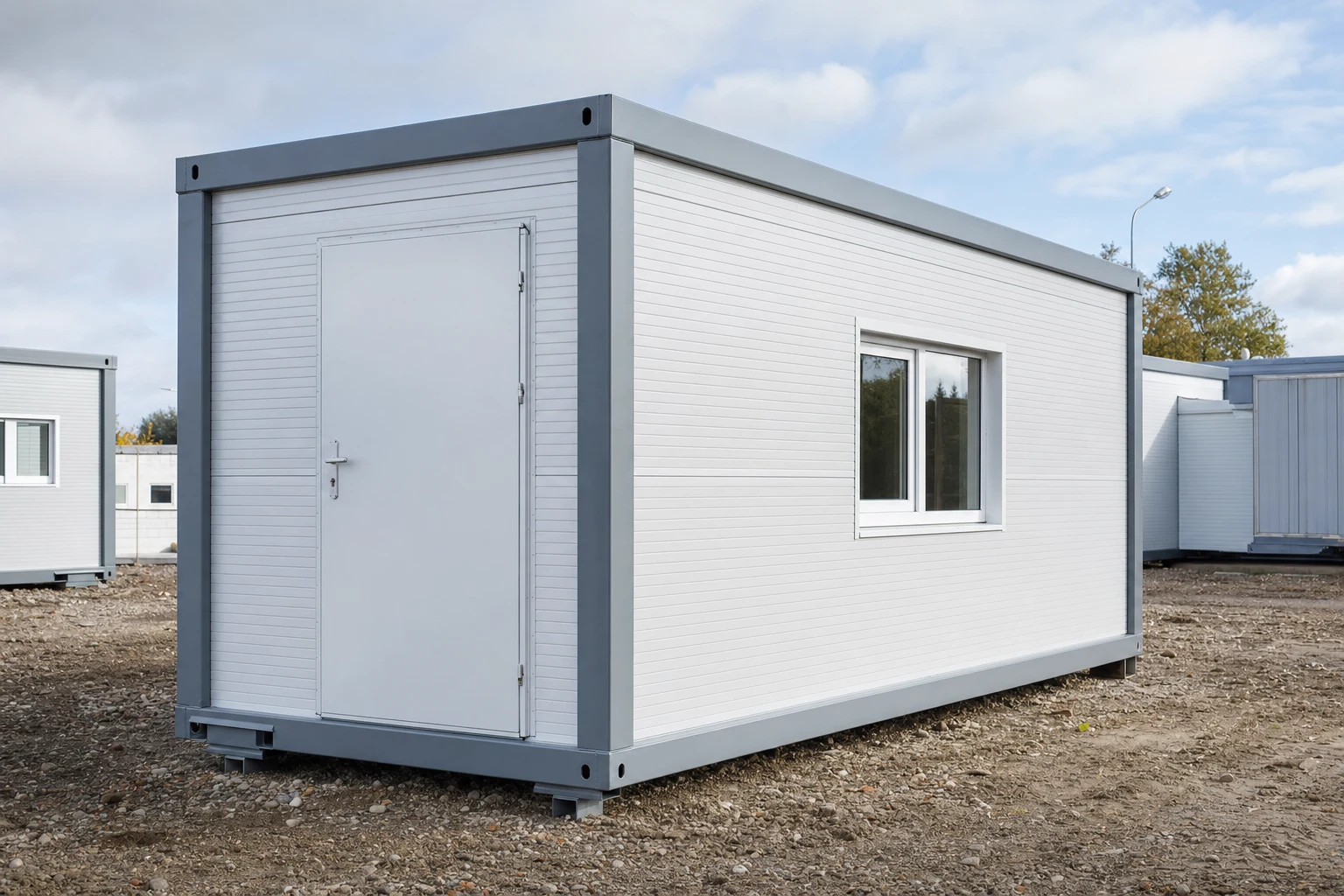
Car wash — building with sandwich panels and the cost of a moisture- and chemical-proof envelope
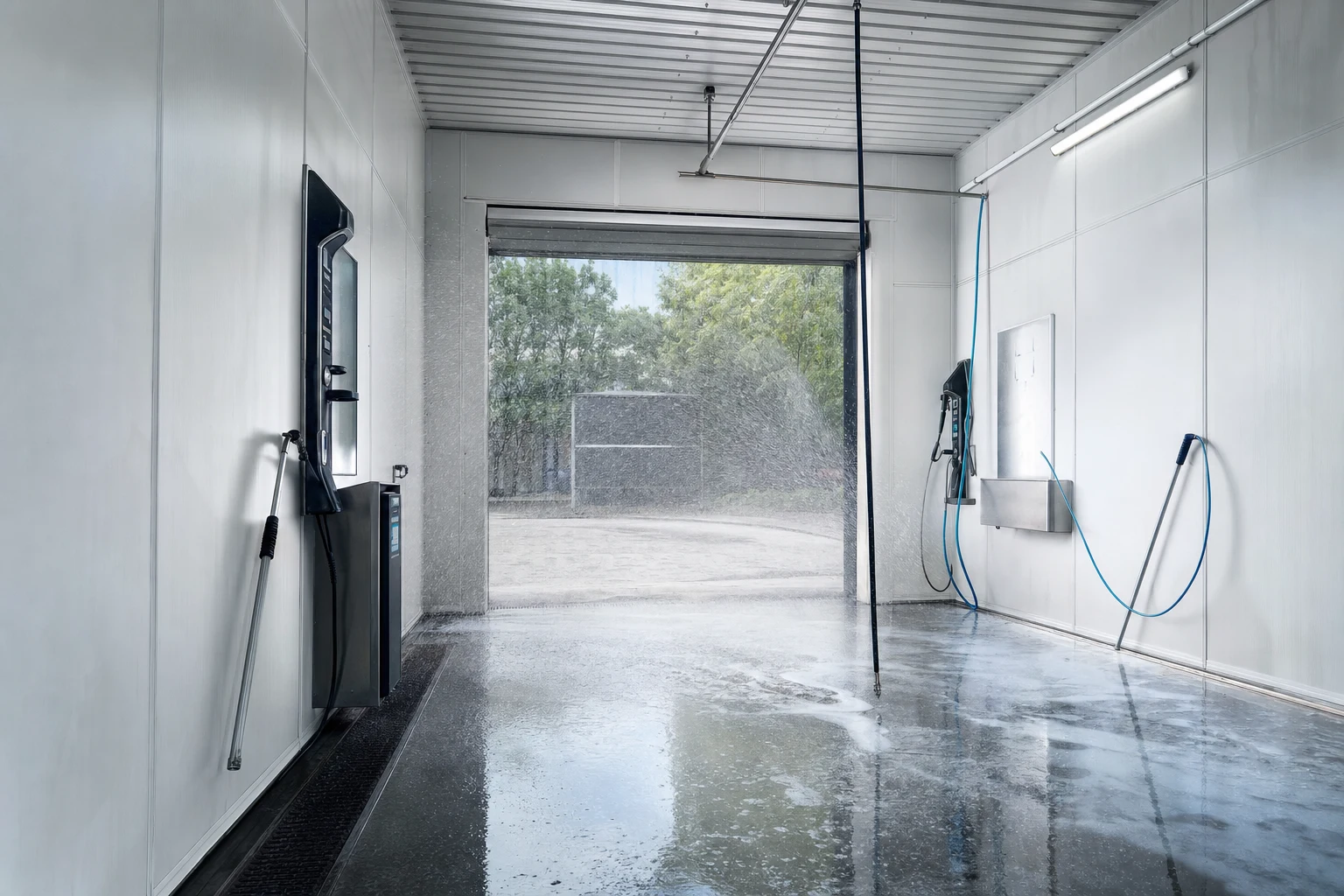
A Saturday afternoon at a self-service car wash. A lance of warm water hits a mud-caked car, a cloud of steam rises over the bay, foam runs down the walls and disappears into the drainage grate. Within an hour, a dozen more cars will pass through — and the same mist will settle on every centimetre of the envelope. Day after day, all year round.
If you are planning to build a car wash, remember that image. The durability of this business will not be decided by the washing technology alone — it will also be decided by whether the envelope survives its own working environment. And that is one of the most aggressive environments you can inflict on a building.
Why a car wash eats ordinary coatings
In a car wash, everything acts on the envelope at once. Humidity reaches the ceiling — literally, because during operation the air is practically saturated with water vapour. Suspended in that vapour is a mist of chemicals: alkaline agents from active foam and the acidic ones used to clean wheel rims. It settles on the walls, ceiling and flashings — including in places no one ever aims the lance at.
In winter a third player joins in: road salt. Every car brings it in on its underbody and wheel arches, and the water rinses it straight onto the floor and the lower band of the walls. Chlorides are exactly the corrosion mechanism that forces seaside buildings to use premium coatings — except that in a car wash you inflict it on yourself, every season.
The standard polyester coating — the cheapest and most common on sandwich panels — is designed for mild environments. In the atmosphere of a car wash its thin organic barrier starts losing from cut edges and minor damage: first blisters, then under-film corrosion, finally rusty streaks on a façade whose warranty most likely never covered such an environment. An ordinary coating in a car wash will not live to see the end of its warranty — and that is not a product defect, but use outside the intended purpose.
Corrosivity category — the word that must come up before any quotation
The PN-EN ISO 12944-2 standard organises environments into corrosivity categories: from C1 (heated, dry interiors) to C5 (industry with an aggressive atmosphere, coastal zones with high salinity) and the extreme CX. The intuition is simple — the higher on this scale a building operates, the more durable a coating its steel facing needs in order to reach the end of its intended service life.
The interior of a car wash — constant moisture, chemicals from both ends of the pH scale, chlorides from road salt — sits high on that scale. Exactly how high should be determined by the designer for the specific building, but one thing can be said without hesitation: this is no environment for standard polyester. On GS insPIRe sandwich panels, the coating intended for the most aggressive environments is Colorcoat Prisma — we described its parameters and selection logic in detail in the article on the facing for a C5 environment. The rule from that text applies in a car wash in full: first classify the environment, only then choose the colour.
The plinth — the spot the lance aims at every day
The highest pressure and the dirtiest water meet at the floor. The jet ricochets off sills and wheels, carrying sand, salt and mud, and all of it lands on the lower band of the walls — over and over, with every wash. The bottom edge of a sandwich panel must not stand in this zone: neither soaking in standing water nor taking direct hits from a grit-laden jet.
That is why in a car wash the panel walls are not brought all the way down to the floor. The envelope starts on a plinth — a concrete or masonry band that takes the water, splashes and impacts — and the joint between panel and plinth is closed with a flashing and a tight, non-absorbent seal laid to a fall, so water runs off instead of soaking in. The floor must slope towards the drainage so nothing pools at the base of the walls. The design logic of this detail is a close twin of the plinths in cold stores and freezer rooms, which we covered separately — a different temperature, the same three commandments: continuity of insulation, tightness, washability.
Why there is water on the ceiling when no one aims there
The dew point is the temperature at which vapour in the air turns into droplets — like on a cold bathroom mirror. In a car wash this physics runs at full throttle: in winter, heated water loads enormous amounts of vapour into the air, and every surface colder than the dew point becomes a condenser. The ceiling, the upper parts of the walls, the flashings, the door — all wet, though no one sprayed them.
The envelope can either work with this physics or succumb to it. It works with it when the partition is warm on the inside — a continuous PIR core and tight panel locks keep the internal surface above the dew point for most of the operating time — and when ventilation continuously expels the vapour outside. Ventilation capacity is the job of the services designer; the envelope’s role is not to add cold bridges on which the vapour will condense first. We took the condensation mechanism and the ways to prevent it apart piece by piece in the article on the dew point under a hall roof.
There is one more consequence: since the ceiling of a car wash cannot be kept dry anyway, it must be washable. A smooth, non-absorbent steel facing that can be rinsed down regularly is a condition of hygiene and appearance — absorbent, moisture-sensitive materials simply have no business being in this ceiling.
Self-service or automatic — two different jobs for the envelope
A self-service car wash is usually a canopy structure: bays open or separated by partition walls, a roof over the whole, an enclosed plant room at the back. Natural air exchange is enormous, so condensation is less of a nuisance — but the envelope works through the full amplitude: frost, sun, wind and chemical mist reaching everywhere. Here the emphasis falls on the facing’s coating, the plinths and the edge flashings, and the partition walls between bays must withstand lance fire from both sides.
An automatic car wash — rollover or tunnel — is an enclosed, warm hall. There is far more vapour and nowhere for it to escape, so ventilation, vapour-tight joints and a washable ceiling come to the fore. An enclosed volume also means a plant room with pumps and chemical dosing units — a separate, aggressive micro-environment worth enclosing just as carefully as the wash hall.
In both cases the material is the same: wall and roof sandwich panels with a PIR core, in the variants we compared in the guide to the insPIRe S, U, D and CH line. What differs is not the product but where the emphasis falls in the details.
Car wash — the cost of building the envelope: what it consists of
We will not quote rates here — there are too many configurations for a single figure to be honest. What we can do is show what the cost of the envelope consists of and what moves it.
The first item is the panels themselves: the variant (a wall panel with visible fixing is cheaper than one with concealed fixing; a roof panel has its own profile), the core thickness and — crucial in a car wash — the coating class. A premium facing for aggressive environments means a surcharge over standard polyester. It is also the item where savings take their revenge fastest, because replacing a corroded façade after a few seasons costs a multiple of that surcharge.
The second item is the details: plinths, flashings, seals and installation accessories. In an ordinary hall this is a margin of the budget — in a car wash it is a fully fledged item, because there are many details and every one must be tight. The third is installation, where care matters more here than usual: an unclosed lock or a badly seated fastener is a future focus of corrosion, and the most common sandwich panel installation mistakes reveal themselves faster in a car wash environment than anywhere else.
On top of that come moisture-resistant doors and joinery, plus everything this article does not price: the washing technology, the services, the floor with its drainage, the foundations. The envelope is one item in a car wash budget — but the one that decides for decades how the building looks and how long it lasts. You will find the broader context of where a lightweight sandwich panel envelope performs best in a separate overview.
Before you order the panels
A car wash is an exam for the envelope: humidity like a bathhouse, chemicals like an industrial plant, salt like the seaside — all at once, every day. Sandwich panels pass this exam on two conditions: a facing matched to the aggressive environment, and plinths, joints and ceiling solved without shortcuts. The rest is just ordinary, fast hall construction — which is exactly why this technology suits car washes so well.
🤝 Contact a BOKKA technical advisor — we will help select sandwich panels and a facing resistant to the car wash environment, and advise on how to solve the plinths and the critical details.
Sources:
- PN-EN ISO 12944-2 — Corrosion protection of steel structures; corrosivity categories of atmospheres
- PN-EN 14509 — Self-supporting double skin metal faced insulating panels — Factory made products — Specifications
- Colorcoat Prisma® coating technical data sheet (Tata Steel)
- Technical data sheets and installation guidelines for GS insPIRe sandwich panels (Gór-Stal)
Frequently asked questions
Is a sandwich panel suitable for the envelope of a car wash?
Which sandwich panel facing should I choose for a car wash?
Why does water condense on the ceiling and walls of a car wash?
What does the cost of building a car wash envelope depend on?
How does the envelope of a self-service car wash differ from an automatic one?
Related products and systems
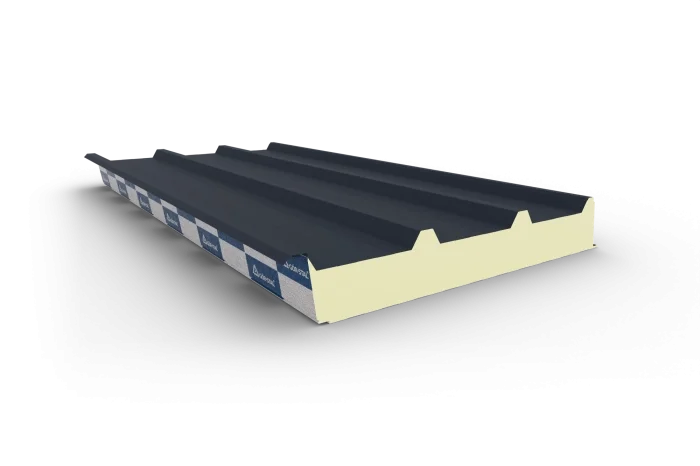
Read next
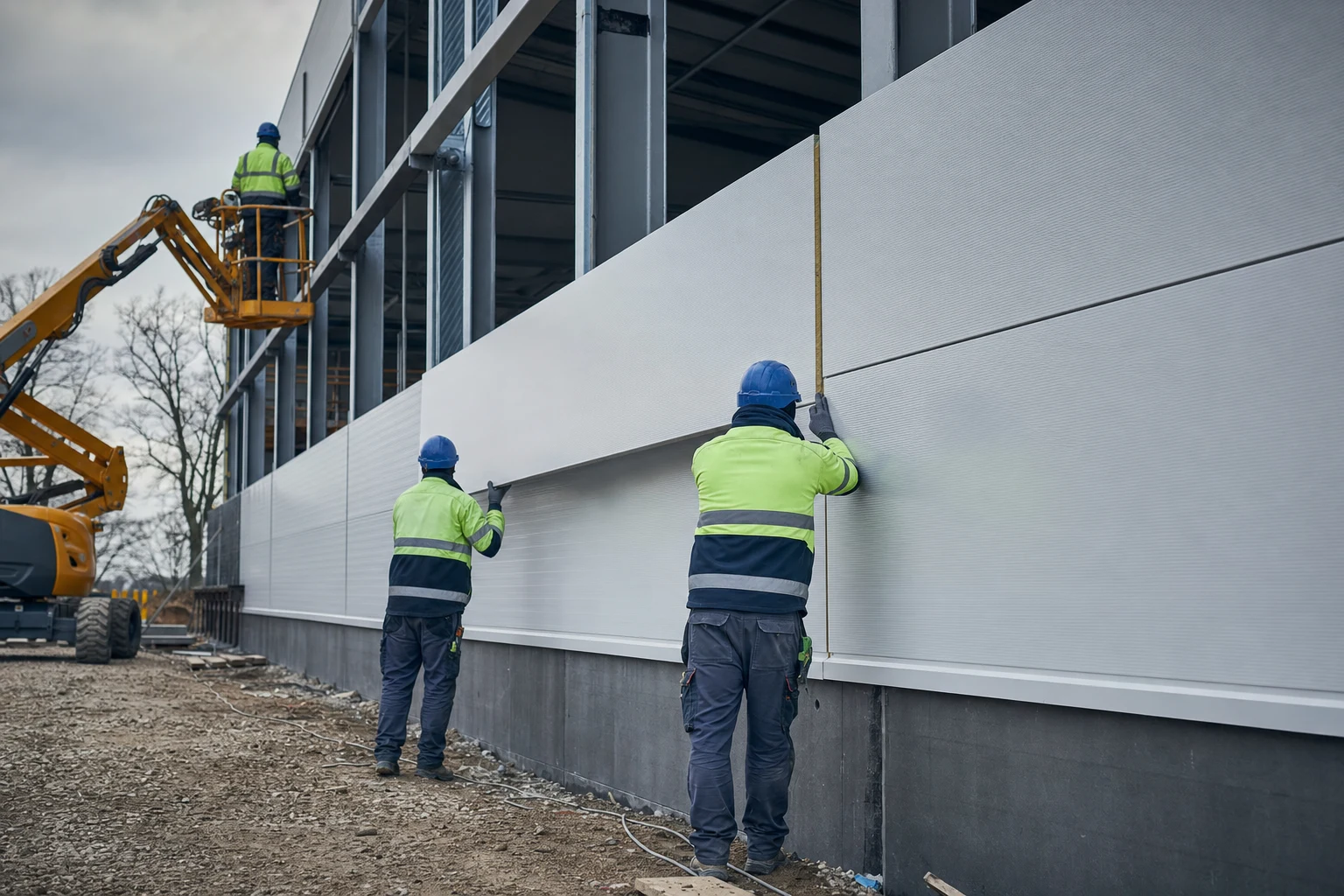
Installing sandwich panels in autumn and winter — what works and what to watch
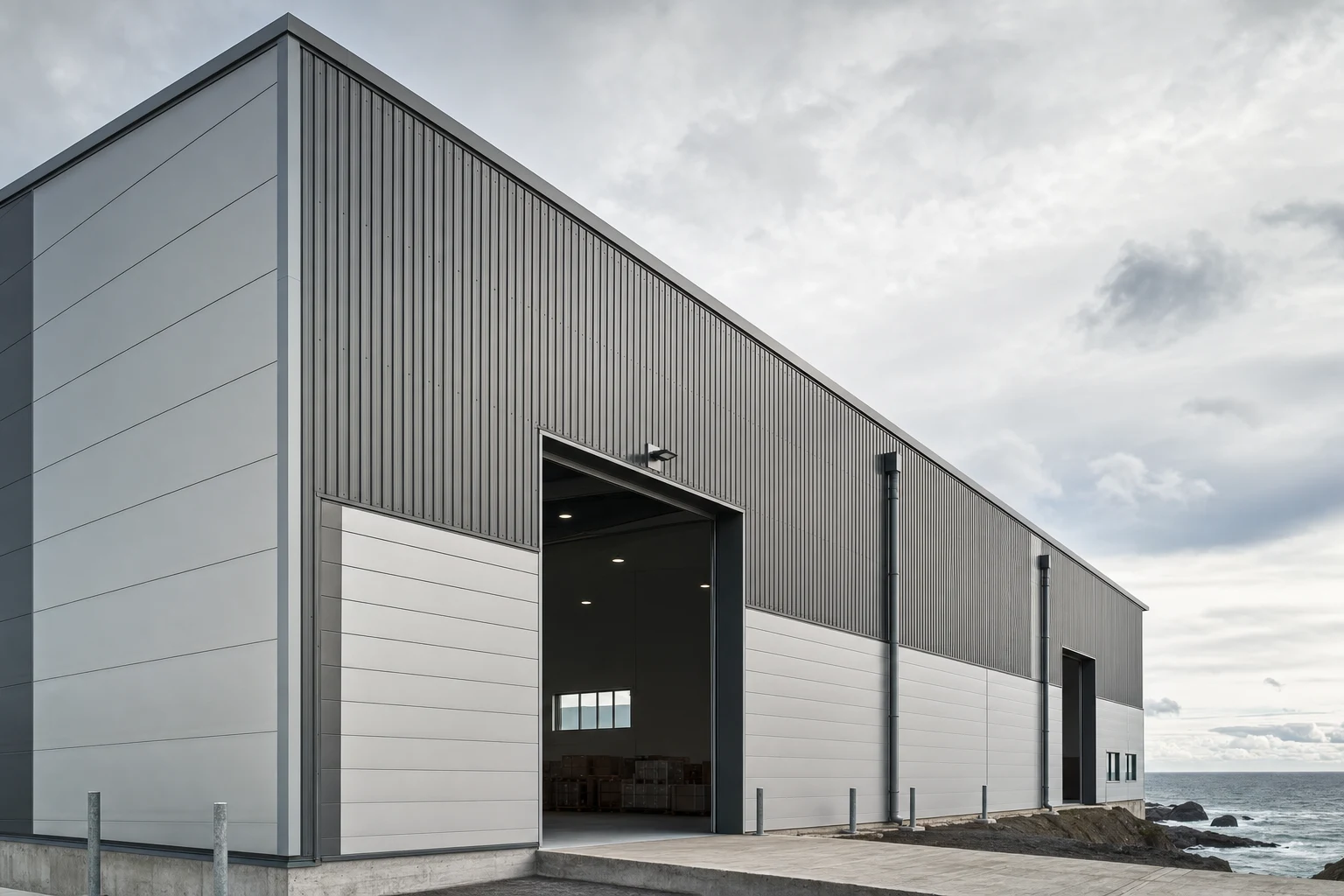
Gór-Stal sandwich panels and a facing for a C5 environment
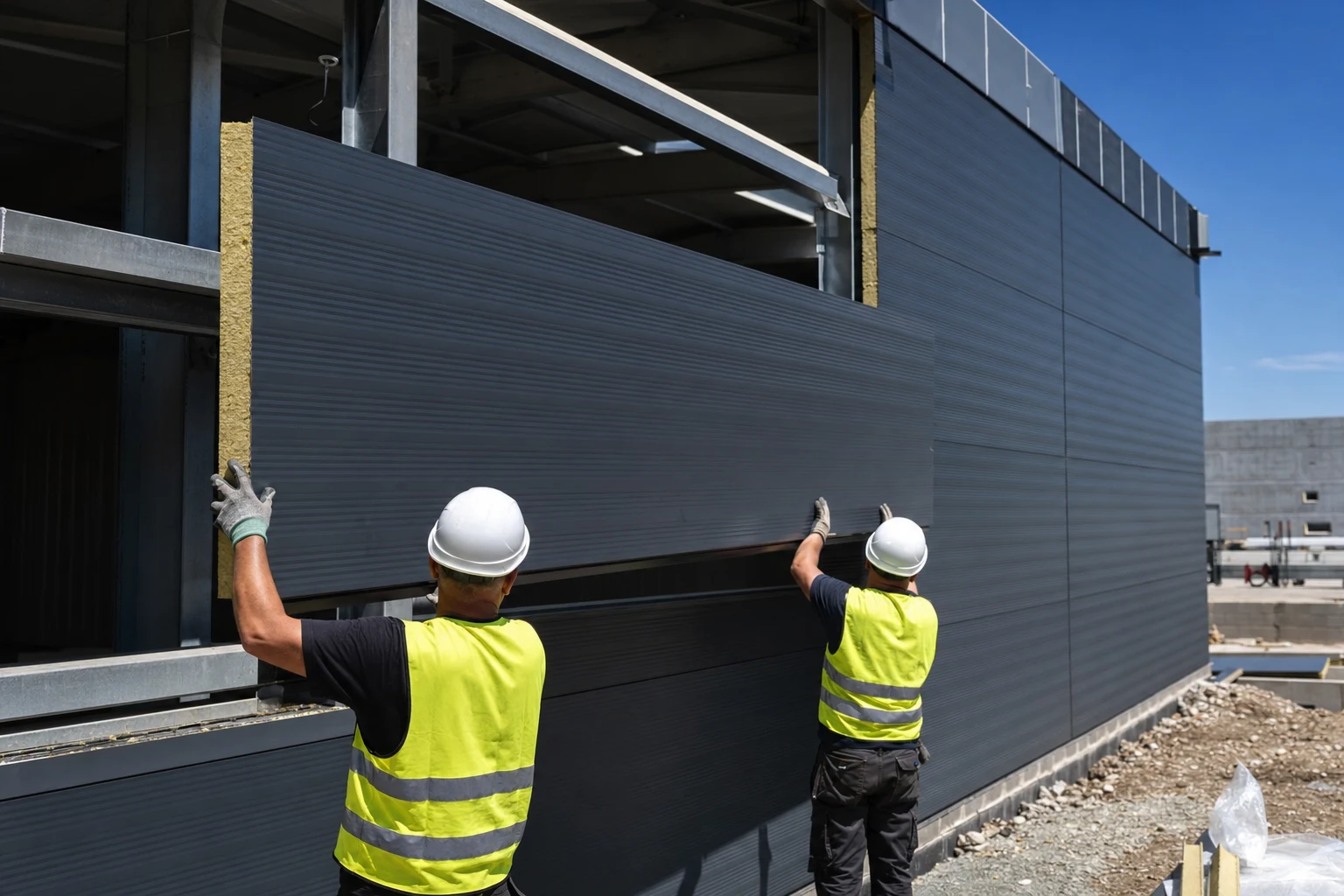
Installing sandwich panels in hot weather — expansion, joints, colour choice