Single-family construction
Energy-efficient and passive houses. PIR in the roof, floor, walls.
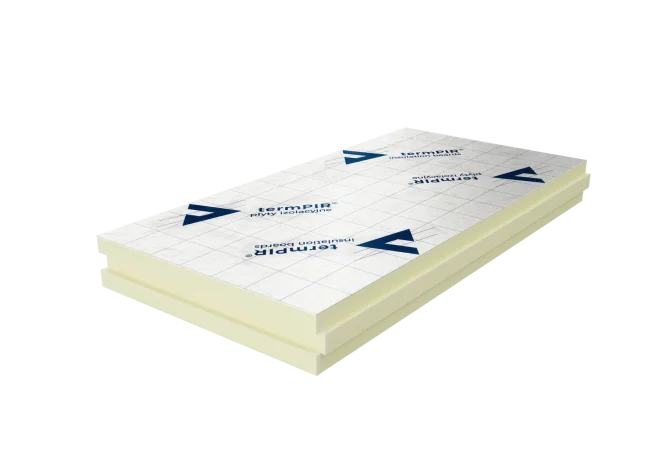
termPIR® boards in single-family construction
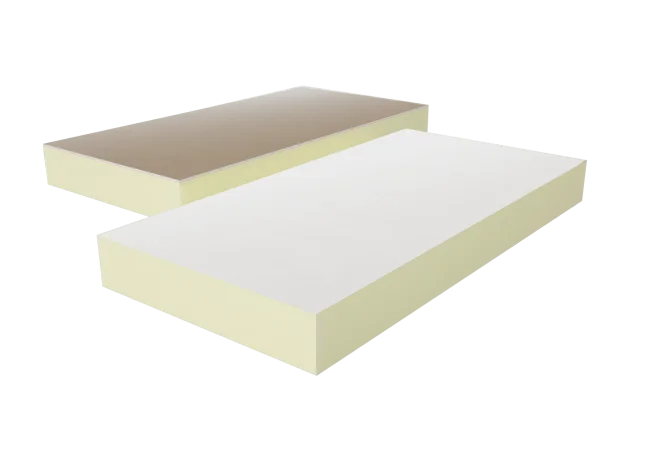
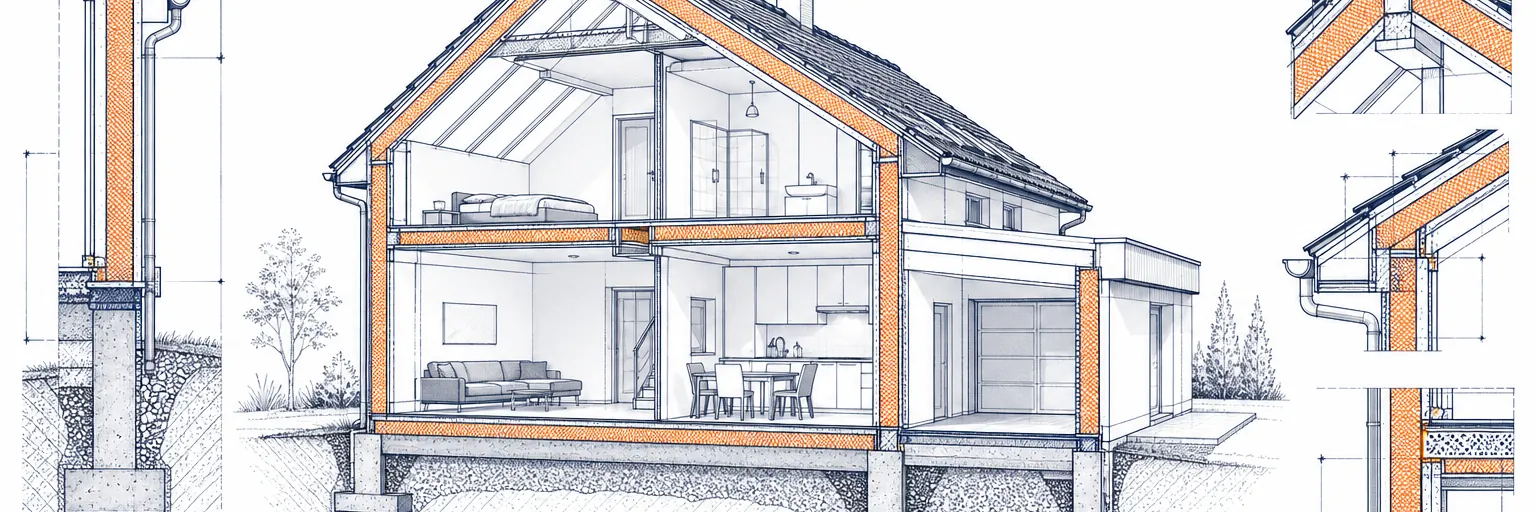
termPIR® thermal insulation boards provide a comprehensive solution for single-family construction — from foundations and ground floor slabs, through external walls, to pitched roofs and the top-floor ceiling. Thanks to an exceptionally low thermal conductivity coefficient λ = 0.022 W/m·K (AL facings) or λ = 0.025–0.027 W/m·K (glass veil facings), the material allows the required U-values to be achieved with significantly smaller insulation thickness than traditional mineral wool or polystyrene.
Thermal requirements according to WT 2021
The regulation of the Minister of Infrastructure, in force since 1 January 2021, defines the maximum values of the heat transfer coefficient U for residential buildings at an internal temperature ti ≥ 16°C:
| Partition | U(max) [W/m²·K] | Required thickness of termPIR® AL | Required thickness of mineral wool (λ=0.040) |
|---|---|---|---|
| Roof / flat roof | 0.15 | 150 mm | 280 mm |
| External wall | 0.20 | 110 mm | 210 mm |
| Floor on the ground | 0.30 | 70 mm | n/a |
| Ceiling above unheated space | 0.25 | 90 mm | 160 mm |
The use of termPIR® boards reduces the required insulation thickness by almost half compared to rigid mineral wool, which translates directly into lower construction costs, more usable floor space and simpler construction logistics.
Pitched roof — over-rafter system
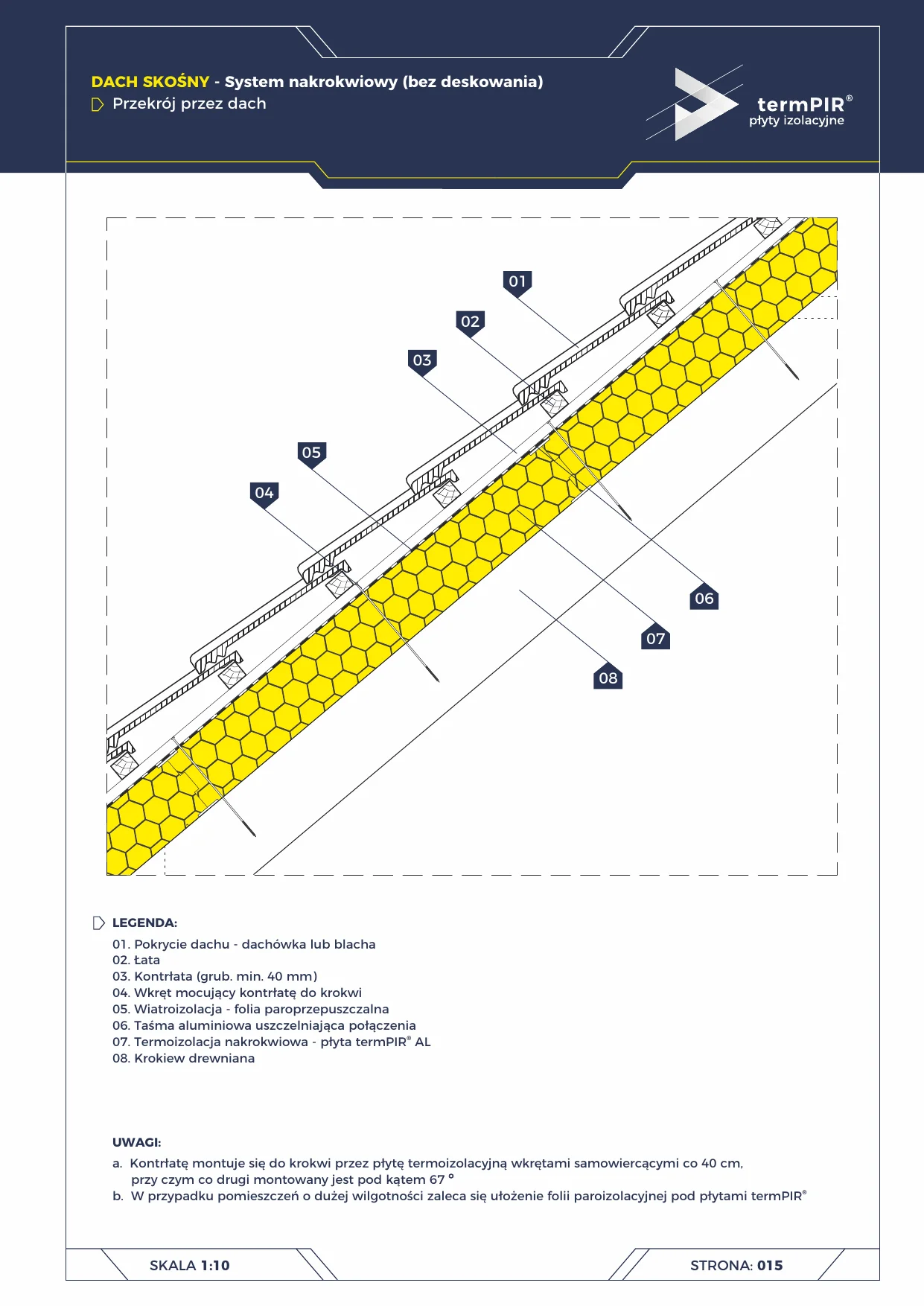 Pitched roof — over-rafter system: cross-section through the roof with layer arrangement
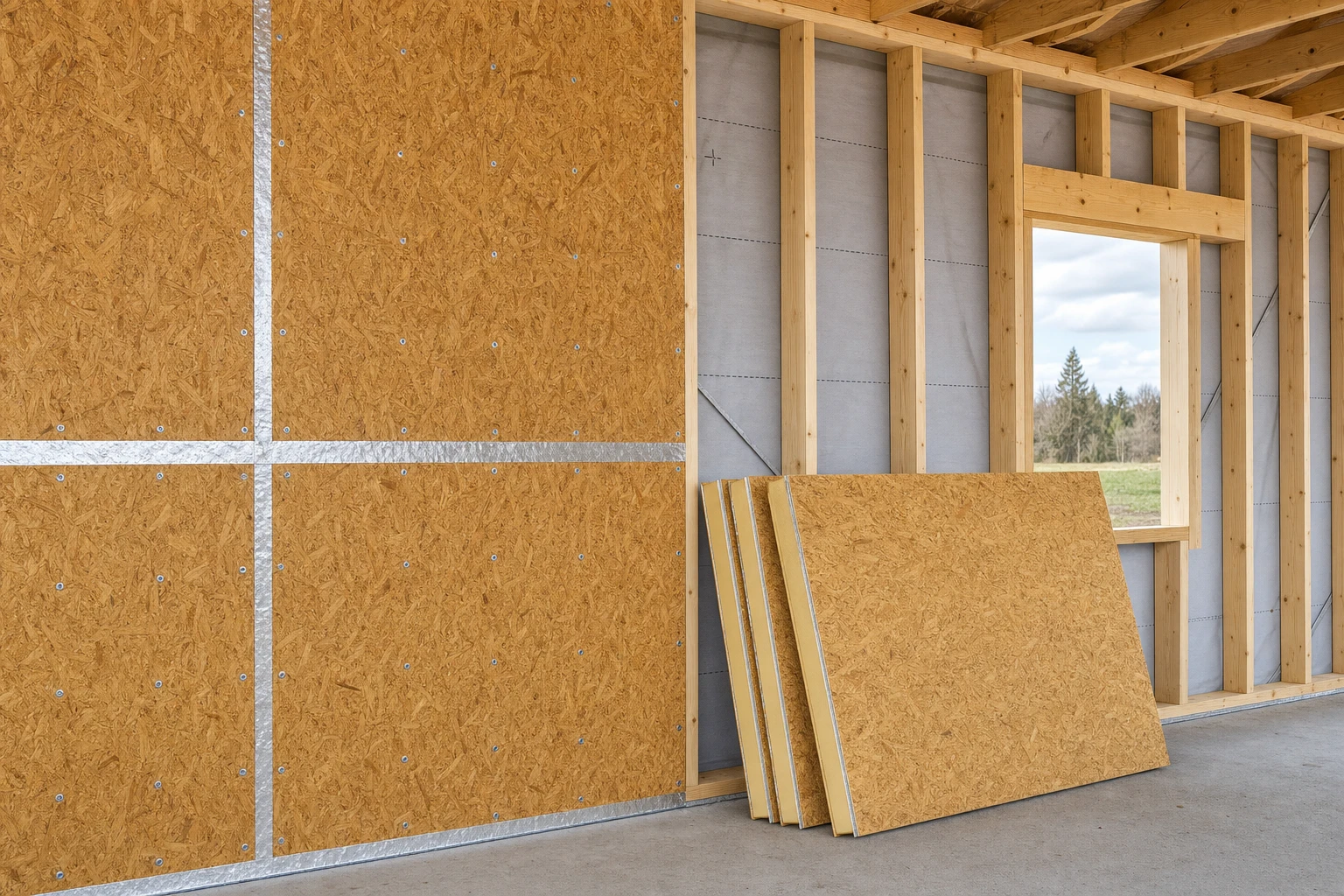
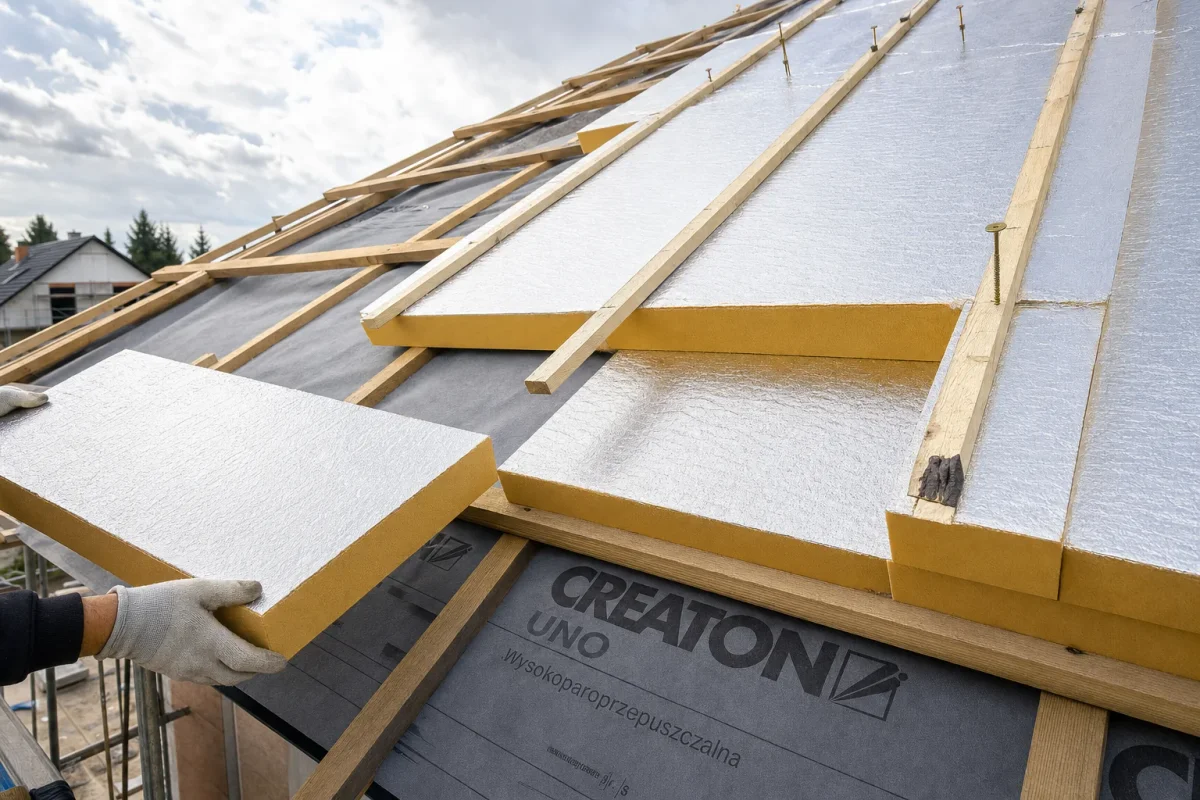
The recommended solution for single-family houses with a habitable attic is over-rafter mounting of termPIR® AL boards. The system eliminates thermal bridges on the rafters, providing a continuous layer of insulation on the outside of the roof structure.
Layer sequence (according to the drawing, from outside):
- Roof covering — tiles or sheet metal
- Batten
- Counter-batten (min. 40 mm thickness)
- Screw fixing the counter-batten to the rafter — through the entire thickness of the insulation
- Wind barrier — vapour-permeable membrane
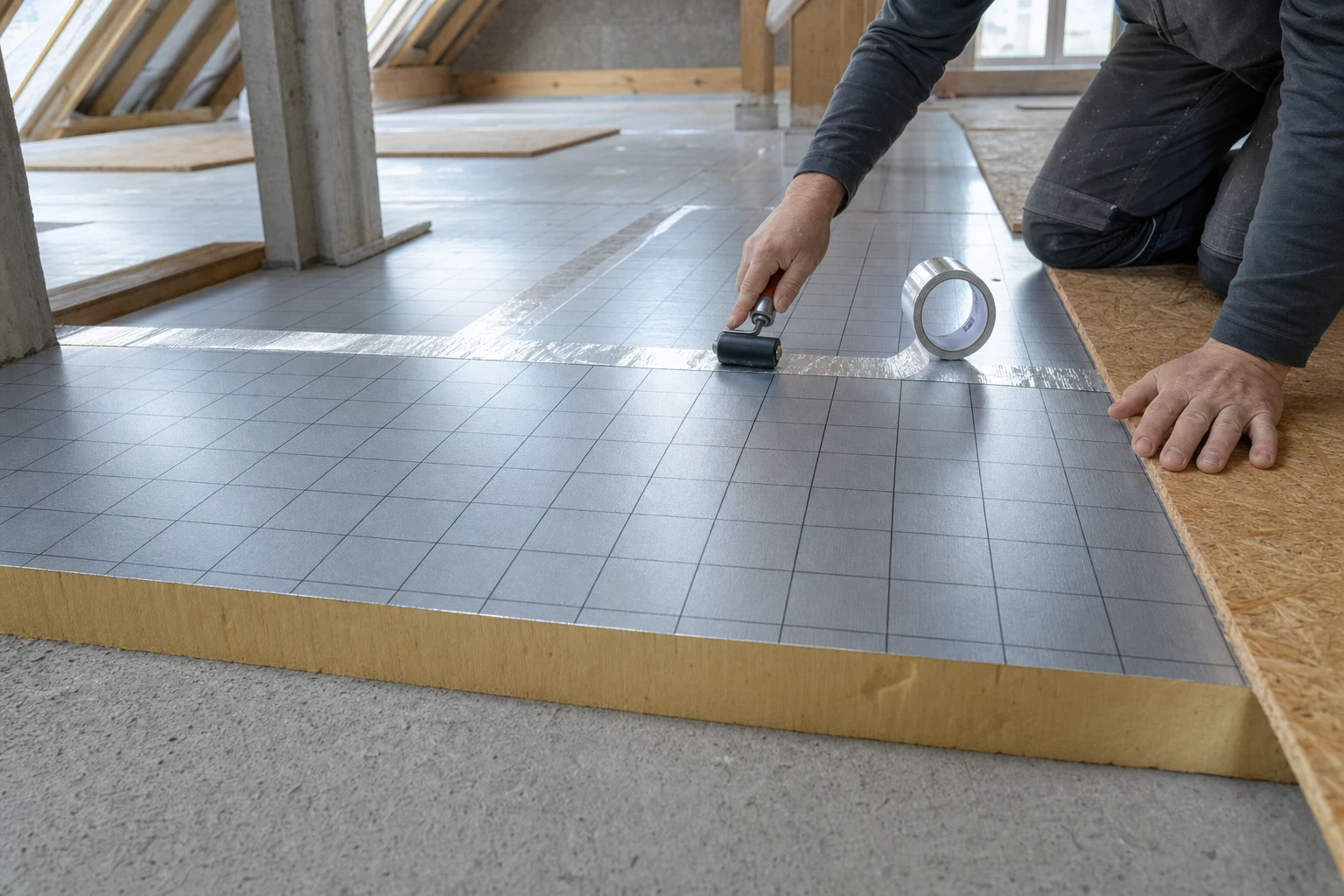
- Aluminium tape sealing the board joints
- Over-rafter thermal insulation — termPIR® AL board, min. thickness 150 mm (U ≤ 0.15 W/m²·K)
- Wooden rafter — visible from the inside (rafters remain in the warm zone, without a thermal bridge)
From the attic interior side, optional finishing with plasterboard on battens fixed to the rafters.
Counter-battens are screwed to the rafters with self-drilling screws approx. every 35–40 cm in the internal (green) zone of the roof; in the edge (red) zones, +1 screw per linear metre of counter-batten is used. Recommended screw lengths depending on the board thickness are given in the selection table (e.g. for 150 mm → 300 mm screw). Joints between boards and cut locations are sealed with aluminium tape (consumption 1.25–1.5 lm/m²) or low-expansion PIR foam.
For rooms with elevated humidity (attic bathroom, sauna), it is recommended to lay a PE vapour barrier film directly under the termPIR® boards from the inside.
Pitched roof — under-rafter and inter-rafter system
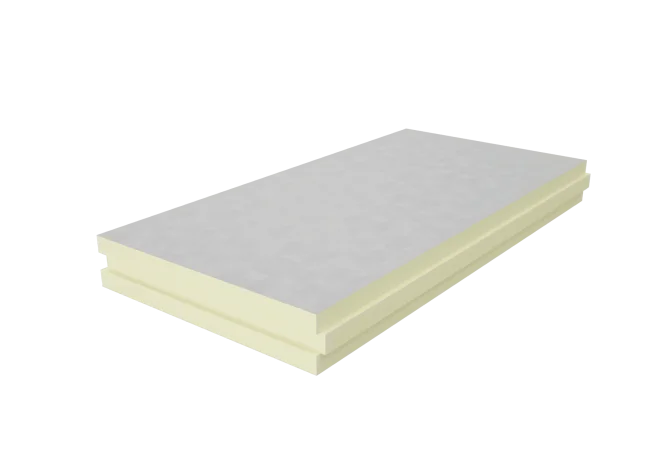
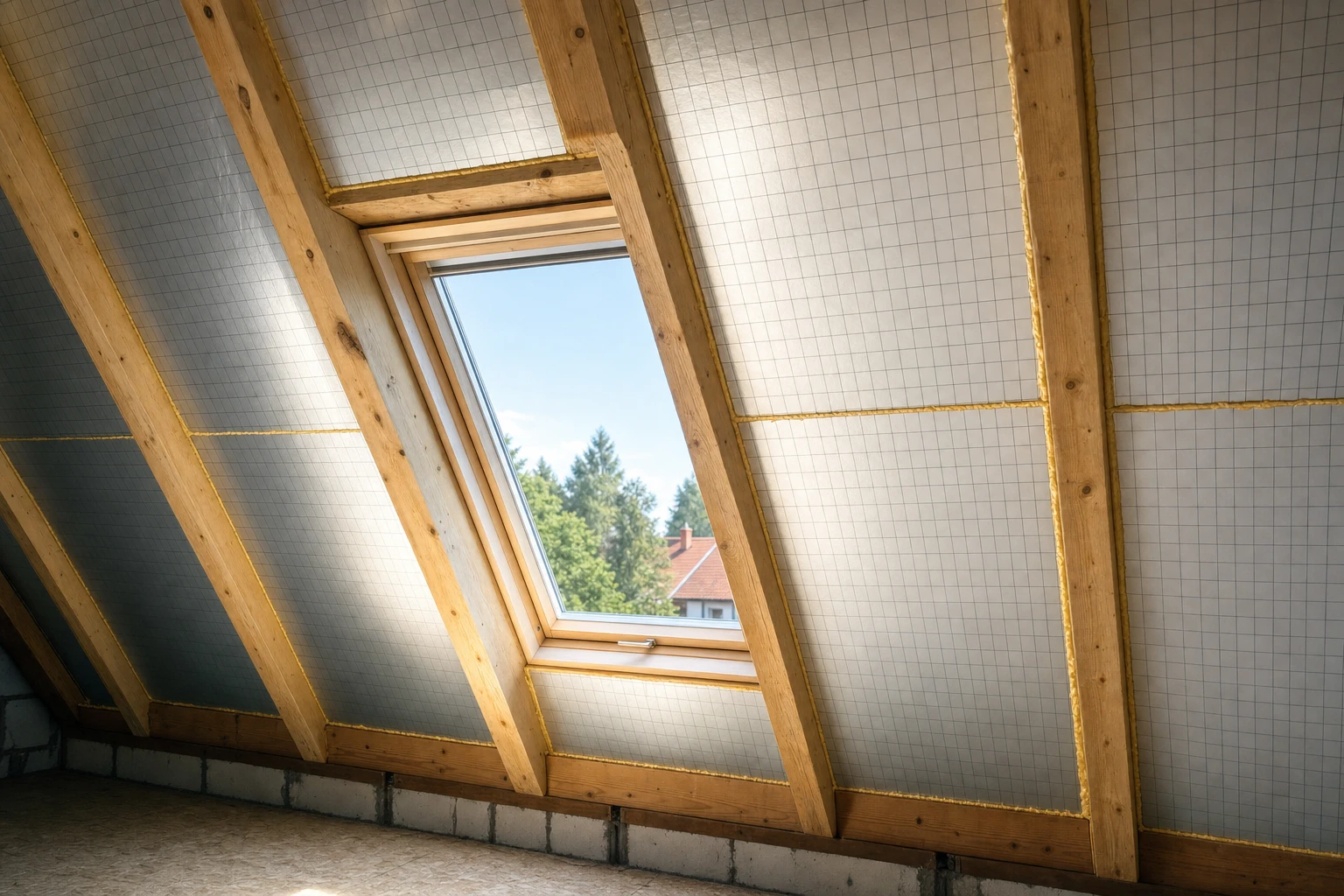
An alternative is a two-layer arrangement: inter-rafter insulation (termPIR® AL board filling the space between rafters) supplemented with an under-rafter layer (termPIR® AL or termPIR® AL GK). Variant W I provides finishing from the interior side with plasterboard on a sub-structure; variant W II allows the use of the composite termPIR® AL GK board directly as a surface ready for acrylic finishing or painting. In both cases, careful sealing with assembly foam of all cut edges and gaps at the rafters is necessary.
External walls
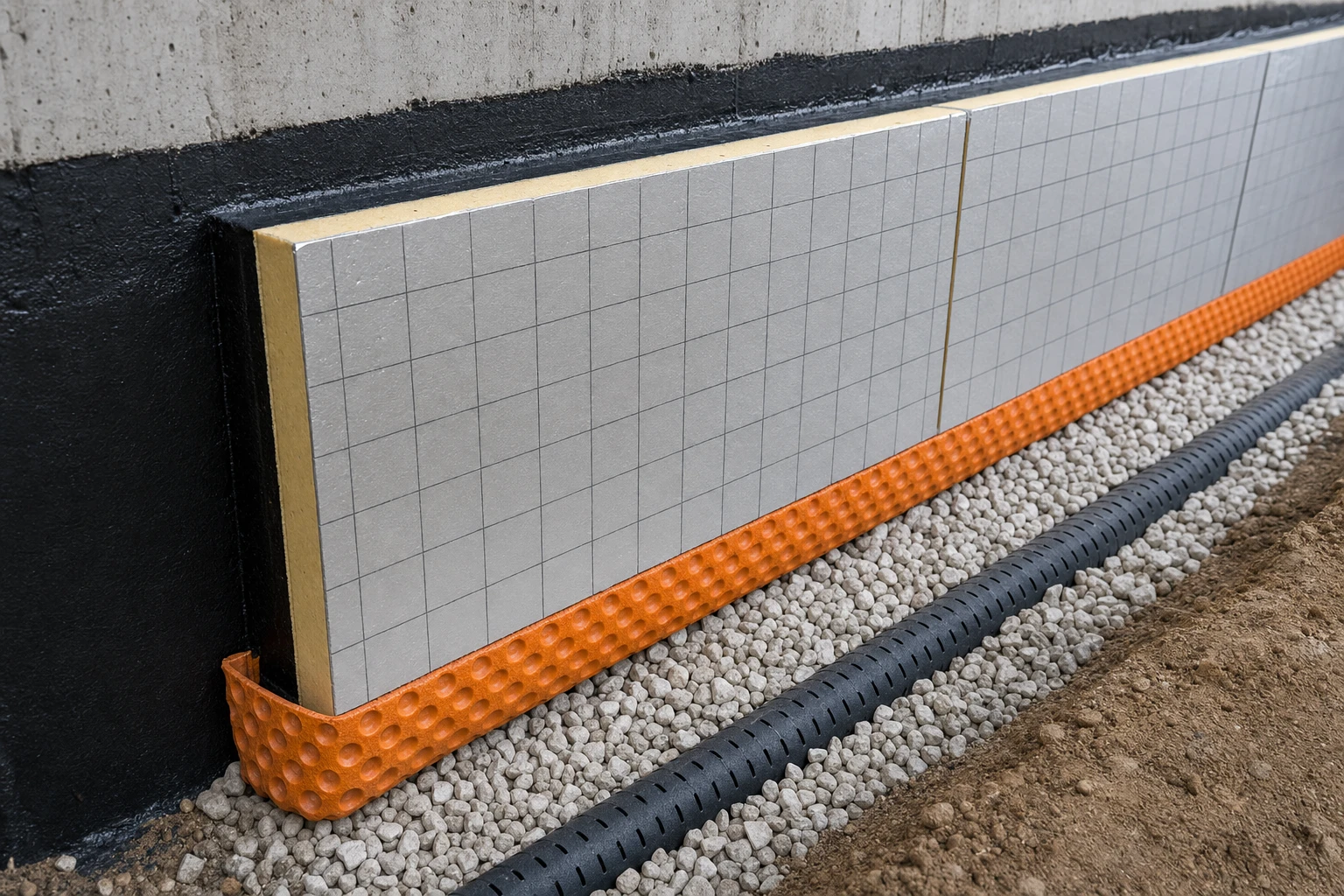
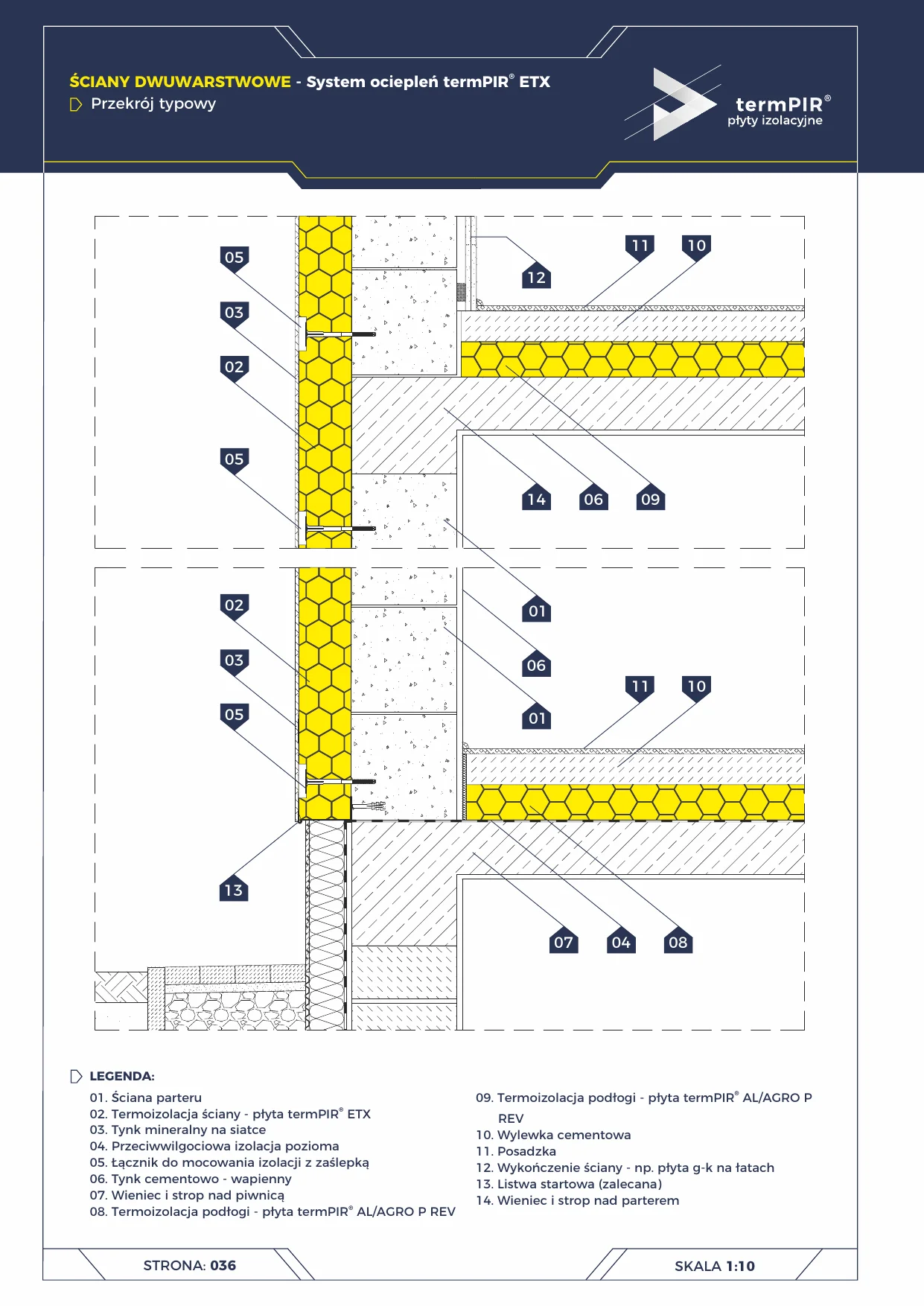 Two-layer ETICS wall with termPIR® ETX — system detail
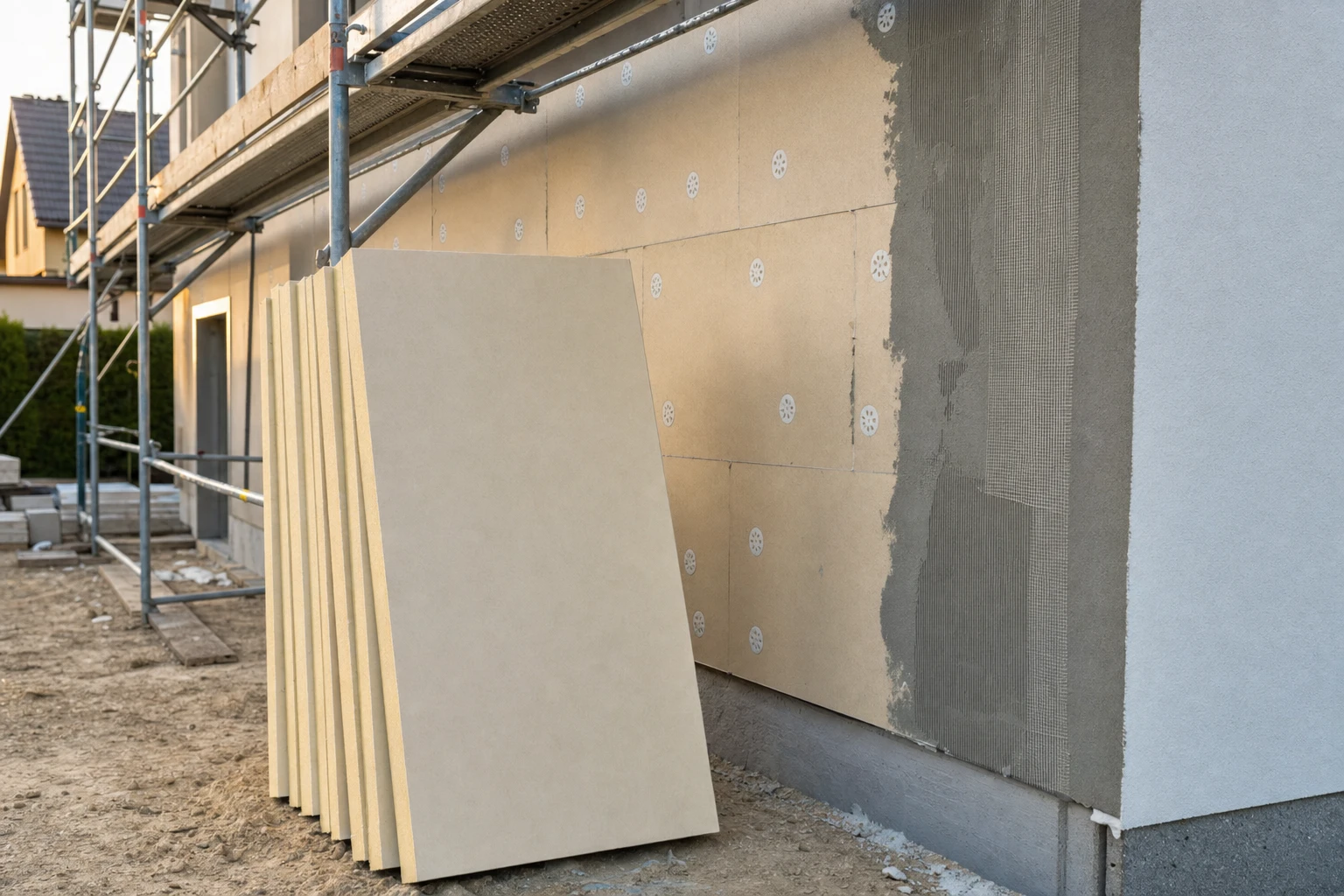
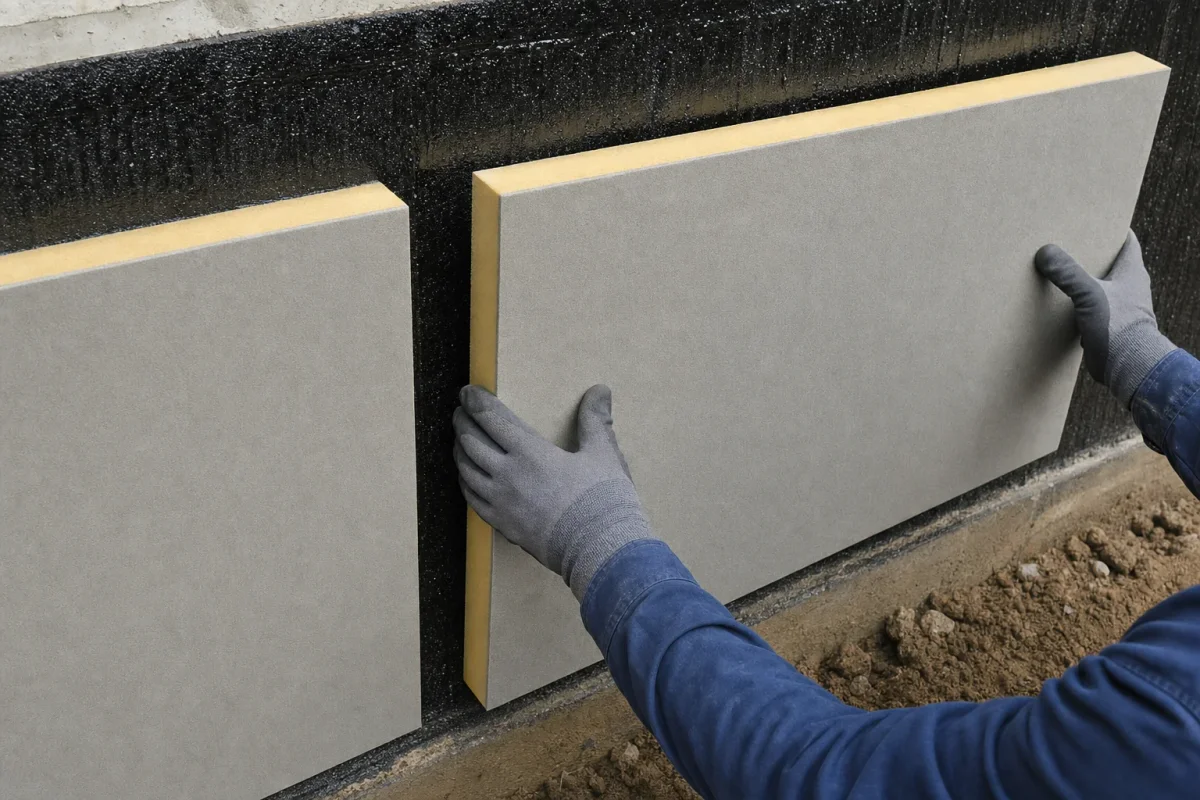
Two-layer ETICS system (light-wet method): termPIR® ETX boards (facing made of thickened glass veil, format 600×1200 mm) bonded to the load-bearing wall with universal adhesive, then dowelled and reinforced with glass fibre mesh embedded in the adhesive. The whole is finished with silicone, acrylic or polysilicate plaster. The system has European Technical Assessment no. 17/0066. The required thickness at U ≤ 0.20 W/m²·K is 130 mm of termPIR® ETX (λ = 0.025–0.027 W/m·K). Minimum number of mechanical fasteners: 4 pcs/m² (up to 12 m height), in edge zones 6 pcs/m². Dowel plates should be recessed and covered with PIR or polystyrene caps Ø 62 mm, eliminating the “ladybird” effect and thermal bridges.
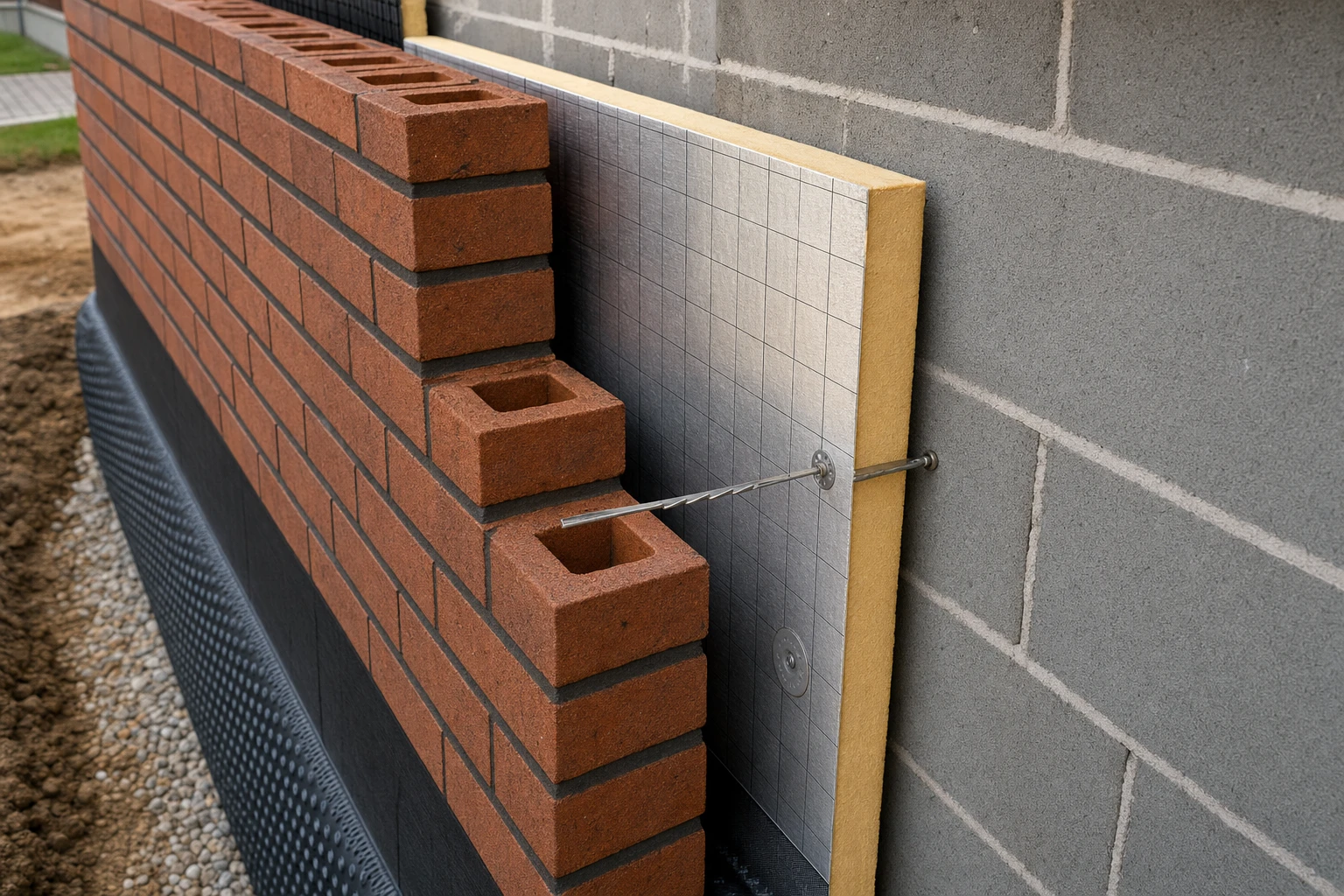
Three-layer system (cavity wall): termPIR® AL boards placed between the load-bearing and the facing layer. The walls are connected with steel anchors. At U ≤ 0.20 W/m²·K, min. 110 mm of termPIR® AL is required.
Floors and ceilings
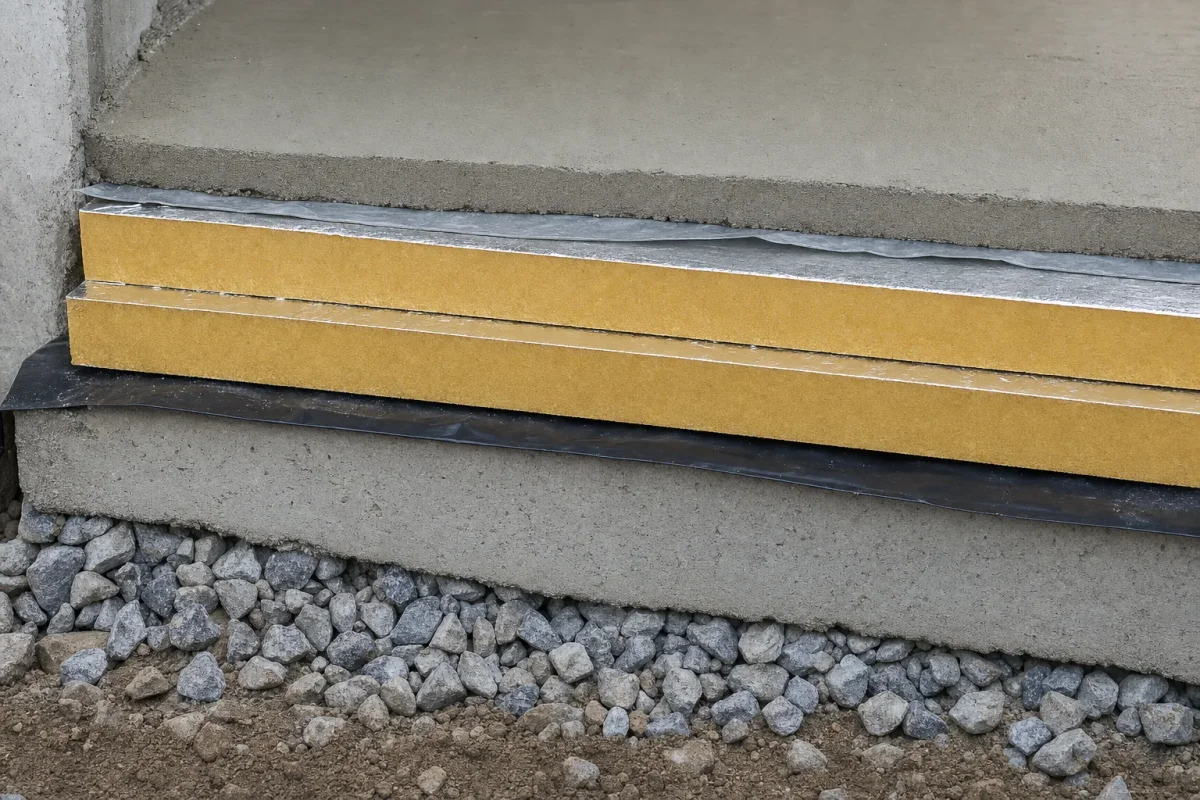
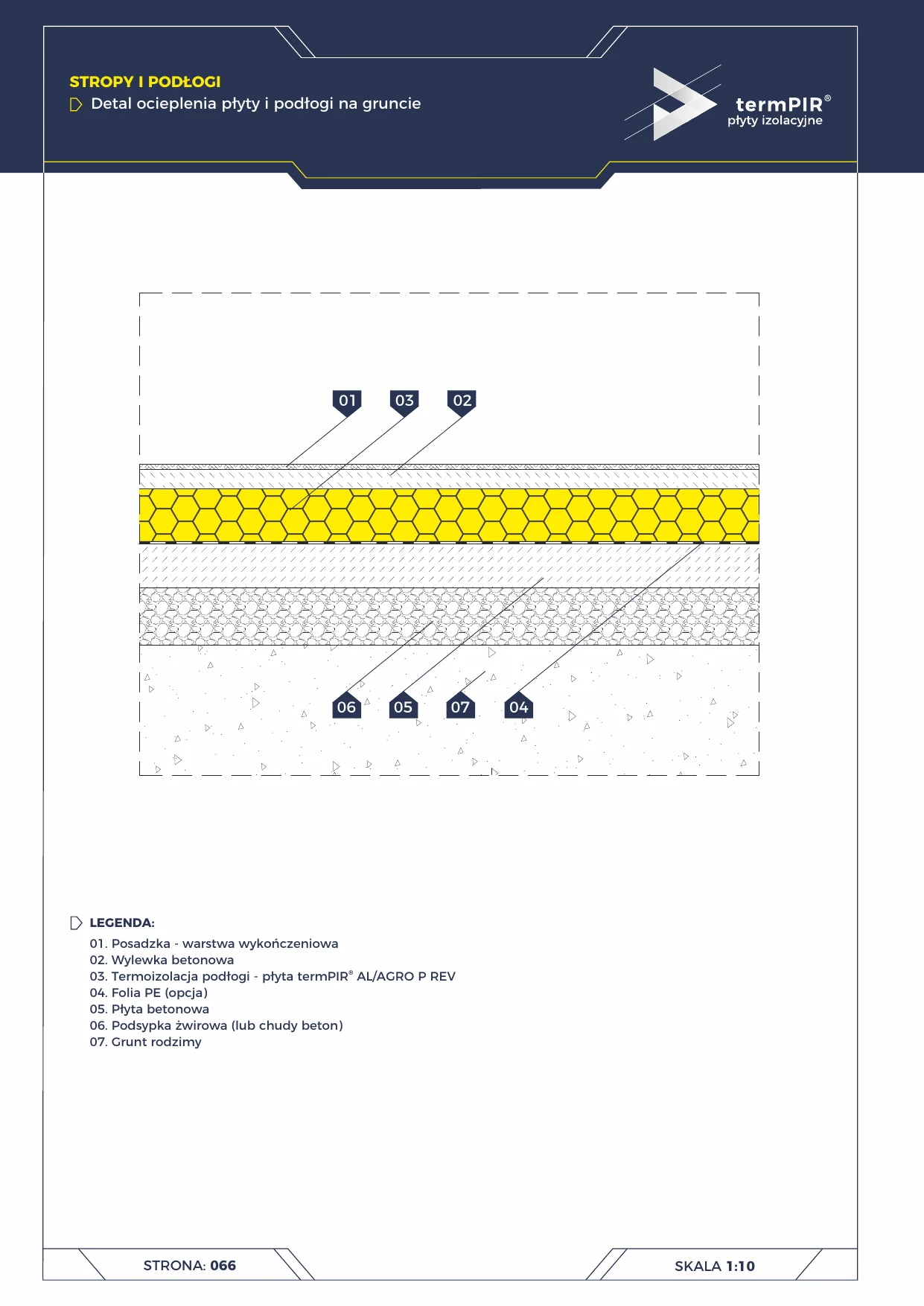 Insulation of a floor on the ground — detail of layer arrangement
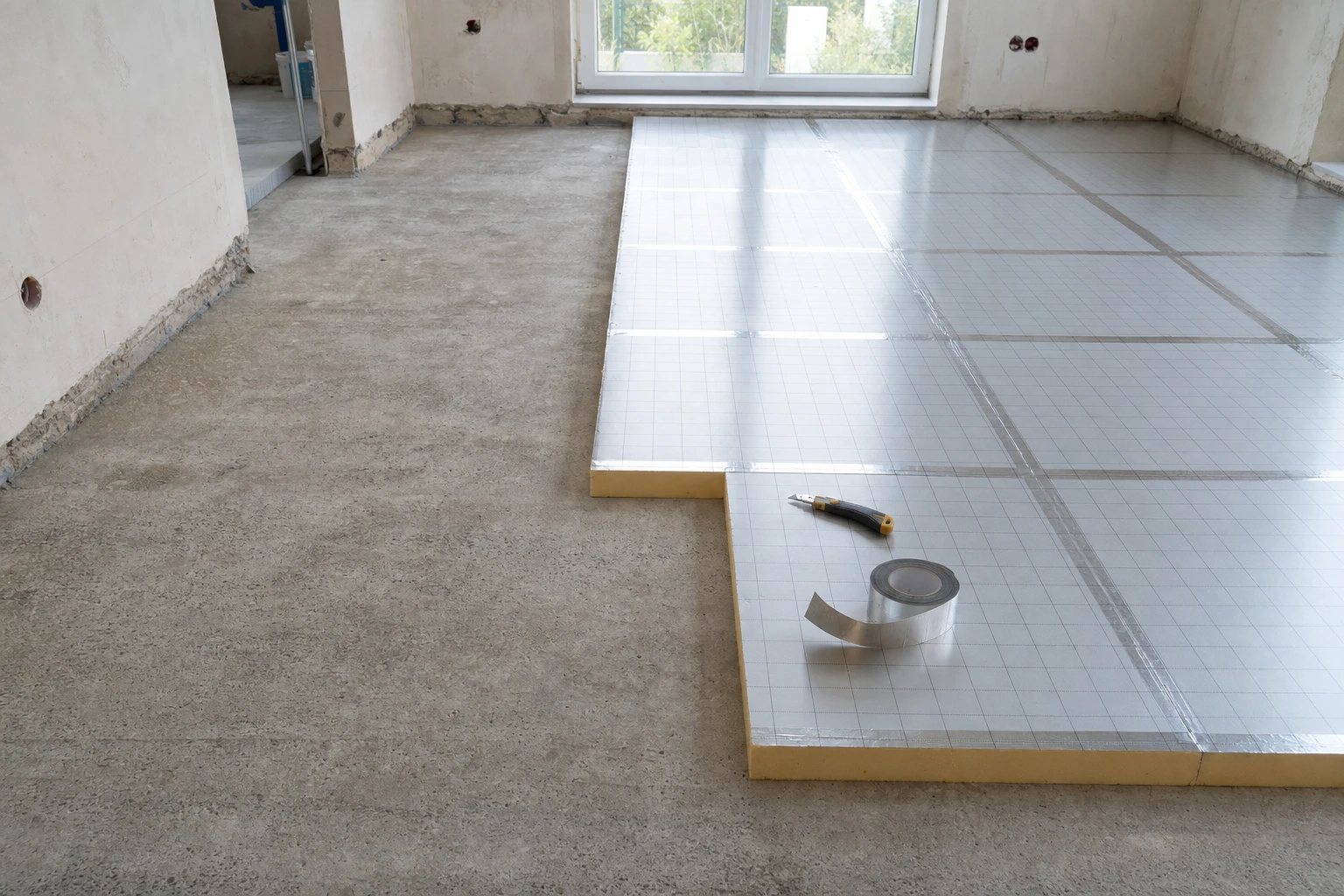
- Floor on the ground: termPIR® AL or AGRO P REV laid on the concrete slab, covered with PE film and cement screed. Required min. thickness 70 mm (U ≤ 0.30 W/m²·K). The AGRO P REV board is recommended under underfloor heating and anhydrite screed — the aluminium layer underneath acts as a reflective shield.
- Top-floor ceiling (above unheated attic): termPIR® AL bonded with PU adhesive to the reinforced concrete ceiling or laid freely with the possibility of walking on an OSB board. Min. 90 mm (U ≤ 0.25 W/m²·K).
- Inter-storey ceiling (acoustic and thermal insulation between heated storeys): termPIR® AL or AGRO P REV, thickness selected according to thermal requirements (Δti ≥ 8°C → U ≤ 1.00 W/m²·K, min. 20 mm AL).
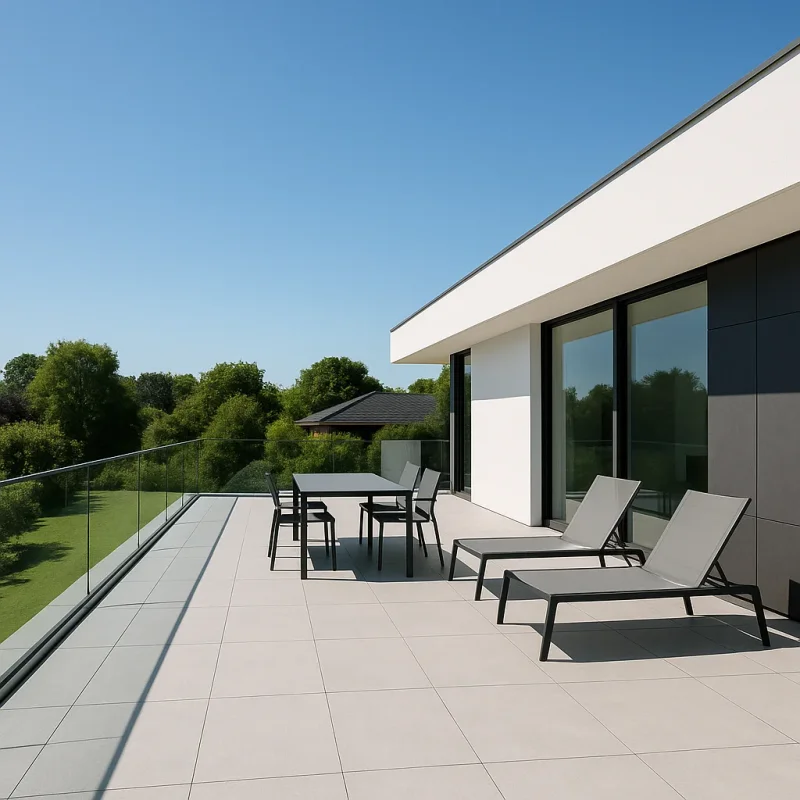
- Terrace above a room: termPIR® AL/AGRO P REV with waterproofing and cement screed as a sloping layer.
Design and economic benefits
- Weight: a square metre of termPIR® AL 100 mm weighs approx. 3 kg vs. ~12 kg of mineral wool — significant relief of the ceiling and simpler installation.
- Partition thickness: reduction by 40–50% compared to mineral wool, which in walls and ceilings increases the usable floor space of the building.
- Biological resistance: full resistance to rodents, insects, fungi and mould — important for holiday homes and seasonally used buildings.
- Water resistance: water absorption < 2% (termPIR® AL, WS) — the material does not lose its properties in contact with condensation moisture.
- Reaction to fire: termPIR® AL thickness 50–250 mm — class E; in applications requiring a higher class, variants with plasterboard (AL GK) are available, classified as non-flammable and non-dripping in end use.
Key technical requirements
- WT 2021 — U ≤ 0.15 W/m²·K for roofs and flat roofs (ti ≥ 16°C)
- WT 2021 — U ≤ 0.20 W/m²·K for external walls (ti ≥ 16°C)
- WT 2021 — U ≤ 0.30 W/m²·K for floors on the ground (ti ≥ 16°C)
- Counter-battens in the over-rafter system: min. thickness 40 mm
- ETICS dowelling: min. 4 pcs/m² up to 12 m height, 6 pcs/m² in edge zones
- Install boards no earlier than 1 month from the date of production (ETICS system)
Typical arrangements and implementations
- Pitched over-rafter roof — termPIR® AL 150 mm without thermal bridges on the rafters
- Pitched under-rafter + inter-rafter roof W I — termPIR® AL with plasterboard finishing
- Pitched under-rafter + inter-rafter roof W II — termPIR® AL GK as a ready surface
- Two-layer ETICS external wall — termPIR® ETX 130 mm with silicone plaster
- Three-layer external wall — termPIR® AL 110 mm between the load-bearing and facing layer
- Floor on the ground with underfloor heating — termPIR® AGRO P REV 70 mm + anhydrite screed
- Top-floor ceiling — termPIR® AL 90 mm bonded to reinforced concrete
- Terrace above a residential room — termPIR® AL/AGRO P REV with waterproofing
Technical consultation
BOKKA advisors assist in selecting solutions for a specific project — from U-value analysis, through variant and board thickness selection, to support at the execution stage. Get in touch via the form or by email to the sales department.