Multi-family construction
Apartments, condominiums, thermal modernization. Fire class under control.
termPIR® boards in multi-family residential construction
 termPIR® systems — applications in residential buildings
Multi-family residential buildings — from tenement houses to modern apartment blocks — require a comprehensive approach to thermal insulation, taking into account both legal requirements (WT 2021) and investor expectations regarding minimization of operating costs and thermal comfort of residents. termPIR® insulation boards perfectly meet these needs, offering the highest class of thermal insulation with minimal layer thickness.
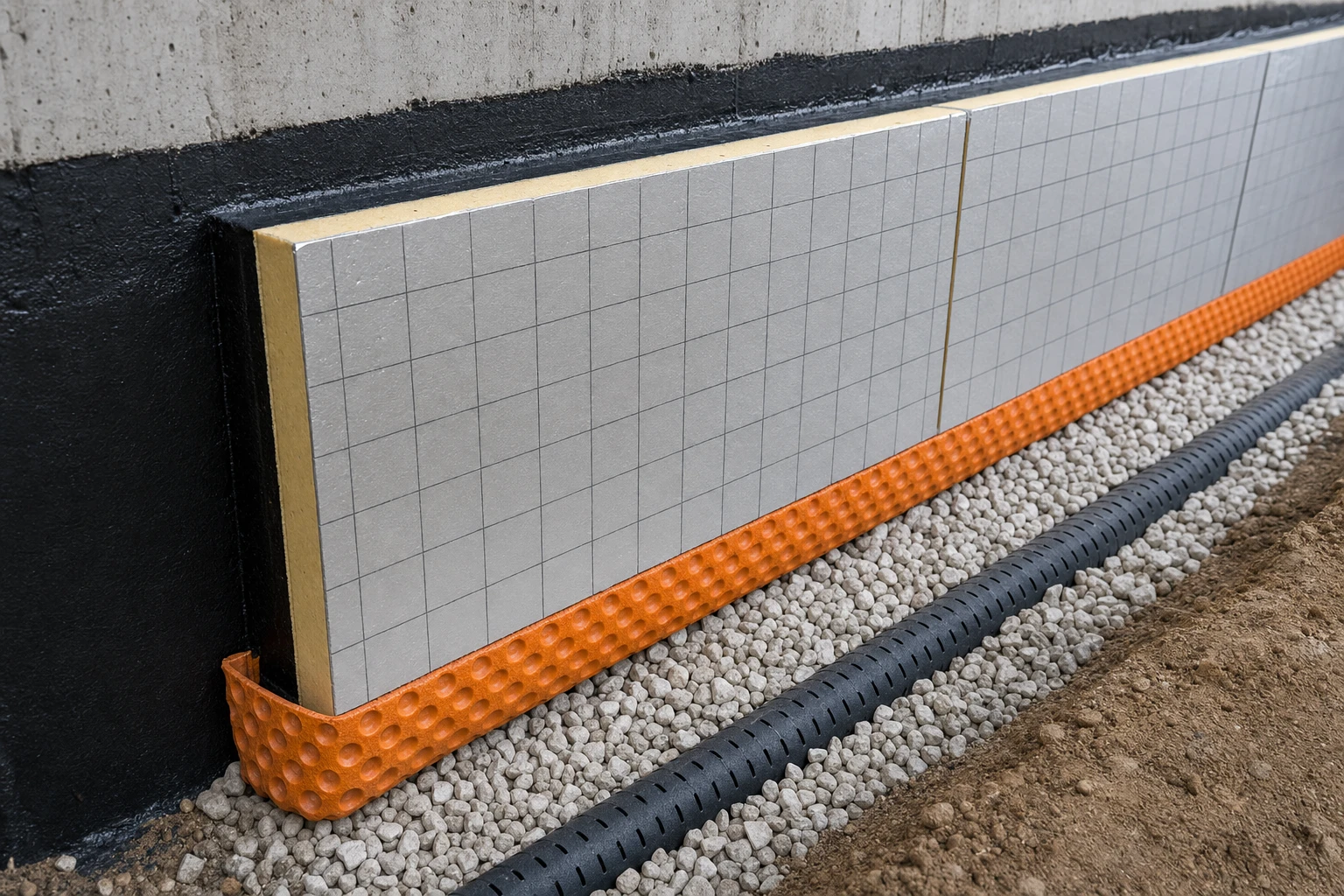
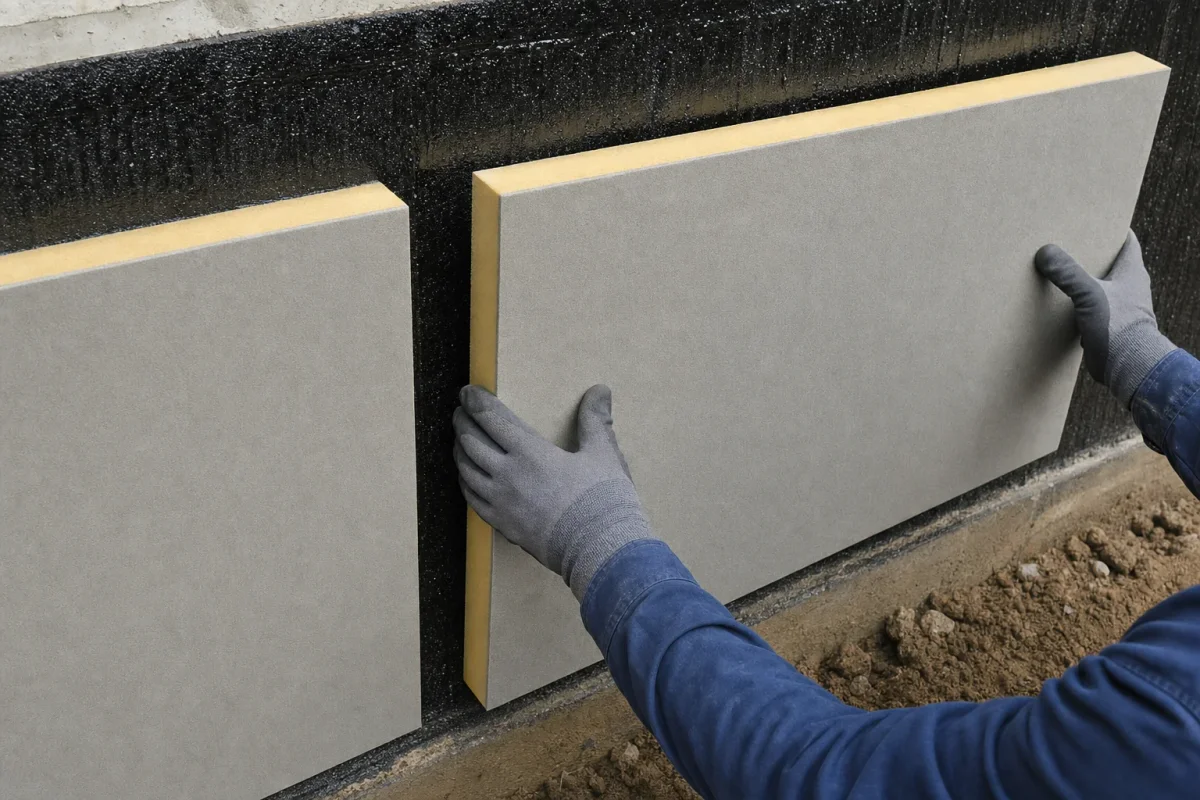
External walls in the ETICS system
 External wall in the ETICS system — layer arrangement detail
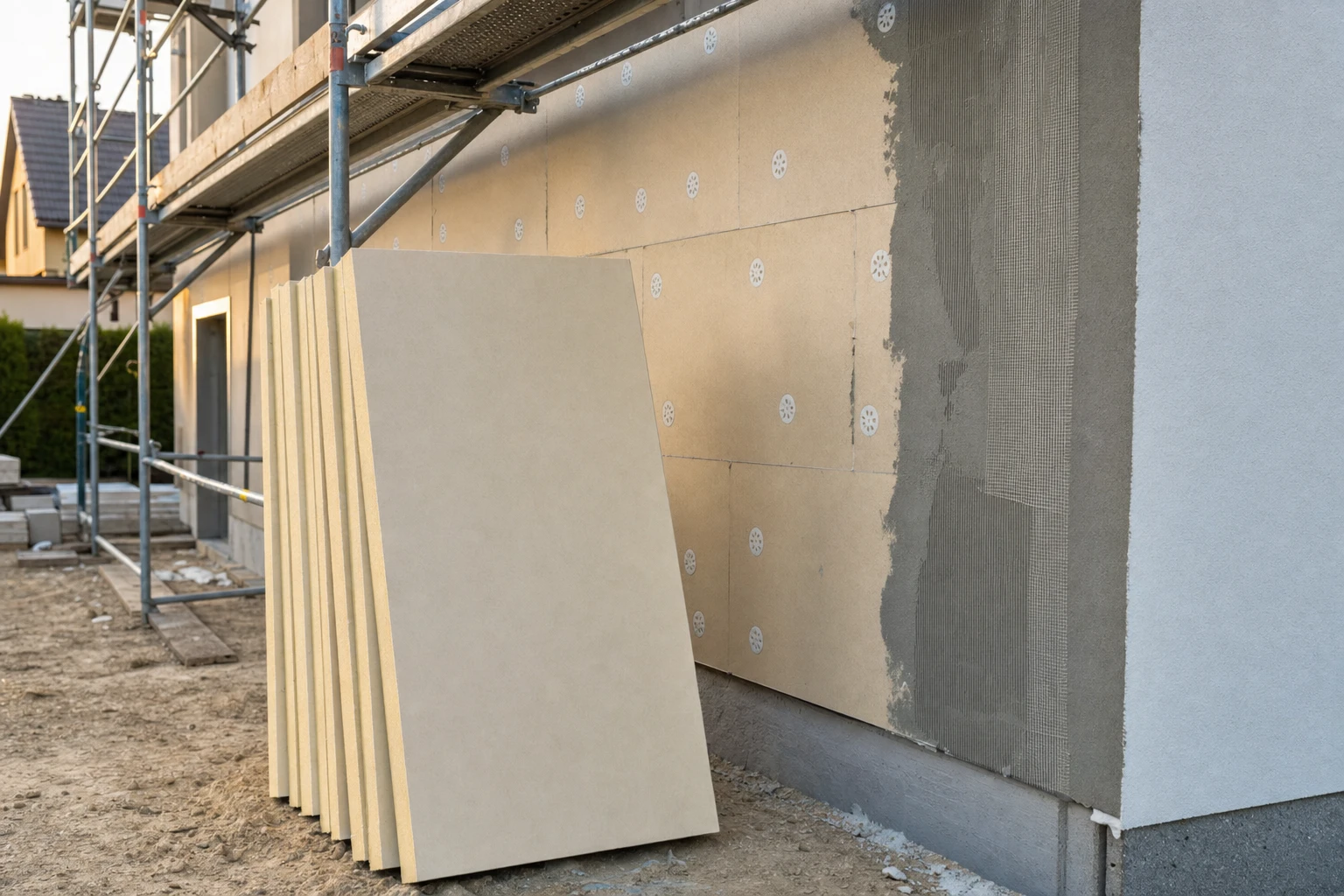
The most popular method of insulating walls of multi-family buildings is the ETICS system (External Thermal Insulation Composite System), also known as the light-wet method or BSO (seamless insulation system). termPIR® ETX boards come with a complete, certified ETICS system (ETA 17/0066):
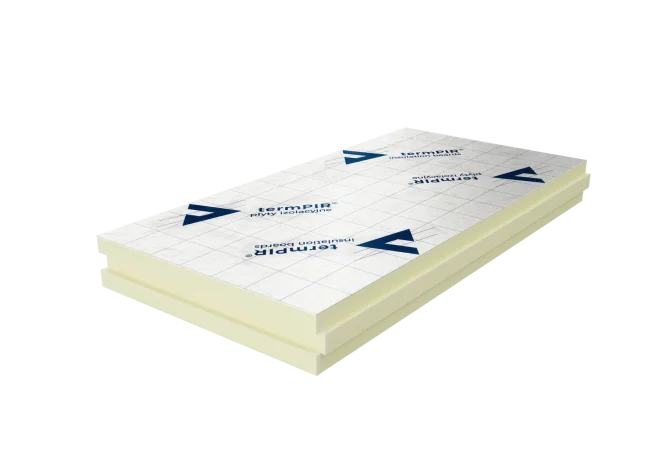
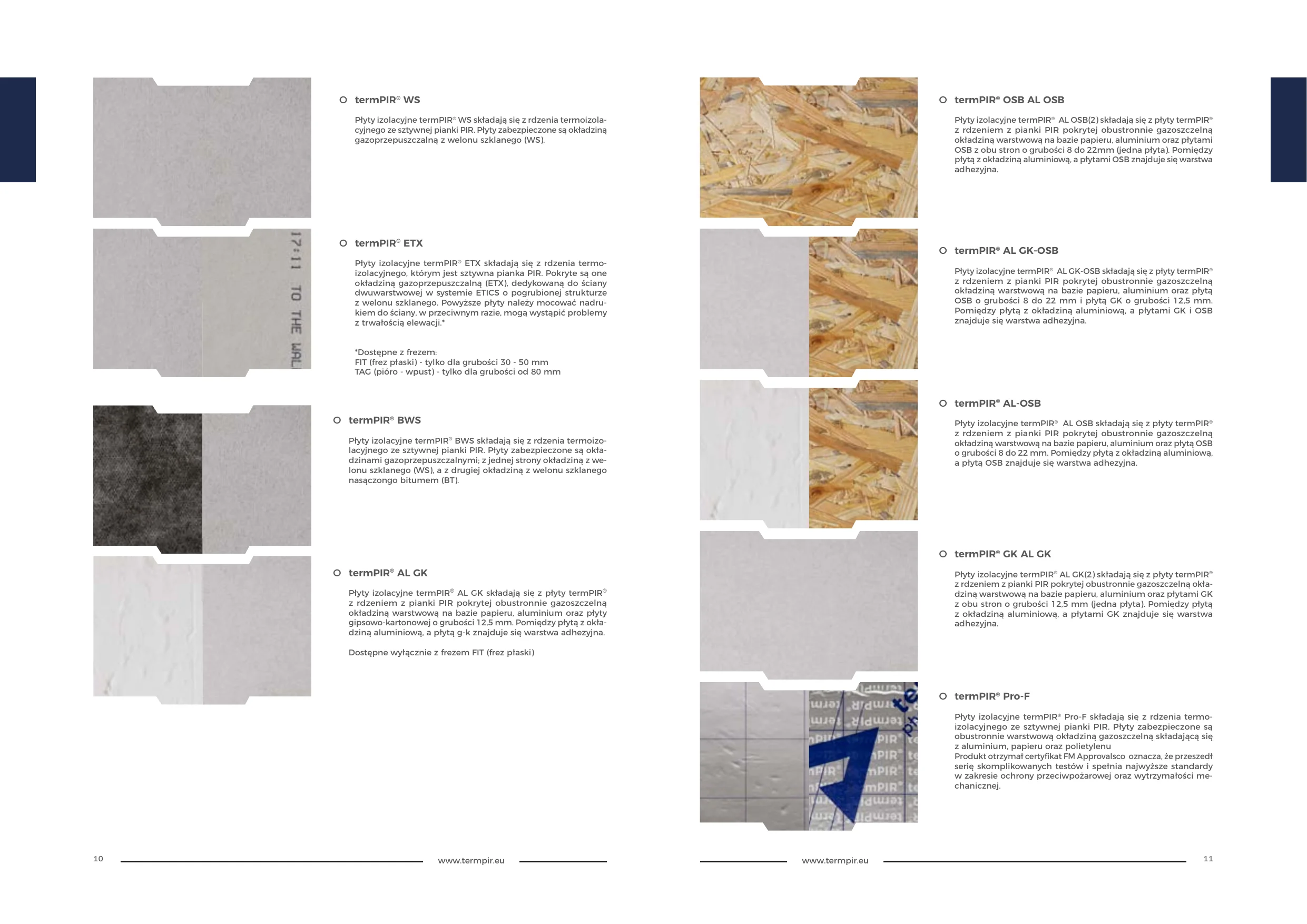
- termPIR® ETX boards feature a gas-permeable ETX facing made of glass veil with a thickened structure — dedicated to the ETICS system.
- λD = 0.027 W/(m·K) for thicknesses 20–79 mm; λD = 0.026 for 80–119 mm; λD = 0.025 for 120–250 mm.
- Example: at a thickness of 140 mm (λD = 0.025): RD = 5.60 m²·K/W, wall U = 0.17 W/m²·K — meets WT 2021 with a margin.
- The system includes: mineral or polyurethane adhesive, mechanical fastening with dowels, fiberglass reinforcing mesh, thin-coat plaster, façade paints.
- Available board dimensions: 600×1200 mm and 1200×2400 mm; FIT (30–50 mm) and TAG (from 80 mm) edge profiles.
Note for designers: In buildings over 12 m high, attention should be paid to fire protection requirements for façade materials. Fire classification of termPIR® ETX boards: class E (thicknesses 50–250 mm) and F (20–49 mm) — requirements for a specific investment should be verified with a fire safety expert.
External walls — three-layer system (ventilated façade)
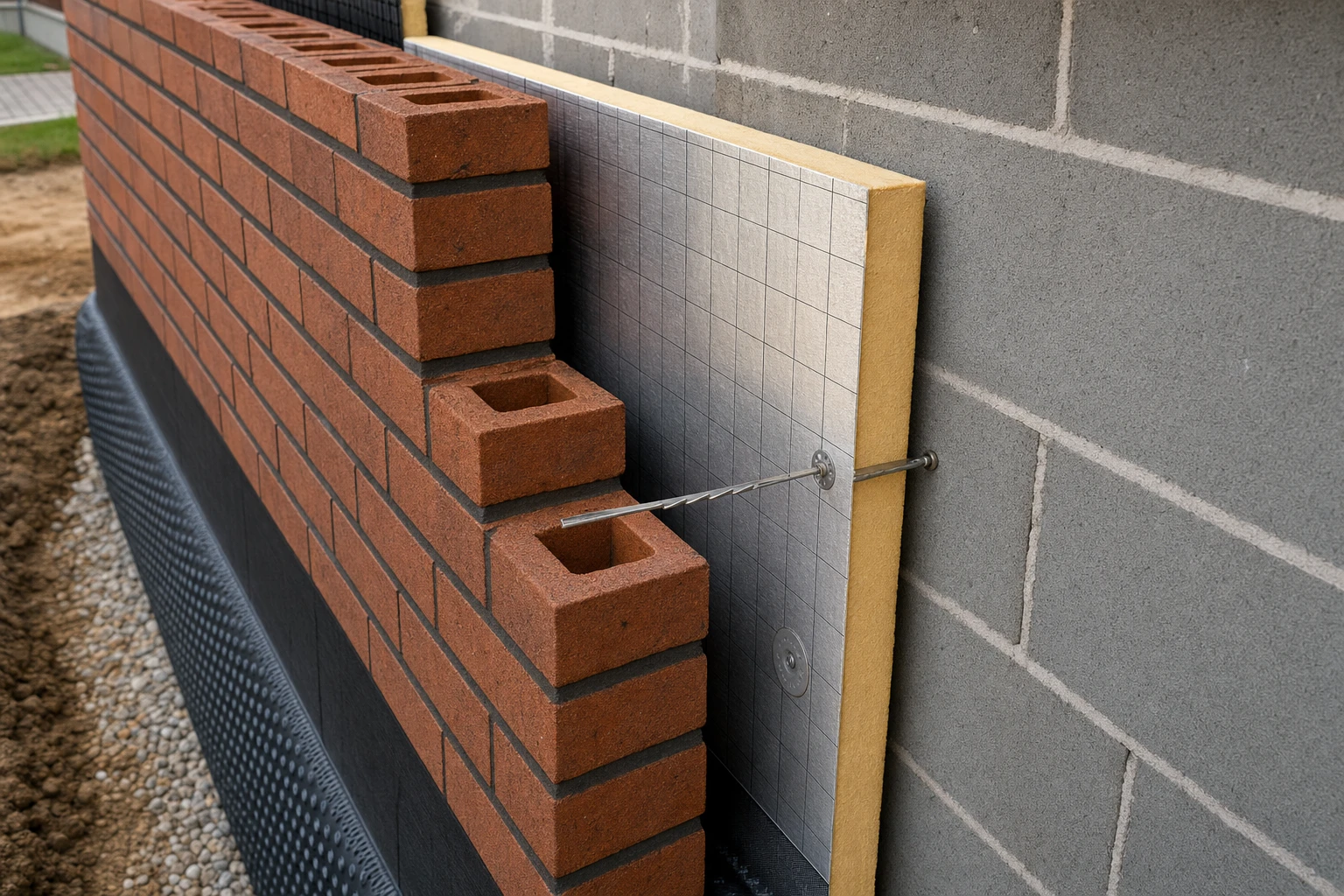
In multi-family construction of an elevated standard and in renovations with clinker brick or stone façade cladding, a three-layer system is used:
- Load-bearing wall (e.g. ceramic block, concrete) → polyurethane or mineral adhesive → termPIR® AL or termPIR® WS (with dowels) → ventilation gap → external cladding.
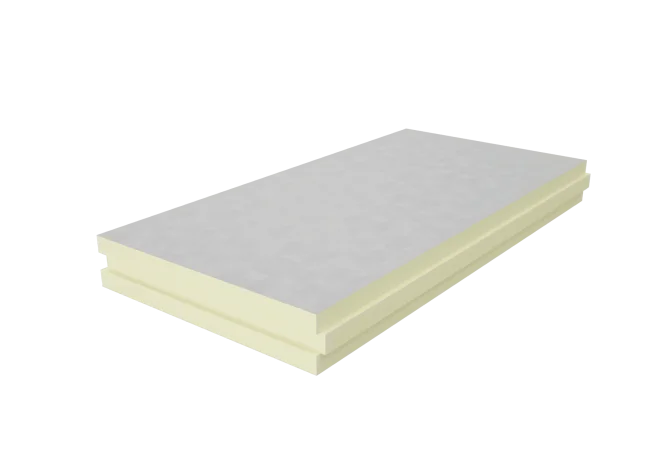
- termPIR® WS has a glass veil facing on both sides — gas-permeable, enabling water vapor diffusion.
Flat roofs of multi-family buildings
Flat roofs are a typical solution in multi-family construction. Thermal insulation must meet WT 2021 requirements (U ≤ 0.15 W/m²·K for flat roofs) and ensure durability for several decades:
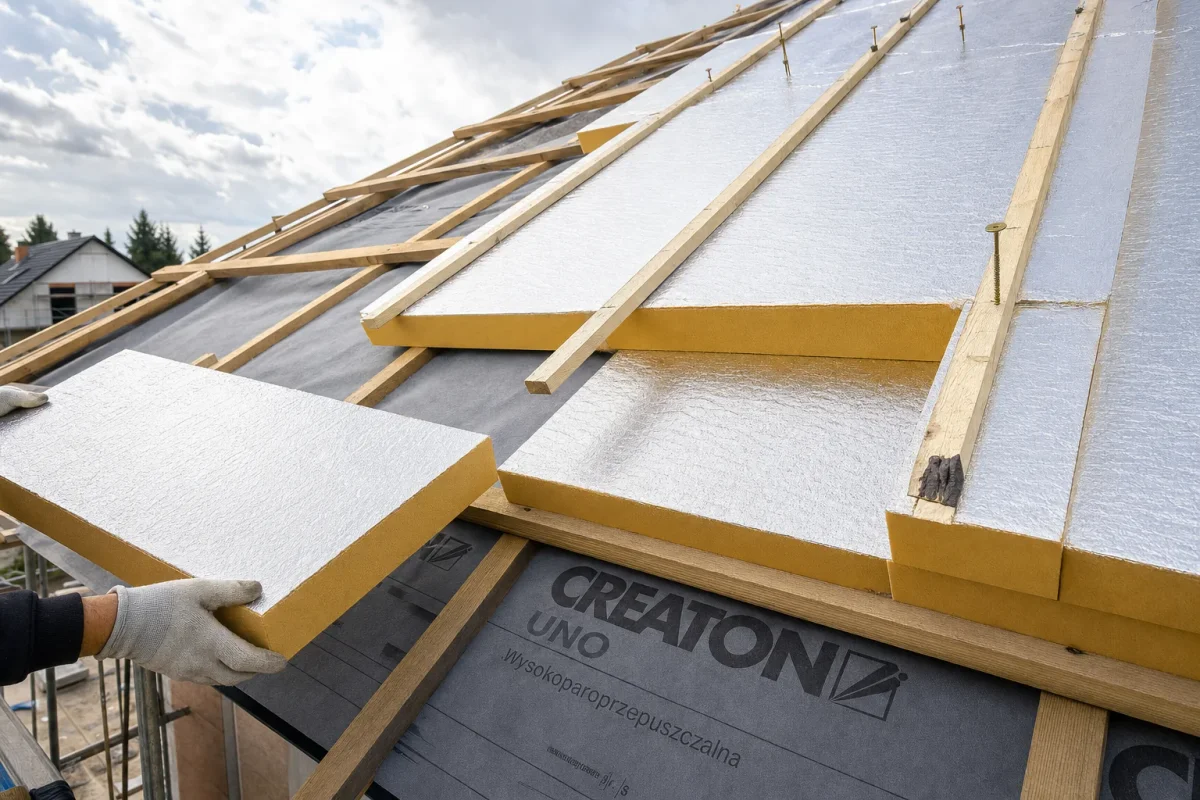
- termPIR® MAX 19 AL — board with a PIR core and double-sided aluminum foil facing 50 µm, dedicated to bonded and mechanical systems on flat roofs.
- termPIR® AL — thickness 120 mm: RD = 5.55 m²·K/W, roof U = 0.17 W/m²·K ✓ WT 2021.
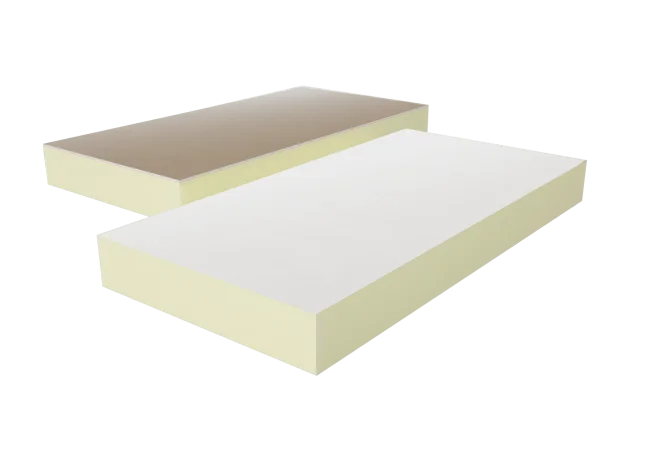
- termPIR® BWS — with glass veil (WS) on one side and bitumen-impregnated glass veil (BT) on the other — used as a slope layer or dual-function insulation.
- Reference arrangement on a reinforced concrete flat roof: vapor barrier → termPIR® MAX 19 AL (proper thermal insulation) → termPIR® BWS (slope layer) → underlay membrane → top roofing membrane.
Terraces and loggias
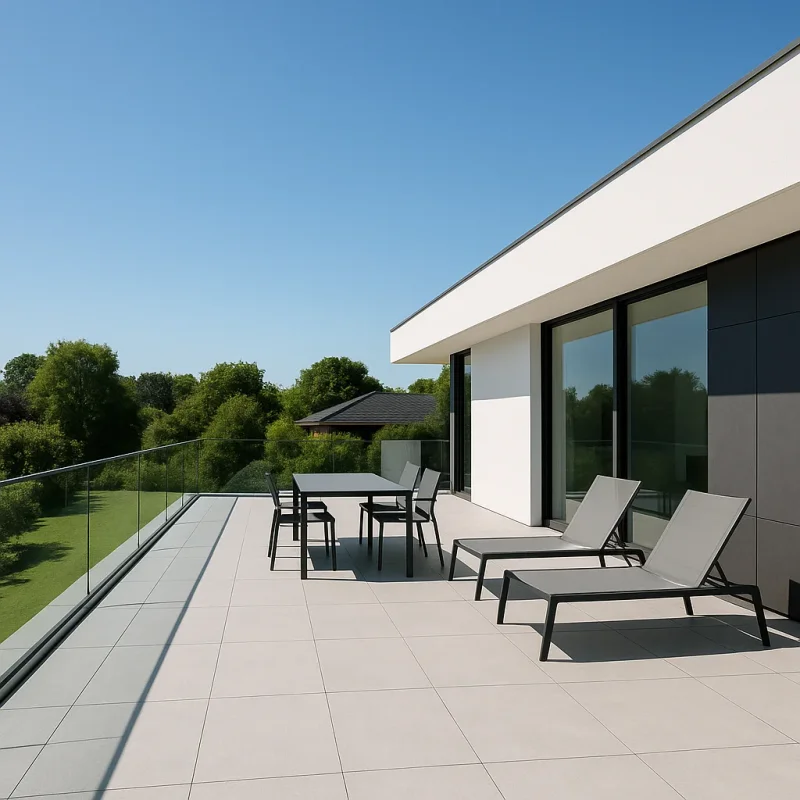
Surfaces exposed to water and variable temperatures require materials with high resistance to moisture. The water absorption of termPIR® AL is ≤ 2% — this guarantees retention of insulating parameters even with prolonged contact with moisture.
Inter-floor slabs and floors
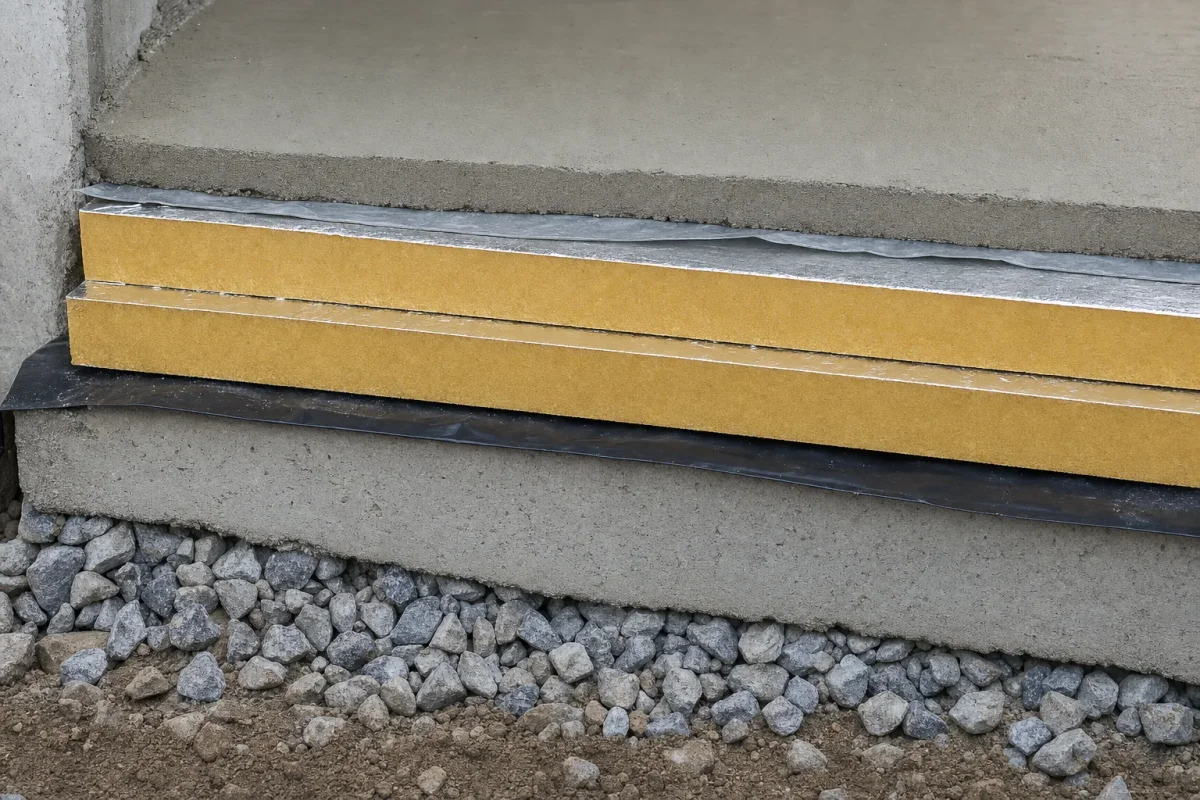
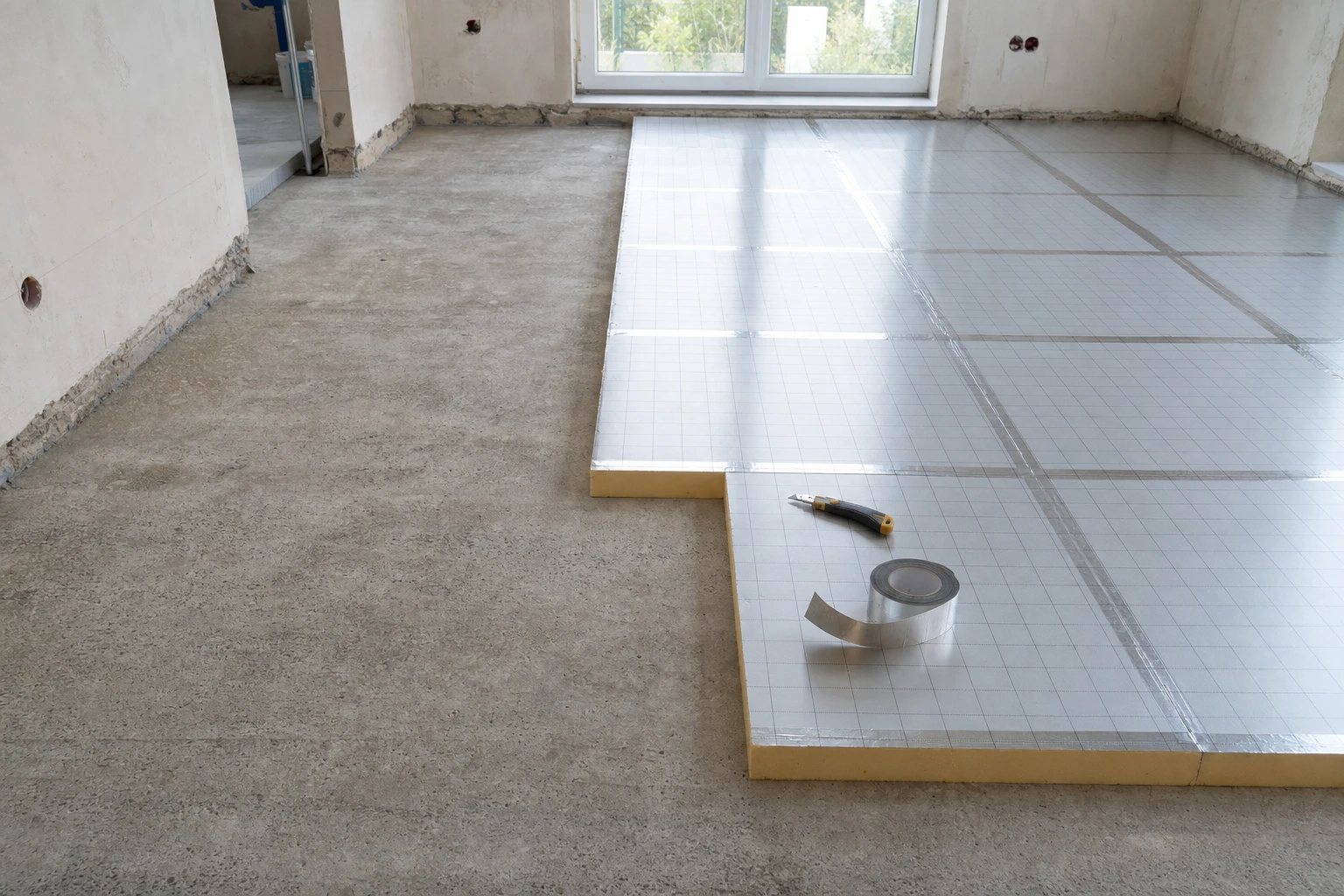
In multi-family buildings, insulation of slabs above basements, underground garages and unheated premises is mandatory for energy and comfort reasons:
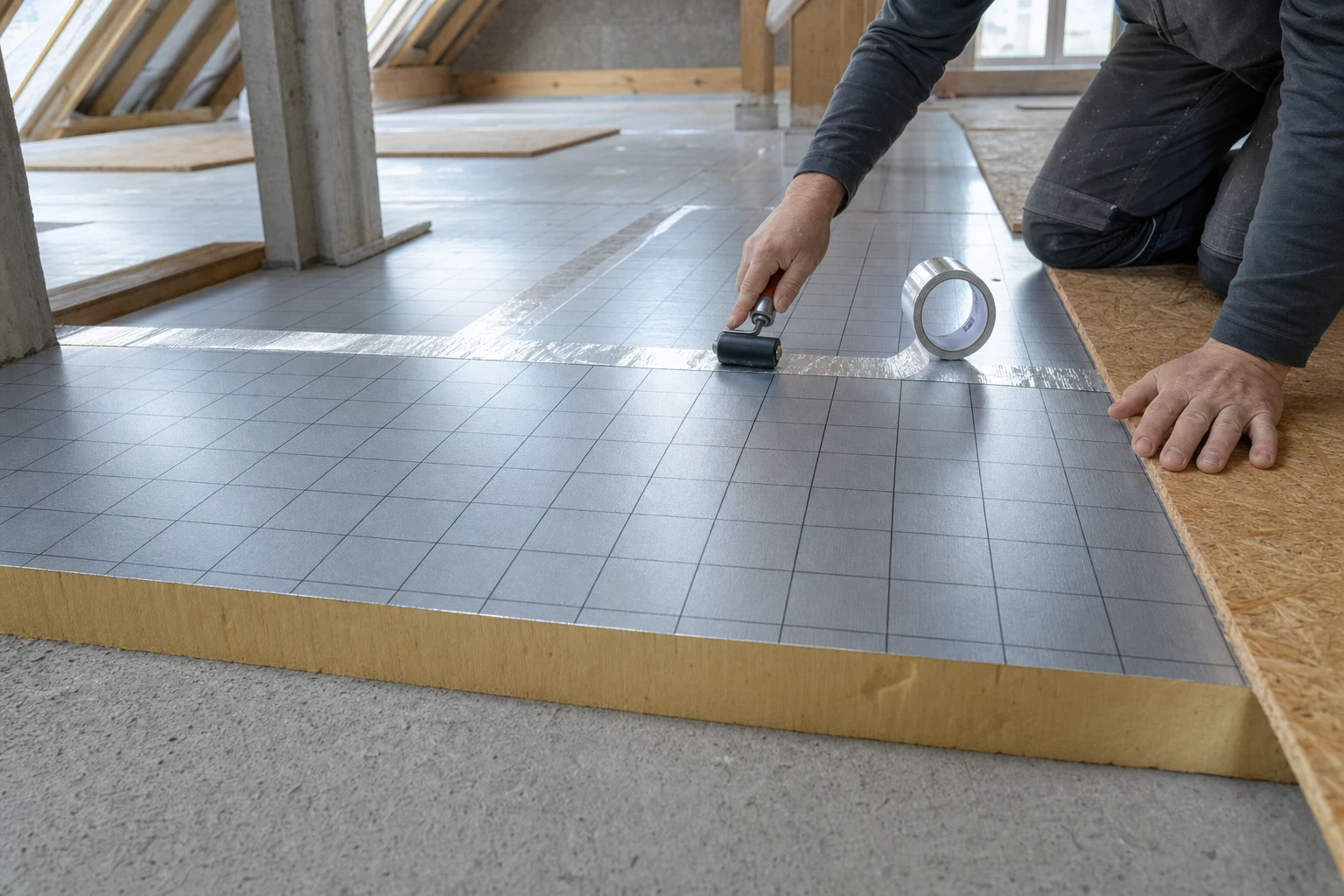
- Concrete slab → moisture-proof layer → termPIR® AL → separating layer → screed.
- Thickness 100 mm: RD = 4.65 m²·K/W, slab U = 0.21 W/m²·K.
- High compressive strength σ10 ≥ 140 kPa (termPIR® AL, thicknesses 30–140 mm) or σ10 ≥ 120 kPa (thicknesses 140–250 mm).
Partition walls with acoustic and thermal insulation
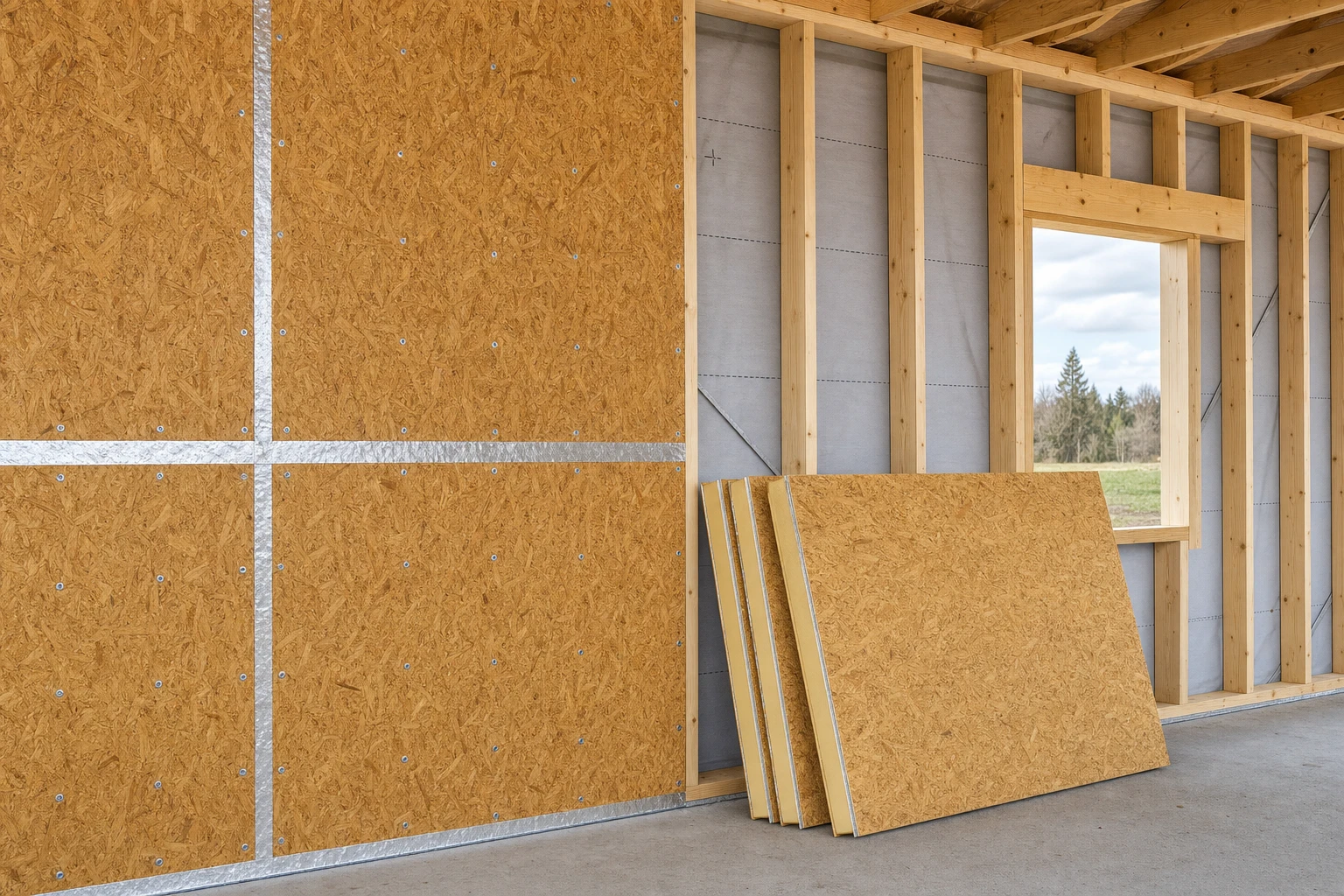
For internal partitions separating zones with different thermal requirements (e.g. staircase — apartment, basement — corridor), the termPIR® WS board is recommended, mounted on an aluminum or wooden frame with double-sided plasterboard cladding.
Certificates confirming quality for institutional investors
- CE marking (conformity with the declared performance, CPR 305/2011) and Keymark (verification of parameters by independent European laboratories)
- ISO 9001 and ISO 14001
- Nordic Swan Ecolabel (ecology)
- Entries in EPDB (Netherlands), SVT (Czech Republic), BVB/Sundahus (Sweden) databases
- Regular audits by Certbud, ICiMB, IMBiGS, PCBC, ITB
Key technical requirements
- WT 2021 — U ≤ 0.20 W/m²·K for external walls
- WT 2021 — U ≤ 0.15 W/m²·K for flat roofs / flat roof decks
- WT 2021 — U ≤ 0.25 W/m²·K for slabs above basement / garage
- Fire protection requirements for residential buildings > 12 m — verification with an expert
- Installation of termPIR® ETX with the print facing the wall in the ETICS system
Typical arrangements and applications
- Multi-family ETICS façade — termPIR® ETX 140 mm, U = 0.17 W/m²·K
- Flat roof on a block — termPIR® MAX 19 AL 120 mm + BWS slope layer, U = 0.17 W/m²·K
- Slab above underground garage — termPIR® AL 100 mm, U = 0.21 W/m²·K
- Partition wall staircase/apartment — termPIR® WS in plasterboard frame
- Terrace above heated room — termPIR® AL + waterproofing, water absorption ≤ 2%
Technical consultation
BOKKA advisors help in selecting solutions for a specific project — from U-value analysis, through selection of the variant and board thickness, to support at the execution stage. Contact us via the form or email the sales department.